Online Gaming is our Westworld - Article
by
Brandon J. Wysocki
, posted on 13 June 2020
/ 3,538 ViewsA few years ago, I wrote an article about etiquette in online gaming. I stated that the points I was making in the article weren't a comprehensive list of my concerns, and so this is an addendum of sorts to that article, prompted by my realization of how analogous the experience of online gaming can be to a vacation in Westworld.
Much like Westworld, or other Delos Destination resorts, the internet, and the multiplayer gaming it facilitates, is certainly a technological wonder, even if we’re not always mindful of that. In the second episode of the first season, a main character, William, is told by a friend who is accompanying him on his first trip to Westworld that “this place is the answer to that question that you’ve been asking yourself.” “What question?” William asks. “Who you really are.”
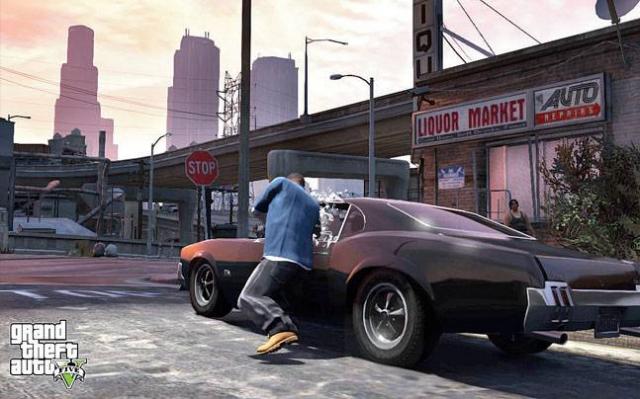
I’m not saying that stealing cars in Grand Theft Auto is indicative of your desire to commit grand theft auto. Nor do I believe that games can drive a healthy, well-adjusted person to become violent or a criminal (perhaps I’ll dive more into that another time). When you’re playing the game as it is meant to be played, regardless of what that activity is, I’d argue you’re being driven by the narrative or game design above all.
Like Westworld, videogames provide vast, engrossing environments in which we can experience things that we might otherwise be unable or unwilling to do. Humans tend to learn and grow by pushing boundaries – indulging urges and curiosities as we begin to understand, often from the consequences of such actions, what is acceptable and what is not.
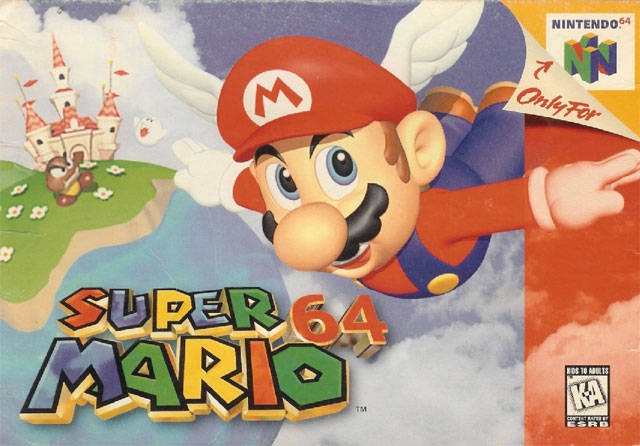
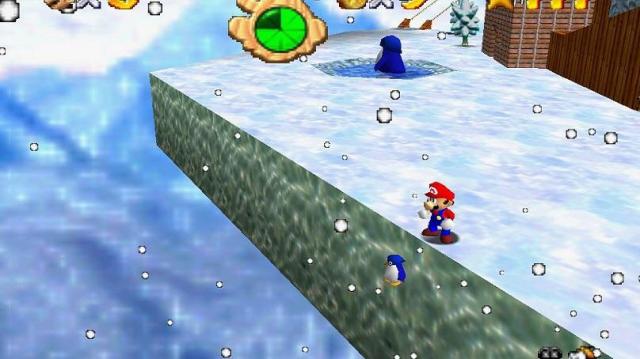
Within reason, videogames can be a great place to do that. I’d much rather someone throw a baby penguin over a cliff in Super Mario 64 than in real life.
Dehumanizing individuals, or debasing any lifeform (or even the Earth itself) is at the root of much of the mistreatment and abuse that we inflict on other lives. I believe that's the most interesting parallel between Westworld and how we behave online. In Westworld, people are seemingly encouraged and expected to indulge their darker desires. That's ostensibly justified by the idea that the “hosts” aren’t really affected by any of it, even if the experience is made believable and, disturbingly, likely more gratifying by the hosts' realistic reactions.
Alternatively, I know people who hunt and fish under the pretence that animals don’t feel pain or grieve death as we do. I believe that many animals are more human than not in that regard. Either way, I’d rather err on the conservative side and assume that they do (full disclosure – I still eat meat, but I don’t deceive myself into thinking their lives aren’t precious or that they don’t feel pain… maybe that makes me worse 🤔). Ultimately, humans have a proclivity to justify their thoughts and actions despite, or really most often as a product of, any cognitive dissonance.
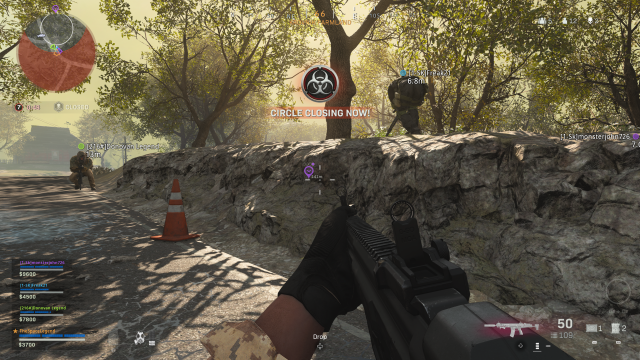
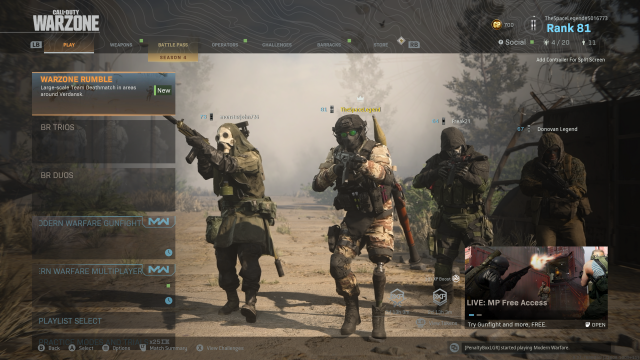
So with online gaming, whether it’s the detachment from the human(s) on the other end of the game, or the consequences of our actions toward them, or the subjective, untenable justification of the mistreatment we dispense, too often gamers seem inclined to indulge themselves at the expense of others. For some time, I began to question whether that was true – but then it occurred to me that I hadn't been playing in open chat sessions in competitive games very much recently (and even still would get a decent amount of “hate mail” after killing an enemy). But my recent foray in Call of Duty: Warzone reminded me just how significant of an issue this can be. While I’m confident it is a minority of gamers exhibiting such behavior, as is often the case the negative impact is disproportionate and far-reaching.
It’s analogous to just a handful of loud people in an otherwise mild and quiet group. It’s hard not to notice them, often even more than the rest of the group collectively. Moreover, it frequently results in others raising their own volume to try to combat it, making the overall situation that much worse via a contagious devolution of sorts. This was borne out in a recent match.
With only two other teams remaining, my entire squad was alive, well-equipped, and playing well, so I liked our chances of victory. Suddenly, with stunning effectiveness, as I engaged a single combatant to the left, my three teammates were mowed down from the right – so quickly that additional bullets began hitting the individual I was engaging with (he was the last man in his squad).
No sooner than he died, the bullets turned their attention to me, despite the fact that I had a small hill obscuring my position. With ludicrous precision, bullets hit what was marginally exposed. We placed second. The kill cam showed the “MVP” of the winning team snapping from target to target, even when they weren’t very visible. According to online stats, he finished the match with 60 kills and 38 headshots. He was “red-flagged” in all four categories that indicate cheating.
But the negative impact didn’t stop with his direct actions. After the match, in the post-game results screen, teams are able to chat openly. As my team was discussing the flagrant cheating amongst ourselves, we began to hear other voices chiming in. With no provocation, they immediately went to how awful we are and how we need to quit playing we’re so bad (counterproductive but common troll “wisdom”).
I asked if they were the cheating player/team (I subsequently learned they were the third-place team), but their response seemed to indicate they thought we were. Next thing you know, as part of their continued verbal attack, my team is being called a variety of racial epithets, including the "N word" – in a game actively displaying a message that Black Lives Matter.
I think the mostly anonymous, impersonal interaction that online gaming (and social media) consists of creates an environment where we often see people indulging in, or perhaps inadvertently revealing, their darker sides. Life is complex, and I don’t think having a darker side inherently means you’re a bad person; it means you have some bad tendencies, which we all do. Behind the safety of their screens, and largely protected from any significant adverse outcomes, people are emboldened to say and do things they (thankfully) would be unlikely to do in person. But I’m not really sure how much better that is.
I personally believe games, and online games, are an excellent tool to use to improve how you respond to stimuli and treat other people. I recently acknowledged that I need to take my intensity down with my friends in Warzone and I am working to do so (thank you Jeff, being the stand-up friend that you are). We all slip up and say or do things that we wish we hadn’t; that’s part of being human. When properly utilized, mistakes and inadequacies are excellent catalysts for improvement. However, I fear that some, maybe even an alarming amount of people online relish having a place where they can be themselves – a place where they feel comfortable and confident to cheat, threaten, insult, and use hateful, disgusting language because of the limited, or even complete lack of consequences.
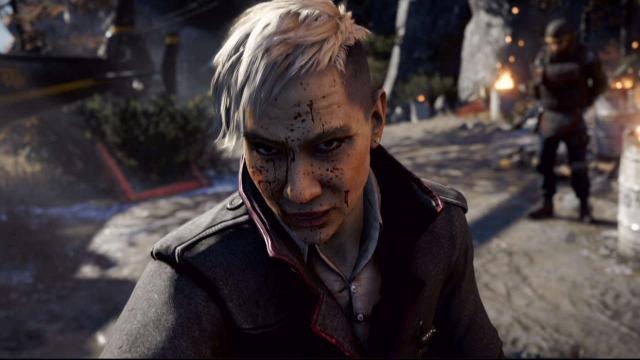
As you watch Westworld, you see the humanity of the synthetic human “hosts” (a classic sci-fi theme). Their inhumane treatment, and the guests who treat them so, are abhorrent. In that same sense, the side of people you see online can be repugnant.
In season two's second episode, William, now convinced that what his friend told him was true, says “this is the only place in the world where you get to see people for who they really are.” Maybe the antics and insults from gamers online are “innocent fun” or a “healthy release” and I’m overthinking it. But often, I can’t help but think that, just as it is in Westworld, it is a very real, very ugly side of an individual being displayed in an environment that would otherwise be an apex of wonder and entertainment.
__________________________________________________
Brandon J. Wysocki longs to write a science fiction novel when he grows up (you could read some of it if you'd like by reaching out to me via Facebook). In the interim, in addition to being a (neurotic) father, husband, and self-employed contractor/carpenter, he plays a lot of videogames and sometimes rambles about his experiences with and opinions of said videogames.
More Articles