


Pete Hines: Bethesda Prioritizes Player Freedom Over Making a Less Risky Game - News
by William D'Angelo , posted on 03 September 2023 / 2,582 Views
The head of global publishing at Bethesda Pete Hines in an interview with GamesIndustry said the studio embraces chaos and player freedom over making a safer, less buggy, and less risky game.
"Bethesda Game Studios has a reputation for things that happen in their games, yes," said Hines. "The thing people miss far too often is that there is some amount of that which is intentional, meaning we embrace chaos. We could make a safer, less buggy, less risky game if we wanted to. But what we try to lean into is player freedom.
"Yes, there's going to be some little things here and there where your companion might stand a little too close to you sometimes, yet the freedom you get, and the things that happen because of that, we absolutely love and embrace.
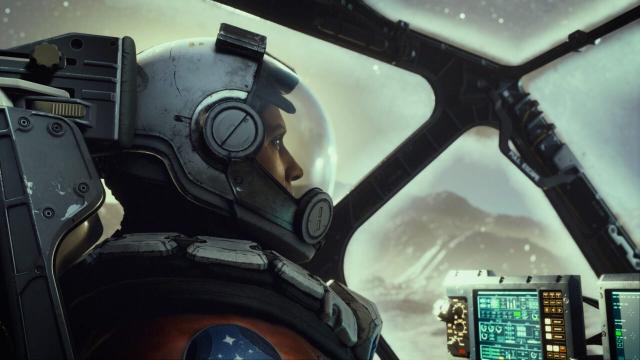
"Of course there are bugs. But does it take away from your experience? Or do you have a consistent, fun game that you just can't stop playing and experimenting with?
"On Neon, a planet covered entirely in water with a city that sits on top of it, we had a bug where a shark was able to get on an elevator. Then the elevator doors would open on a street level and the shark would come sliding out – everybody screams and starts running in every direction. I'm laying into it with weapons, people are screaming and guards are running. I said: 'Do not take this bug out of the game!' I'm almost positive they did but I love that stuff."
Bethesda released Starfield last Thursday in Early Access for those that purchased the Premium Edition or the Game Pass Premium Upgrade and within a couple of hours the RPG reached 234,502 concurrent players on Steam alone.
The official launch for Starfield is on September 6 for the Xbox Series X|S, PC, and Xbox Game Pass.
A life-long and avid gamer, William D'Angelo was first introduced to VGChartz in 2007. After years of supporting the site, he was brought on in 2010 as a junior analyst, working his way up to lead analyst in 2012 and taking over the hardware estimates in 2017. He has expanded his involvement in the gaming community by producing content on his own YouTube channel and Twitch channel. You can contact the author on Twitter @TrunksWD.
More Articles

Wished starfield focused on just 200 planets and then create an entire game based on that and make it jam.packed and alive with better graphics.,1000 planets that are mostly empty are pointless. Waste of resources.
100% agree.

The only bugs I hope they fixed are the ones that occur if you go for a walk and enter some room and find some items, only to then do a main quest later that takes you to that same spot, and then there is some kind of error. This happened a few times in skyrim, and so it turned me off completely from exploration and to just follow the sidequests and missions as they come

Please dont ever change Bethesda. Love the risk taking and freedom these games bring. Its become a Bethesda charm. Loving Starfield

Making risky games and giving players freedom are both very good things to do. But well I don't trust Pete Hines and Todd Howard to much.

Todd is probably the biggest liar in the industry.

Fair enough, but this is the best Bethesda RPG launch yet, so there's that at least.
Where did he lie exactly?
Bigger than peter molyneux?
I don't think less buggy should be lumped in with safer and less risky. No matter how safe or unsafe and risky or less risky, a game should not be buggy. Buggy means the team F'd up and released a game in a poor condition.

The higher-up team, you mean. It's up to them to be able to utilize the devs they have appropriately. Doesn't really take away from your point though.
The thing is, a narrative third-person action-adventure game, or a track racing game, can be made to be nearly bug-free at launch. But a huge open-world RPG with systems to define how things react to each other isn't like a linear adventure game and "bug free" is essentially impossible at launch since you can't predict every single possible interaction between all the disparate elements.
Digital Foundry and others have said Starfield is easily the least buggy Bethesda RPG at launch, so that's a big step in the right direction.
It would seem that Bethesda has usually had a harder time with open-world games than other studios, so I feel like there's some merit to the critique. They're not even doing anything particularly difficult, such as choices that major impact. To me, Bethesda's performance regarding bugs has seemed quite lackluster, considering all the aspects of the scopes of their games. That said, gotta give credit where it's due, and Startfield has indeed sounded better than the earlier Bethesda games, which is great.
I think there's less merit to the critique since this is a massive game that is relatively bug-free, and has excellent performance, on launch day. Lots of other developers haven't managed that on much smaller games. I additionally feel there's less merit to the critique due to the fact that Bethesda games aren't all hand-crafted, they're a mix of elements (some hand-crafted, some procedurally-generated), with systems to define how elements interact. It's the unexpected interaction of those systems that create the potential for the unexpected. A game that's more smaller, and/or more linear, and/or entirely hand-crafted, doesn't tend to have problems like that.
But totally fair enough if you feel differently. :)
Practically no non-trivial piece of software is bug-free, so I'm not demanding that of games either. I just think that Bethesda's main catch is large, fairly static worlds, and that doesn't seem like a terribly difficult problem. It's got to be a lot of work, but it's nothing like, say, Baldur's Gate III, which has lots of choices, which probably complicates things a lot more than just creating a bigger world with fairly little interaction between the different parts.
I think it depends. If Forza Motorsport is buggy at launch, that's a problem as it's a track racing game in a constrained environment.
If a huge sprawling RPG with a mix of hand-crafted and procedurally-generated elements and systems to define how the environment and NPCs react to this chaotic mix has some bugs at launch, that's completely understandable.
The most risky thing they are doing is not releasing it on the PS. Between the lack of PS sales and this game being on Game Pass, the money made off this game will be dramatically lower than it could have been.
Yes being on Game Pass might drive subscriptions. However not releasing it on the PS5, which easily has a 2 to 1 ratio over the XSS/XSX is a financial mistake. This is all Microsoft doing this and they have mountains of money to burn to win whatever they are wanting to win at the end of the day.
I predict however, that after a 12-18 months they will release it on the PS5. After that amount of time any boost in Game Pass subs because of this game will have been had and they can cash in on PS5 sales then.
Less risky ? They just make Fallout in space & keep admitting to that fact. Essentially that’s 6 fallout type games just from Bestheda themselves. These PR spin merchants are an embarrassment, across the whole industry
Well... As a complaint, I'm not sure how much credibility it would have, but Starfield doesn't exactly seem like a huge risk to me. On the surface, it might seem quite risky, but since they're doing what they've been doing very successfully since at least Oblivion, I'd say the risks are very manageable for Bethesda.
And yet, the risk was real IMO. I mean, the less risky move was to go right into another Elder Scrolls, followed by another Fallout. So many years pass between releases in those franchises that there's virtually no risk of "franchise fatigue" with them. They have existing worlds and existing lore, so it's lower-hanging fruit than creating a new universe from scratch.
In fact, I'd argue that meant they were taking an additional risk that the Fallout franchise would get cold between releases. How long after Fallout 4 before the next singleplayer fallout? No one knows. With Fallout 76 being poorly received, and a huge gap to the next Fallout, they're risking that franchise getting forgotten about by a lot of gamers. You neither want to release too many, nor too few, games in a popular franchise.
Less risk of that with TES since Elder Scrolls Online was somewhat better received that Fallout 76, and since Skyrim continues to sell (moreso than Fallout 4 does). But Elder Scrolls VI would be out by now if they hadn't started on Starfield, I suspect, so some "franchise health" risk there as well perhaps.
Look at Volition, two poorly-received games in a row (one of which sold at least two million units) and the studio has had to close. If Starfield took longer, or was less well received, than just another TES or Fallout then it could have hurt the studio badly.
Well this certainly isn't the least risky move, but I still think it would have taken Bethesda a major screwup for this to be much of an actual risk. Personally I'd say Fallout 3 was riskier, considering how long after the previous highly-deemed game of the series it was released and how far they deviated from it.
At this point, Bethesda has enough reputation to have the interest of players no matter what they do, and enough funds to be able to market a new IP sufficiently. This is a bit over-simplified, I imagine, but I think all they had to do was pick a setting that's not too off-putting and do whatever they've been doing forever (and anything on top of it is just extra).
I agree with most of what you say. But Bethesda probably would have released this game a year ago, if not for Microsoft purchasing them. Given how polished Starfield is, that was a win. A win we probably wouldn't have gotten if Zenimax was still independent and didn't have Microsoft's wallet backing them up.
I have my doubts about Microsoft having much impact, and I would kind of expect Bethesda to have been able to afford the suspected delay on its own as well. I don't know for sure though, so this is pure speculation, and besides, I'm not sure this bears much relevance to the risk aspect that we were discussing earlier.

Sometimes talking just get u deeper in a lot of trouble,
Maybe they should shut up Todd and hines hahaha
I'm not sure what you're getting at. Everything he said here has me even more interested in trying this game. Not enough to splurge for the premium edition, but definitely even more excited now to try it tomorrow night when it hits Game Pass.

Stop the excuses and be better. It pains me the next elders scrolls will use the same fucking engine that morrowind used.

The creation engine allows them to do things most other engines would have a hard time doing for what their goals are. If they tried to make Starfield with Unreal engine for instance, it wouldn't have the desired results you think it would.
Btw, Starfields visuals looks great. Especially the environments, ships, planets, and creatures. NPCs vary in detail.
The modern Creation Engine is improved dramatically from Morrowind. The Creation Engine has evolved with every game (except for maybe New Vegas, as that was Obsidian using the engine, perhaps without the resources, or even the permission, to change it).
So no, the next Elder Scrolls isn't using the exact same engine as Morrowind, any more than Windows 11 is the exact same OS as Windows XP.
Digital Foundry said Starfield is better than Fallout 4 in nearly every way, on a technical level, to give you an idea of how much it's evolved and improved recently, let alone since Morrowind.
I wouldnt stress, you wont be playing them anyway.
There are some serious Bugthesda apologists here.
Every single Bethesda game I have played has had performance problems from day one. While my 12700K/4070Ti can run this game better than a Xbox Series X ever will, every other game I have not only looks as good or BETTER but runs WAY better.
I could live with not being able to pickup a coffee cup for a COMPLETE re-write of their game engine or switching to another engine all together.
What game of similar size and scope to Starfield looks and runs "WAY better"? Keep in mind the Creation Engine 2.0 keeps track of every single object in the game, etc., meaning you can place a rock somewhere on a deserted planet and come back months later and the rock will still be exactly where you put it. So I don't think most games under the hood are dealing with nearly as much as Starfield is.
Starfield isn't a gamble?
So because another studio made a space game, Bethesda is not taking a gamble? You're logic is weak. How many space games are out there let you do everything Starfield offers? 0. They never stated Stafield was the riskiest game made in the last decade.
You know how many great games, especially RPGs, have some cringy NPC dialogue in them? Damn near all of them.
I'm listening and replying to your comments and each point you are trying to make. Here are my points why you are wrong.
-8 years in development.
-largest BGS game yet.
-New IP.
-New mechanics like spaceship travel never before in a Bethesda game.
-Best looking BGS game yet.
Please give factual examples why this game isn't a gamble.
I think I kind of get where @Chazore is coming from, honestly. To the untrained eye, it's just another RPG from Bethesda. And there's some truth in that. This isn't No Man's Sky, you're not able to go anywhere and explore everything. You fast-travel most places, worlds are segmented into sections and you choose what section to land in, etc. From that perspective it doesn't seem that risky.
However, I agree with you that if you look under the hood a bit more, and especially if you consider the financial risks of devoting 8 years to a new IP, and committing to creating their biggest RPG yet when all their previous RPGs had terrible bugs and performance issues at launch, I agree that the risks were definitely there.

What you're describing is really the inherent risk attached to developing any new IP. 8 years is simply the timeframe it took, likely with delays, project deadlines not being met and/or scope creep.
A studio with an established audience, sticking to the same genre, using existing tried and tested tools, and working to their own strengths is hardly noteworthy or exceptional in the field of risk in this industry.
An example of a risky project would be something that involves completely building a new engine from the ground up, switching over to a completely different genre or banking on an idea that has never been executed before and there's uncertainty surrounding if it even has an audience- that's risky.
Do you think for a moment anyone on the board struggled to greenlight Starfield? It's a Bethesda game set in space.
I get what you are saying, but I still see it as a big gamble. I do see tackling a different genre as a bigger gamble, but that doesn't take away from what BGS has accomplished. Following a successful formula doesn't mean they aren't taking a gamble. There is a reason BGS is the only studio making RPGs of this style. It's not easy and cost a lot. Starfield is doing many new things not in past BGS games and it's easily their biggest game.
This company has made these style of games for 29 years. It's in their wheelhouse. If you can point out a specific aspect of the project that was very risky, I'm all ears, but you seem to be pointing to the standard risk that applies to developing most new AAA IP.
It's also very normal for the next big AAA game at a studio to be their biggest, most expensive project yet, that is, until the next one comes along.
I'm curious, if Naughty Dog made a linear adventure game set in space, or Fromsoftware made a Soulslike that allows you to jump between planets you would consider it a 'big gamble'. When in reality, they're still just playing to their strengths.
I get your point, but I still consider Starfield to be a risk. They could have easily stuck with making a new Fallout or ES instead, but went with a new IP. It's easy to say, "Well it's Bethesda so it's going to be a hit." We all saw what happened with Fallout 76. If there next game didn't turn out good, it would have been a disaster for them. Instead of playing it safe, they made a need IP.
Starfield, while using past formulas to its strengths, is doing things, like space travel, which they have never done before. They have never made a game with flying or driving before. Considering this is their first, I would say they did a damn good job.
They could have made it one solar system to explore or did it like Mass Effect with a few planets on certain solar systems and scanning the rest, but it vastly exceeds this. How many comments have you seen saying, "1000 empty planets". Making the game feel like their is always something to do while offering so much "space" to play in is no easy task. The game doesn't have "aliens" or some other species to play as, which some might see as as questionable when making a space game. The game starting "slow" can be seen as a big gamble compared to their previous entries.
It depends on what Naughty Dog and FromSoftware decide to add to the game. Just because a well established studio is making a game to their strengths, doesn't mean it's a guaranteed success.


Basically I'll be right, they were be wrong, and I can bark back and expect backup, because that is the example you guys are setting up here.
if that doesn't happen that way, then it's pure bias and hypocrisy.
It's bethesda of all companies, I shouldn't ened to explain their history, but then I forget we're on VGC, where that doesn't matter.
I'm not a particularly big Bethesda fan. But I'm enjoying starfield more than any of there other games. Usually I lose interest in there games pretty quick due to the gameplay not being particularly fun.
Again I'm not sure what you are trying to say here. If you have a point to make just make it and stop with this passive aggressive rubbish. You seem to be annoyed that people are trying to have a discussion with you.
No one is having a discussion with me though?. it's people just telling me I'm wrong.
Discussion tends to have open ears, not made up minds, made up minds is debating, and I wasn't even asking for a debate, I was asking for bethesda to do some trendsetting, not do what others are already doing (and that's what got people in here arguing the petty semantics of "actually they did this specifically that others games didn't do".
I don't think you'll ever see what I'm trying to say, because from what I can see that you have admitted:
You think I'm annoyed, like malding to hell (I'm not, just mentally tired).
You clearly like the game (the bias is present).
With those two main points, it boils down to "shut up and move on" or "don't say anything bad at all". But again, I don't think you'll see it that way, and I guess at this point I'm no longer going to expect you to or hell anyone to from here on out.
People are willing to have a discussion with you. But you just made a statement and never really backed it up with anything when people called you on it. Fair enough to have an opinion but at least give some reasons why. Sounds like you are going through something so maybe take a break from this site and clear your head for a bit, not worth getting to bent out of shape over video games.
Did you delete your first comment?
The thing is, this game isn't really anything like Star Citizen, or Elite Dangerous, or No Man's Sky. So this isn't derivative of those other space games, not even a little bit.
I think it arguably was risky, given they knew they'd probably have some people complaining that they can't spend 7 hours (or whatever) flying from one planet to another if that's what they wanted to.
This game is also WAY, WAY, WAY bigger than any Fallout or Elder Scrolls game. Hell, it's bigger than all the previous Fallout and Elder Scrolls games put together. So they also risked that they wouldn't be able to pull it off at all. And if they did pull it off, could they make it acceptably bug-free? Could they deliver enough content to keep such a huge world interesting? Keep in mind this game started before Microsoft purchased Zenimax, so Bethesda didn't know they'd end up in the enviable position of delaying it as much as necessary, they might have been financially forced to release it before it was truly ready.
Fallout 76 bombed, and if Starfield also bombed after all these years of development, and the next Elder Scrolls game an unknown number of years away, and the next Fallout game far further away than that, it could have put the company in dire financial straights.
So I think you're being unfair to say Bethesda took no risks here, honestly.
Then it's a non stop cycle.
Either way I'm done. I'm just going to comment in the future and stop responding to anyone who disagrees because it's just tiring and not worth my energy anymore.
People are just too bothersome to convince these days, everyone has their hill chosen to die on and isn't really open to being convinced.
I asked you your reasons why you thought it wasn't a gamble and you didn't say anything. I have no problem admitting I'm wrong or looking at things from a different perspective, but you didn't give me anything to make me change my mind. That's on you.
In terms of new IP? nothing remarkably risky about it.