



Kingdom's Return: Time-Eating Fruit and the Ancient Monster (PS5) - Review
by Evan Norris , posted on 19 May 2026 / 2,646 Views
For the past 30 years, developer Inti Creates has been synonymous with two things: action-platforming and pixel art. The studio, which was built by former Capcom employees back in May 1996, has made a name for itself over the last three decades by releasing punchy, side-scrolling platformers with decidedly old-school art styles. Its latest project, Kingdom's Return: Time-Eating Fruit and the Ancient Monster, falls into this same broad category, although with something of a twist: strategic town-building. Take note, however: the action and strategy phases don't receive equal attention.
Kingdom's Return takes place in the kingdom of Almacia, tucked away in a remote corner of the continent of Norlant. Despite its isolated nature, the kingdom is (or was) unusually prosperous, thanks to its proximity to magical fairies. You see, adventurers across Norlant would make pilgrimages to the area to form special pacts with the fey creatures nearby. When one such hero makes their way to Almacia to carry on this timeless tradition, they're met with shocking news: the whole area has been magically transported to the distant future, causing all the buildings and facilities to fall into disrepair. Now, it's up to you and your new fairy companion, Chronos, to set things right.
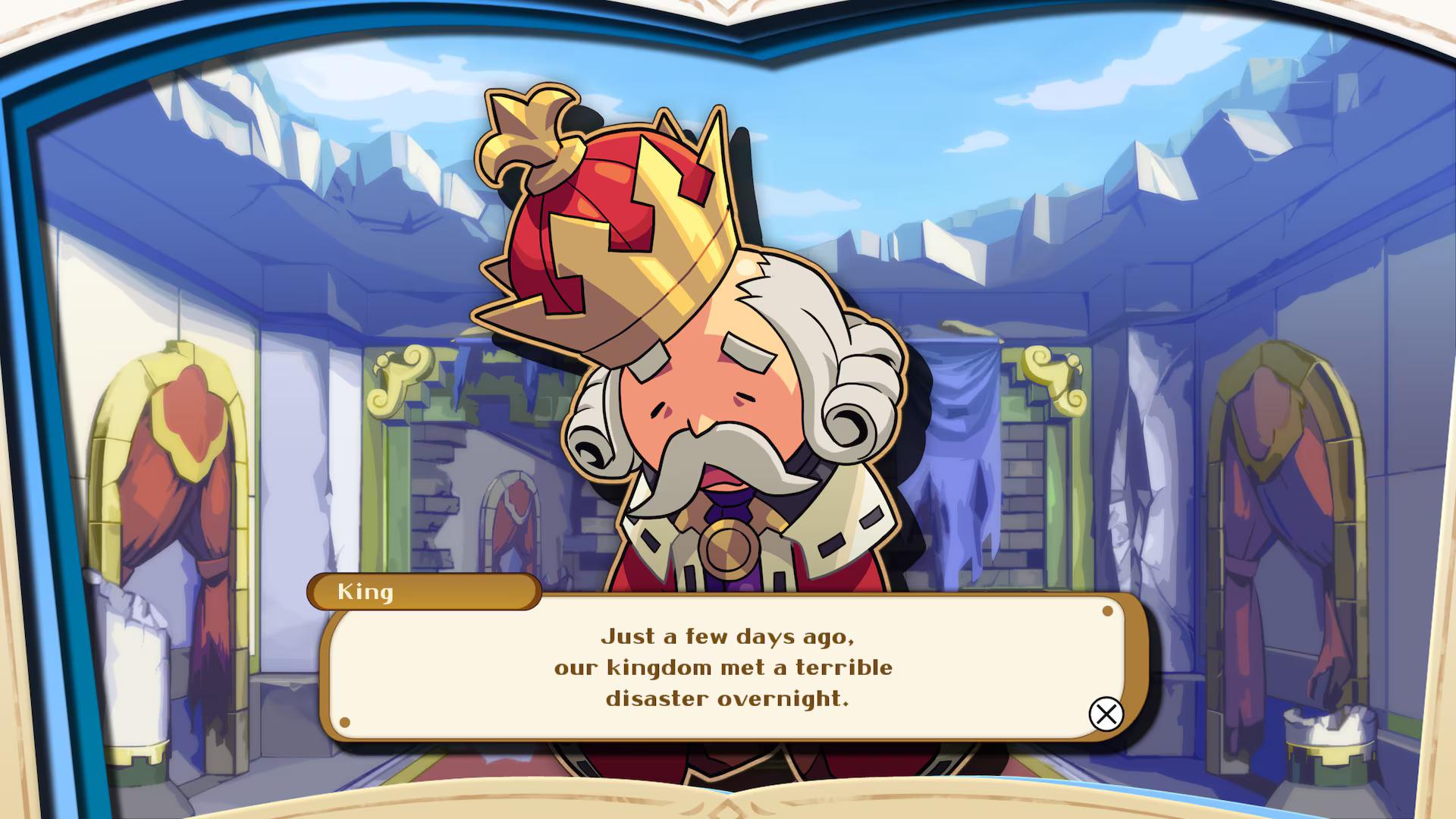
The premise in Kingdom's Return is quite good, but the game doesn't do anything especially interesting with it. Despite the catastrophic nature of the emergency, the stakes feel quite low. It doesn't help that the kingdom and the surrounding areas feel mostly devoid of human life, apart from a handful of two-dimensional NPCs that exist primarily to provide exposition or send you on quests. Overall, the story is designed to be more silly and cozy than anything, which is, honestly, perfectly fine. It exists to justify the gameplay and to push the campaign forward. And on those terms, it works. Just don't expect to remember it fondly — or remember it at all — after the credits roll.
You will probably remember the gameplay more warmly. As mentioned before, it's a mix of action-platforming and strategic town-building. Let's start with the action phase.
From your base in Almacia, you will set out into the wilderness beyond the borders of the kingdom. Once there, you'll view everything from a top-down isometric perspective. You can wander aimlessly, picking fights with roving enemies and opening treasure chests, or make a bee line for the next point of interest — typically a forest, cave, or other monster-infested location. In either instance, whether you collide with an enemy or enter a dungeon, the perspective will change to that of a classic side-scroller. This is where the game spends most of its time.
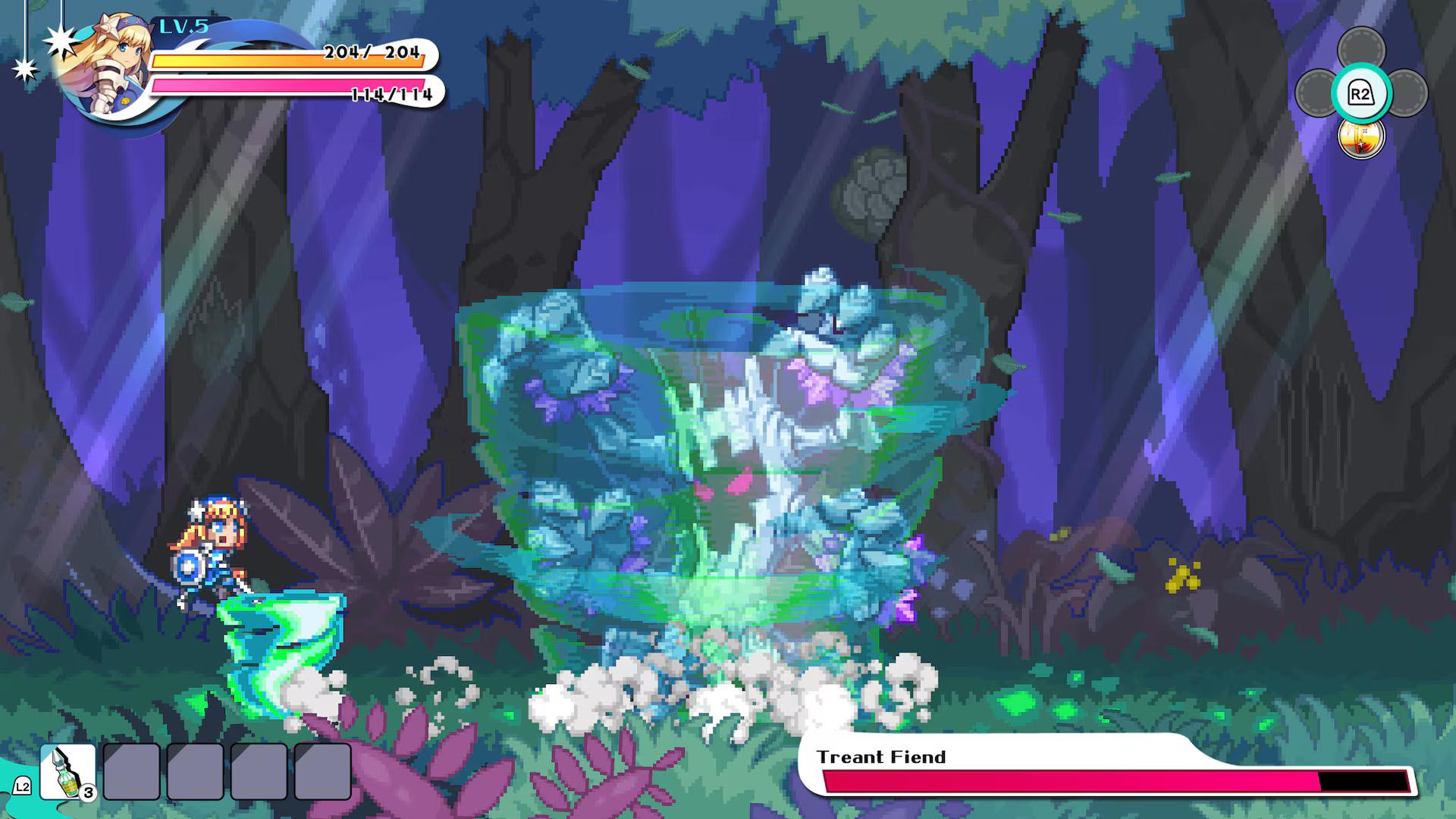
Each dungeon is split into different areas and floors; and in every one you must defeat all the rank-and-file monsters in order to proceed. While the combat here isn't as flashy or deep as that in other Inti Creates' games, it's perfectly competent. There are four playable characters, each with their own class-based abilities, but all of them share basic commands: regular attack, special attack, jump, dash, and guard. Again, it's not revolutionary, but it's snappy, precise, and reliable. It can be quite entertaining to slash and fire at incoming enemies, anticipate telegraphed attacks, and dodge and deflect with perfect timing. And when you mix in special abilities, which you can unlock and assign at your discretion (if you have enough skill points), it feels like you have a lot of control over the flow of battle.
There is an issue, though: repetition. As you move between areas and floors in a given dungeon, you'll encounter similar-looking spaces and recycled monster types. It gets old after a while. And it's exacerbated by the fact that you must revisit dungeons three or four times each in order to clear all your quests. To help offset this repetitive loop, the game steadily introduces new biomes with new gimmicks — poisonous mushrooms, tidal waves, mine carts, falling embers, geysers, etc. — as well as eventful boss battles. These certainly help, but don't entirely eliminate the feeling of tedium.
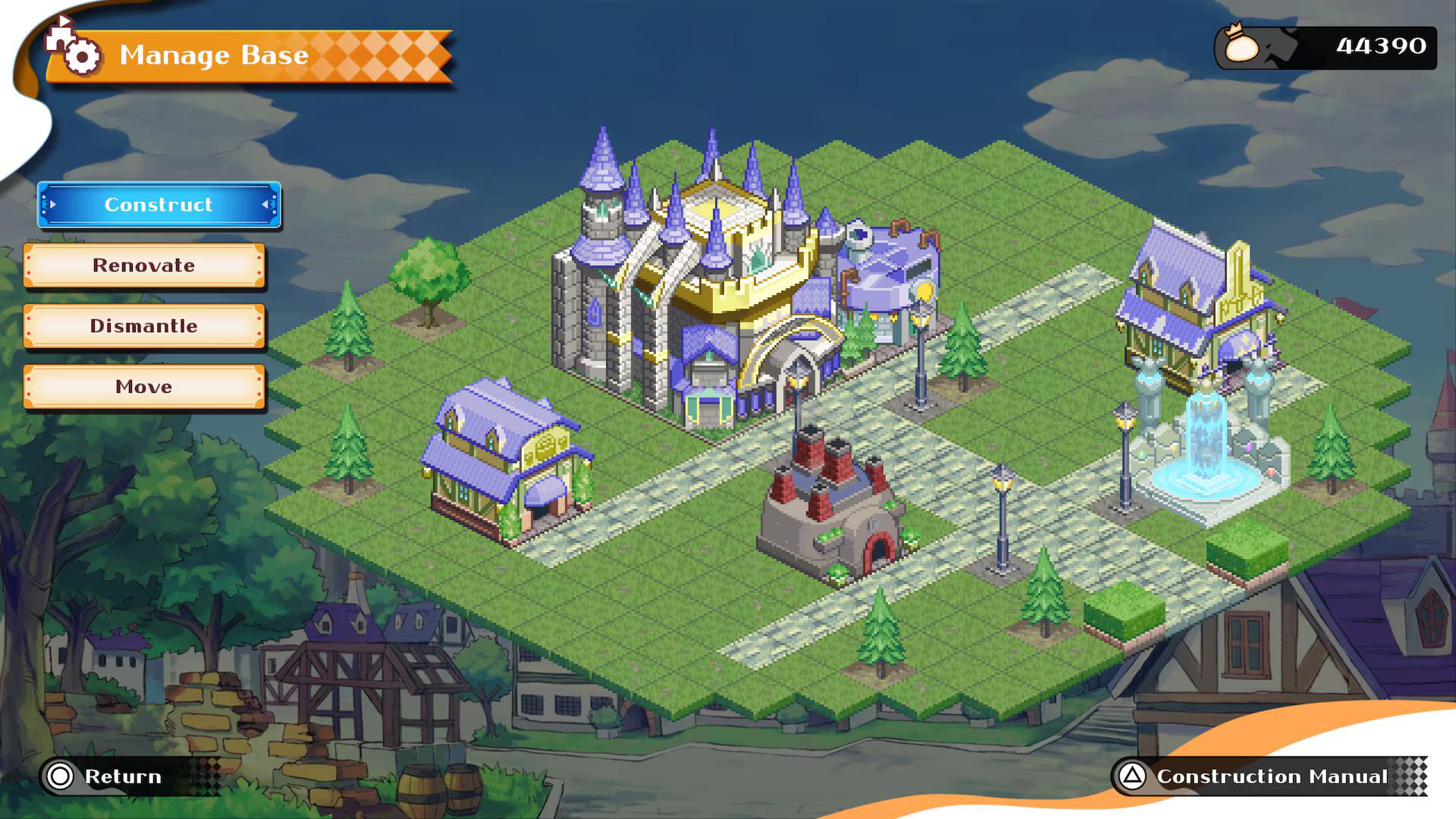
Once you clear a dungeon, either by defeating a boss or fulfilling some other obligation, you'll return home to Almacia. Here you enter the game's second phase: town-building. Using materials and money collected out in the field, you can erect new buildings around your castle. Based on where you place them, and whether they're connected by roads, you'll earn performance modifiers to your stats. For example, the weapon shop will boost your attack, while the inn will increase your HP. This is an entertaining diversion, one that helps break up monotony in the action phase, but it could be so much more. Inti Creates missed a golden opportunity to make something akin to ActRaiser, with a more robust simulation element where players are responsible for the economic and population growth of the kingdom. As it stands, the strategy piece is underdeveloped.
The game itself is somewhat underdeveloped as well. Even with multiple dungeons, dozens of quests, and plenty of time reserved for town building, the campaign will draw to a close after only seven hours. Now, to be fair, there is a good amount of replay value. You can play through the campaign as one of four different classes, each of which plays and fights differently. The Imperial (my favorite) is a well-rounded knight who focuses on defense. The Wizard is a squishy magician who specializes in ranged attacks. The Alchemist is a tactician who lobs chemicals that inflict status ailments. And the Zipangu is a swordsman adept at rapid combo attacks.
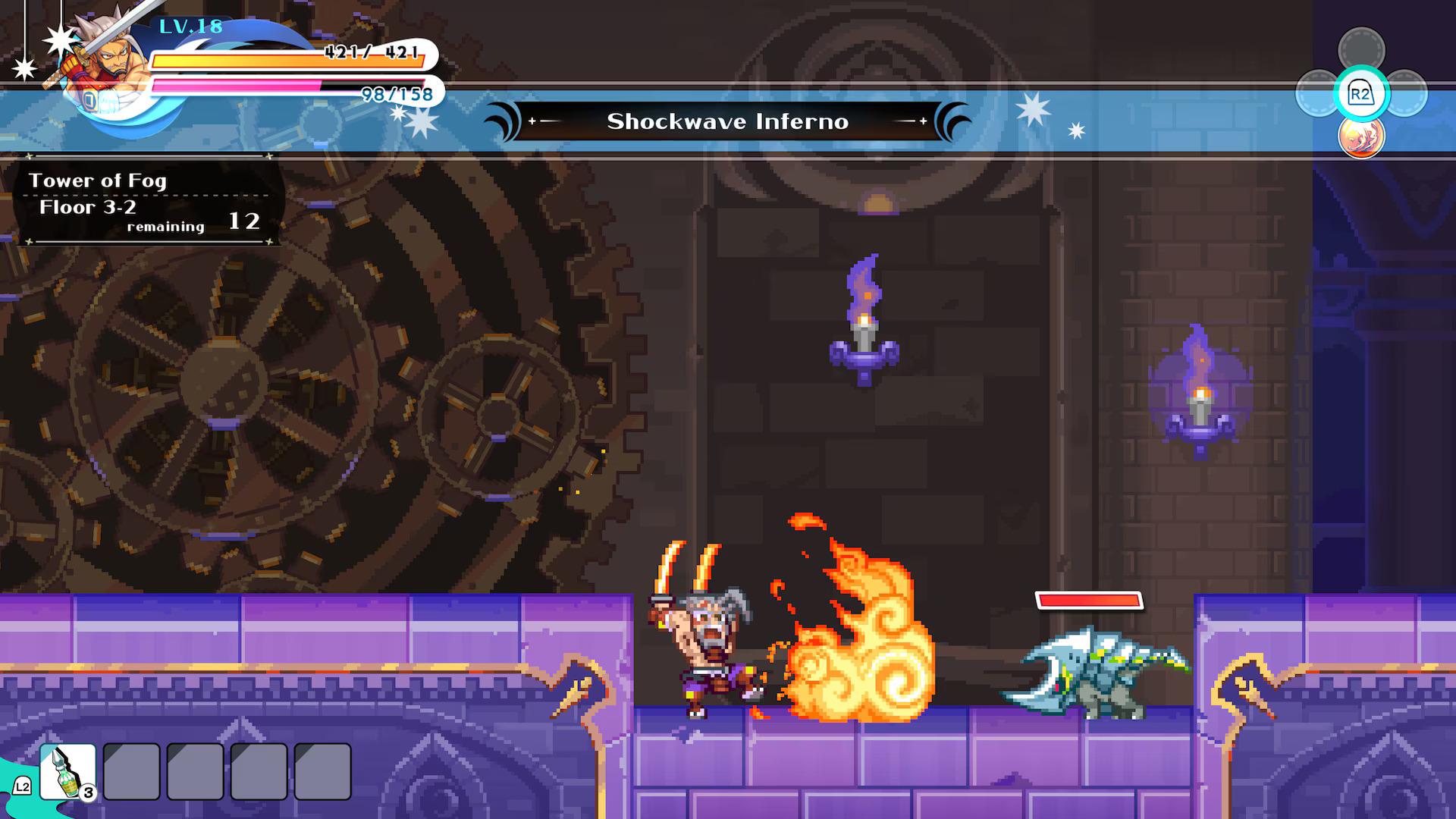
No matter which hero you pick, you'll be treated to some charming pixel art. This isn't Inti Creates' most stylish or evocative work (in fact it's generic in places) but it's bright, welcoming, and perfectly aligned with the easygoing vibes of the narrative. As for the music, it's appropriately bouncy and fantastical, although not particularly memorable.
"Not particularly memorable" is a good way to describe Kingdom's Return as a whole. While it has an interesting premise and a clever gimmick, it doesn't do enough with those assets to stand out among other action-platformers, including those developed by Inti Creates in years past. With that said, it's far from bad. Thanks to snappy combat, four playable characters with unique talents, and appealing pixel art, it's a decent enough diversion.
VGChartz Verdict


6
Decent
This review is based on a digital copy of Kingdom's Return: Time-Eating Fruit and the Ancient Monster for the PS5, provided by the publisher.