
Deltarune – A Halfway Point Assessment - Article
by Mark Nielsen , posted on 18 November 2025 / 3,448 Views
Episodic games and reviews are a bit of a weird mix – at least when the chapters are spaced out as much as they are in the case of Deltarune, the spiritual successor to Undertale. But with four out of the seven planned chapters released and the game already having a pretty significant scope in total, now seems like a good time to assess how this slow-moving chapter train is doing so far and whether or not it’s worth getting onboard.
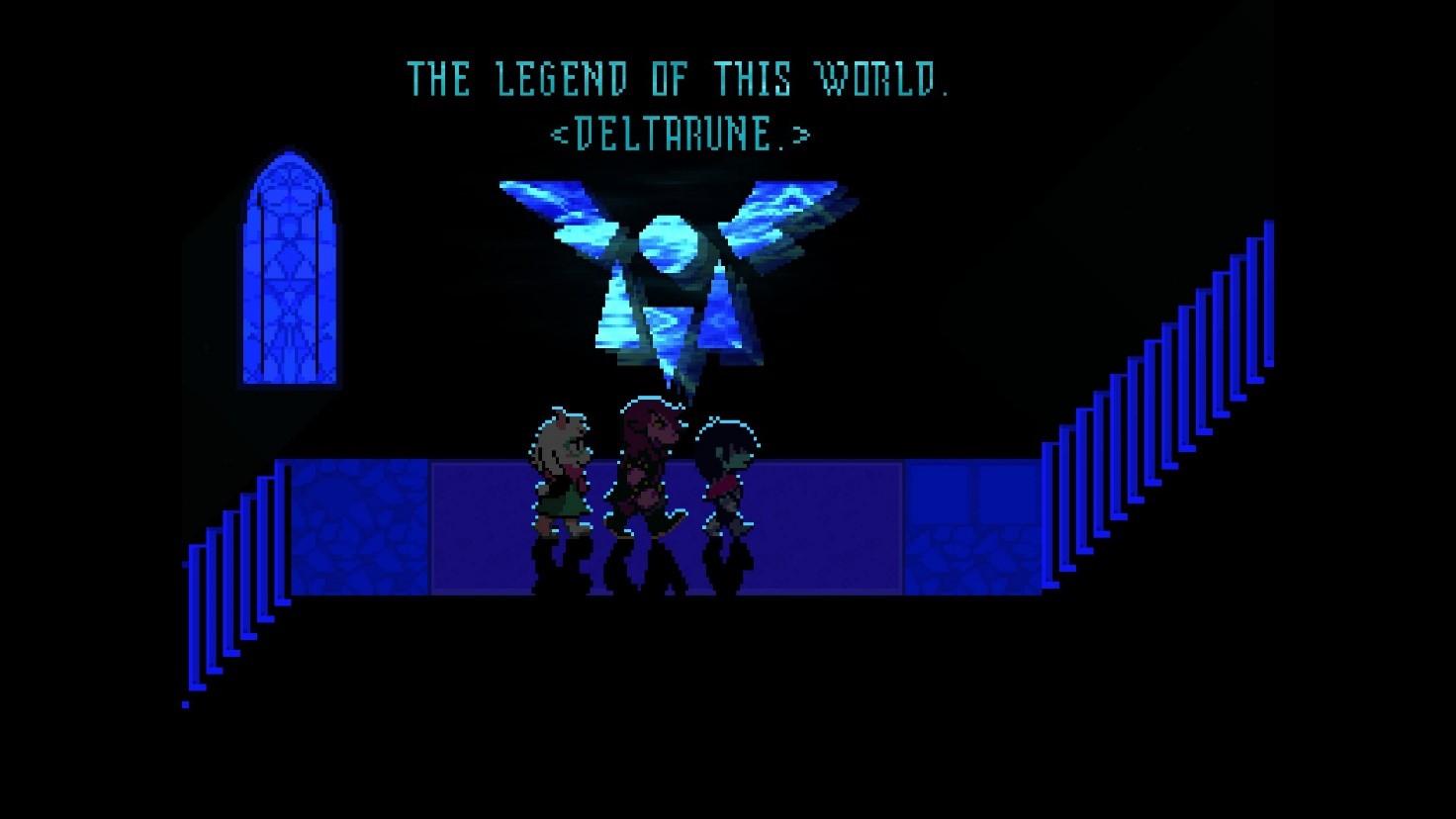
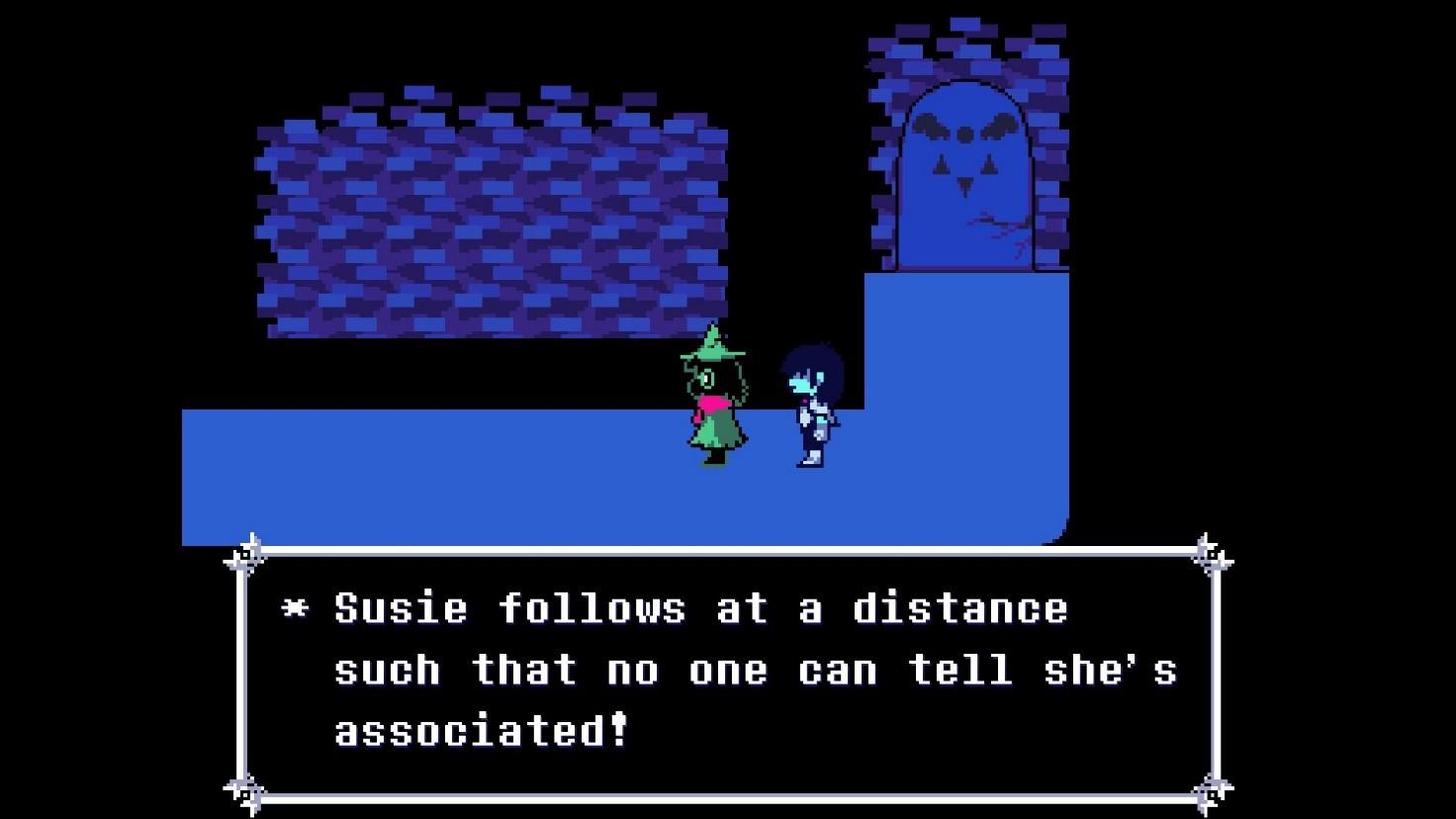
For those unfamiliar with the specifics, Deltarune can essentially best be described as indie Persona, complete with an almost equally banging soundtrack. You play as a couple of kids who discover The Dark World, where they have special powers and must work together to stop the Dark Fountains, saving the world as we know it. A tried-and-true premise, but true for a reason; there’s always something cool in the notion of two alternate but connected worlds. While it might lack as much interaction with party members and people in the regular world as Persona, it instead has a more fleshed-out Dark World, with its own little civilization and characters, where even your enemies can be quite likeable.
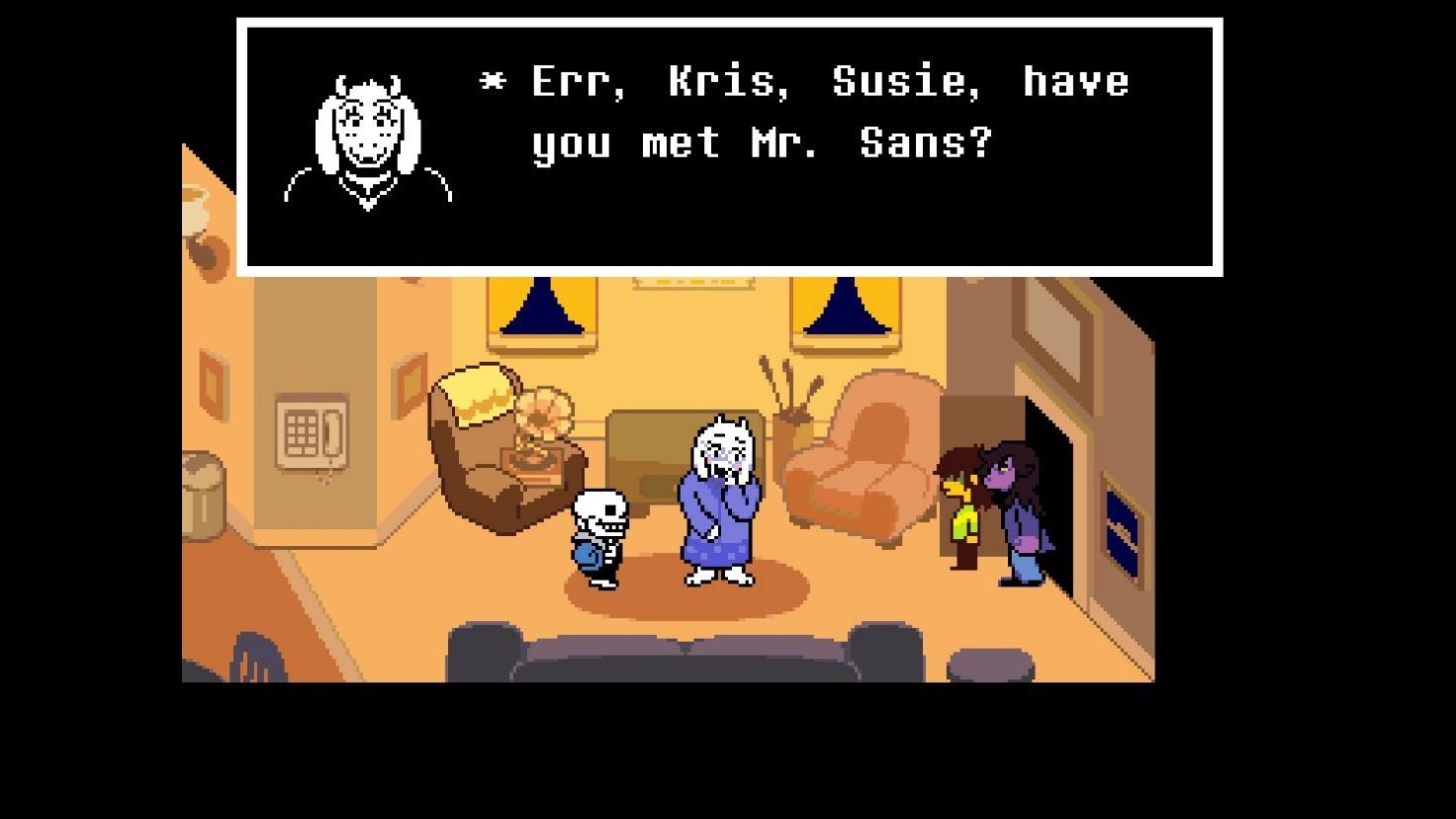
Another extremely obvious connection is, of course, to Toby Fox’s previous work: Undertale. Deltarune essentially works as an alternate timeline that shares many of the same characters as Undertale, but sees them all living together in a small town and sort of plays on the players' prior knowledge (assuming they've played Undertale), both by contrasting and further developing things like the character relations we've come to expect and, on rare occasions, hinting at things where the player knows more than the characters due to that previous knowledge.
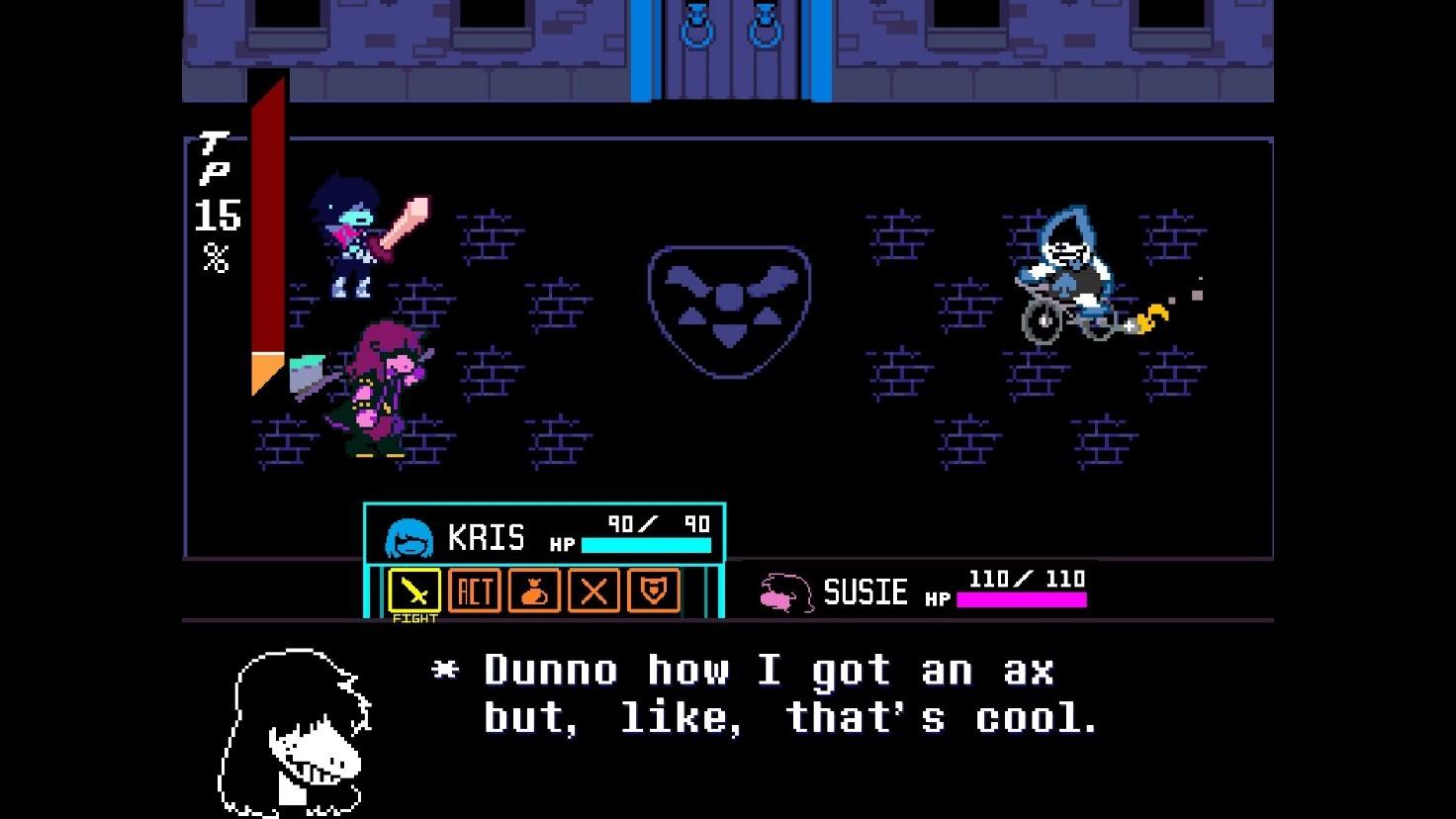
Another thing that makes its way over from Undertale is (to an extent) the combat system. What remains the same is the iconic heart having to dodge enemy attacks, as well as the “Spare” mechanic where you can choose to convert enemies to your side rather than fighting them, which is expanded on with a Recruit mechanic, where you can recruit enemies to your town in a classic “Gotta Catch Them All” style.
Where it differs from Undertale is that you control not one character in battle but three, each with different strengths and abilities, which is again another element that brings it a little bit closer to the classic JRPG formula. While attack dodging and Sparing was enough to make Undertale fun, this element adds a lot more depth to Deltarune’s combat.
I also can’t cover combat in a Toby Fox game without talking about the bosses, which often bring unique mechanics into play, as well as some of the greatest tracks on the aforementioned incredible soundtrack (it's hard to stress that part enough). This still holds true in Deltarune, and though it might have started out falling a little short of Undertale’s peak battles in terms of pure epicness, it’s started to catch up splendidly with the last two chapters added. There's certainly also more than enough challenge for those who seek it.
Of course, a topic that cannot and should not be avoided here is the story of Deltarune which, along with its humor, is perhaps where it shines the brightest. What perhaps impressed me most with Deltarune’s first chapter when I played it years ago was (again, along with the humor) how much character development it managed to fit into its three-hour runtime. And honestly that left me a little nervous that Toby Fox had rushed all the character development into the beginning, even though there were six more chapters planned. Chapter 2, while great for different reasons, didn’t completely alleviate that worry either. However, with the latest two chapters, I can breathe easy because Toby Fox has proved there is still so much left to this story - and more left for our characters to learn.
Another aspect that makes Deltarune’s story so strong, and perhaps the one that best suits its episodic format, is its sense of mystery. To be frank the world of games is full of predictable stories, with a few intended surprises along the way that may or may not end up actually surprising, and that’s not always a bad thing because a story that surprises just for the sake of it is often worse since it pulls stuff out of thin air. Some of the best narratives are those that can find the balance in-between, and Deltarune manages to walk that line. Its grand mystery, along with several smaller ones, is who is creating the Dark Fountains and why. It gives you just enough information to have you wondering about these mysteries and thinking you know the answer, but then it builds more onto it little by little, so your initial guess might not have been right. It throws you some curveballs, but never any fouls, and there’s always more to wonder about. This makes the episodic structure all the more exciting (and a little frustrating), because when you complete a chapter you don’t just want more game for the sake of it, you’re legitimately curious about what comes next.
The story also manages to exhibit many different vibes throughout, and all with great success. Chapters 1 and 2 were all about humor and emerging friendships, Chapter 3 was silly with just a hint of sadness, and Chapter 4 is where the full stakes finally start to be felt. It manages to match Undertale both at its funniest and its most dire. And that’s without even speaking of the secret bosses and unique interactions you can unlock by going all in on sparing or destroying your enemies. There might not be clear overarching Genocide and Pacifist routes like in Undertale, but your choices can still be felt and there are opportunities to go to those extremes.
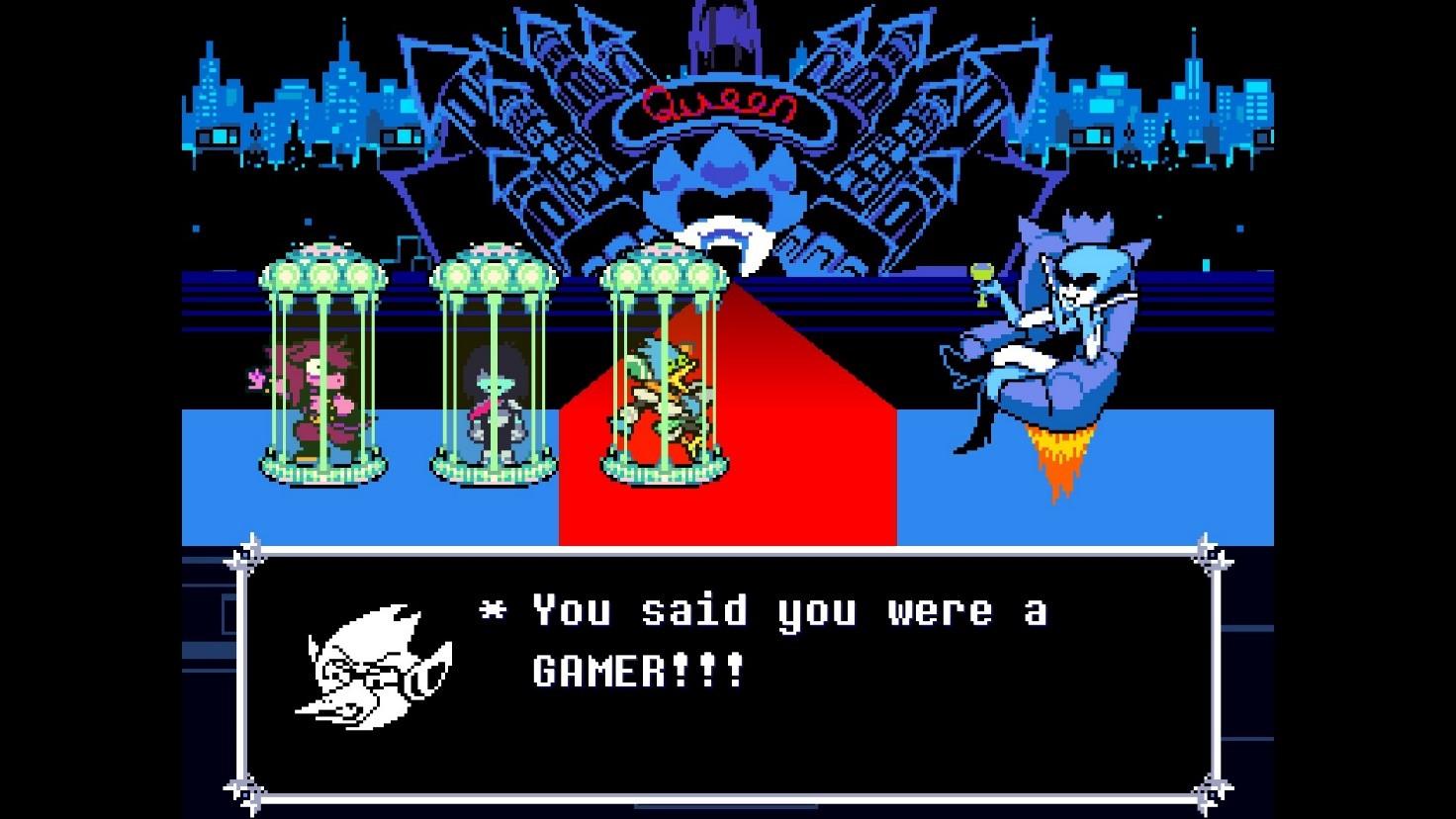
Four chapters in and Deltarune has not only arguably surpassed Undertale in several areas, but is decidedly among the best indie games ever created so far. It manages to blend so many different forms of appeal, from humor to mystery, from epicness to challenge. It can both make you laugh and touch at your heartstrings, such that when all seven chapters are complete it might have one of the best stories (and almost certainly one of the best soundtracks) in gaming. It’s understandable if people hesitate to dive into an episodic and therefore unfinished title; you will be caught in a vicious cycle of waiting, but that’s only because this is a game that's worth waiting for. Any fan of indie games or JRPGs owes it to themselves to check Deltarune out eventually, and since it's already longer than Undertale, there’s really no time like the present.
Verdict so far: 4.5 out of 5 Hearts

More Articles

The only real issue I have with Deltarune thus far is figuring out which year to nominate it for Game of the Year. Even in its current incomplete state, it's one of the best, and best-told, stories in this entire medium. I strongly echo this review's recommendation!


I wish Deltarune would stick for me like it has stuck with others. I loved Undertale back when I played it in September 2018… but I just cannot click with Deltarune.
Love to see such high praise for it though!