A Late Look Minis – Diablo, Balatro and Kingdom Hearts III - Article
by Mark Nielsen , posted on 28 February 2026 / 2,662 Views
Welcome to A Late Look, a series of articles where I take a belated look at games from yesteryear that I missed out on the first time around. Not quite review and not quite rant, it’s more a casual assessment of what I – the gamer of the future – consider to be each game’s strengths and weaknesses in retrospect.
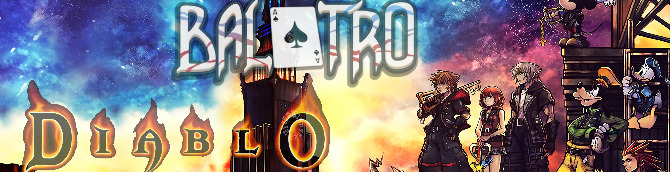
This particular entry is a bit of a special one, namely the introduction of A Late Look Minis - a collection of short Late Looks picking up on some of the games I meant to write a full article for but was too busy to do at the time. This time the games in question are the original Diablo, Balatro, and Kingdom Hearts III - a perfectly natural combination of games that you definitely expected to see today.
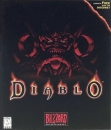
Diablo
Strength: Satisfying Progression
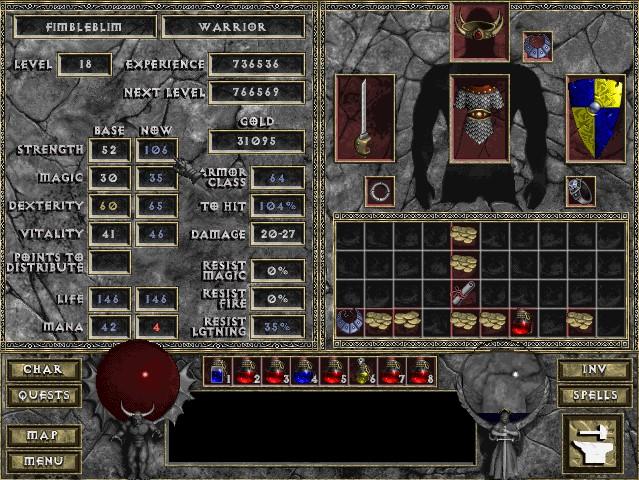
When held up against its more famous and better-selling successors, the one thing that really sets the original Diablo apart is its straightforward linear approach - the whole game is one long dungeon with 16 floors - and how the classes and character progression work.
Without skill trees or unique abilities, the three classes blend together in Diablo, and while that can sound boring in theory, it's actually very satisfying since each of the classes can potentially use all of the items in the game, and all of the stats are worth leveling up. There are still differences in starting stat distribution and exactly what you gain from each stat, but you can start out as a Warrior and still end up wielding a bow and casting spells - it’s three classes for the price of one!
That's part of what adds to the satisfaction of progressing in Diablo, but another big one is the items. Item drops are much sparser here than in later games, but rather than that being a bad thing it means it’s worth picking up and identifying all of them. Additionally, because there are fewer equipment slots, when you find an upgrade it will often feel like a very palpable boost - suddenly you can breeze through the enemies on a level where you struggled before. Another bonus on the item side is that, unlike in Diablo II, where you can maybe squeeze one item in amongst the gem hoard in your stash, you instead have an infinite stash called the ground in Diablo single player.
Weakness: The Grind, Dear God the Grind!
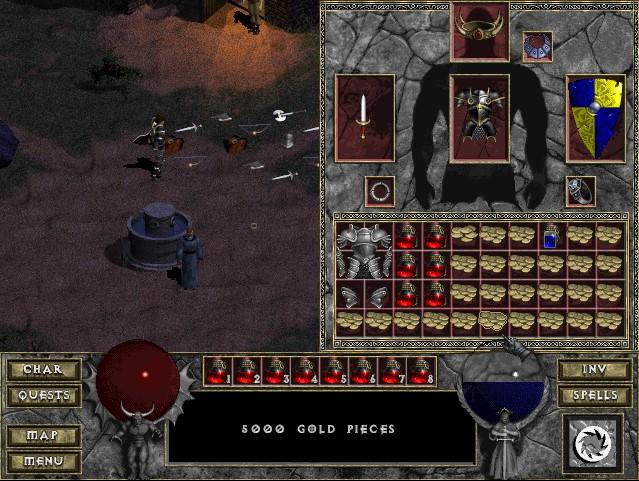
While the relatively high difficulty of Diablo is part of what adds to the significant satisfaction of progressing through it, its scaling of enemies is also a bit on the generous side, to the point where grinding is - you guessed it - mandatory to beat the game. That is what it is, but where it gets a bit strange is that this is the one Diablo game where enemies don’t respawn, so actually grinding doesn’t mean going back and killing enemies on lower levels, it means restarting the game itself on the same character.
In the early stages I’m not necessarily more for or against this approach to grinding (as much as I am forced grinding in general), and I was lucky enough to get a pretty strong build going, so I only ever had to restart once (technically). Where it gets real iffy is the difficulty and particularly design of enemies on the lowest levels of the game, which seem to scream “you aren’t strong enough for this”, not through their stats but through their infuriating abilities. The “Hell” section of the game is quite literally that as a melee fighter, as it's filled with ranged enemies where the one you approach runs away while the others barrage you down, or enemies that will phase away when attacked, literally leaving you less than a second to damage them each time you approach them, once again while being barraged down by their nearby compadres. While it felt like the game really wanted me badly to restart and replay these very last sections of the game over (and over), I personally just ended up “solving” the issue by running past all the regular enemies on the final floor to kill the much less frustrating Lord of Terror himself, but that can’t exactly be said to be the most satisfying solution to the problem.
Personal Verdict: 6.66 Coin-Stacks out of 10
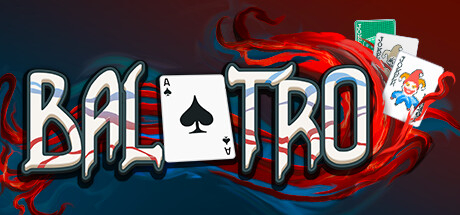
Balatro
Strength: Fun Deckbuilding
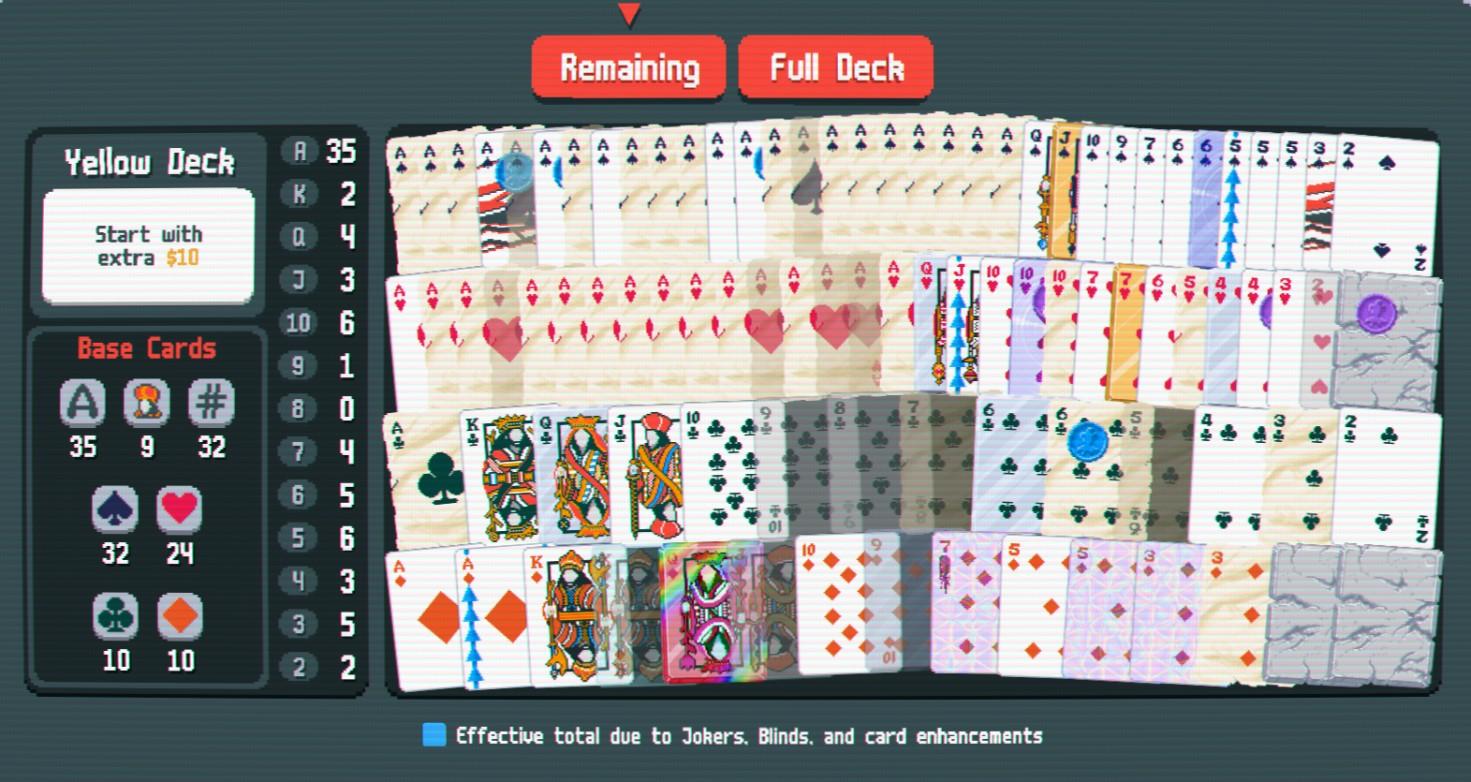
Balatro was the indie phenomenon that swept across the gamer nations back in 2024, and after experiencing its core gameplay it’s not hard to see why. There’s something oddly satisfying about Poker in games already; I might never have completed Far Cry 3, but I did sit in a hut with some guys of questionable moral fibre and played Poker for many hours. Fast-forward to Balatro in 2024 and you can not only cut out the middle-man, but take things to new heights and made-up numbers by building your own 35-Ace decks and combining them with Jokers that add modifiers to your run. It’s all set up in classic roguelike fashion, letting you buy randomly chosen Jokers or booster packs between rounds, and it has that very addictive feel we all love and dread.
Weakness: The Grind, Dear God the Grind!
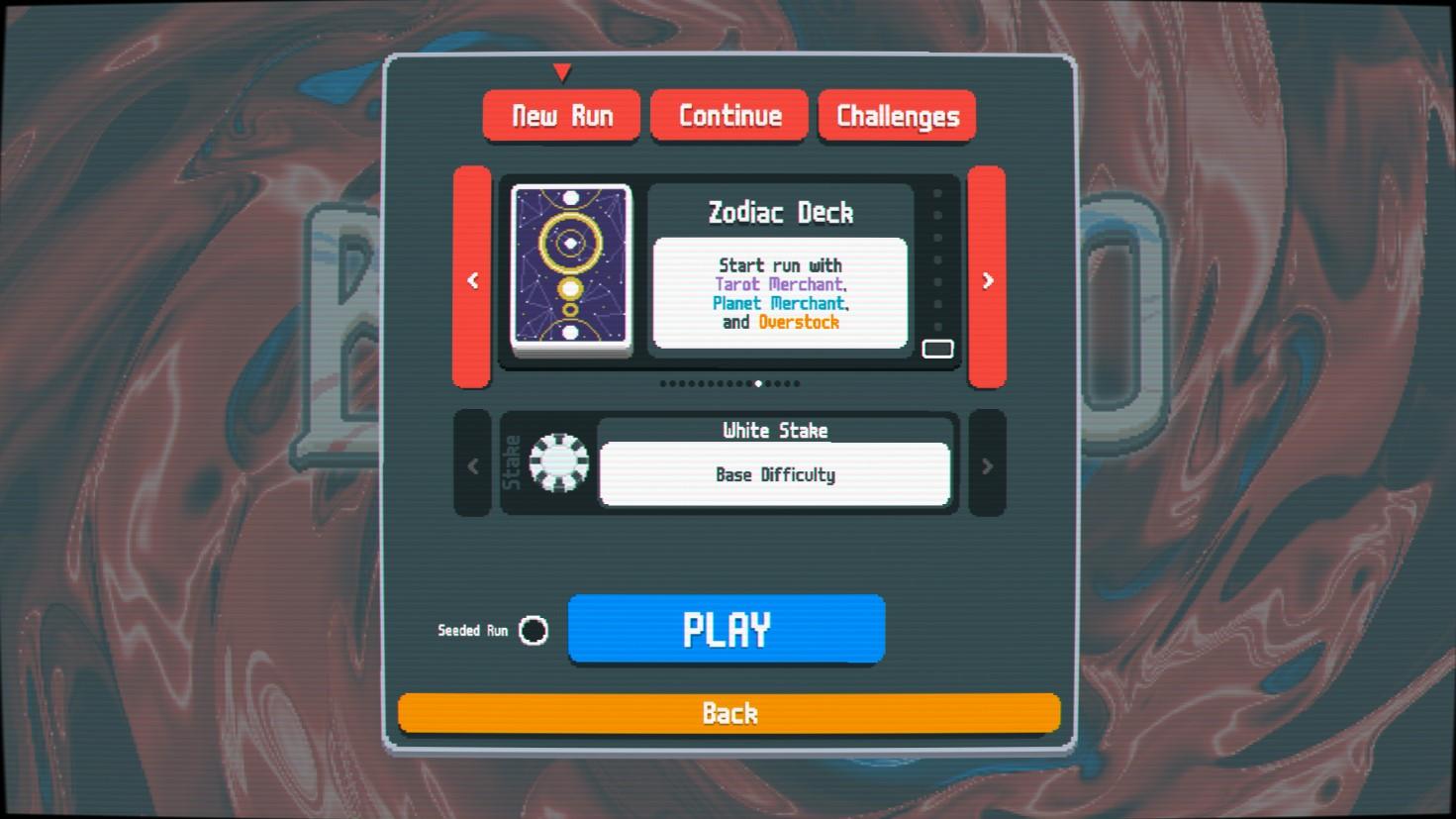
Balatro is fun, very fun, and it’s a game you can potentially put a hundred or several hundred hours into, but it has one major design issue that made me not want to do that. It has 15 different “decks”, each with a unique ability as well as several difficulties called “stakes”; so far so good, but where it misses the mark is by forcing you to unlock the difficulties for each deck individually.
Don’t get me wrong, tracking which difficulties you have beaten with which decks is great, but locking them so you have to start over from the easiest difficulty with each one is not, because it’s not only limitation for the sake of limitation, it also incentivises you to keep using the same deck instead of trying new ones, since you’ll be starting from scratch. And if you give in to this call for forced repetition, the more you play the more you’ll see the same Jokers, and the whole thing will start to feel less fresh.
It’s like an action game with multiple playable characters where you can only play the game on easy with each one to start, then normal, then hard, and there are 8 difficulties in this case. One potential light at the end of the tunnel is if you’re playing on Steam there seems to be a mod that fixes this problem (though yours truly can’t seem to get it working on my system), but that doesn’t change the fact that the base game is held back significantly by this one limiting choice.
Personal Verdict: Three-and-a-Half of a Kind (Out of Five)
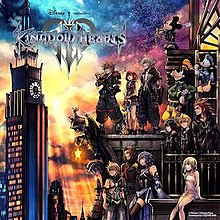
Kingdom Hearts III
Strength: Disney/Pixar Worlds
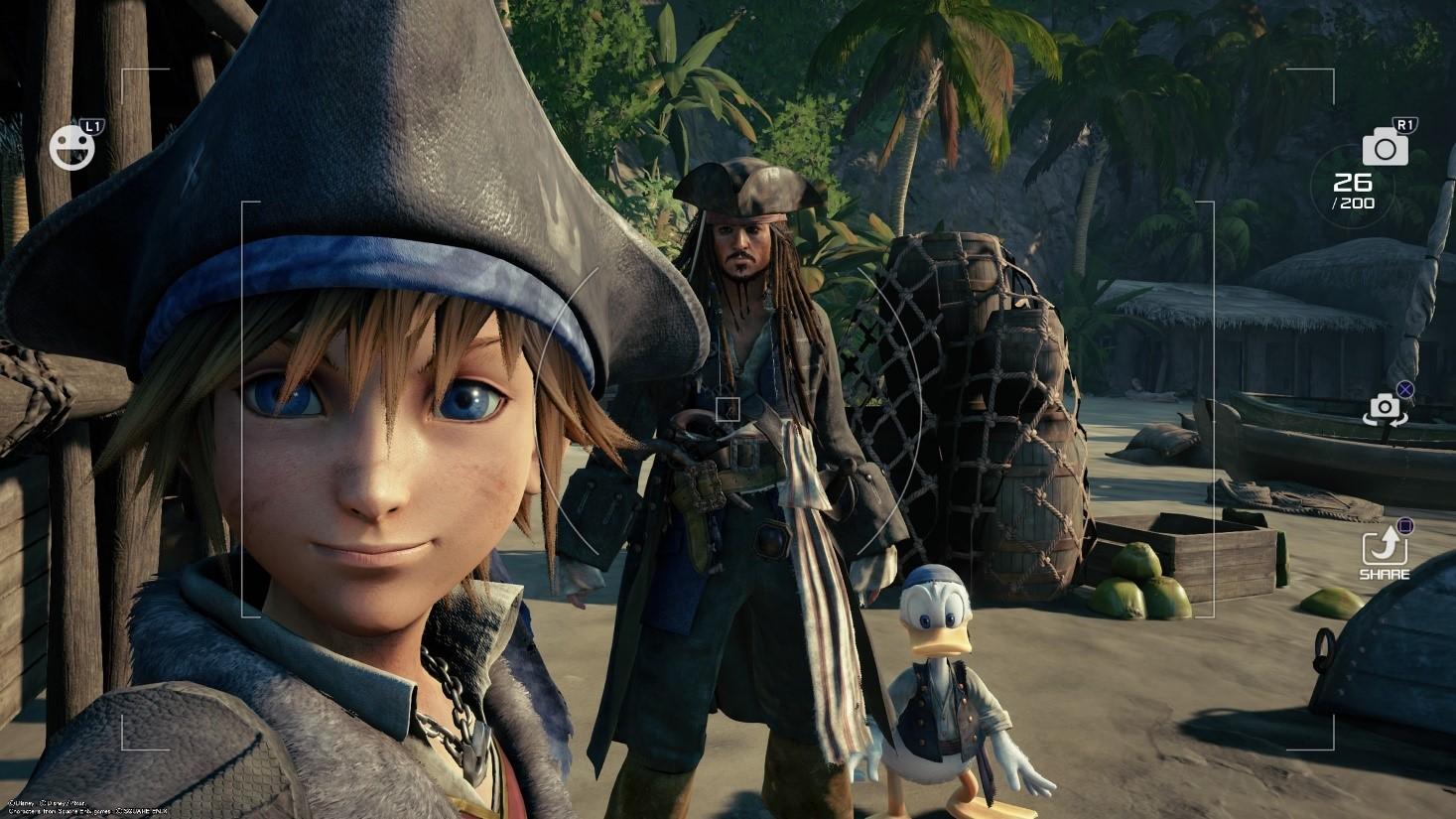
It’s no secret that a large part of the appeal of Kingdom Hearts is its Disney world. Visiting and exploring locations you’ve known since your childhood while interacting with their characters, oftentimes teaming up with them as well, has always been a strength of the series and this game is no exception. If anything, I would argue it stands the strongest in this area. The development team opted to make the worlds larger in this entry, rather than including a ton of them, and while a few more would certainly have been welcome, some of the one included are absolutely exceptional because of this focus, from exploring the Caribbean freely with Jack Sparrow and sailing around the sea in your own ship, to traversing the beautiful snowy world of Arendelle, or the lovable Monstropolis.
Strength/Weakness: Great Gameplay with Overly Spammable Special Attacks
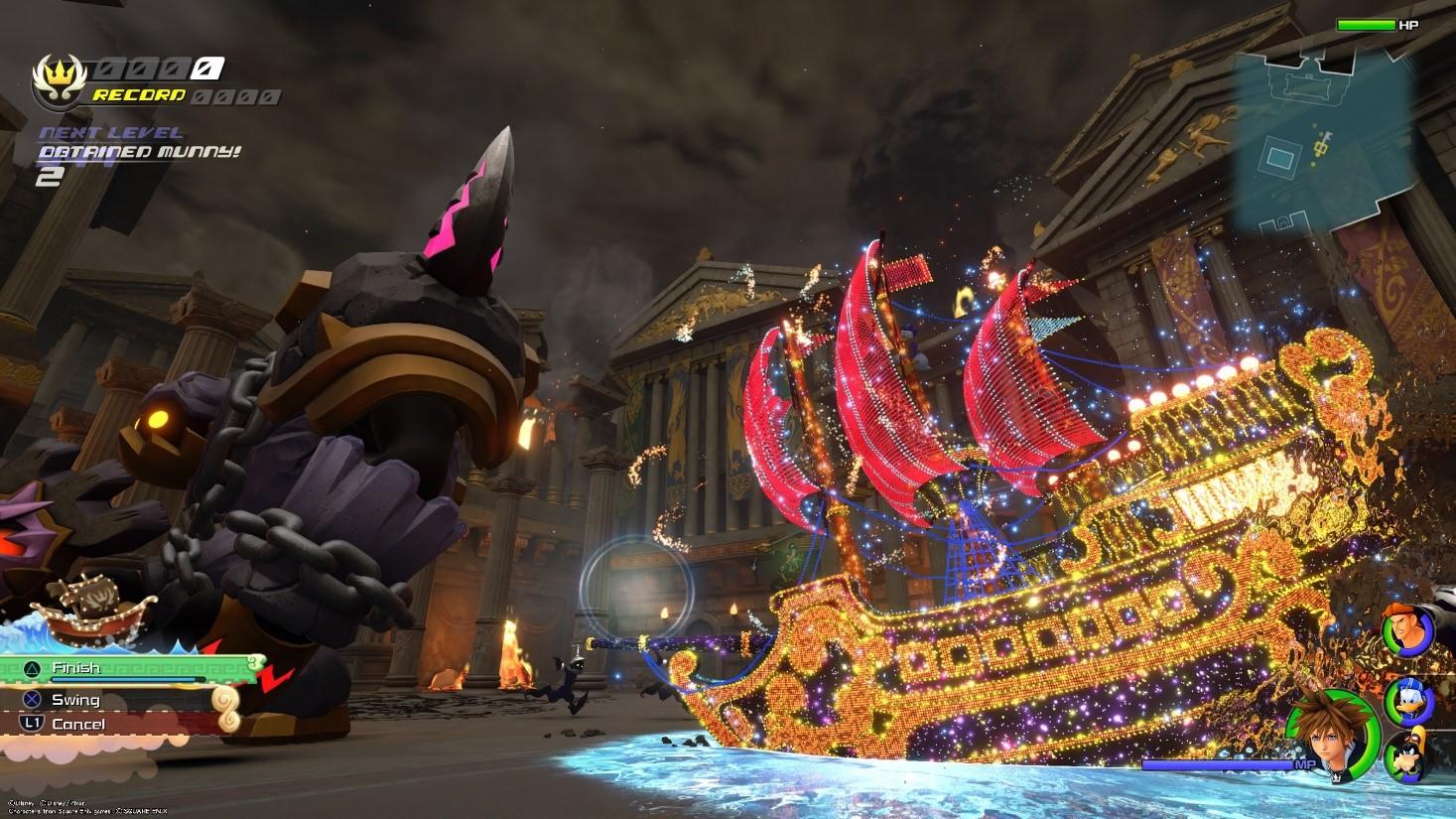
Another area where the latest entries in Kingdom Hearts, III and its short prequel Kingdom Hearts 0.2: Birth by Sleep – A Fragmentary Passage (I promise the games are better than the naming conventions), really shine is in their gameplay. The combat is smoother than ever by several degrees, and like the original Birth by Sleep before them, they’re full of cool transformations and special attacks. While it might rarely be brought up as such, Kingdom Hearts is an action-RPG series, and even if it might not be the technically deepest, the action really flows here and is very enjoyable.
If you’re to find a small bit of dark in the light though, it’s that Kingdom Hearts III might have taken things a bit too far by not only combining mechanics from every other game in the series so far, but also making the special moves upon special moves be usable quite frequently. While it's part of what makes the game fun, there is essentially no part of combat where you’re not in the middle of a special attack of some kind or seconds away from one. It does admittedly take a bit away from how “special” these attacks end up feeling, which is a shame, but on the other hand if one of the game's most noteworthy weaknesses is giving you too many big flashy attacks, that’s not the worst problem you could end up with.
Strength/Weakness: A Messy Story Full of Feels
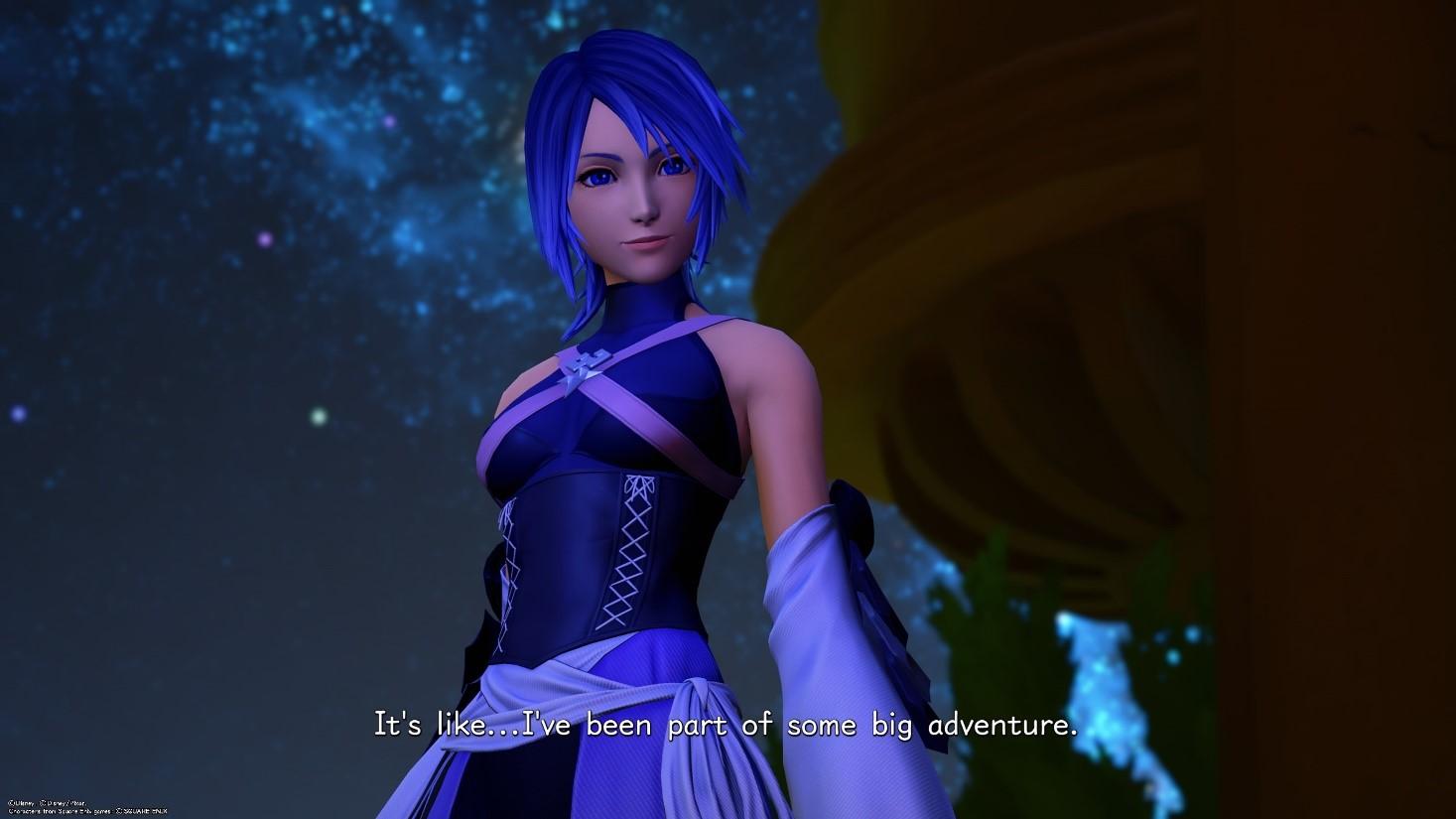
If you’ve reached Kingdom Hearts III after playing through the multitude of main games and spin-offs leading up to it like I have, you’re quite likely to have noticed something: the story doesn’t make sense. Not even a little bit. But, frankly, if you’re surprised by that at this point you simply haven’t been paying attention. I must admit even if it’s questionable from a normal review standpoint, I’m prone to giving Kingdom Hearts III a full pass for this because… it simply doesn’t bother me anymore. It was annoying in the first game, and even more so in the second, but at this point it’s just building on to the long history of messy lore that was already in place, so what did you expect it to do?
If you can ignore how convoluted and occasionally deus ex machina it all feels, there’s serious merit to everything else about the story of this entry. It feels like a crossover within a series of crossovers, since it brings all of the characters from main games and spin-offs together to finally meet, and boasts really heartfelt moments in the process. It doesn’t do everything perfectly of course - there are some wasted opportunities, some characters are given a time to shine while others aren't so much - but ultimately it's still a very enjoyable game from a story standpoint, despite how many questionable elements it contains. Couple that with the fact that Kingdom Hearts is one of the few Japanese RPG series with a continuous story across games and that means, if you’ve reached this point, you’ve been a part of one of the longest and strangest journeys in the world of gaming, which makes it all the more meaningful. One can only wonder where it goes from here.
Personal Verdict: 4.5 Mike Wazowski of 5

More Articles
I always like when the first Diablo even get mentioned.
I view the grind as non existent and like it that way. The fact that enemies respawn is the reason I dislike almost all other games in the genre.

Do you play it without resetting then somehow? Because I would call that the definition of grinding having to restart the game to level up your character and gear further. I'm sure its possible if you make a strong enough build (on normal at least) but I could definitely see a scenario where you get more or less locked out of winning the game.
For me the game ends when I cannot get any further.
What would be perfect in how I like to play is to only be able to restart after finishing a whole run. So all sort of repetition to only gather exp or gear without going further in the story is impossible.
That is also the reason I love the first two Fire Emblem games on GBA but really dislike sacred stones.
Well that's one way to look at it. Though you could apply that same logic to almost any game and you'd never have to grind.

Amazing how much Diablo inspired many games