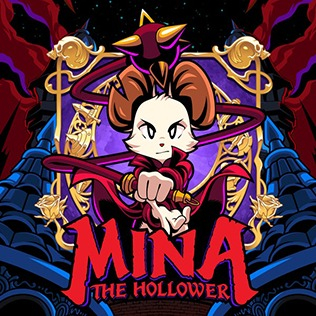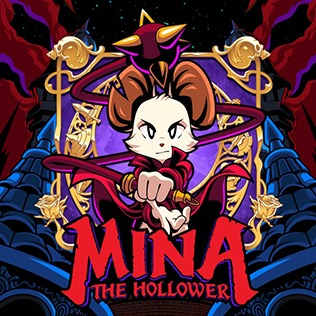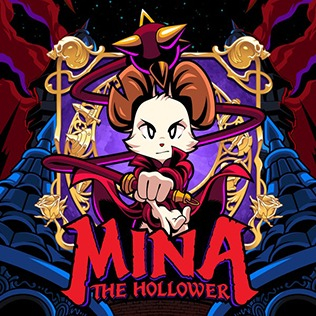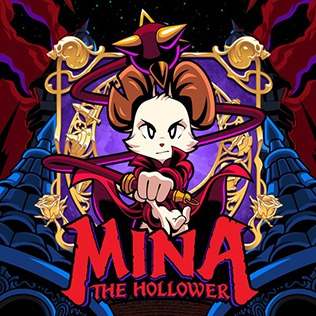
Mina the Hollower (NS2) - Review
by Evan Norris , posted on 10 June 2026 / 3,414 Views
In an interview with Bloomberg late last year, Sean Velasco, co-founder and studio director at Yacht Club Games, described the tenuous situation with its newest game, Mina the Hollower. "It’s make-or-break for sure," he said. "If we sold 500,000 copies, then we would be golden. If we sold even 200,000, that would be really, really great. If we sold, like, 100,000, that’s not so good." Luckily, as of this week, the game has sold at least 500,000 units, placing the beloved indie studio in a stable situation. It's fair to say, then, that Mina the Hollower is a financial success. But is it also a great game worthy of the team that brought the world Shovel Knight?
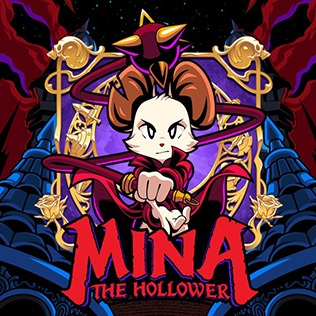
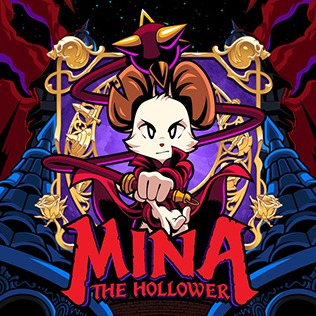
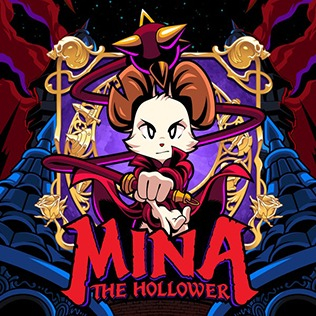
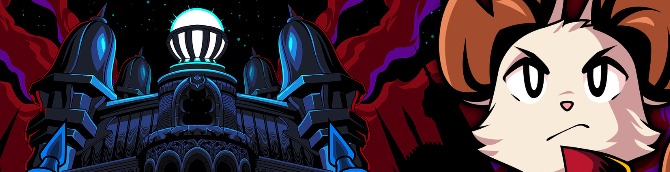
Unlike Shovel Knight, which operates in a sort of chivalric medieval fantasy world, Mina the Hollower embraces Gothic horror. The story begins with Mina, an anthropomorphic mouse and member of the Hollowers Guild, as she sails toward Tenebrous Isle. After many years abroad, she's been called back to restore six failing Spark Generators, which she helped design and which provide power to the entire isle. Once she arrives (by the skin of teeth), she finds the island in chaos, the Generators sabotaged, and twisted, violent monsters roaming the countryside. The only safe haven is Ossex, the central urban area, which is governed by Baron Lionel, Mina's former benefactor. When Lionel sends the veteran Hollower into the far corners of Tenebrous to restore the status quo, she finds more than she expected.

In general, the storytelling in Mina the Hollower is quite good. The premise is strong, the setting is memorable and immersive, and the world-building is off the charts. The game introduces so many interesting characters, communities, locations, and factions; it really feels like a world with a past, present, and future, not simply a playground built only for Mina's adventure. Yet there are a couple of small issues. For one, the character writing has some gaps. Mina, as the protagonist, needs more dialogue and more agency. After 25 hours with her, I'm still not sure I could accurately describe her personality and intentions. The same goes for Lionel.
For another, the arc of the plot is heavily telegraphed. When Mina is taken aback by late-game revelations — revelations Yacht Club Games had been signposting for 20-plus hours — she looks foolish. That said, the ending sequence of the game is not at all what I expected, so the developer deserves kudos for that. Whether that ending is satisfying, well, that's another thing altogether.
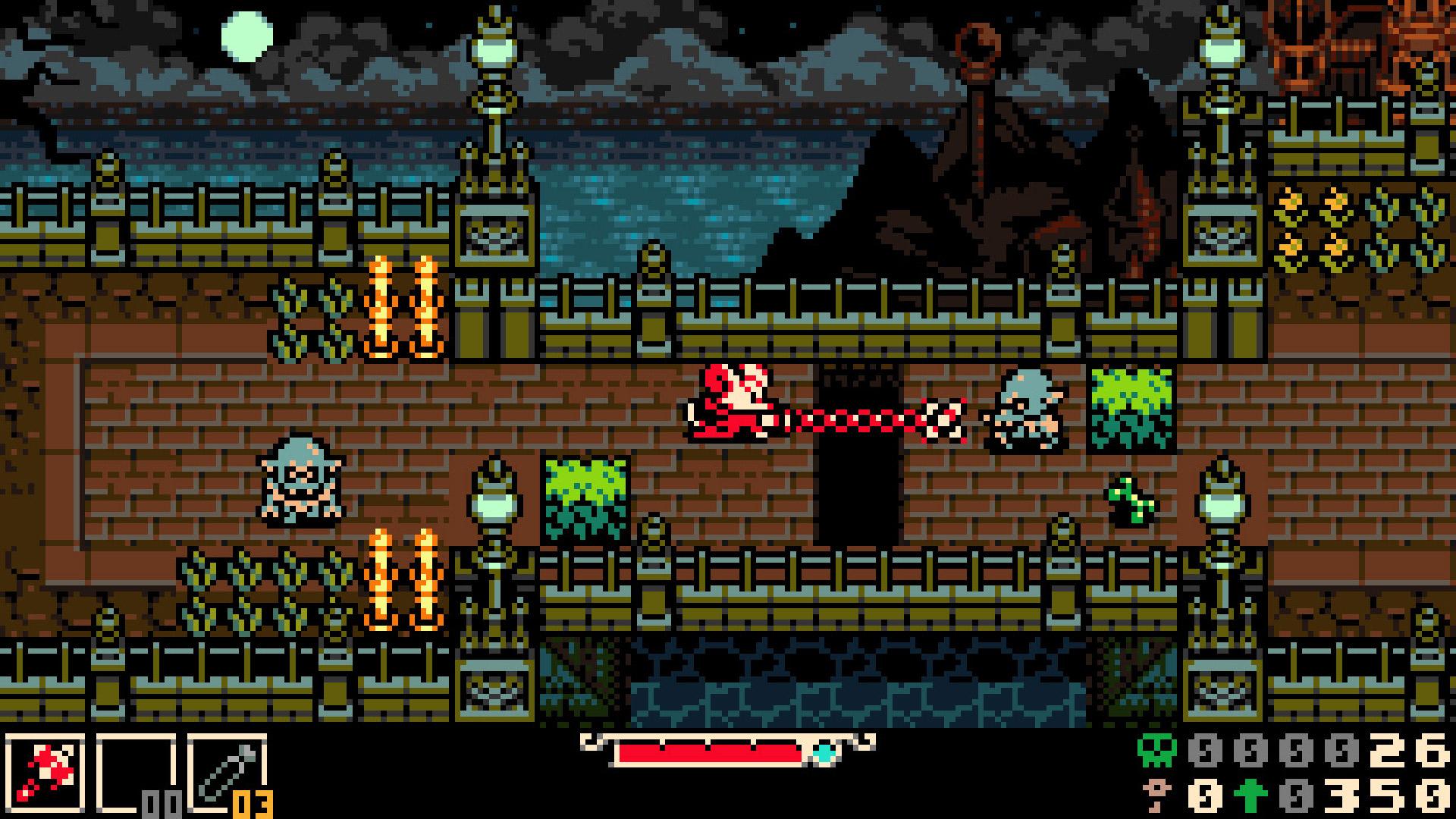
Outside of the narrative, it's difficult to find holes. Mina the Hollower is a tightly constructed, endlessly rewarding, uniquely challenging action-adventure game that pulls together many of the best pieces of The Legend of Zelda, Castlevania, and Dark Souls. The gameplay loop, in particular, is delightful. From a top-down perspective, players guide Mina through several discrete biomes filled with traps, platforming trials, and a near endless parade of murderous monsters. Using tools and abilities at her disposal, she will move deeper into uncharted territory, fighting in tense battles, uncovering secrets, crossing seemingly impassable gaps, and performing tasks for needy citizens.
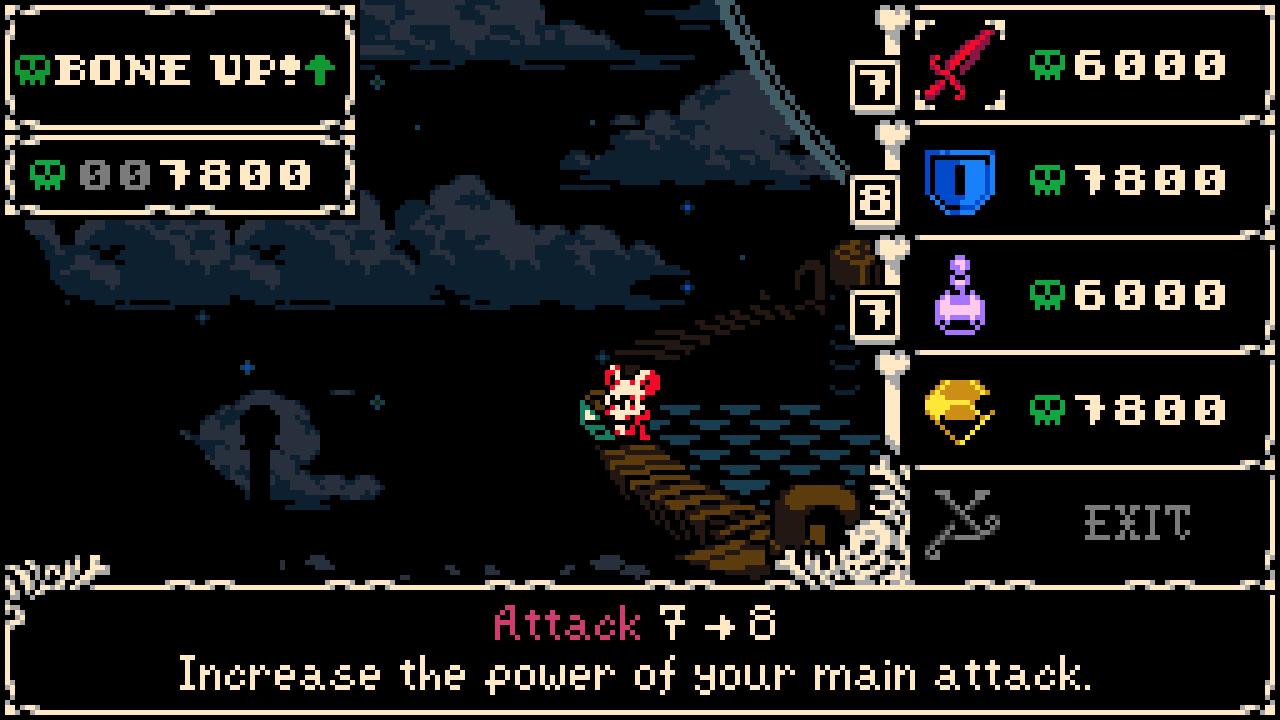
When this exciting action-platforming, action-adventuring dynamic pairs with the risk-and-reward framework of the Souls series, things get even more interesting. Suddenly, there's much more on the line. A missed leap or a mistimed attack on a powerful enemy may not only mean death, but the permanent loss of all your accumulated bones (experience points). As a result, the game demands patience, thoughtfulness, and the careful management and investment of impermanent resources.
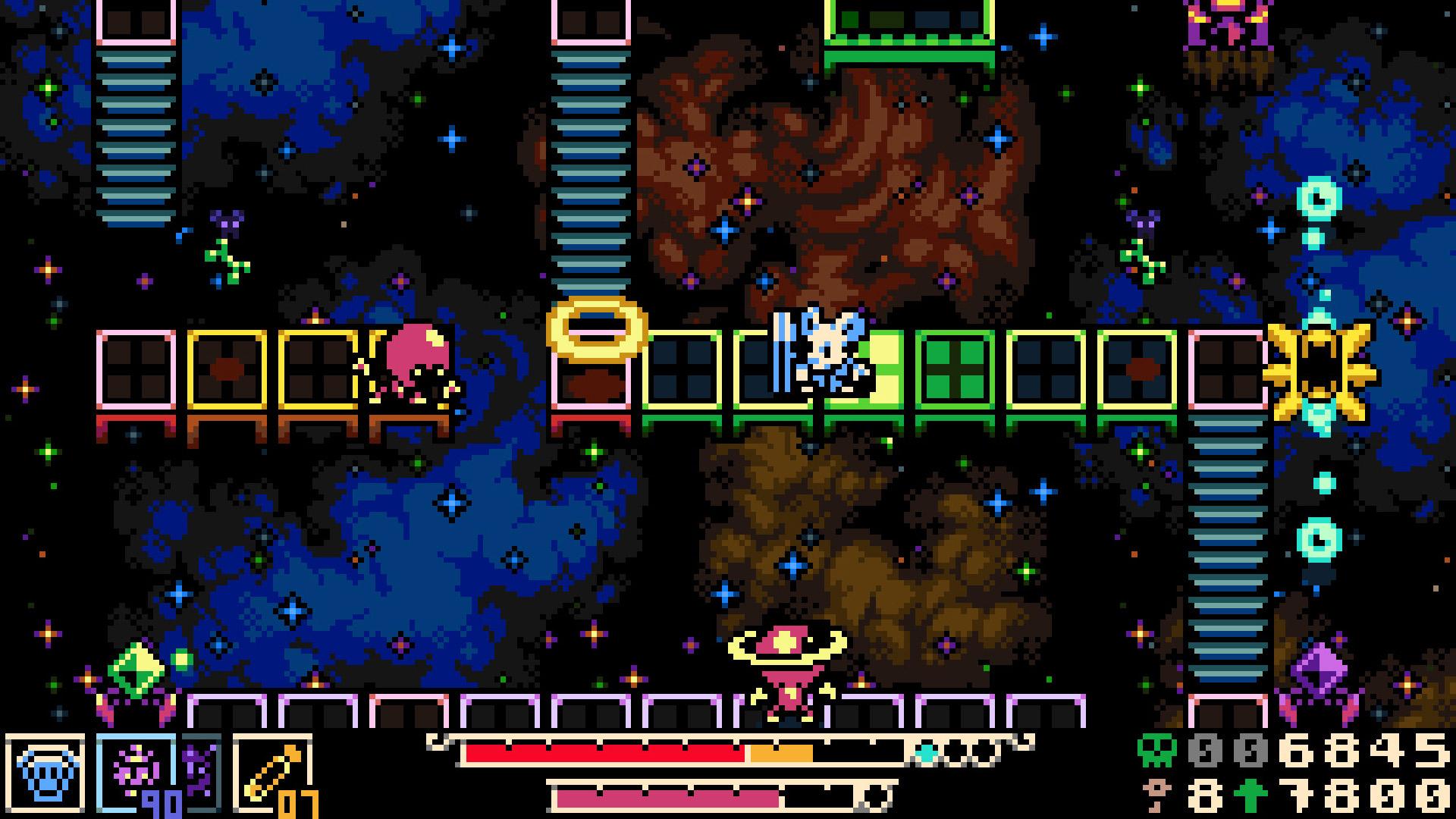
Now, sometimes, the different genres operating inside Mina the Hollower struggle for supremacy, creating a bit of friction. This happens primarily when platforming asserts itself more strongly, which it does in a big way in Astral Orrery (the sense of friction is exacerbated by the fact that a top-down perspective is not the ideal option for fast-moving, high-stakes platforming). For the most part, though, Yacht Club Games balances things remarkably well.
That's due primarily to the unifying nature of the game's signature mechanic: burrowing. Indeed, Mina's ability to burrow is essential for all things: navigation, combat, and exploration. By leaping into the air with the B button and holding it down on your descent, you can direct Mina to tunnel beneath the surface of the ground for a second or two. This allows her to dodge incoming attacks, pop up behind foes and strike their unarmored areas, access hidden chambers, and perform all sorts of platforming derring-do. At first, it all feels rather unintuitive, but after a few hours it will become second nature. Once, when I took a break from the game to catch up on Pokopia, I tried to jump and burrow as Ditto. That's how much the mechanic had become entrenched in my muscle memory.
Overall, Yacht Club Games did tremendous work with burrowing. Not only does it make platforming more fluid and combat more breathless and improvisational, but it just feels amazing. I swear you can sense the upward pull of the surface every time you're underground, even without the assistance of rumble.
The studio also did great work with the game world, which is densely packed with treasures, mysteries, and hidden, optional areas. In fact, I'm not sure I can name a video game with more secrets per square foot. You know the YouTube channel Every Frame a Painting? Well, this is Every Screen a Secret. As a result, you can expect to spend a lot of time on Tenebrous Isle. I watched the credits roll after 27 hours, with roughly 75 percent completion. I expect those looking for the elusive 100 percent would need to log at least 30 hours.
Actually, it might take much longer than that, because the game doesn't have a great way to track your progress or keep tabs on undiscovered items. Later in the game, you can purchase a map, which can be upgraded to track what's missing, but it shows only the overworld, not individual squares. Early on, I gave up on the dream of 100 percent, seeing as it would involve too much backtracking and trial and error.

Outside of secrets, players can extend their play time via New Game Plus (unlocked once you beat the game), achievements, multiple optional modifiers that make the game easier or more difficult, and the secret ending, which seems to be exceptionally difficult to unlock.
One thing that's not exceptionally difficult? Mina the Hollower in general. Don't misunderstand: it's a tough game. I died a few dozen times, and clenched my Pro Controller in frustration more than once. Yet, it's forgiving and flexible in places. There are frequent shortcuts back to safe spots; lots of upgrades to health, defense, and HP (as long as you have the bones); and several trinkets that can really save the day. If you're concerned about banging your head against the wall for hours on end, don't worry. There's a particularly nasty difficulty spike right before the final boss battle, but most of the time things are manageable.
Speaking of boss battles, they're consistently great. What else would you expect from a game that pulls from Zelda and Dark Souls? You'll face off against soldiers, headless statues, giant underwater beasts, spectral train conductors, and many more. One of them plays like something you'd encounter in a biomechanical shoot-'em-up like X Multiply or Salamander. One of them...well, I'll just say it reminds me of Nemesis from Resident Evil 3.
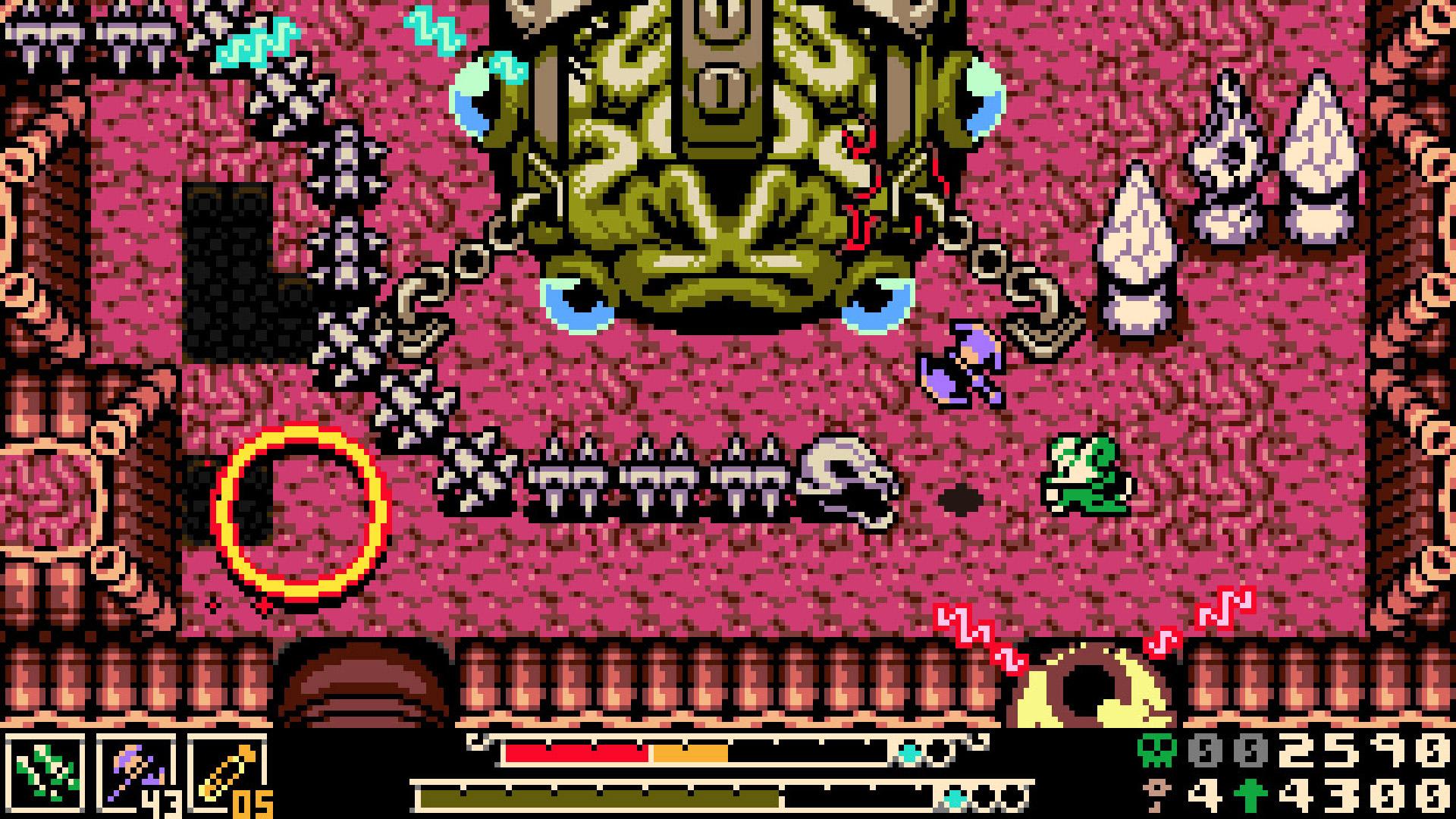
All the bosses look spectacular, too, despite the obvious technological limitations. The development team purposefully chose a Game Boy Color aesthetic, which tugs at those nostalgic strings and dovetails beautifully with the game's old-school sensibilities. Don't mistake the game for Oracle of Seasons or Dragon Quest Monsters, though; there's more going on under the hood in Mina the Hollower. That includes parallax scrolling and rotation effects, which provide depth and which work wonders on quasi-3D tower climb sequences, one of the single best features of the game.
The soundtrack is in a similar situation. It uses the Game Boy sound chip to nail that old-school auditory experience, but it feels more sophisticated than anything from the era. Composed by Jake Kaufman, featuring guest tracks by the legendary Yuzo Koshiro (Ys, Shinobi, Streets of Rage, Earthion), it's simply fantastic. The highlights include "A Sinking Feeling" and "Theory of Everything".
Mina the Hollower has sold 500,000 copies, but it deserves to sell ten times that number. Not only is the game a worthy successor to Shovel Knight, it's arguably the best title Yacht Club Games has produced. There are a handful of minor flaws — characterization gaps, a telegraphed story, the lack of a detailed map, a late-game difficulty spike — but they're relatively unimportant compared to everything the game does well. That includes world-building, locomotion, combat, exploration, boss battles, art, and music. If you're a fan of Zelda, Castlevania, and Dark Souls, or indie gaming in general, this is the game for you.
VGChartz Verdict


8.5
Great
This review is based on a digital copy of Mina the Hollower for the NS2, provided by the publisher.
More Articles


"If you're a fan of Zelda, Castlevania, and Dark Souls, or indie gaming in general, this is the game for you." This summarizes it perfectly. As a big fan of Zelda, I give this game a very strong recommendation.
Good review write up BTW! This was a nice read. Captured a lot of my own personal critiques and praises quite well here.

Thanks for that feedback! I had a lot of fun with Mina the Hollower — both the game and the review.
Hopefully there’s more Mina content on the horizon.
That was a very entertaining piece. Congrats on the write up. It really got me interested in the game!

It is my game of the year so far.
Also, I finished it with 100% completion (I only went to finish it when I had gotten it all) and it took me 35 hours.
There is an ability later on that you can buy that makes the eyes of the skull that tracks your current bones on screen turn blue when there is a secret in a screen adjacent to yours, and red when it is on the screen you are in currently, so it does have a way to tell by screen if there is a secret there, but I pretty much didn't use it because I was already very far into completition (probably over 95%) when I discovered I could buy it lol.