
Analyzing the RPG Genre - Article
by Karl Koebke , posted on 19 September 2012 / 7,432 Views
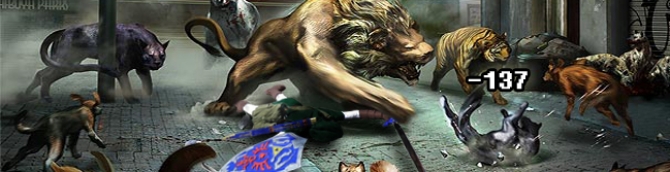
I've been a fan of RPGs for almost as long as I've been into gaming in general. I think the first RPG that I truly loved was Earthbound for the SNES and since then it has been my favorite and most played genre. With more and more games including RPG mechanics at some level or another, it's become more difficult to differentiate a true RPG from an action or strategy game with RPG elements. Fellow RPG loving staffer Nick Pantazis has often gotten into discussions with me about what defines the genre. Based on what we've come up with I've come to the conclusion that, even though you probably wouldn't guess it at first glance, Tokyo Jungle (a game where you try to survive as an animal in a post apocalyptic Tokyo) is actually more of an RPG than oft mistaken RPG hopefuls The Legend of Zelda and Monster Hunter. So here we go.

First off we have to get into what defines video game genres in general. Other media/art genres are commonly differentiated by their most defining attribute. Movies genres are based on story instead of camera work, while music genres are based on tone and music techniques over lyrics. While the importance of different aspects of a video games are up for debate (I really do like a good story myself) I think we can mostly agree that the most defining aspect of a video game has to be its gameplay style. How you separate gameplay styles from one another can be difficult and some would prefer to go the route of United States Supreme Court Justice Potter Stewart's statement about how censors should filter hardcore pornography from more legitimate artforms - “I know it when I see it”. It seems reasonable, but the scientist in me hates leaving something so ill-defined, so here's what Nick and I have come up with as a definition of an RPG:
1.Main focus of the game must be (largely) persistent Player controlled characters with base stats that define their attributes and which can be increased over time, e.g. strength and agility.
2. There must be some means for the player to increase the base stats of these characters over time by completing objectives which is usually, but not always, called “experience”.
That's it. Seems simple, but these two features are present in every game I've ever considered an RPG and at least one is missing in every game that has RPG attributes but isn't commonly thought of as a full-on RPG. Once you define the RPG genre in this way it's quite easy to see why Zelda and Monster Hunter don't fit in. While they both have similarities in design with a lot of RPGs they are both missing these necessary attributes. Zelda may have a setting that reminds you of a fantasy JRPG, but Link doesn't have any base stats and there's certainly no experience system. Monster Hunter is in the same boat; even though you obtain better equipment, the character itself does not receive any increase in base stats, so it features an equipment and item system in common with a lot of RPGs but that's it.
 Not an RPG
Zelda's “RPGness” in general has come up quite a bit and there are some decent arguments for and against. Those for it say that Zelda has a setting that makes them think of an RPG. That seems like a poor definition, though, because obviously not all RPGs look like Zelda (the Fallout series, Earthbound, Disgaea, and so on) so if the genre was defined by the setting you'd be cutting out huge swathes of games whose RPG credentials have never before come into question. The other argument I've often heard is that Zelda was referred to as an RPG in the early iterations by journalists as well as developers. I don't agree with the idea that just because the developers made the game that their word on it is law. They can make mistakes just like anyone else and I think calling Zelda an RPG was one such mistake. That's not to say that Zelda or Monster Hunter should be RPGs either - many Zelda fans don't even like the one Zelda game that could be defined as an RPG (Legend of Zelda 2).
So what about Tokyo Jungle? What makes it an RPG while Zelda and Monster Hunter are action/adventure games? Well when you play survival mode in Tokyo Jungle your main goal is to keep the species going. To do this you have to find a mate with which to procreate, with each new generation being stronger than the last (Darwinism at work - suck it Creationists). Surviving that long requires that you replenish your hunger meter by eating without being killed. Think of the new generations as levels and the hunger as experience and you're all set. It's a strange outer coating on a fairly clear cut RPG mechanic. The only issue with the definition I mentioned above is that since you are switching generations you might think that you don't have a persistent character, but I'd argue that that depends on how you define your character. You aren't playing survival mode as a single deer, but instead you are playing a family line of deer which remains as your persistent character until your eventual and inevitable demise. Sure, it's a strange RPG where you usually only get two or three levels before having to restart from the beginning, but the mechanics are still there.

An RPG
So there you have it. Playing as a dog in Tokyo Jungle is more of an RPG than The Legend of Zelda or Monster Hunter. It's important to remember that while Tokyo Jungle may not look the part, that's only a skin deep analysis and insufficient when defining something by gameplay style. There will always be exceptions and games that mix genres to the point of being indistinguishable, but I think our two rules encompass just about every game that has classically been thought of as an RPG. Let me know in the comments if you find my definition lacking and let me know your own.