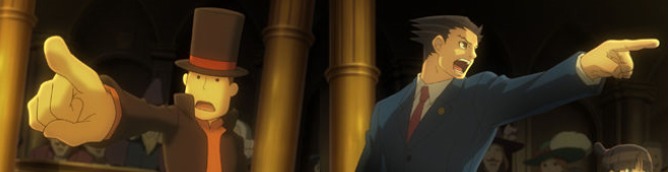
Legendary Partners: How Professor Layton vs Phoenix Wright Influenced The Great Ace Attorney - Article
by Alex Bailey , posted on 16 December 2021 / 6,376 Views
WARNING: Slight Spoilers ahead for a minor plot detail in Apollo Justice: Ace Attorney.
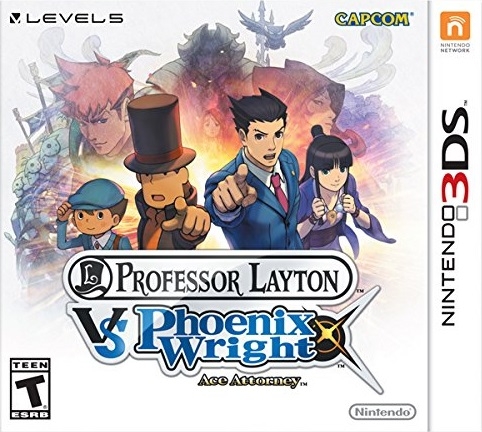
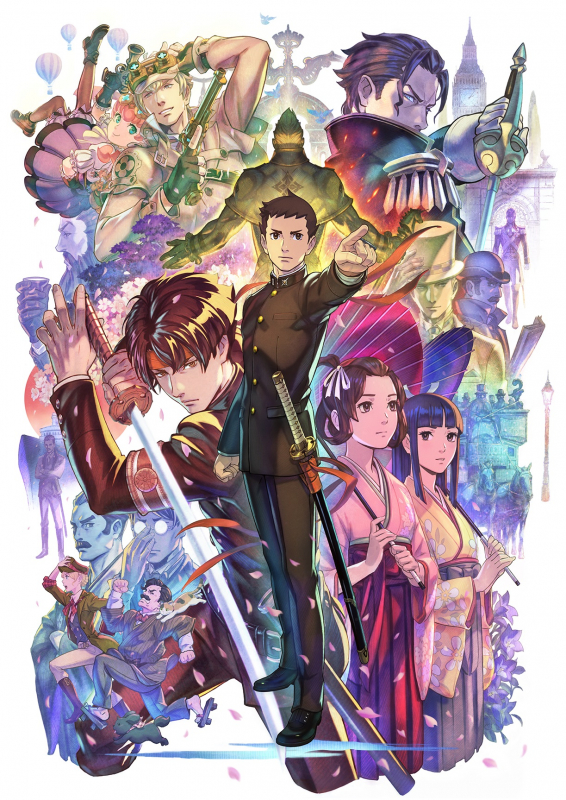
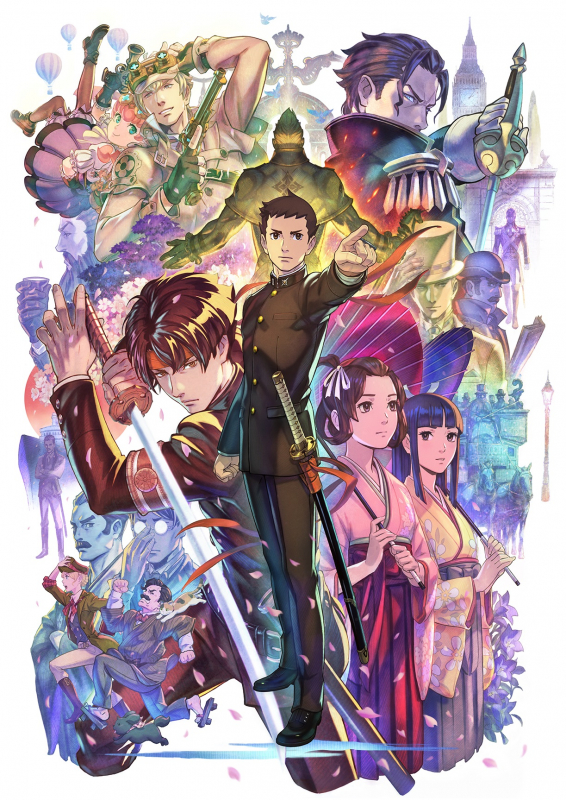
As a diehard Ace Attorney fan, one of my favorite guilty pleasures is replaying the series. It doesn’t matter to me that I’ll never be able to experience them blind again; I simply love revisiting the wonderful cast of characters and the litany of bizarre cases the games have in store. In order to prepare for this year’s The Great Ace Attorney Chronicles, I went through all of the series’ mainline games yet again. As a result, wherever I looked throughout The Great Ace Attorney, I couldn’t help but notice its influences from across the franchise. For instance, 'Reaper of the Bailey' Barok van Zieks repurposes unused concepts for the prosecutor in Trials and Tribulations, Godot, such as his penchant for alcohol and his delightful leg slam animation. Ryunosuke’s trials in London feature a jury system, drawing from a plot point in Apollo Justice: Ace Attorney’s final case (more on that later). Beyond those examples, however, what surprised me throughout The Great Ace Attorney was how much it took from one of the least remembered entries in the series: Professor Layton vs Phoenix Wright: Ace Attorney.
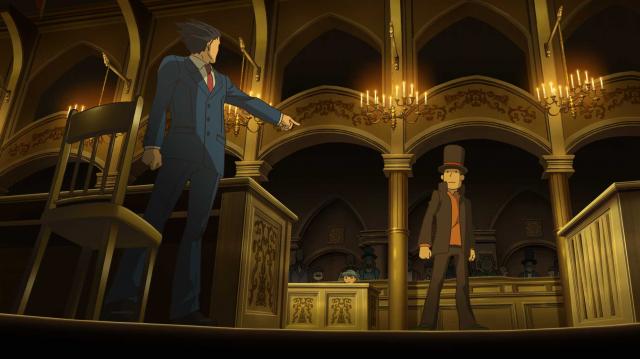
Looking back at it now, however, this crossover’s influence on The Great Ace Attorney should have made more sense to me. Starting development sometime prior to 2010 and released on Nov. 29, 2012 in Japan, Professor Layton vs Phoenix Wright: Ace Attorney was a large, ambitious crossover project that required the full attention of series creator Shu Takumi, who had directed the first three games in the series and was the lead writer on the fourth. As such, Ace Attorney titles during this time were developed without Takumi’s involvement. Takeshi Yamazaki, who planned each entry with Takumi, would rise to the role of director for Ace Attorney Investigations: Miles Edgeworth, Gyakuten Kenji 2 (Ace Attorney Investigations 2 -- Japan Exclusive), and Phoenix Wright: Ace Attorney - Dual Destinies. While Takumi did say that new blood directing the mainline Ace Attorney series was a good thing, Dual Destinies was undoubtedly something he had mixed feelings about. Instead of returning to the mainline team to work on Ace Attorney 6 (what would become Phoenix Wright: Ace Attorney - Spirit of Justice), his next Ace Attorney project after the crossover would be a new spin-off entry, The Great Ace Attorney.
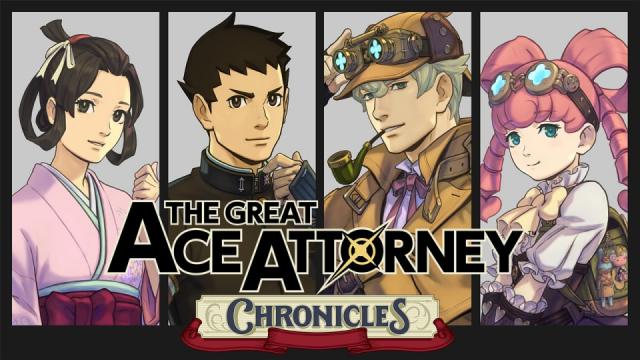
I’m getting a bit ahead of myself, though. Professor Layton vs Phoenix Wright: Ace Attorney touts two of the most famous mystery solvers in gaming coming together to contend with magical mysteries and witch trials in a land without logic called Labyrinthia. This shift in setting brings with it a few changes to the Ace Attorney formula that have found their way into this year’s The Great Ace Attorney Chronicles. Much of this can be found in the way that Professor Layton vs Phoenix Wright: Ace Attorney handles its cross-examinations with mob trials. Those familiar with the Phoenix Wright formula know that, traditionally, witnesses are cross-examined one at a time. While the line of witnesses leading towards a not-guilty verdict might not be a straight one, and you may double back to certain witnesses on your way, the number at the stand rarely exceeds one. Mob trials do away with all of this; now, you’ll have several witnesses at the stand at a time, working together to create one story but more often than not making things even messier (one case in this game has ten witnesses at the stand at once). While this change to multiple witnesses at the stand alone is helpful to alleviate some of the tedium of longer Ace Attorney cases, Layton vs Wright gives you a few new ways to deal with this type of testimony that are expanded upon in The Great Ace Attorney.
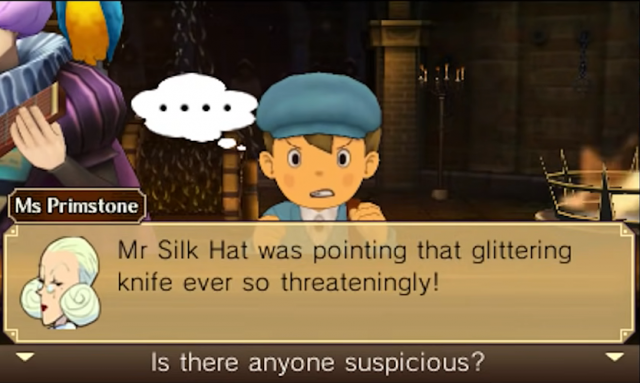
Every once in a while, when you press a witness, something they say will cause another to become lost in thought. You’ll then be able to change your line of questioning in order to target them, catching the witness off guard and gaining information that the witness might not have wanted to divulge or had simply forgotten. In Layton vs Wright, this is used to great effect and is one of the major through-lines of each mob trial; the witnesses all slowly connect and their story takes concrete form. This is carried into The Great Ace Attorney and expanded upon, becoming a central mechanic to the trials in each case as a source of information. While the overall number of witnesses on the stand at a time is lower than in Layton vs Wright (usually two to four), this allows stronger character dynamics between witnesses within the cases, such as a lovey-dovey couple or an employee and his boss. In a later portion of The Great Ace Attorney: Adventures this even amounts to a bit of light puzzle-solving.
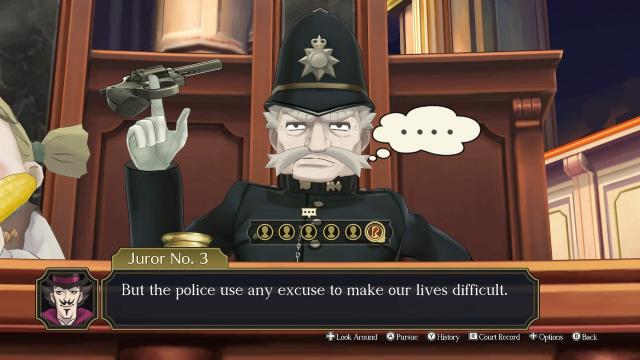
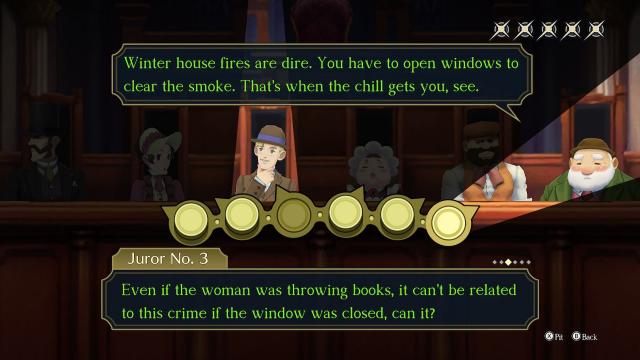
Also included is the ability to pit the testimonies of two characters against one another in order to use them as a contradiction and gain new information or forward momentum. This mechanic is presented much more sparingly throughout Layton vs Wright, only really appearing close to the end when Phoenix is backed into a corner, but for The Great Ace Attorney its scope has changed drastically. The mechanic has been taken apart and reshaped to form the title’s Summation Examinations. As mentioned before, The Great Ace Attorney features a jury system, with six jurors to convince of your client’s innocence rather than just the judge. The jury is made up of six “random” members of the public, and each has different thoughts and priorities throughout the trials. At certain points during each trial, the jury will interrupt when they believe your client to be guilty beyond a shadow of a doubt. With Ryunosuke's back against the wall, you must now pit the opinions of the jurors against one another to change their minds and keep the trial going. Like the other mob trial mechanic, the members of the jury's thoughts influence one another, and some of the biggest parts of the mystery solving come into play here, as you put the pieces together to change the jury's mind.
Gameplay isn’t the only thing that Layton vs Wright and The Great Ace Attorney share, however. For one, The Great Ace Attorney’s English setting is in no small part due to Takumi’s work on the crossover. The Ace Attorney team’s work with Level 5 put the bulk of the visual design in Capcom's hands. Their effort depicting a medieval-inspired England allowed them to more feasibly render Victorian England and make the setting work for The Great Ace Attorney. However, the English setting is also likely to be something Takumi desired personally; Takumi wanted to have an Ace Attorney game featuring Arthur Conan Doyle's Sherlock Holmes for a very long time, and in The Great Ace Attorney this idea finally comes to fruition, as you partner with London's own Sherlock Holmes (or Herlock Sholmes).
Another important aspect of both games is their soundtracks. Layton vs Wright was composed by two people primarily: Tomohito Nishiura of the Professor Layton series, and Ace Attorney newcomer Yasumasa Kitagawa. Kitagawa would take the lead on composition for The Great Ace Attorney, and you can absolutely hear the similarities between the two soundtracks. Inquisitor Zacharias Barnham and Prosecutor Barok van Zieks’ themes would both fit snugly in the other’s game (although they wouldn’t work as themes for each other), and I could almost sense where Prelude to Pursuit could play upon returning to Layton vs Wright. Both soundtracks are heavily instrumental, with Kitagawa specifically mentioning a "festive" vibe common to the scores, despite the variation of instruments between titles (Layton vs Wright has a focus on piano, while The Great Ace Attorney features Spanish musical flourishes and a more heavy emphasis on the violin). Kitagawa’s direction for the series’ composition is great; while both The Great Ace Attorney and the mainline Ace Attorney games have begun to incorporate more orchestral soundtracks, The Great Ace Attorney easily features my favorite of the two directions.
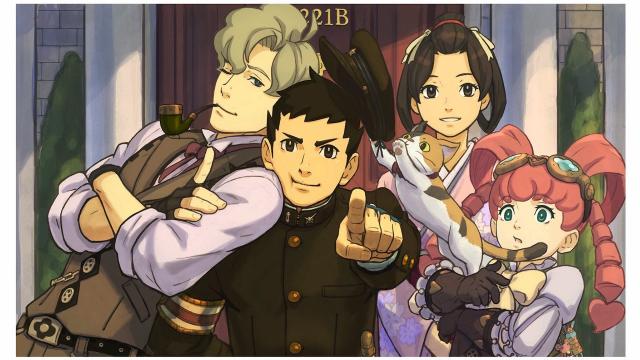
More than anything, The Great Ace Attorney may not just be a spin-off touching upon ideas from Shu Takumi’s time with the crossover. It takes Professor Layton vs Phoenix Wright's setting, musical cues, and gameplay, brings them to these new games, and expands upon all of them. With his somewhat troubled history regarding the mainline titles after Trials and Tribulations, his long-standing want to have an Ace Attorney game with Sherlock Holmes in it, his implementation of the jury system, and his story that didn’t follow Phoenix Wright, The Great Ace Attorney seems to be Shu Takumi's vision for modern Ace Attorney. With Takeshi Yamazaki having left Capcom last year, one begins to wonder if Takumi might return to the main series for Ace Attorney 7, and if The Great Ace Attorney will end up influencing mainline Ace Attorney in turn. If so, we'll have Professor Layton vs Phoenix Wright: Ace Attorney to thank.
More Articles
Professor Layton vs. Phoenix Wright was actually the game that got me into the Ace Attorney series (I had been a huge Layton fan before but had never played Ace Attorney), so I'll always love it for that. I definitely have noticed some of the similarities you said in this article, especially the multiple jurors at once system, and it makes me enjoy Great Ace Attorney that much more. More than anything though, it makes me wish for a sequel to Professor Layton vs. Phoenix Wright!

My time with the Great Ace Attorney was definitely filled with thoughts of "this reminds me a lot of Layton vs Wright", I feel the testimony and jury system was made easier and somewhat less interesting in GAA compared to the crossover, I also feel the musical motifs of LvsW were generally stronger than GAA, just considering the original tracks, since obviously LvsW had the benefit of taking a lots of cues and notes from their legendary original games soundtracks, still really liked a lot of GAA's music tho. The character design for a lot of the London people was also clearly inspired by the crossover, and it shines through with some of the best designs in the series. And I could easily replace Holmes and Ryonosuke with Layton and Wright in my head, they have their quirks, but kind of deliver a similar feel during the more serious Sherlock moments and the sillier side of Ryonosuke.
Looking forward to replaying Great Ace Attorney at some point, since I also love replaying this series from time to time, they all have a good spot in my heart (even if 4 is kind of just very disappointing in a lot of aspects).