Existing User Log In
New User Registration


Register for a free account to gain full access to the VGChartz Network and join our thriving community.





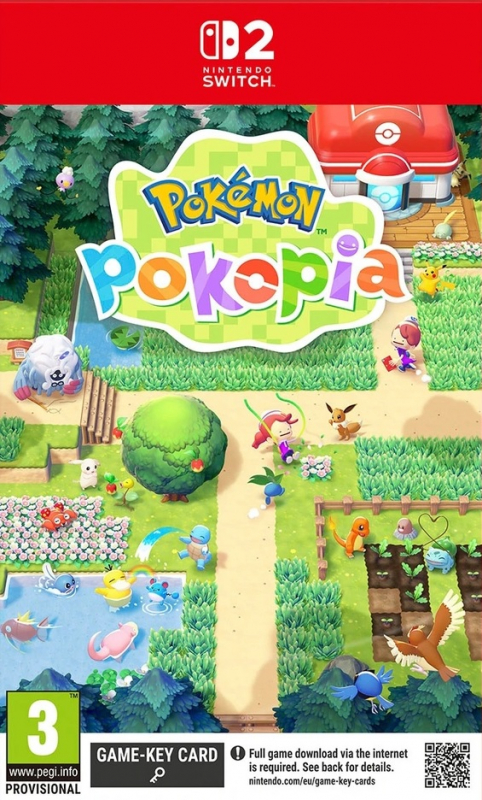
America - Front

America - Back

Game Freak
Omega Force
Simulation
 03/05/26 Nintendo
  (Add Date)
 03/05/26 Nintendo
| Owners: | 2 |
| Favorite: | 0 |
| Tracked: | 0 |
| Wishlist: | 0 |
| Now Playing: | 1 |
March has been a significant month for Nintendo in the Switch hybrid era. The original Switch launched on March 3rd, 2017, and reversed a generation-long downward trend for Nintendo. The same day, Nintendo released game-of-all-time contender The Legend of Zelda: Breath of the Wild, which sent the sales ceiling for the franchise into the stratosphere. A few years later, on March 20, 2020, Animal Crossing: New Horizons debuted and provided a soothing balm at the beginning of an era of economic, social, and political instability. And, of course, there's March 10, or, as it's known fondly in video game circles, Mar10 day, which has been celebrated with increasing vigor since 2015. The latest Nintendo offering to make a splash in March is Pokémon Pokopia, a social sim that pulls in elements from Dragon Quest Builders, Animal Crossing, and, naturally, Pokémon. Is it on its way to becoming as iconic as other recent March milestones?
Pokopia begins modestly, before revealing its immensity. You play as a humble Ditto, a mid-sized purple Pokémon famous for its ability to assume and hold the shape of anything it observes. After transforming into the likeness of your former human master, you arrive in an arid, desolate cave, with only one other Pokémon in sight: a large, vine-covered Tangrowth, who mysteriously wears glasses and pokes around in a wheelbarrow full of junk. Tangrowth, who is called "Professor" due to his scholarly style and disheveled appearance, is startled to see another Pokémon — or any living thing for that matter. When Ditto and Tangrowth finally exit the cave and look over the lands beyond, the Professor explains the problem: "The grass and trees are withered and dry. And all those humans and Pokémon who once lived here... they're gone." And so it falls on Ditto to rehabilitate the land, lure back the missing Pokémon, and discover the truth of the humans' disappearance.
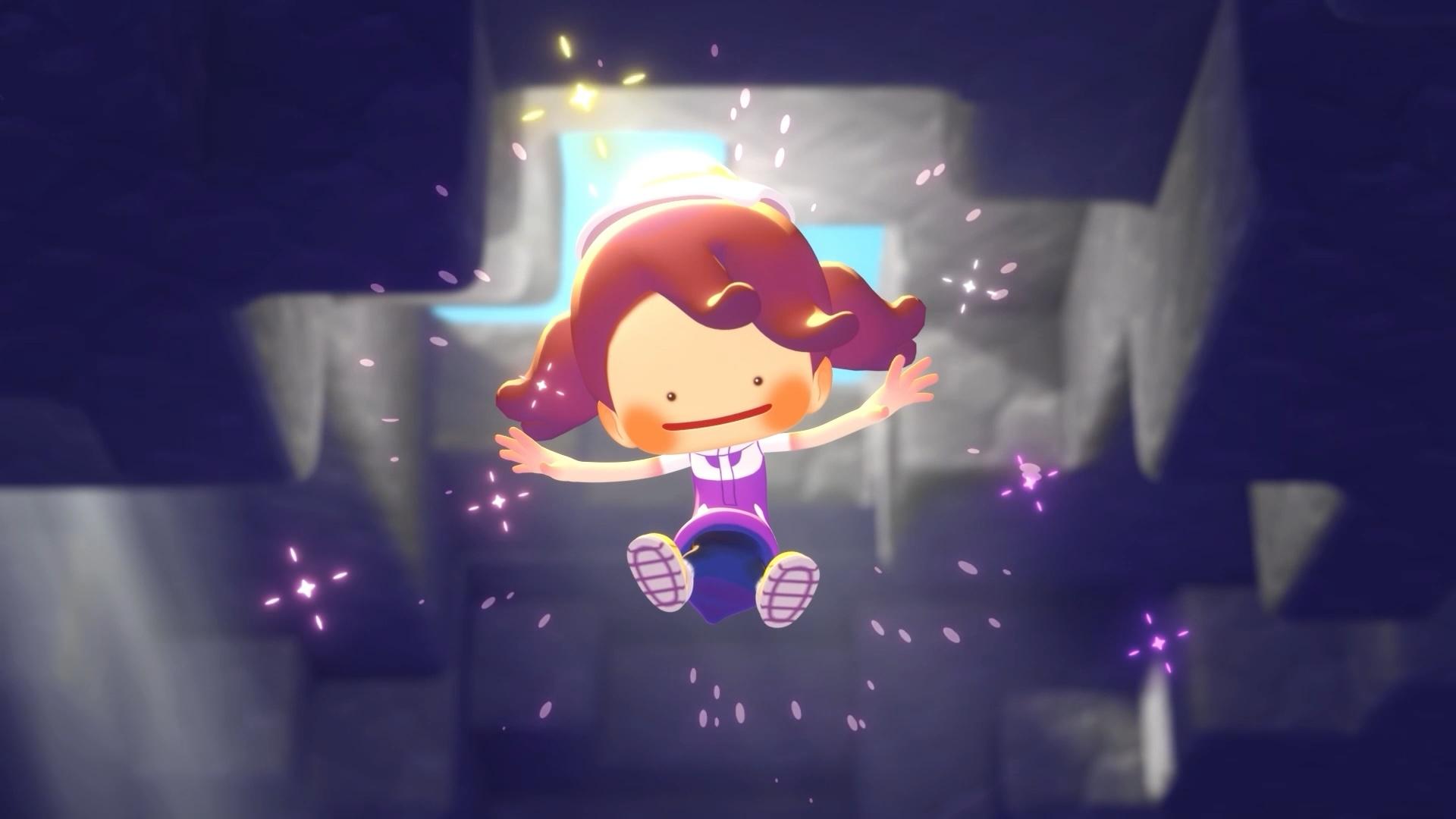
It's a perfect premise for a social simulation like Pokopia. After all, the game is all about incremental improvement, restoration, and making new friends and neighbors. The central question about what cataclysmic event (or events) led to the mass disappearance of humans is actually the least interesting part. The heart of the game, and the best part of the game, is making the world your own. Indeed, there are times when the demands of the story intrude upon the free-form fun. Although, to give credit where it's due, the structured part of Pokopia is essential in easing you into its rules and possibilities.
Things start slowly. Out in Withered Wastes, the first of many biomes, you and Tangrowth encounter a dehydrated Squirtle, laying on its side begging for water. By observing the turtle-like Pokémon, you learn "Water Gun", which allows you to dispense water in a cross-shaped pattern. After reviving Squirtle, you turn Water Gun on a patch of withered tall grass. This creates a tall grass habitat, which summons Bulbasaur, who teaches you "Leafage", allowing you to grow tall grass at will. This, in turn, summons Charmander, whose fiery breath is essentially for heat and light. For a while, this is the gameplay loop: creating habitats to rehome lost Pokémon, who grant you new abilities or send you on errands that make it easier to befriend even more Pokémon.
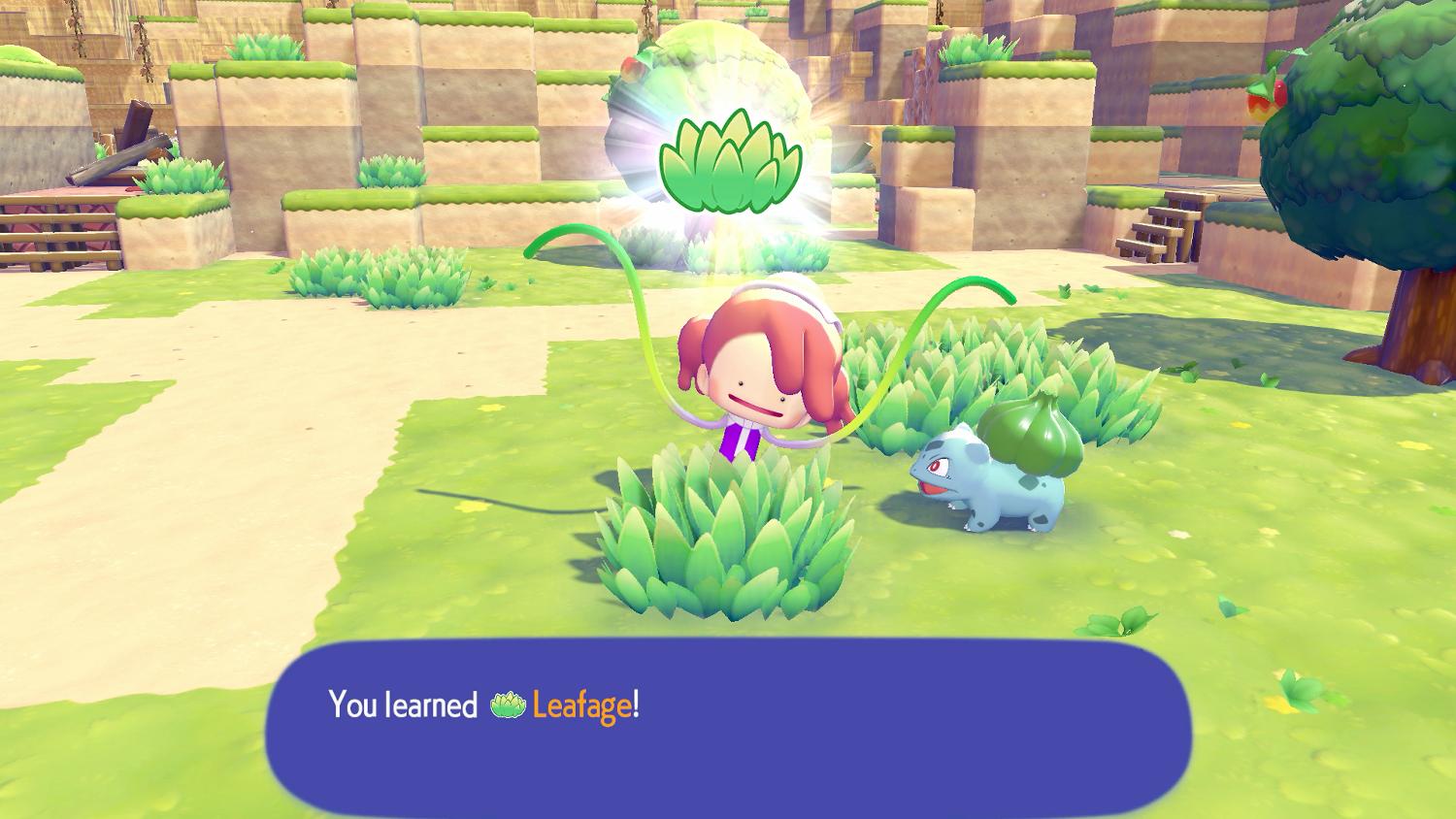
This is a magical time in the game, when it's just you, Tangrowth, the three starting Pokémon from Gen 1, and a wing and a prayer. It's not the best time, though. That comes roughly 15-20 hours in, when you obtain a critical mass of materials, blueprints, copied abilities, and neighbors/helpers. These assets let you build new structures, terraform the land, decorate interiors and exteriors, and, in general, turn overgrown, unattended wastes into vibrant, thriving towns.
The open-ended freedom to do as you please, paired with the satisfaction of rehabilitating the land, is absolutely intoxicating. And the land isn't just a blank canvas on which to paint your masterpiece. It's dotted with ponds, rivers, waterfalls, secret chambers, impossibly deep mines, pools of lava, half-destroyed houses, hidden hot springs, jury-rigged towers made of junk, and many other destinations. There's a heady sense of adventure here that's often missing from social simulation games. And, on top of all of that, you have the joy of slowly but surely filling out your Pokédex — catching them all, as it were. Because of all these factors, Pokopia is one of the most rewarding, dopamine-rich games you will ever play.
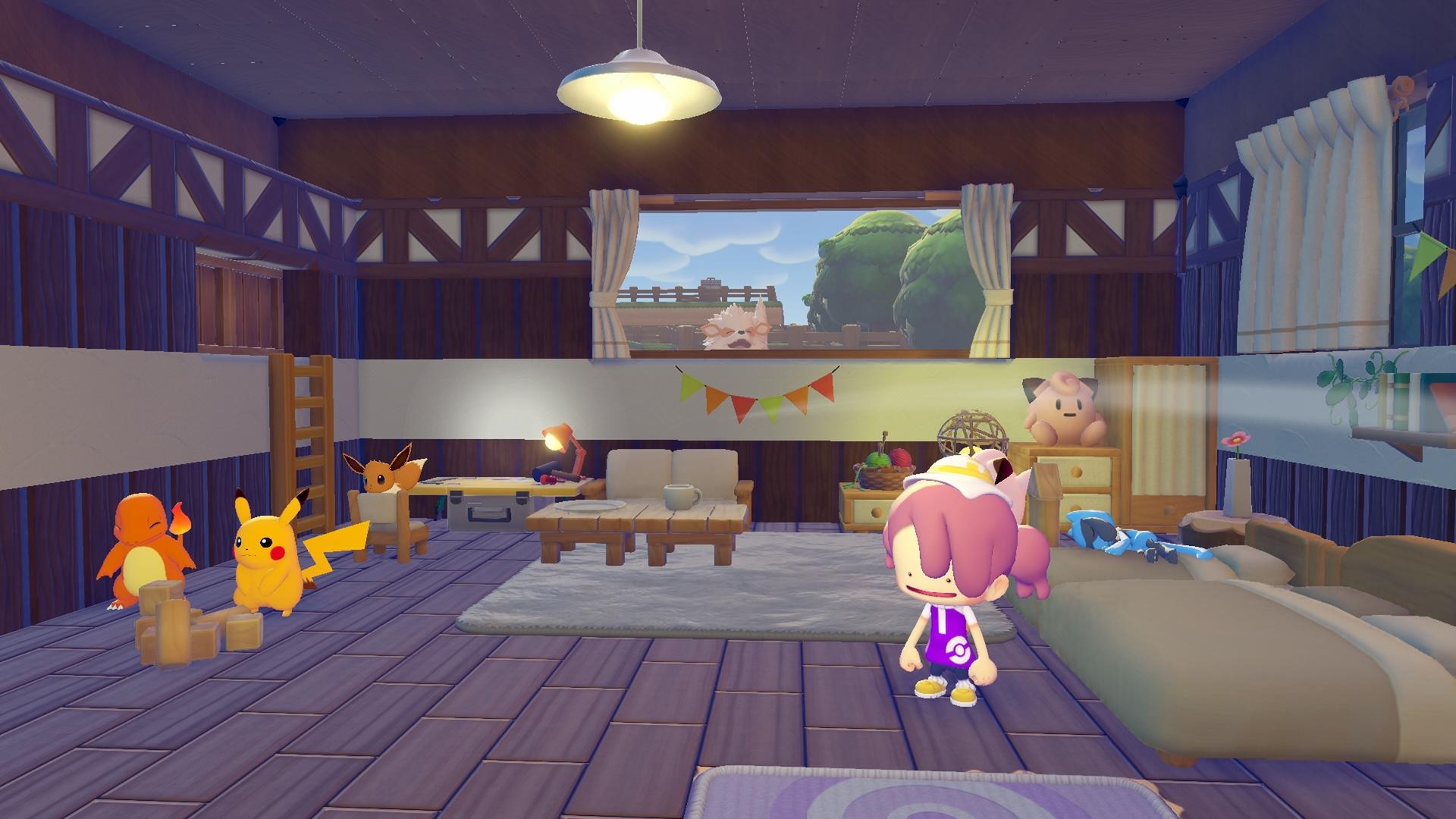
The downside to all this is that the game can be overwhelming. Even as someone who has logged 1,000 hours across Breath of the Wild, Tears of the Kingdom, and Animal Crossing: New Horizons, I was pushed to my limit at times in Pokopia. With 300+ Pokémon, 200+ habitat types, and five massive biomes filled with countless quests and clean-up opportunities, there are a lot of relationships to nurture, homes to build, and demands to meet. Now, I understand it's counter-intuitive to complain about an excess of interesting, gratifying content, but in some instances Pokopia is too much of a good thing.
In one instance, it's not enough of a good thing. And that is storage. In general, co-developers Omega Force and Game Freak did a splendid job making things easy and approachable in Pokopia. You can scroll through your abilities with the d-pad, move around the game world with ease, teleport to your home in each biome from the pause menu, craft hundreds of items at your workbench with a couple of button taps, and even create a copy of any photographed item via the 3D printer in each Pokémon Center.
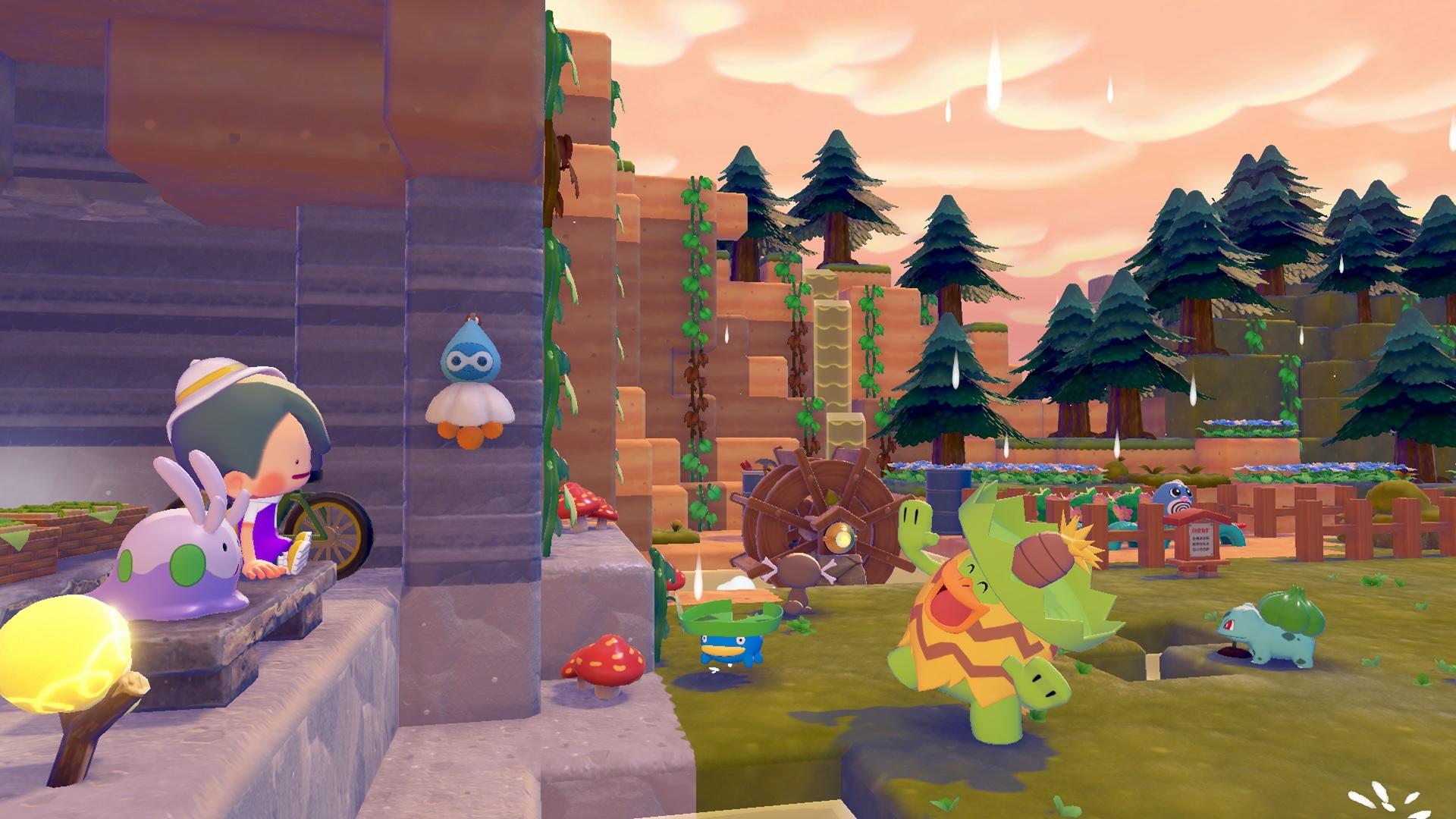
But with storage, the developers missed an opportunity to streamline things even further. Because crafting and construction are such major components to making progress in the game, having quick and easy access to building blocks and other materials is essential. The good news is that you can expand your personal storage and also place bins around each workbench, allowing you to pull from them directly when manufacturing new items. The bad news is that there's no global storage. I can't tell you how many times I teleported back and forth between biomes because I didn't have the bricks or twine I needed for a job, and wasn't exactly sure which bin I'd left them in. Now, to be fair, it took New Horizons six years to achieve this kind of global storage, and I'm sure Omega Force and Game Freak can fix things in a patch. For now, though, it's the biggest inconvenience in Pokopia.
There's nothing inconvenient about sharing the Pokopia experience with friends, though. In fact, the game offers a surprising number of cooperative opportunities. For starters, you can travel, via online or local connections, to another player's town and play with them — although you'll be limited in what tools you can use. This is a great way to meet and learn about Pokémon you haven't yet encountered in your own town.
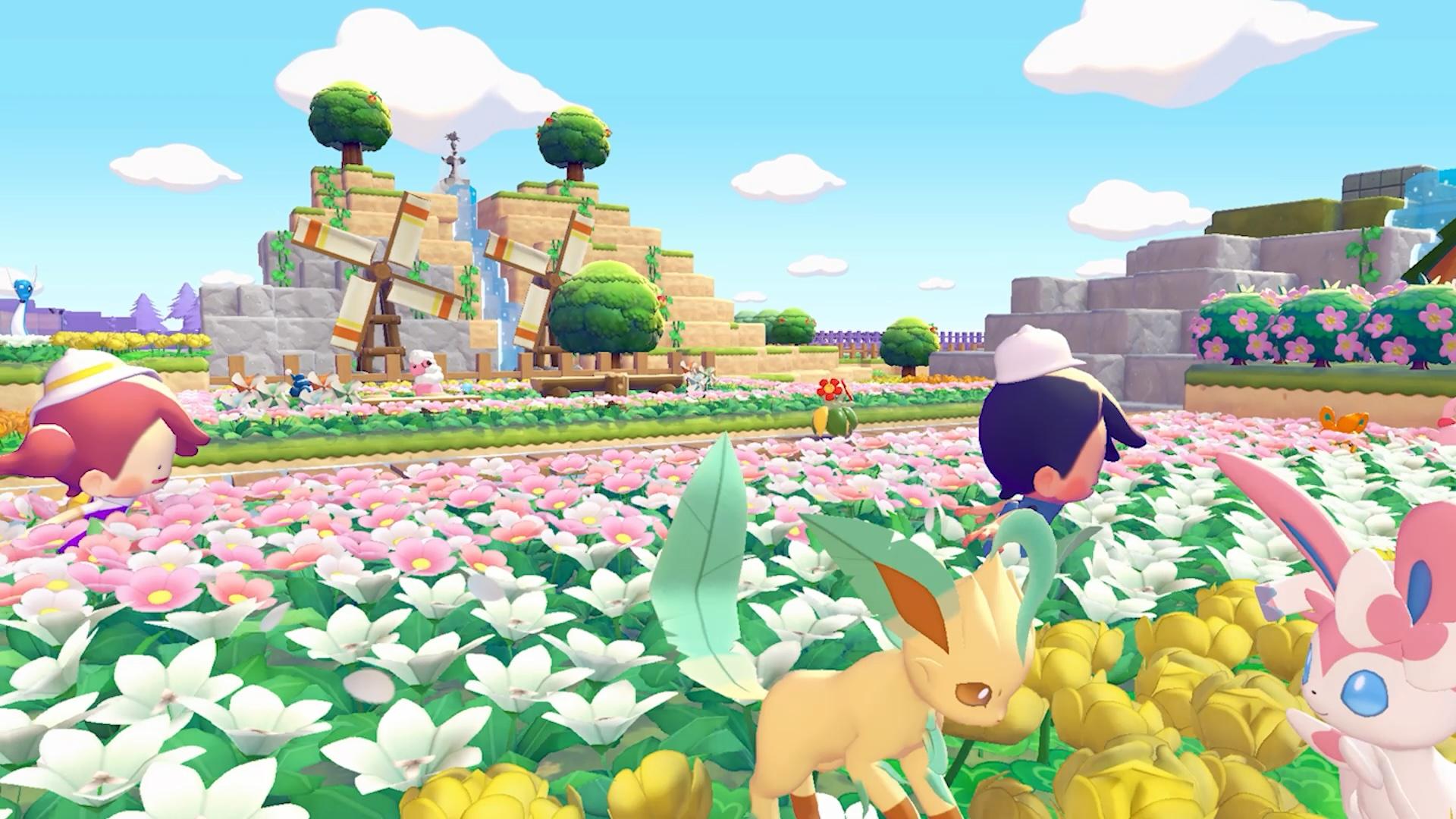
If you want a little more agency, you can create a unique standalone island where both of you can craft, construct, and deconstruct to your hearts' content. These so-called Cloud Islands allow multiple players to experiment at will without the risk of undoing the progress made at the host's main island. Finally, there's Palette town, a sort of sandbox area within the larger world of Pokopia where online friends can contribute to the rehab effort. Palette Town is completely divorced from the game's narrative, so you can let your imagination run wild.
Thanks to Palette Town, Cloud Islands, and the immensity of the single-player campaign, Pokopia is a massive undertaking. You can "beat" the game in 35-40 hours, but you'll need hundreds more to see everything, meet everyone, and create your perfect utopia. If you were trapped on a desert island with only a Switch 2 and a copy of Pokopia, you would never be bored.
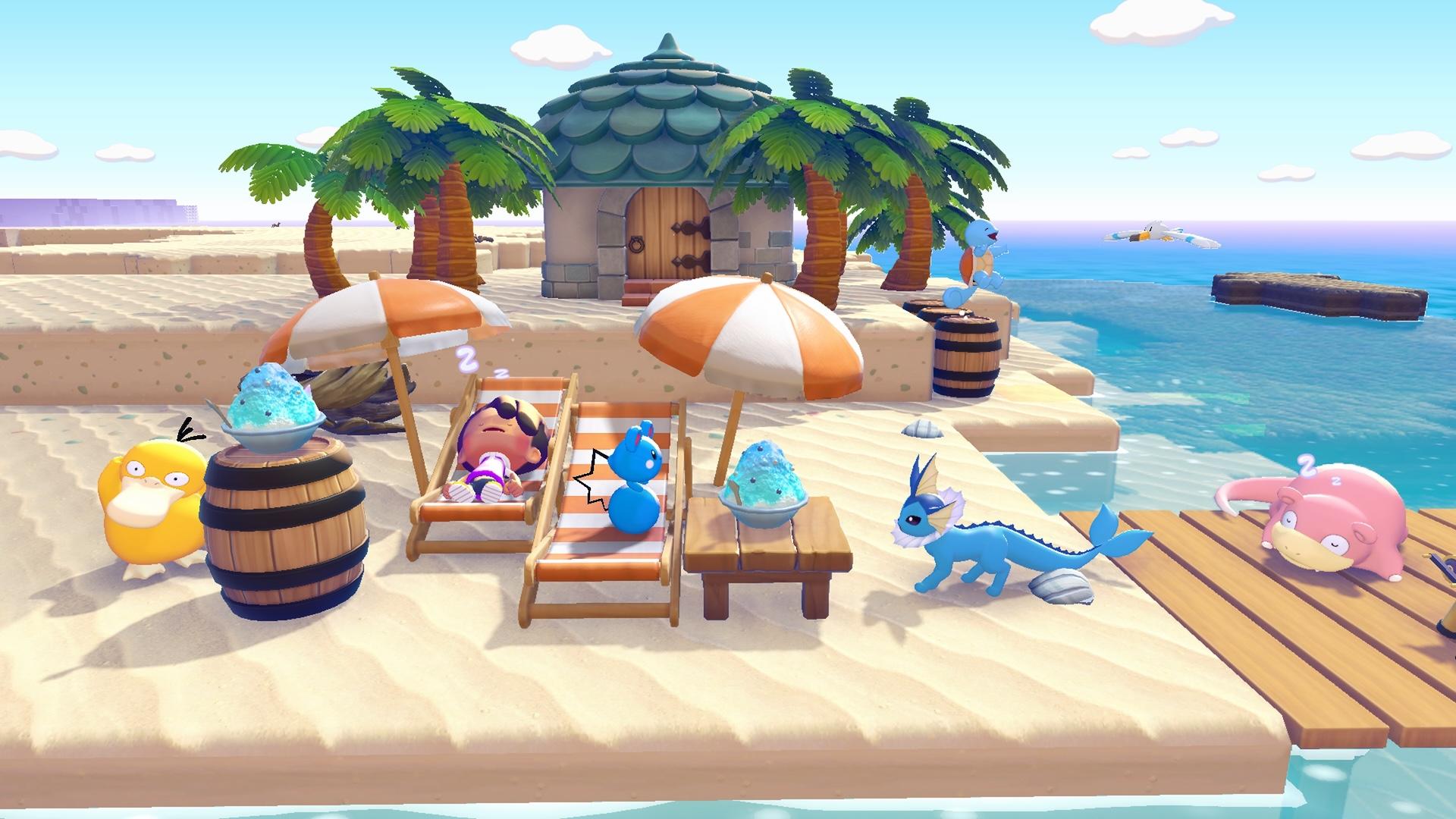
You may want a TV and an HDMI cable on that island, though, so you can play the game docked. Handheld mode is certainly viable, but the image quality takes a hit, even as it maintains 60 fps. Overall, Pokopia isn't pushing any boundaries when it comes to graphics — its models, lighting effects, and textures are all modest — but it benefits from a comforting, cozy aesthetic that pairs well with established Pokémon designs. Music tells a similar story. It won't take home any awards, but it's atmospheric, nostalgic, and inviting.
Inviting is the ideal word to describe Pokopia. It welcomes players into its vast domain, grants them world-altering tools, and encourages them to craft, build, demolish, customize, harvest, and befriend at their leisure. At times, the immense size and scope of it all can prove daunting, but if you can push through those overwhelming periods, you'll discover one of the most content-rich, rewarding, habit-forming social simulation games ever made. The month of March gets another milestone and Switch 2 owners get a game to last the entire generation.


 |
Machina
posted 14/08/2026, 06:08
+1 million https://www.vgchartz.com/article/468733/pokemon-pokopia-sales-top-5-million-units/ Message | Report |
|
|
|
|
|
Machina
posted 12/03/2026, 11:16
2.2 million in 4 days https://www.vgchartz.com/article/467264/pokemon-pokopia-sales-top-22-million-units-in-4-days/ Message | Report |

About Us |
Terms of Use |
Privacy Policy |
Advertise |
Staff |
Contact
Display As Desktop
Display As Mobile
© 2006-2026 VGChartz Ltd. All rights reserved.