
Tomb Raider IV-VI Remastered (PS5) - Review
by Evan Norris , posted on 23 February 2025 / 6,838 Views
Last year's Tomb Raider collection was a celebration of developer Core Design at the height of its power. This year's collection, Tomb Raider IV-VI Remastered, is more of a cautionary tale. As you play through the games, which start incredibly strong and end with a whimper, you can almost see the behind-the-scenes development problems: programmer fatigue, unrealistic deadlines, publisher interference and — in the case of the final entry, The Angel of Darkness — confused, overly ambitious ideas. Still, there's something weirdly compelling about this new compilation, despite an inferior line-up of games. The titles included here are less beloved and rarely celebrated, so, in an odd sort of way, they need a second chance more than the original trilogy.
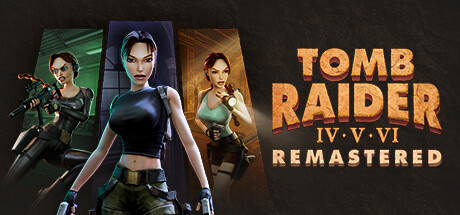
Tomb Raider IV-VI Remastered includes three video games from the tail end of Core Design's tenure with the Tomb Raider franchise: The Last Revelation (1999), Chronicles (2000), and The Angel of Darkness (2003). Where the three games in the 2024 collection all fell firmly within the good-great range, the titles offered here vary more wildly in quality.
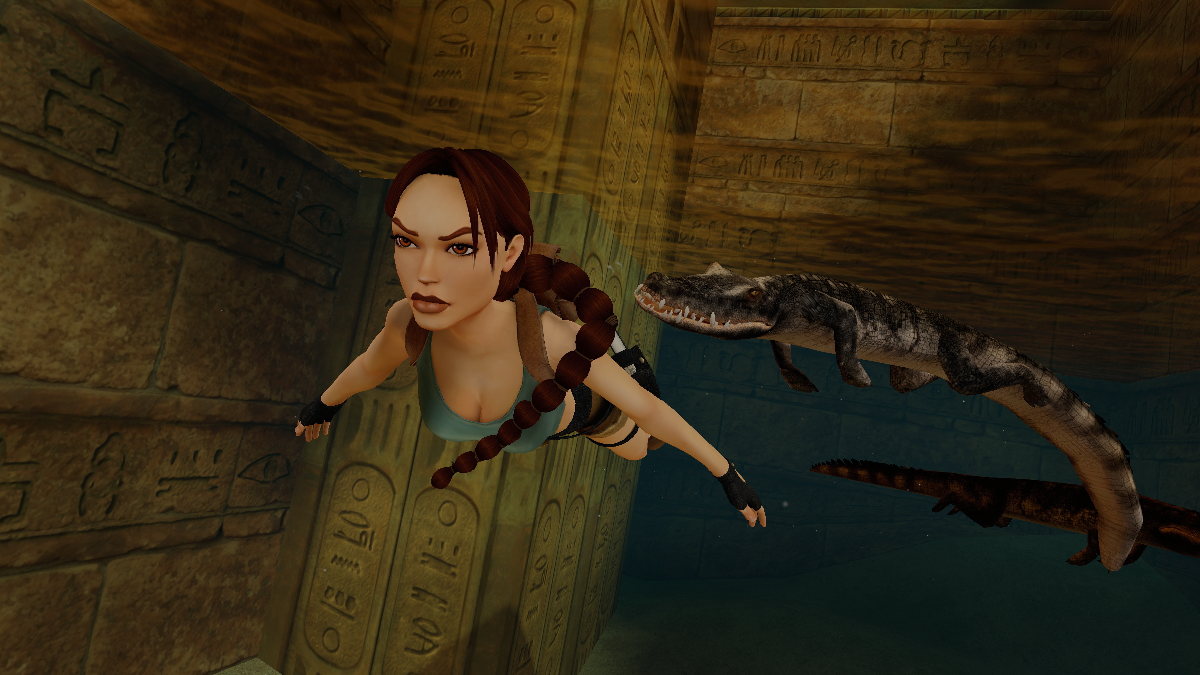
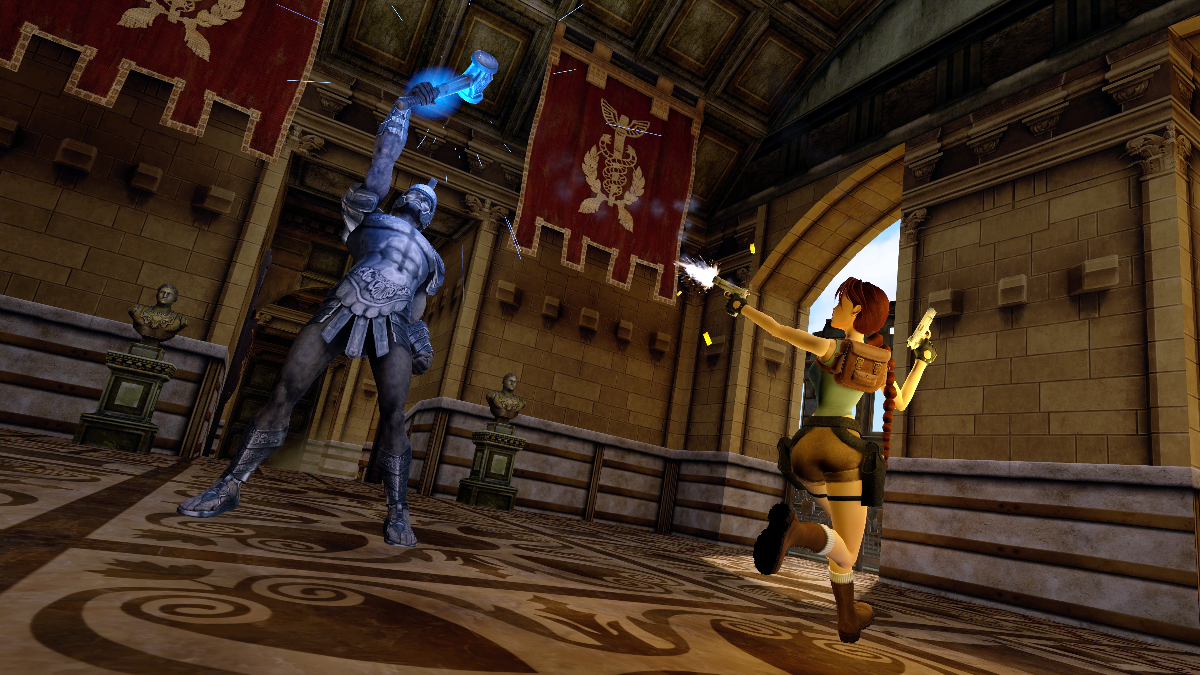
The first, and finest, game is The Last Revelation. Indeed, you could make a convincing case it's the third best game of the Core Design era, behind only Tomb Raider and Tomb Raider II. It benefits from a more personal story-line that begins in heroine Lara Croft's youth; a deep dive into a single country (Egypt) instead of a globe-trotting adventure; a return to the slower-paced, methodical puzzle-solving gameplay of the premier game; and, of course, the amazing sense of place, discovery, and oldness that only the best Tomb Raider games can capture. Core Design, in its halcyon days, simply had a gift for transporting you to an ancient world, for making you feel alone, lost, and deep within the earth, desperate for fresh air and sunlight.
Had the studio's wishes been granted, The Last Revelation would have been the final chapter in Lara's story. However, publisher Eidos disagreed and the developers at Core Design needed a steady paycheck, so Chronicles was born. Despite the lack of passion for the project among the development team, as disclosed in the years after launch, Chronicles is not a bad game. It's not exactly a good one either, though. Due to its narrative, in which old friends of Lara recall her many adventures over the years, and chapters that differ greatly in time period, location, and gameplay, everything seems disjointed. In fact, the game feels a bit like a "deleted scenes" featurette, which is kind of what it is, since it contains several ideas cut from The Last Revelation. While there are some fun mechanics and exciting scenarios, like Lara jumping across shipping containers while a deadly claw tracks her movements, you can sense the wheels starting to come off.
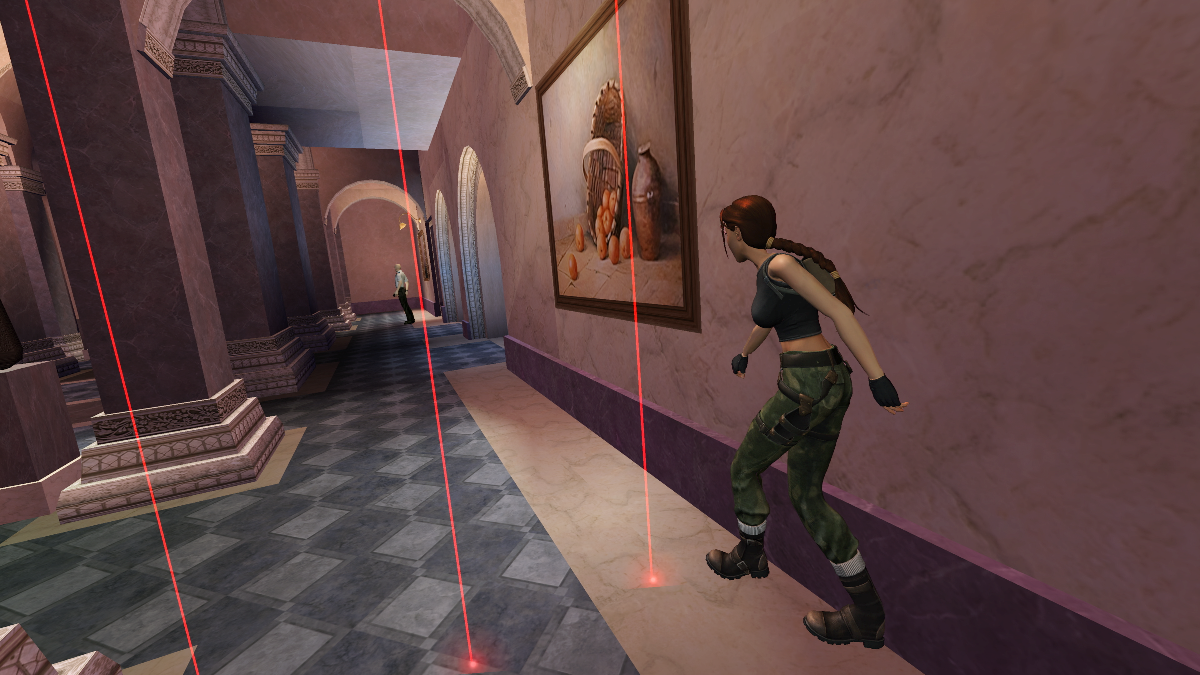
Three years after Chronicles, the wheels came off in a spectacular way with The Angel of Darkness, which brought the series to PlayStation 2 for the first time. The reasons for the game's failure are well documented at this point: the development team was less experienced, overambitious, and unprepared for the complexity of sixth-gen game design; planned sections and gameplay elements were scrapped to hit deadlines; and more energy was spent on reinventing the brand than on nailing the basics. This final point is really what makes Angel of Darkness a low point in the franchise. Instead of pulling in open world elements and stealth mechanics (cribbed from Shenmue and Metal Gear Solid, respectively), Core Design should have focused on foundational aspects like camera and control — both of which, regrettably, are substandard.
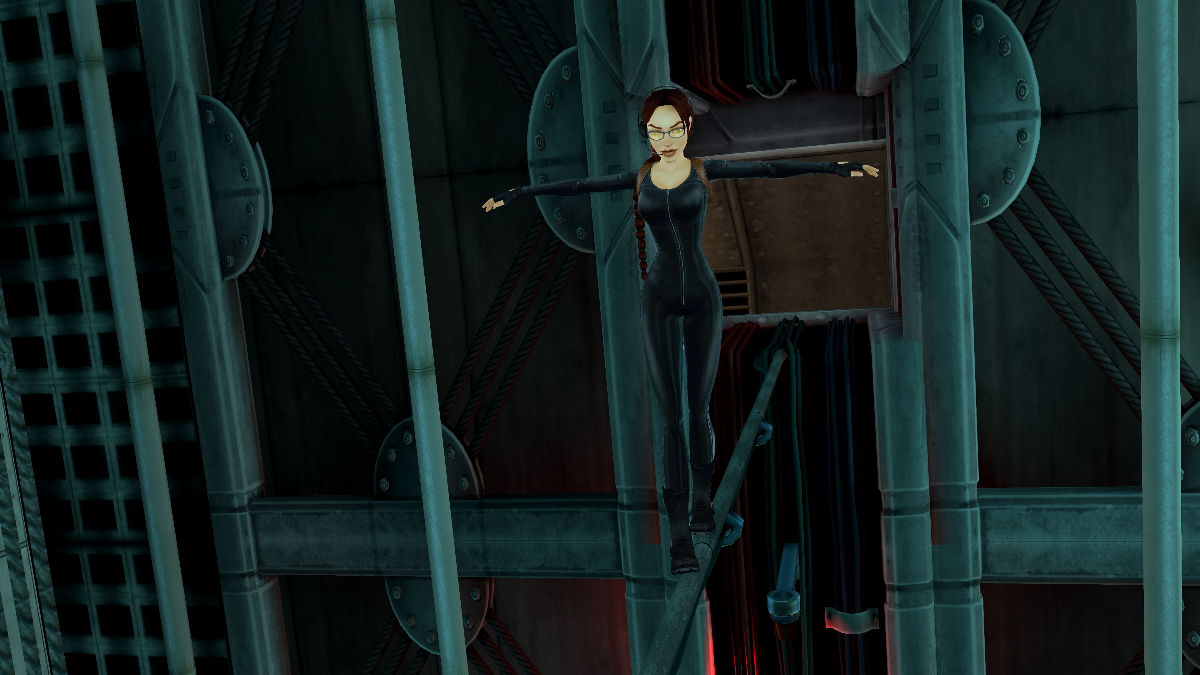
To be fair, Angel of Darkness isn't a total disaster. There are a handful of immersive set-pieces and some RPG features that, while underdeveloped, hint at something interesting. Furthermore, the game plays better in this collection than it did on PS2, for a few reasons. The first is that the optional "modern" control scheme, implemented across both Tomb Raider collections, actually makes the game handle decently. The controls still aren't ideal, but less leaden and clunky than before. In addition, developer Aspyr reintroduced several pieces of cut content, including voice lines, inventory items, shopping options, a training area, and abilities unique to playable character Kurtis Trent. These additions don't magically transform the infamously poor entry into a masterpiece, but they're welcome nonetheless.
The same modern control scheme that elevates Angel of Darkness is also available for the other two games in the collection but, as was the case in Tomb Raider I-III Remastered, you're better off sticking with the original tank controls for those precision jumps.
The optional remastered graphics make a much bigger splash, especially in The Last Revelation and Chronicles (the visual upgrade in Angel of Darkness is negligible). While there are still some lighting issues — the remastered versions can be a bit too shadowy — the level of detail is sometimes night and day. The development team went the extra mile not only to enhance textures, models, and geometry, but to add lots of little flourishes to increase the ambiance: thigh-high blades of grass to replace a flat green patch; a curved outer Colosseum wall, bathed in the warm light from a setting sun, to replace a flat, phony-looking facade; and crackling torches, wispy smoke, drifting sand particles, and cobwebs where there were none.
While, for the most part, everything looks lovely, I did encounter a couple of odd graphical glitches. At the end of the Desert Railroad chapter in The Last Revelation, during a cut-scene, a train car disappeared, leaving only its door. In the makeshift gym in the Paris church in Angel of Darkness, a piece of one of the boxers appeared to hover in mid-air above him. These bugs are exceptionally rare, however.
If you care less about graphics and more about performance, don't worry; Tomb Raider IV-VI Remastered has you covered. In the prior collection, the original PlayStation visuals were locked at 30 fps while the remastered graphics soared to 60 fps. That limitation is not present here, however. By clicking off "Retro FPS" in the graphics menu, you can achieve 60 frames even with other old-school settings. It's a major upgrade.
As for other extras, the collection carries over photo mode from 2024 and includes "The Times" bonus level for The Last Revelation, which was originally exclusive to PC and celebrated the British daily newspaper, of all things.
In the end, Tomb Raider IV-VI Remastered is less essential than last year's Tomb Raider collection, entirely because the games are inferior. While The Last Revelation remains one of the franchise's better entries, Chronicles is merely decent, and The Angel of Darkness is subpar. Still, thanks to control and graphics options, paired with the 60 fps boost, this newest compilation represents the superior way to experience these titles. If you only have the time and money for one purchase, go for I-III Remastered without question. If, however, you're a completionist who wants to experience Lara's lesser, weirder adventures and observe how developer fatigue and mismanagement affected the trajectory of the franchise in the early 2000s, this is the collection for you.
This review is based on a digital copy of Tomb Raider IV-VI Remastered for the PS5, provided by the publisher.
More Articles


I haven't played any of these for more than 30 minutes so I look forward to picking this up once I've finished the previous remastered collection (still have yet to finish TR3), but my expectations are much lower. It's interesting that you prefer 4 to 3 though; maybe my expectations are too low for that one!

I was surprised when they announced this second remastered compilation. I suppose Embracer wants to milk this series (they really buyed it for a bargain price, among other interesting assets from Square Enix, just for $300 million. That was very incredible and makes you ask a few questions about what the hell is happening in SE this last years).
I've the first Tomb Raider for Sega Saturn (theorically, the first game version ever released in the whole series) but I certainly never was interested in the series beyond the 3rd title... so, this compilation is very exotic to me and I'm not really interested on it (the series are now a shadow -if that- of what they were in the 90s, and most probably Uncharted replaced it like 15 years ago).
What now really amuses me is rediscovering how the first 5 games, basically the classic ones, were produced in 5 years. Only in 5 years.
Not only that, The games were always multiplatform: all being released for PSX and Windows. Saturn getting the first one, and Dreamcast getting IV and V in less than one year, and the last one at the same time of PSX and Windows releases. (Also, it was confirmed some years ago TR2 was in development for Saturn until Eidos and Sony did a 2 year-exclusivity deal for the series -in consoles-, which forced to discart the well-advanced Saturn version of TR2, and most probably, a rumored N64 version of TR2 or maybe TR1).
Tons of new games and versions in 5 years. No time to "remaster", or "remake" anything. This, now, would be totally insane, and impossible to achieve.
5 games in 5 years... of a triple A series, developed for multiple platforms, with NO similar hardware architecture among them. And ALL made inside the same studio. Pure Science-Fiction now.
But there is even more: the official expansions for TR1, 2 and 3 for PC (and Mac, along with its own full game versions) were released something like one year and a half after the release of every game. And also, that "Extra" level gifted by "The Times", for the IV, they surprisingly included in this second compilation, So, all those expansions were released inside those same 5 years.
The cherry in the top were the 2 Game Boy Color games, which, I understand, were also developed inside Core, releasing the first one betwen the 4 and 5 games, and the sequel being released in mid-2001, some months after TR5. And they were GOOD games for a GB. The Lara Croft animations were the most impressive ones I've ever saw in that console, btw.
CRAZY,
Everything ended with PS2. It is famous what happened in the early 2000s, with a huge crisis in the japanese game industry supposedly caused (or helped) by PS2 being hard and expensive to make games on it. Well, TR Angel of Darkness was like 3 years in production ONLY for PS2, and even then, the product had to be severely cutted because time constraints, and in the end, had big gameplay problems which destroyed the reputation of the series forever. I remember Angel Of Darkness as the real (unexpected) ending of TR series, because the media created a huge hype around it, and the final product... was mediocre. All the reboot trilogies after that, had no real impact anymore, and 22 years later, the series... have a grim future.
If you like some series now, the norm is to get a remaster of a game from 10 years ago... or even older. And be thankful. Something very obnoxious has affected the videogame industry this last 25 years, and especially this last 15-10 years.