Editorial: Bayonetta Is New-School Feminism - News
by VGChartz Staff , posted on 07 October 2010 / 17,164 Views
Disclaimer: This article is the work of one writer, and does not necessarily reflect the views of gamrFeed or VGChartz.
With the news fortelling Bayonetta 2 and the upcoming Halloween season is my article on why Bayonetta, the game character, is good for feminism.
Alright, that’s enough.I'm actively trying to restrain myself from playing the game because I should be finishing this article, such is the extent of my love for Bayonetta
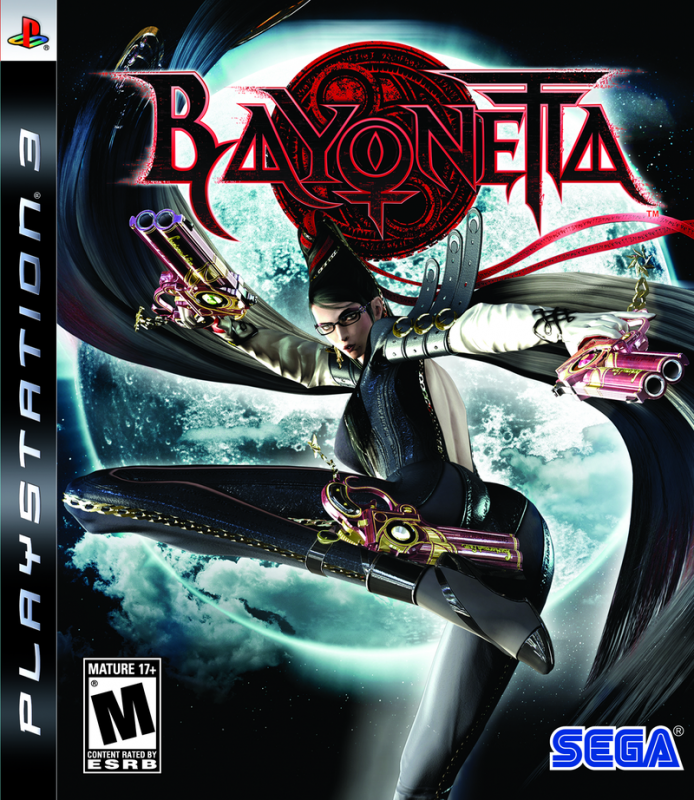
Much has already been said about the awesomeness of Bayonetta, so I won't repeat it. My focus today: Bayonetta is a feminist hero.
First, I'm a feminist. I honestly find it difficult to imagine someone who wouldn't be. I consider myself fortunate to have been surrounded by strong female role models and I recognize that not everyone is so privileged. My mother, in particular, is the finest human being to ever walk this earth. My mission here is inoculation against those who take issue with the game.

From the very start of the game, the viewer is so inundated with sexual imagery that the viewer can't help but ignore that aspect and focus on the important issues, like the mastercraft involved in game mechanics, and how much -fun- Bayonetta is to play. It teaches us to view the sexual aspect of femininity as . . . a veil at best, a distraction at worst. To paraphrase the Great Toni Morisson, "One day we'll get to a point where gender exists, but doesn't matter." Bayonetta says the same thing about sexuality, and about gender, but with guns strapped to her hands and feet.
Even in the areas of fashion, Bayonetta is an icon. A previously favorite quote by Sharon Stone, "Ginger Rogers did everything Fred Astaire did but backwards while wearing heels." Seeming to mean that, in Hollywood, if Ginger Rogers wanted the same fame and recognition that Fred Astaire got, she'd have to let him lead and she'd have to wear heels. Bayonetta makes no such concessions. She wears cute shoes because she wants to, and she kicks ass because she wants to. If kicking butt while wearing cute shoes was more difficult, she’d just have to better herself. She seems like the kind of person who would have roundhoused Fred Astaire in the face if he tried to lead.

She also seems to . . . ignore this hyper-sexualized imagery of herself. She wears what she wears and looks the way she does because she wants to, not because she's seeking the attention of any of the male characters in the game. She and Rodin have a business relationship. She makes him talk to her as an equal. With the inundation of 'girlish' imagery, the butterflies and kisses, Bayonetta tells us to not focus on these cheap icons of femininity, and undercuts all those who use their sexuality and gender as a weapon. It points and laughs at beer commercials which try to make women seem infantilly susceptible to alcohol, hair products, and other pressures of men.
Bayonetta is taken seriously because, as a good friend gleefully said, 'This game will kill your face off.' Bayonetta is quite difficult, but you always seem to know what you did wrong, or you’re aware of another tactic to try. In the grand tradition of excellent educators, Bayonetta lets you make your own mistakes, and lets you figure out the answers. She wouldn't settle for a sloppy performance, but neither would she randomly screw you out of something you had legitimately earned.

Bayonetta is like the best romantic partner. You don't have to change yourself to be with them, but you want to improve yourself. She doesn't demean you for screwing up, but somehow inspires you to do better. She pays for herself. She makes her own money, and if you want to share in the experiences she's having, you may come along, and stay as long as you wish so long as you abide by mutually approved modes of behavior.
Bayonetta's enemies are oafish and slobbering. They're stupid machines which react emotionally and without thought. I submit to you, Gentle Reader, that Bayonetta's enemies are stereotypes of the male and female gender. The pawns and bosses are the oafish men. The female antagonists are trying to play silly mind games with Bayonetta. Our heroine is a problem-solver who can also kick ass, and even do it with some style that she herself originates. She fights them on her own terms. She dictates each fight.
Even the story of Bayonetta is a nod to her own perfect philosophy. The story is crap, and makes no sense, but at the same time, the game seems to say, "If you want story, read a bleeping book. If you want unparalleled excellence in gameplay, I'm your woman."
Bayonetta's character design is also a nod at feminism. No waifish size zero super poodles here. No chibi-girls. Bayonetta is shaped like a fully mature adult. It's almost refreshing. Instead of sexualizing another high school girl-woman, she's all grown up.
The witch imagery is also important. Witches were the outcasts who did what they wanted while needing a certain amount of anonymity to be able to hide from backward social thought. The witches did things for people. They were the midwives, the healers, the educators; they were instruments of societal betterment, and people feared them.

Alright, that’s enough for now; I think I've made my point. I'm actively trying to restrain myself from playing the game because I should be finishing this article, such is the extent of my love for Bayonetta, my over-sexualized, feminist hero.
More Articles
Wut? I thought Keith was a girl, not a guy.
@tazerkatq and Squeakthedragon: That's EXACTLY what I feel about this game. It's a satire. You know, it's actually a very successful trend in games/movies/musics/books.
I just get really mad about people that throw sexism/feminism/racism as if they could use those as magic words to prove anything they want. And I friggin' love thinking out of the box!
The MoM "she obeys a guy" is so... Ah, whatever...

"First, I'm a feminist. I honestly find it difficult to imagine someone who wouldn't be".
I can think of a very good reason not to be. It's 2010. If you are after equal rights, then you should NOT be adopting gender specific positions. This isn't the 40s anymore. Be a humanitarian instead.

Lara Croft is only an icon in the sense that she was one of the first sexualized bimbos that was tossed out to 18-24 year old gamers, at a time when that was considered risque. Beyond that, she's done NOTHING for women in gaming that I can see.
God, each time I read this article I find it funnier, and funnier.

Apparently, loving your mother doesn't help you to grasp the fundamentals of feminism.
Bayonetta is a mockery of every hyper-sexualized female video game character. She isn't a "new-school" feminist icon. She's a joke that you clearly didn't get.
And midwives and healers who were tried and executed as witches WEREN'T witches, they were innocent women who were hated because they held a position in society that the men of that time couldn't understand. They didn't dance around sky-clad, they were hung and burned. But I guess the subtlety of that joke in the game was lost on you too.
edrigo - I'm not trying to bash the article, but it reads as if it were written at the high school level. It's disjointed, has unnecessary content, and fails to sufficiently prove its thesis. Basically, it looks like some guy's random thoughts on the matter (which is what editorials generally are, I know) rather than a convincing argument.
@shanobi
what is so wrong about the piece the author wrote? even if u think it is misguided is that any reason to act sooo "hurt". If lara croft can be seen as a female icon and by some quote's "done much for women in gaming" why not bloody bayonetta? Why is it so hard to grasp for some people that there might be a deeper point in art direction than they assume in games.
Armads, it's just another sad day. The day that I saw this site posting articles telling you to hurry up and download xbox 360 games for free through a glitch, was another sad day.
Seriously, who is editing these writers? And who is allowing seemingly anybody to write for them?
I'm sad to say that my respect for this place is pretty much gone. I'll wait to see if things clean up at all, but I'm not holding my breath.

@voty2000
"Instead, some people claim the author sucks"
If the author wants to suck, who are we to stop him? If it's something that he enjoys in his own personal life, more power to him..

"Sexual exploitation is a celebration of women, which I should know since I'm a feminist (and I can't imagine who wouldn't want to fight for the already equal rights of women!). In fact, I'll even prove how much of a feminist I am by posting a close up picture of Bayonetta's ass in the article as well as a couple pictures of her half naked. "
"Yup, feminism at its finest."
*Disclaimer: This post is the work of one writer, and does not necessarily reflect the views of gamrFeed or VGChartz.

@voty2000
The author appears to be extremely under/mis-informed on even the basic definitions of the concepts he is trying to discuss. The article is poorly thought out and poorly argued. Instead of pointing the finger back at us who have criticized him for this, how about you do some critical thinking instead of just calling his opinion "neat." Empty praise is just as counterproductive as empty criticism.

I'm not sure what you're trying to say. If a "powerful woman who happens to dress and be sexy yet is not doing it for the sake of appeasing men," is feminist, then Bayonetta is certainly not remarkable for being so. Many characters like that inside and outside of gaming. Off the top of my head, Samus, Chun-Li, and Aya Brea within gaming, and Nico Robin, Urd, and if we want to dig further back, Wonder Woman from outside of gaming
if your assertion is valid (debatable), then Bayonetta is merely one of many who did it long before she did, and have gained more notoriety for being thus

@voty2000
But the whole article is honestly incredibly stupid. You wouldn't disagree with, say, the Third Reich by offering up a point-by-point rejection of their "opinions" would you?
Opinions can be wrong, stupid, and ignorant, dammit.

Some people commenting must not know what an editorial is. It's an opinion piece. You don't have to agree with the author but why attack the writer for an opinion? Argue the points you disagree with, not dismiss the writer. I don't necessarily agree with the article but is was a neat perspective that should cause a good discussion. Instead, some people claim the author sucks.
She's awful. I really can't stand the way she looks, nor am I interested in the game's gameplay (or anything else for that matter).
@voty2000
"Good job on the article, keep them coming."
Agreed.. keep us cumming
@VGhippy
"I thought the article was really good. Maybe looking into some aspects a bit too hard, but on the whole really good"
I thought the whole point of the article was to make us hard
She's obviously bias though. She prefers to look and perform better on the 360. ~_n
I think people are being really unfair to the author of this article and anyway were all just dudes who apparently have no concept of feminism how many girls are on this site to make a case for or against i dn't know, but i will definitley say this game exudes femininity even if u take away any percieved feminist aspect.

She also seems to . . . ignore this hyper-sexualized imagery of herself. She wears what she wears and looks the way she does because she wants to, not because she's seeking the attention of any of the male characters in the game. She and Rodin have a business relationship. She makes him talk to her as an equal etc...
Laughable :she's a game character obviously created to lure males' attention and females'envy...
Female's envy you say? Probably.
I think she's awesome, and really enjoyed the game. I enjoy playing games with strong player characters, and really connected with her big personality and outlook; I love feeling some connection with a character I'm playing, I wasn't jealous of her; I was her.

This article is so naive that made me a bit surprised.Don't talk about terms you don't fully comprehend man.Any woman that sees the stuff you wrote and has actually seen the game will find it insulting ...
i might also add my first impression on playing it was that it was meant for hardcore gamer girls (very fluffy, girly visuals with blood and guts for good measure)

It's good that they made an action game such as Bayonetta with a female character, but I thill think there is too much near nudity for herself. It's nice that there is comedy about it in the game, but still. Samus was a better feminist, except not in Other M.
Still great game, I just wish the main character looked more realistic. Heels are not realistic, and she doesn't have to be naked to do her fancy tricks.
If u look at a game like vanquish it totally takes the piss out of macho male types and the funny thing is most people won't get it. They'll say dumb stuff like "geez the voice acting isn't realistic/goofy" or something. Bayonetta is highly sexualised but from a more feminine approach (which is why alota peeps feel uncomfortable playing it). To say it's spouting feminist ideals left right and centre is a stretch but i do agree with alot of wat the author has written

If Bayonetta is feminist... Then what game is sexist? I'm glad VGchartz have all those great authors ;D
Bayonetta, a strong, independant woman who fixes up everything for everyone and doesn't get held back by anybody criticising her for not choosing to stay in the kitchen or wear clothes they think she should wear as a woman?
Sounds a pretty damn awesome role model to me.
A naked woman is not sexist. A man seeing a woman as nothing but a piece of meat is, among many other examples. Bayonetta acts like she'd probably jump kick any guy who looked at her like that in the face just to make sure he gets the right impression.

Regardless of whether or not the author of this article understands feminism, the flipside is that people who think Bayonetta is exploitation are so literal minded they can't grasp a lateral joke.
Bayonetta may not be high minded in the way the author believes, but neither is it exploitation for sweaty teens. (That'd be Dead or Alive.) It's satire, and taken purely as satire (leaving feminism to another debate) it's pretty clever about it. Hell, the "leading man" in the game is a bumbling nerd who is a direct jab at the kind of guys who would normally be playing games like this to visualize themselves as a swaggering, cocky hero.
Despite being a Japanese made game, Bayonetta is very British in its choice of satirical strategy.
It's just as much a satire of exploitation as the Grindhouse and Machete are satires of their respective genres in film.
it's article's like these that make me glad i visit vgchartz all the time. Now i didn't appreciate the game fully (as i only played the demo) i found it to be a big wtf momemt in gaming in a very good way, i do see the celebration of womanhood in the game and i appreciate reading article's that look at the deeper aspects of gaming,
cheers

I can't believe this editorial was actually accepted to be posted on the news section of this site. This is a sad day indeed. "Bayonetta is feminist because she's hot and it's totally not about that" but MoM is anti-feminist because she takes orders from a superior officer who happens to be male. You sir have done a disservice to this site with this article.
I know you didn't say the last part, but people in the gaming media have. But you chose to write an article in which the character was designed with an emphasis on sexuality and not defend a real advancement for women in the world of games.
This article is a joke. In your failure to define feminism it basically means a bunch of things you think are cool. Hypersexuality and violence are not what I think of when I think of feminism, but I guess you do. Then again, I doubt you have really thought about the historical differences within the feminist movement or realized that people across the spectrum, from WTO bra burners to Phyllis Schlafly to Sarah Palin have IDed themselves as "feminists."
And this gem of historical knowledge: "The witches did things for people. They were the midwives, the healers, the educators; they were instruments of societal betterment, and people feared them" is so lopsided and pandering I can't believe you buy into such one sided nonsense. These editorials need some serious, well, editing. If this is the best social commentary gamers can muster it's no wonder the medium is seen as a brutish art form if one at all.
if Bayonetta is feminist then I'm a kobold elephant. Check Samus Aran or Aya Brea if you want feminist characters written gracefully. Even if poor Aya is now being exploited by SE for The 3rd Birthday -sigh-
I thought the article was really good. Maybe looking into some aspects a bit too hard, but on the whole really good. The only bit I felt it fell flat on was this part:
"Bayonetta's character design is also a nod at feminism. No waifish size zero super poodles here. No chibi-girls. Bayonetta is shaped like a fully mature adult. It's almost refreshing. Instead of sexualizing another high school girl-woman, she's all grown up."
I don't think I've ever come across an adult female that is shaped like her. It might be that European women just arn't built like that but she seems to be moddled after the exaggerated female bodies from comic books like X-men but much skinnier/lankier and with a slightly srunken head (or regular head on an enlarged body). She's shaped more like a parody of a woman than an actual woman. Actually parody might not be the right word, but it's something along those lines.

"Bayonetta's character design is also a nod at feminism. No waifish size zero super poodles here. No chibi-girls. Bayonetta is shaped like a fully mature adult. It's almost refreshing. Instead of sexualizing another high school girl-woman, she's all grown up."
Huh? Bayonetta has a super model figure at worst. She doesn't look like 'real' women at all.
Have you seen super models? Her thigh is the size of their two legs put together.
I believe the standard supermodel is a UK size 4, and I am certain that Bayonetta is not a size 4.
Bayonetta II - Bukakke Edition. You will be so hard playing that you won't even SEE the fellatio! Now THAT's feminism!
Now, Keith, do a story about how Metroid Other M is Male chauvinism and we are way to go!
I find so hilarious how Platinum Games, even though they explicitly said that they went for this character design because "sex sells", got away with all that.
But hey! In the past feminists burned bras even though they were made to "free women from the corset" and was a feminism symbol in the past... why don't burn away all clothes? Just go for it, girl!
(I mean, really)
Good job on the article, keep them coming.
Somehow I doubt the writer has played the game to the point where you can do cosplay with Bayonetta, dressing her up how YOU like (as a race queen, a cheerleader, etc.). Then, cinematic scenes contain a lot of upskirt shots. In Normal mode and higher, the player is too busy playing the game to watch the skin-baring Wicked Weaves. But, If you play the game on Easy mode, it's a completely different experience.

All I heard was ♪ Smack it up, flip it, rub it down, oh nooooooo ♫

wtf are you talking about?
i just want to bone the shit out of her

okay, to be honest ~ when bayonetta left off almost all of her closes to summon a demon, i took a closer look... but some minutes later, i didnt care anymore, because the game itself was the point i automatically focused on... so her sexuallity left quickly in my head, and made space for her personality. (or should i say the words she was given by the dev's?)
But who cares after all, great Game.
@Simulacrum:
i agree with you at the Gameplay part, and i also agree with your second point, but i didnt care for it later on.. like seeing .. a Nut. dunno xD..
God, I love these Forge News articles. I'm forwarding this on to some women that I know so that they can also have a laugh!
Thank you, Keith.

Nope, just good old fashioned exploitation.
Mkay..My first impression was that this game is just Devil may cry copy with boobs, but in the end game was pretty good.And crazy.
But it just went over the top sometimes with those torture attacks and "we don't show real ass or boobs so its ok" thing.