

Aphelion (XS) - Review
by Lee Mehr , posted on 12 June 2026 / 4,282 Views
Reviewer's Note: Given some of my pointed critiques, it's impossible to avoid SPOILERS altogether. Read on at your own risk.
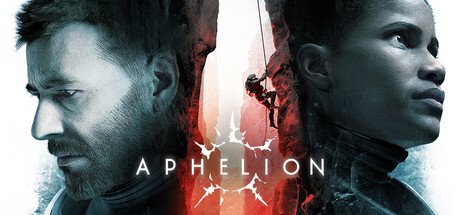
It's looking dire for our pale blue dot. The self-inflicted consequences of climate change have effectively reached a point of no return, prompting Earth's best and brightest to find potential new candidates. Enter Persephone: an ice planet on the edge of our solar system that might work, thanks to promising signals of a habitable zone called 'The Source'. Gamers would especially feel right at home thanks to its conveniently-scalable ledges, grapple points, slip 'n slides, balance beams, and tight corridors disguised as loading screens. Yes, developer/publisher Don't Nod's post-2019 release cadence means vacillating between familiar stomping grounds (a la Lost Records: Bloom & Rage) and more action-oriented affairs like Aphelion. Creatively stimulating as that may be, doggedly committing to any tired genre formula will leave anyone as cold as these frozen wastes.
The year is 2062. Leading this intrepid expedition are two of the European Space Agency's (ESA) best astronauts: Astrobiologist Ariane Montclair and Engineer Thomas Cross. They'd also decided to end their relationship and remain professional before this space-faring voyage, so it's not surprising our first encounter with them is the… shall we say "post-credits scene" of a romantic liaison – soaked with an air of awkwardness. These fleeting moments aboard HOPE-01 are among their last before crash-landing on Persephone's surface. Now, separated by miles of mountainous terrain and no radio reception, they must consider regrouping while also pressing towards The Source.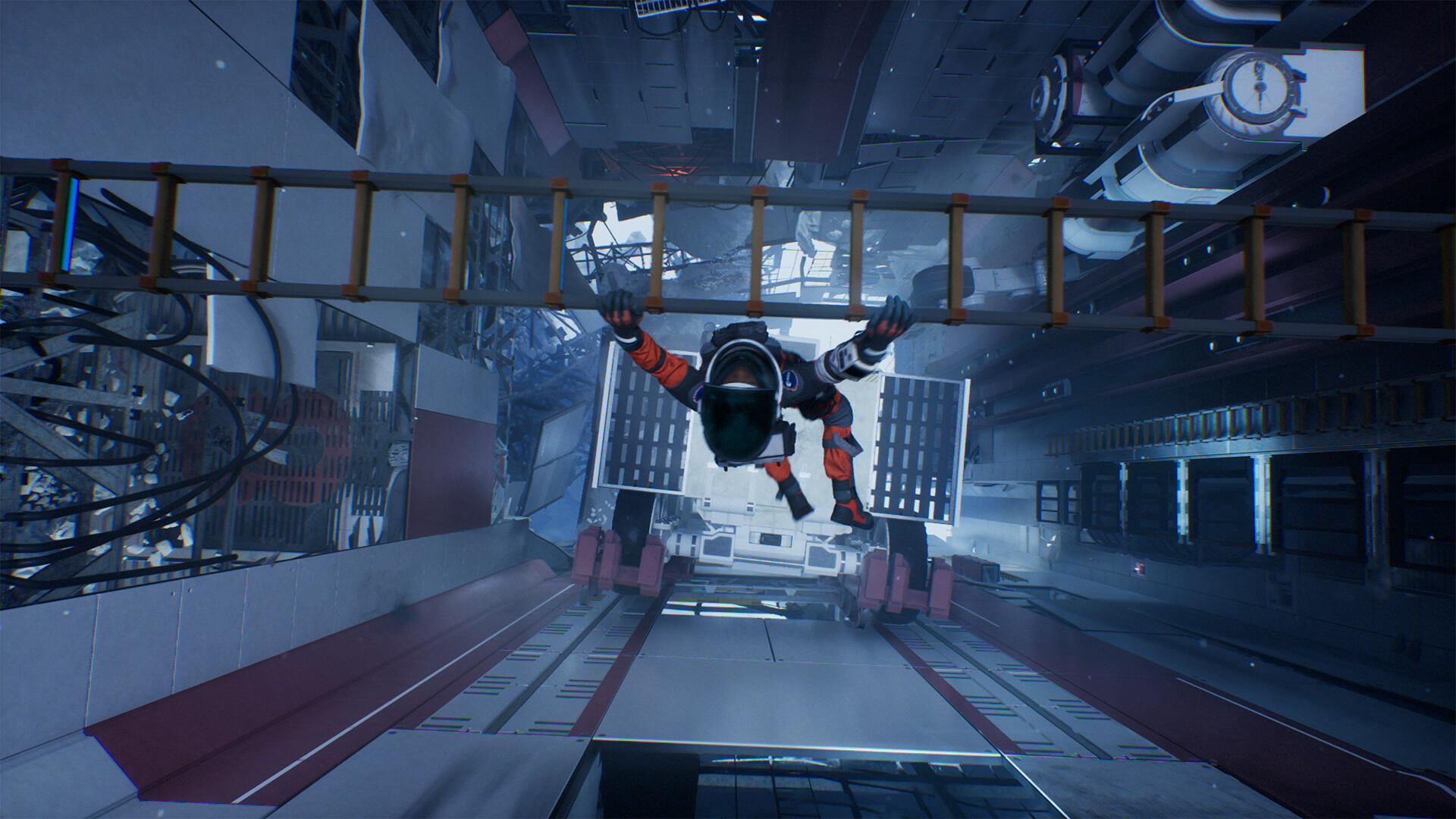
Disregarding the incredible plot hole of sending only two astronauts on a manned mission, the premise knows how to grab your attention. Hardly one minute after unhooking from the pilot's seat, Ariane is butt-sliding down a steep incline and desperately grasping onto color-coded ledges. It's a sci-fi-flavored rendition of Uncharted 2's opener: flanked by tall snowy mountains, navigating through a crumbling wreck that's dangling over a precipice, and a comfortable platforming template contrasted by the disorienting shift in perspective; subtract every ounce of Nathan Drake's charisma and Bob's your uncle. For all of the explosive eye candy on display – especially with the ESA's sterile, scientifically-grounded technology being swallowed by this harsh world – it's odd how little she seems to care.
Ariane acts quite restrained over most of her death-defying jumps as well; then again, maybe she's consciously aware of her own plot armor. In a strange turn, the developer responsible for a more mechanically-unique & intricate climbing system in Jusant opts instead for the middle-market version of Action-Adventure™ The Game. On occasion, hidden grapple points can be unlocked by manipulating crystal formations with your gadget's magnetic field doohickey, but it's a mere stopgap to the formula of rope-climbing and swinging. Beyond that, Aphelion's next best idea is simply hitting the grab button when hopping between ledges or suffer a quick QTE as a last gasp.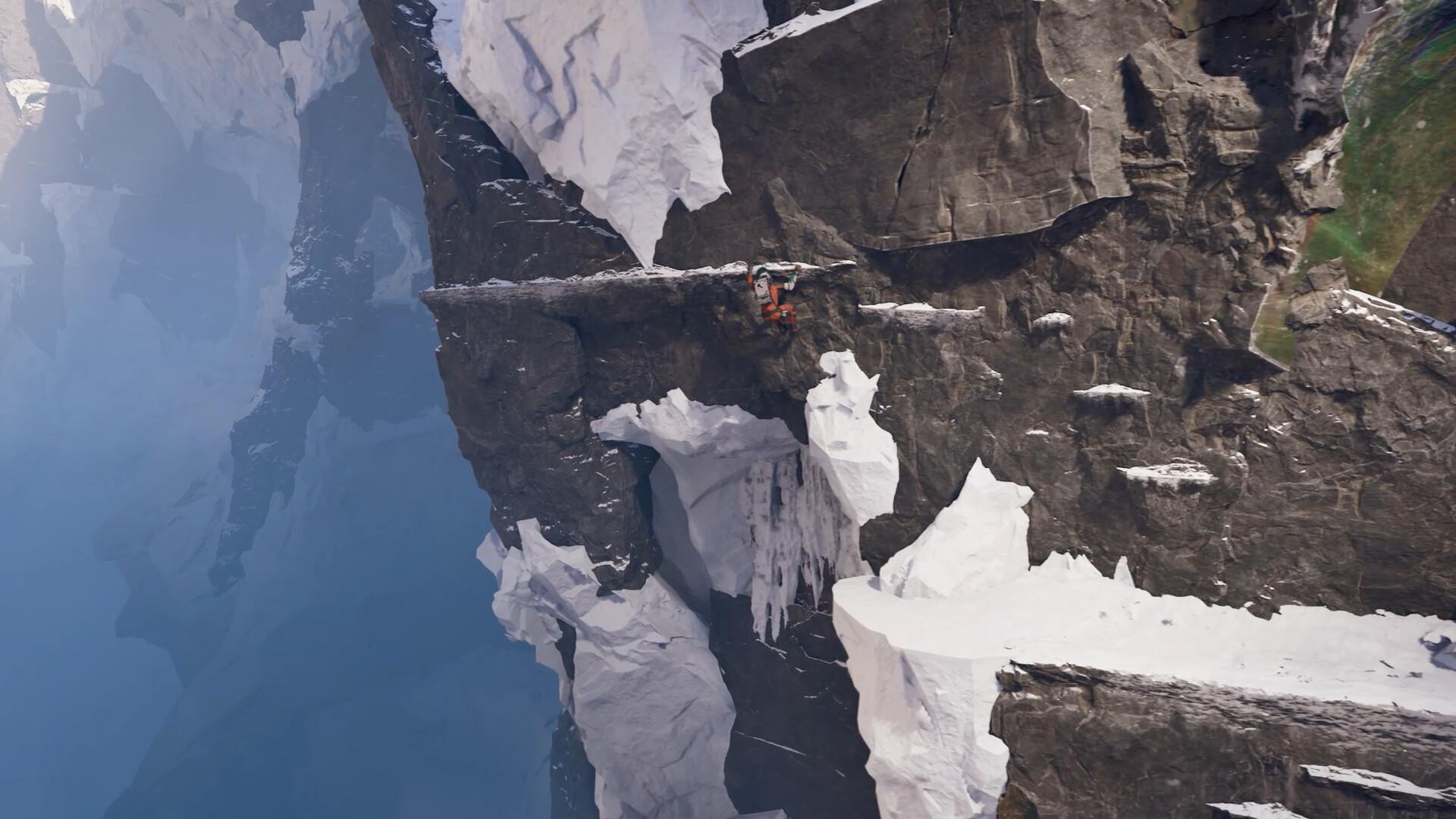
Vicissitudes from crash-landing mean Thomas stays grounded more often. One of the escape pod's support beams speared his gut and now he's barely able to clamber a chest-high wall. One of the game's rare moments of effective storytelling is in priming you to act like Ariane only to be stone-walled. Soon thereafter, an accident results in his suit leaking air; fortunately, he happened upon an area littered with oxygen supply hubs from another expedition. His pie slices of Action-Adventure™ mechanics are rather expected: time crunches between recharge stations, yanking blockades with his grapple hook, and occasionally solving stale puzzles. Take a wild guess what the six-digit code will be to open the captain's quarters.
Both protagonists were told they were the first ones here, so naturally this early revelation is meant to prompt more questions. Thomas serves as a window for players: who is this crew that beat us here and what are they doing about The Source? Problem is certain inquiries only befuddle instead of intrigue. How in the hell does this SpaceX stand-in not only evade anyone spotting the crew's interstellar voyage but also millions of tons of research equipment and infrastructure brought alongside it? The answer is two-fold: Don't Nod needed collectible breadcrumbs (audio logs, notes, etc.) after being boxed into this corner and also a villainous corporation to chide for messing with Mother Nature.
Disbelief-suspending questions continue swelling the further into its nine-hour runtime (exploration included). Besides Ariane's aforementioned indifference towards HOPE-01's destruction, she seems rather unfazed about researching The Source – her life's work – without any ESA equipment; hell, even the notion of needing rations or hydration whilst crossing vast landscapes at sub-zero temperatures doesn't figure into her equation.
One could argue against fixating on nitpicks, but it's only a natural consequence of a story so devoid of great payoffs and emotional connection. The plot's structure trips over itself in distinct ways. Ariane and Thomas are late to the party and their individual discoveries don't carry tangible stakes; compared to something like Gone Home, where you're situated as a sleuth disinterring more about your family with total freedom, the difference here feels night and day. The better narrative already happened. That goes doubly so for the bland love story that doesn't earn Amine Bouhafa's mellifluous tracks. Outside of the opening, they hardly ever contact each other, leaving us to glean their shared history – from motivations to backstories – through their own recollection.
That's also not helped by lackluster presentation either. While I can't speak for any of the foreign voice actors, neither Vanessa Dolmen nor Eric Geynes nail their soliloquies. The clunky platitudes and empty blurbs littered across Persephone aren't welcome material to work with, made worse by having to wait for their spiel before interacting with context-sensitive items, but their performances only exacerbate these issues. About the only marks of visual nuance outside of the planet's flowing magnetic trails and abstract snow sculptures are belabored close-ups during cinematics – as though Don't Nod was infatuated with its own tech. For the sake of comparing technology to another cinematic sci-fi title within its $30 price orbit, Fort Solis trounces it as far as detail and lived-in atmosphere is concerned.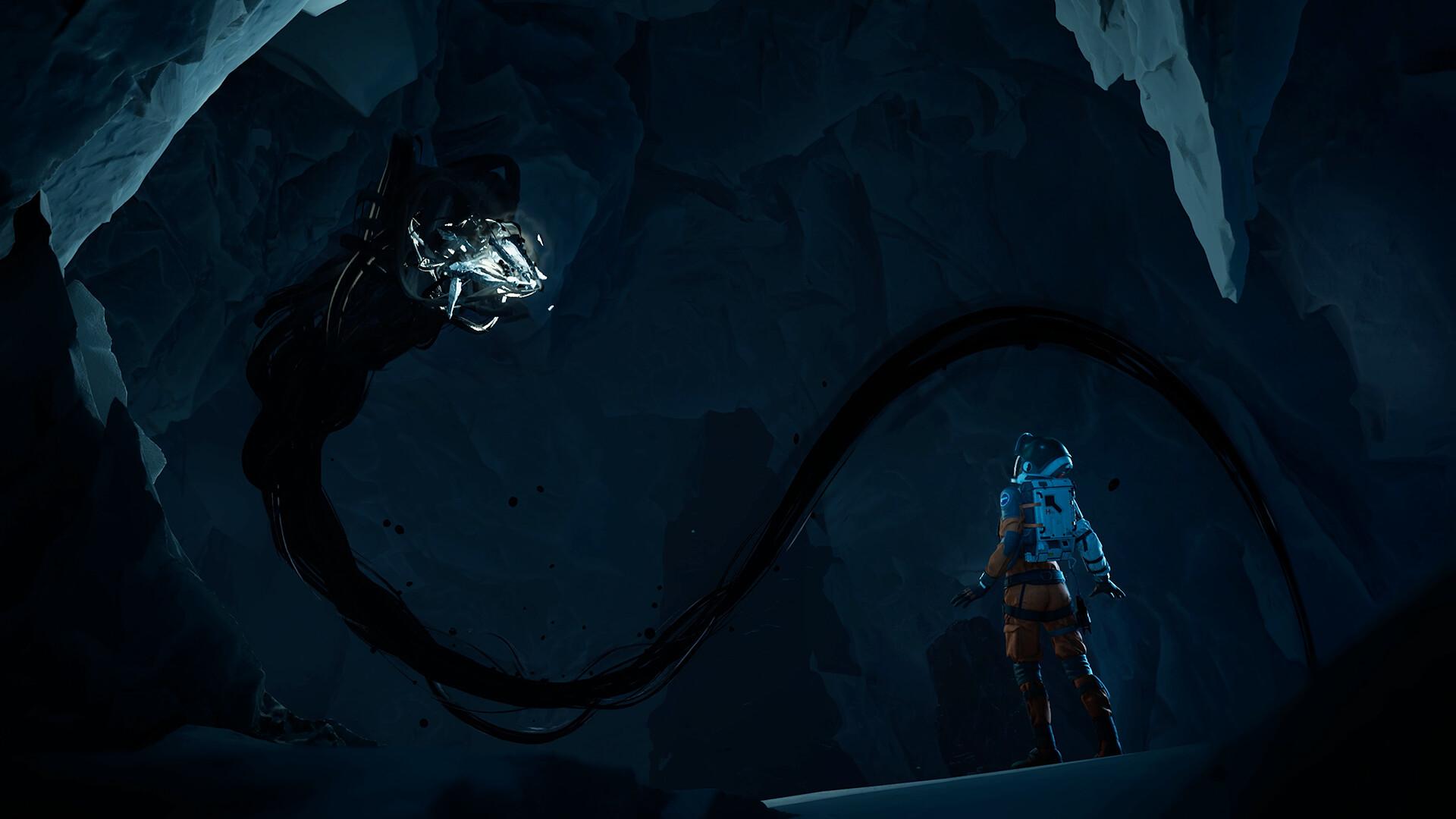
Given the bevy of formulaic ideas already here, it's odd how some easy lay-ups were absent altogether. If this magical(?) place can occasionally materialize an echo of your beloved in corporeal form, why not also incorporate brief flashbacks of them on Earth? Not only would that give players a break from this consistently unremarkable visual design, but also present background to their budding relationship and eventual split. In keeping with Don't Nod's AAA affectations, you'd think Lead Writer Leigh Alexander or the half-dozen narrative designers would've chimed in with something more than a typical eco-minded message and neat science mumbo-jumbo; instead, the end result is like a creative black hole.
The entire structure is built on a house of cards, where each successive idea feels plucked from the grab-bag of Action-Adventure™ tropes. Among the aforementioned goulash of concepts, there are also stealth segments awkwardly sprinkled about – like gravel chunks in a clam chowder. Imagine LOST's serpentine smoke monster with a crystalline headdress to show which way it's facing. Fortunately, this creature is blind, so the goal is to quietly navigate around its patrol pattern and trigger distractions on occasion. The problem is less simplicity but more its artificial viciousness. With no clear nor universal sound detection, moments like dropping from a tiny elevation or climbing a ledge shouldn't raise immediate suspicion like splashing around in a puddle; and yet, it's also rather easy to hide. Exploiting it becomes a reflex after five minutes, which makes the final act all the more boring.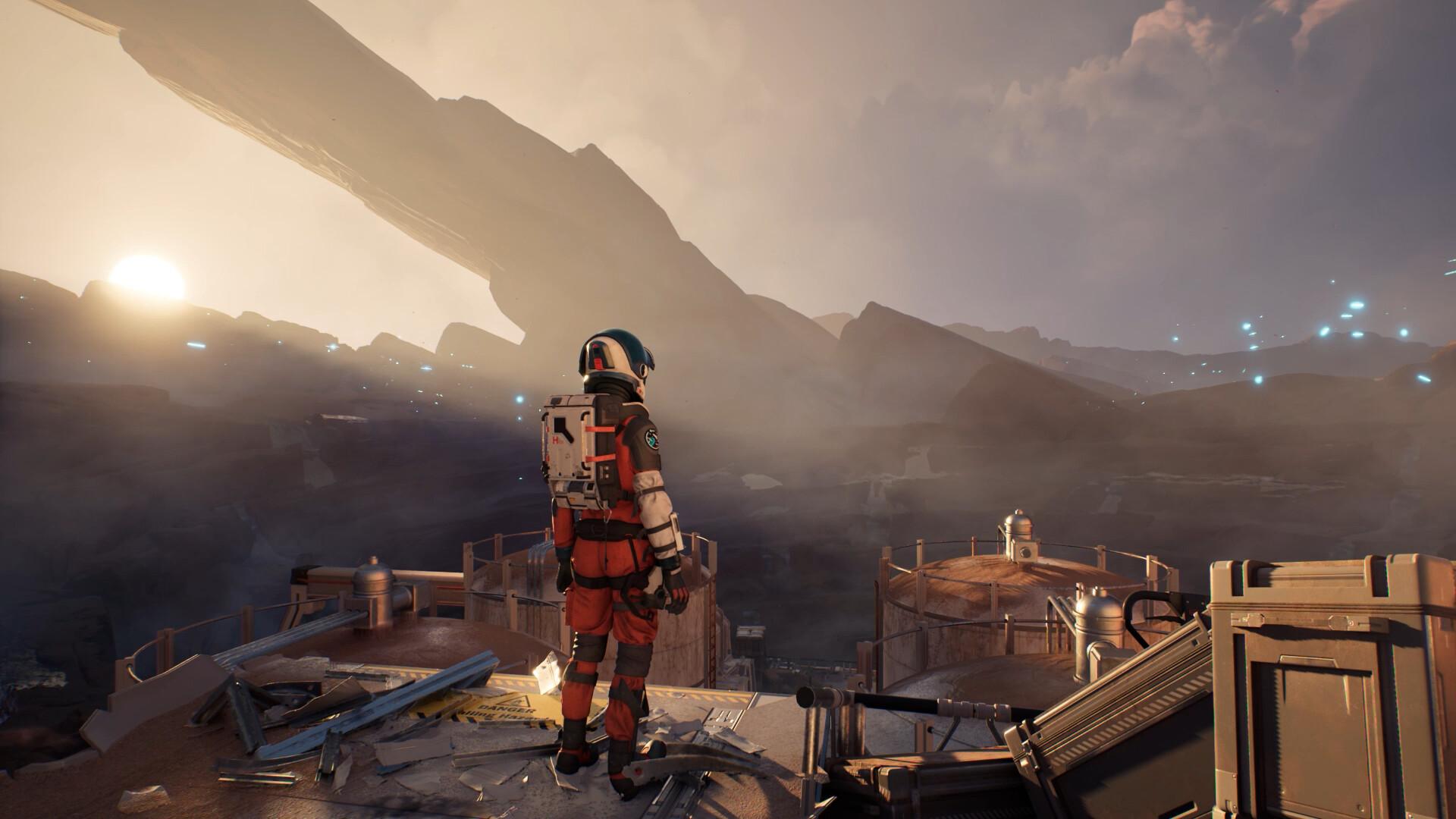
Fundamentally, Aphelion's aph-ailure is more death by plodding routine than a thousand paper cuts. With special exception to Persephone's magnetic field, every other morsel here – be it gameplay, narrative, or aesthetic – feels so formulaic that it begs the question of what potential Don't Nod ever saw. Even flagrant missteps of yesteryear (Twin Mirror, Lost Records) contained some gimmick(s) that avoided being a thoroughly homogenous sludge; something – however small – that felt genuinely inspired. When any new planet is a chance to ensorcell players with boundless possibility, it takes a Herculean effort to make one as dull as a broom closet.
Contractor by trade and writer by hobby, Lee's obnoxious criticisms have found a way to be featured across several gaming sites: N4G, VGChartz, Gaming Nexus, DarkStation, TechRaptor, and Cubed3! He started gaming in the mid-90s and has had the privilege in playing many games across a plethora of platforms. Reader warning: each click given to his articles only helps to inflate his Texas-sized ego. Proceed with caution.
VGChartz Verdict


3.5
Bad
This review is based on a digital copy of Aphelion for the XS