
History of Real-Time Strategy: The Rise (1992 - 1998) - Article
by Taneli Palola , posted on 06 February 2019 / 22,611 Views
By the early 90s the real-time strategy genre was on the cusp of breaking through to the top of the video game industry. Throughout the previous decade it had slowly emerged as something of an offshoot of the turn-based strategy genre, and by 1989 all the basic elements of the fledgling RTS genre were in place. However, even as we entered the new decade it still had no proper recognized name.
Of course, that would change very quickly, as the industry entered into a period of time that served as the inception point for many of the most important and popular franchises in the entire history of the genre. This article will cover the years that pushed real-time strategy to the top of video game world and turned certain developers into household names.
Ion Cannon Ready
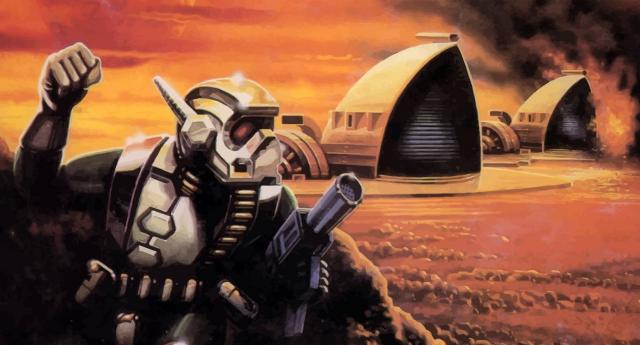
By 1992 all the core mechanics of real-time strategy were in place, and games like Herzog Zwei (1989) and Mega Lo Mania (1991) had in essence already put all of the various different parts together into one package, but had failed to present them in a way that would appeal to larger audiences. This would finally change when Westwood Studios took a shot at the genre, and in doing so turned a formerly niche sub-genre into one with genuine mainstream potential.
Westwood Studios' main claim to fame prior to 1992 was the dungeon crawling RPG Eye of the Beholder (1991) and its sequel The Legend of Darkmoon (1991), which are often considered some of the best 90s RPGs. The studio had actually already tried its hand at the real-time tactics genre with the game Battletech: The Crescent Hawks' Revenge (1990), which served as something of prototype for the game that would define the genre two years later, but which wasn't a huge success itself.
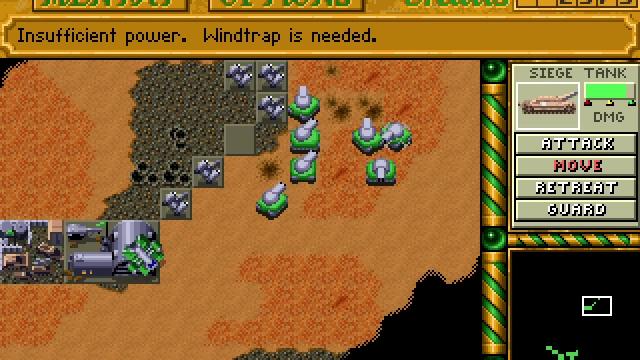
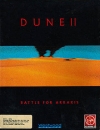
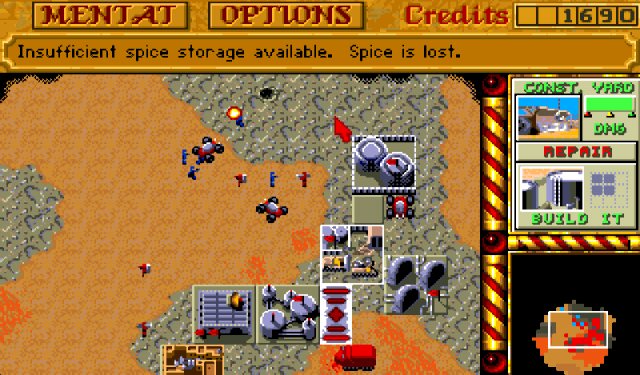
In 1992 Westwood Studios released Dune II: The Building of a Dynasty, and alongside that coined the term real-time strategy, which would become the name for the entire genre going forward. The phrase 'real-time strategy' actually came about when Dune II's producer, Brett Sperry, attempted to describe the game; the term stuck and quickly became the de facto name for this particular type of game.
Dune II was a genuinely groundbreaking title when it was released, succeeding in areas where many games before it had failed to do so, chiefly in making the strategy genre attractive to a large number of players and expanding the reach of the genre significantly. Naturally, there were various different reasons for this sudden explosion in popularity for the genre, and numerous external factors came into play at around the same time which facilitated Dune II's success.
Most notably, this was when mouse-driven controls became more prevalent in PC gaming. The team at Westwood Studios realized that it would be much more natural and quicker to play a strategy game with a mouse rather than controlling everything with a keyboard. The inspiration for this design choice actually came from Mac's mouse-driven software interface.
Dune II was naturally influenced by a number of different strategy games that had come before it, from the obvious ones like Herzog Zwei, Civilization, and Populous, to more obscure titles such as Military Madness. In addition, Brett Sperry has stated that some of Dune II's gameplay was heavily influenced by an argument he had with the then Vice President of Strategic Simulations Inc. - Chuck Kroegel - about the commercial viability of ”wargames” as a genre. Sperry felt that there was still a lot to be done within the genre by pushing it more towards faster-paced, action focused gameplay that would entice new people to give the genre a try, and Dune II was the showcase for this particular vision.
Dune II's gameplay loop was a particular stroke of genius and is still often used to this day. It streamlined and refined the already existing mechanics of resource gathering, tech trees, base building, and upgrading your armies, making them more accessible to people not accustomed to strategy titles, and as a result defined an entire style of video games for years to come. Many later games would go on to vastly improve on all of these elements of course, making Dune II somewhat archaic and simple by today's standards, but without it there just might not even have been a foundation upon which subsequent games would build.
While Dune II's success was readily apparent, its influence on the real-time strategy genre wasn't immediate. Westwood Studios naturally took what it had made in the game and began developing its next major project, but between 1993 and the early part of 1994 few if any proper RTS titles were produced. There were certain games that featured elements of the genre, but none that could be categorized as genuine RTSs.
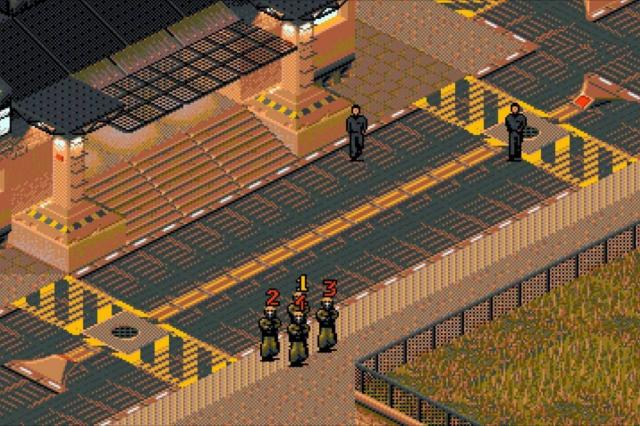
Notable example of this would be Bullfrog Productions' Syndicate (1993), better classified as a real-time tactics game due to its lack of base building elements and focus on a few individual units rather than larger armies in missions. Another title that could be considered an RTS game was Blue Byte's The Settlers, but it's better categorized as a city-building game rather than an RTS. However, this gap in RTS titles didn't go entirely unnoticed, and the following year another major franchise would be born.
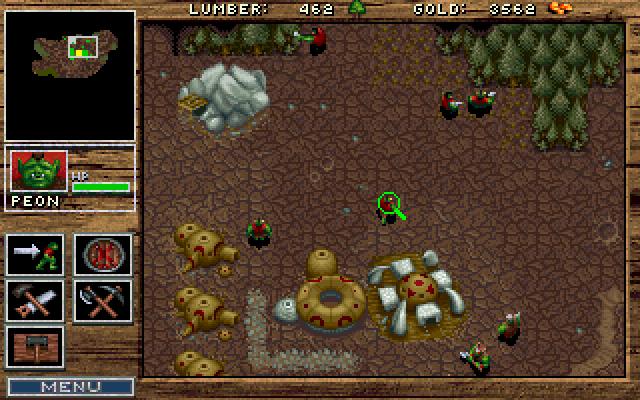
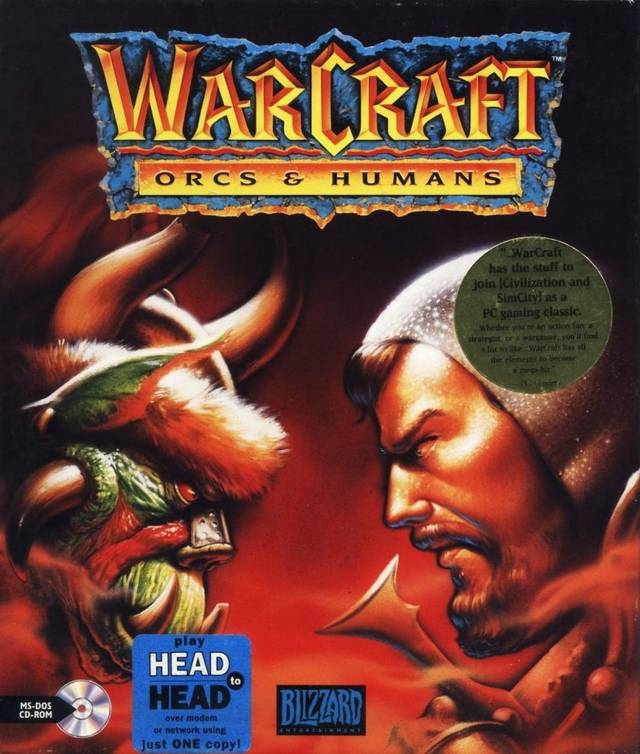
In 1991 a video game company called Silicon & Synapse Inc. was founded in California. The studio would produce a few well received SNES titles during its early years, like Rock n'Roll Racing and The Lost Vikings, which are today often seen as cult classics. But then in 1994, a few months before the release of what would become one of the studio's most influential titles, the company changed its name to the one we now know it by – Blizzard Entertainment. The game the company developed was, of course, Warcraft: Orcs & Humans.
Intended to take advantage of the lull that followed the release of Dune II, Warcraft was developed in a very quick timeframe so that it would have free range on the market, at least for a brief period of time. There's no doubt that Warcraft was heavily inspired by Westwood Studios' work, to the point that it could almost be called a reskinned copy of Dune II. However, it did have a fairly clear identity of its own as well, increasing the pace of the gameplay and giving the two warring factions much more depth and identity through the use of in-game voice lines and various cutscenes between missions.
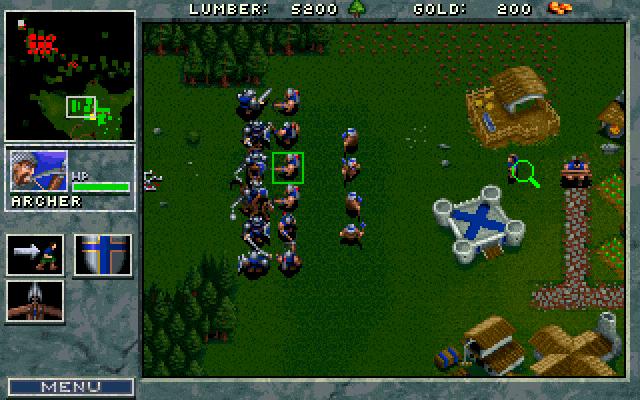
The other element that set Warcraft: Orcs & Humans apart from the games that came before it was the multiplayer skirmish mode, allowing two players to play simultaneously either locally or online. This would prove to be a landmark moment in the development of the RTS genre, as once Blizzard realized the popularity of the multiplayer mode it would significantly influence the design of its later RTS titles. The game's release would also set the stage for the rivalry between Blizzard and Westwood Studios that would catapult the genre to great heights over the next five years.
As already mentioned, Westwood Studios had kept busy throughout this period as well, having been quietly working on the successor to Dune II since before work on Warcraft had even begun. In addition, it hadn't gone unnoticed in the studio that Blizzard's game had more than just a passing resemblance to its own work. This sprung up what was initially a pretty serious grudge, but fairly soon both sides realized that the battle between the two studios was actually mutually beneficial in the long run, and it turned into more of a friendly rivalry after a while.
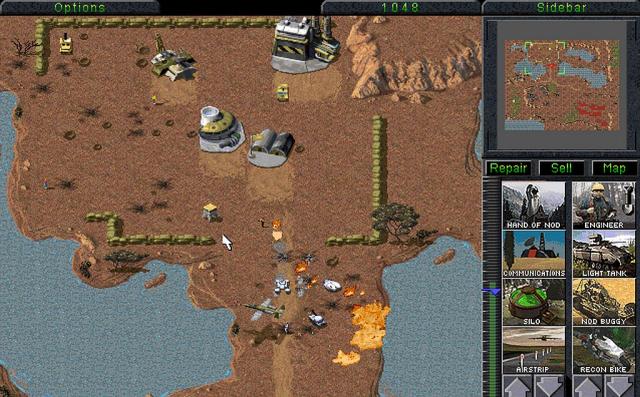
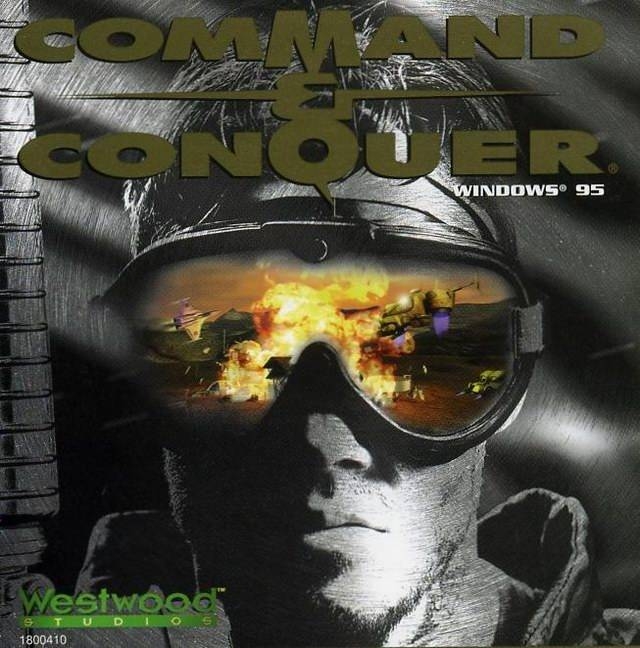
In 1995 the popularity of the RTS genre exploded off the back of two huge releases, beginning with Westwood Studios' most ambitious game yet, Command & Conquer. Learning from its experience developing Dune II, this new title was meant to expand and improve upon the concepts introduced in that game. It was essentially the culmination of everything the developer had wanted to do with Dune II, but had been unable to achieve previously.
Development for Command & Conquer began in early 1993, soon after the release of Dune II. Westwood Studios wanted to build an even better real-time strategy game, but this time using its own original IP. However, early on the game was quite different from how it would eventually turn out, taking place in a high fantasy setting with wizards and magic. Of course, this would eventually change quite drastically.
At the time the Gulf War had ended fairly recently, and war and terrorism was constantly on the news. This had a notable effect on the world that was created for Command & Conquer, and the political climate of the era was seen as the perfect inspiration for a new RTS title, albeit one set in an alternate timelime so as to avoid evoking some of the more unfortunate realities of modern warfare. From this the idea for the war between a global military alliance (GDI) and an anarchistic terrorist organization (Nod) was born.
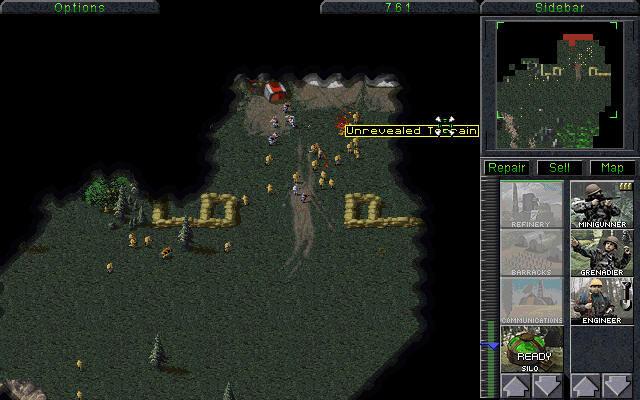
At its core Command & Conquer is essentially a faster-paced and more polished version of Dune II and its gameplay, but that would be selling it short. Still, much of the central gameplay of the earlier title was there, just presented in a new environment with slicker, more fleshed out gameplay. Naturally the interface and gameplay were significantly improved, and the added multiplayer element was a welcome bonus. It also introduced a click-and-drag multi unit selection feature, which made giving orders to large groups much more manageable than before. However, there was much more to the game than just improved gameplay.
One of the genuine highlights of the title are the intentionally over-the-top and wonderfully hammy live-action cutscenes, filmed using mostly people working at Westwood. The sole exception was Joseph Kucan, whose turn as Kane, the leader of Brotherhood of Nod, gave us one of the most memorable bad guys in video game history. These live-action cutscenes would become a trademark of the C&C franchise going forward, and over the years they provided us with some of the funniest video game moments ever.
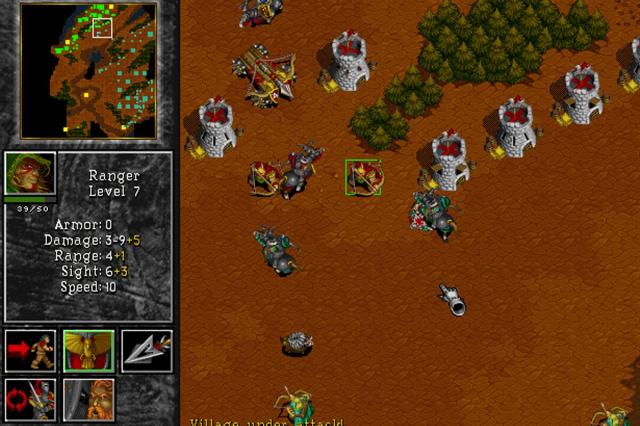
Command & Conquer was a massive success for the studio, going on to sell over 3 million copies and launching one of the biggest RTS franchises of all time. However, Blizzard wasn't just going to let Westwood Studios take the RTS crown for itself without a fight. Ever since the original Warcraft had proved a major success, the developer had been busy working on a sequel, and at the tail end of 1995 we got our hands on WarCraft II: Tides of Darkness.
WarCraft II had an extremely fast development period - the previous game had only been released in November of the previous year, and work on Tides of Darkness didn't begin until February 1995. With a December release date this meant that the game was completed in less than a year. It naturally helped that much of the title was still heavily based on the core gameplay and mechanics of the first Warcraft, but it was still a remarkable achievement nonetheless.
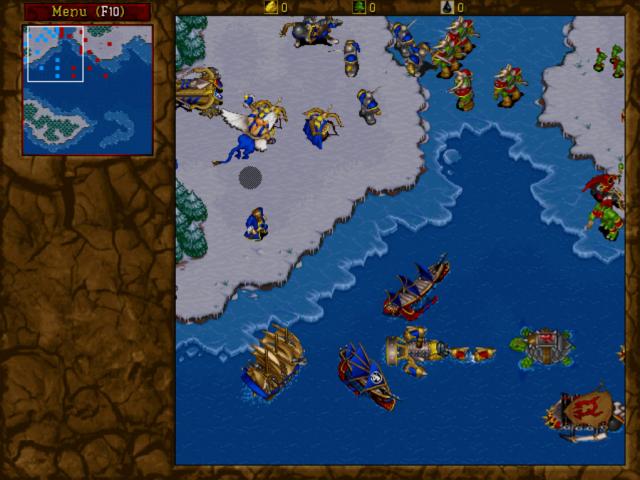
In less than one year's time, Blizzard had managed to not only improve the gameplay and mechanics of the title, but also almost entirely overhaul the graphics, making WarCraft II look years beyond what the studio had achieved with the first game. The gameplay was also vastly expanded, introducing various new unit types and structures that brought a lot more variety to the battles between the two sides. The storyline was also given much greater focus and depth, which helped flesh out the world of Azeroth even further.
However, the one element Tides of Darkness introduced that had the most significant effect on the genre, at least in hindsight, was the two-tier fog of war system. Now, in addition to the black fog covering the map's unexplored areas, already explored areas outside of your line of sight would be shrouded in grey. This introduced a new element of strategy to the RTS genre, where you could never be entirely certain about what was going on around the game map, allowing players to hide units and stage sneak attacks in ways that weren't possible before.
Similarly to Command & Conquer, WarCraft II: Tide of Darkness was a massive success, selling over 500,000 units in three months, and by 2001 it reached sales of over 3 million. Real-time strategy was now emerging as one of the leading video game genres on PC and many game companies were definitely taking note of this fact, but for just a little while longer it would remain the almost exclusive domain of Blizzard and Westwood Studios.

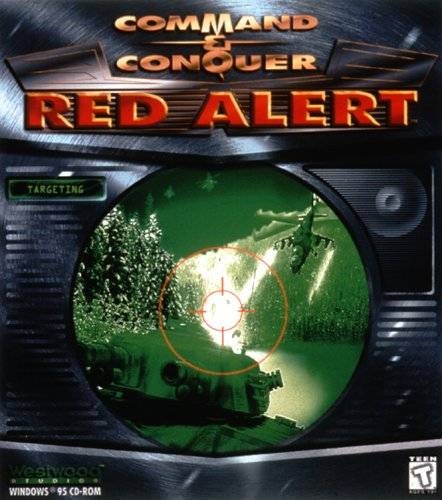
Following the success of Command & Conquer, Westwood Studios immediately went to work on a follow-up. However, instead of returning to the same setting, the developer decided to instead create a game set in an alternate timeline. This game was Command & Conauer: Red Alert and it released in late 1996. The narrative is set in motion when Albert Einstein travels back in time from 1946 to meet a young Adolf Hitler in 1924, just as the latter is being released from prison. The two have a brief discussion and shake hands, which erases Hitler from the timeline.
While this prevents World War II as we know it, it was only a temporary solution, and set the stage for the almost unstoppable rise of Soviet Union in the new timeline. Without Nazi Germany as a counterbalance in Europe, the Soviet Union rose to unprecedented power under Joseph Stalin's rule, and soon a new war is on the horizon with Stalin looking to conquer all of Europe. In the end, the changing of history only managed to replace one war with another. In addition, Red Alert actually serves as a prequel to the Tiberian timeline, with the Brotherhood of Nod's mysterious leader Kane appearing at various points as Stalin's advisor.
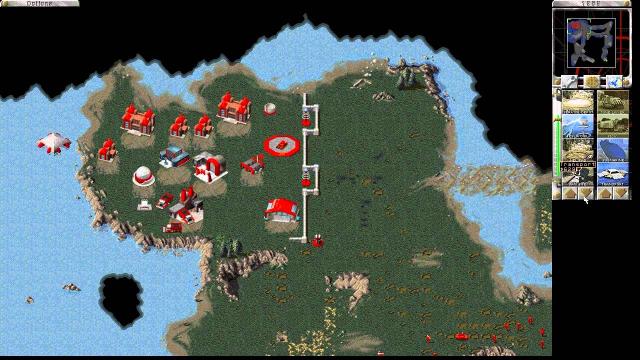
For anyone who played the first C&C, Red Alert's gameplay was instantly familiar. Nearly all of the elements from the first game were present, just improved and with some new things added to the mix, such as naval units and a greater variety of structures and units in general. Overall, Westwood did a great job at making the two sides clearly distinct from one another, each having their own strengths and weaknesses in battle.
Red Alert and WarCraft II cemented both series' place in the pantheon of RTS games. If it hadn't been for the work of these two studios the genre may have never risen above niche status, and many of the genre's key features can be traced directly back to these few years and the titles created by just two developers. Unfortunately, 1996 also marks the point when the RTS genre ceased to be a two-horse race. Real-time strategy was suddenly a lucrative market, and people took notice. The onslaught of mediocre knock-offs was about to begin.
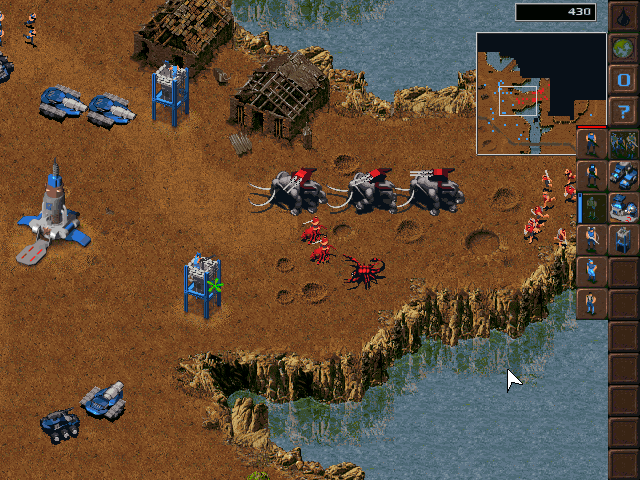
The following year it became clear that quite a few video game companies had noticed the success that Westwood and Blizzard were having with their strategy games, and naturally wanted in on this shiny new trend. It's just a shame that the vast majority of developers that brought out their own RTS titles hadn't quite figured out how to best work within the genre, and as a result most of these games came off as cheap imitations. For some reason sci-fi seemed to particularly popular among these developers.
Among these many hopefuls were luminaries such as 7th Legion, Conquest Earth, Dark Colony, Earth 2140, Enemy Nations, KknD, and Imperium Galactica, just to name a few. Some of them were received relatively well, and a few even had some interesting ideas of their own, but often these good ideas were buried under a litany of poor design choices and other issues that prevented most of these titles from standing out or leaving any lasting impression.
However, I will fully admit to liking KKnD and its sequel KKnD2: Krossfire, despite neither actually being all that good in hindsight. Call them a guilty pleasure I suppose. Of course, it wasn't all bad, despite the somewhat questionable quality of many of these titles, as 1997 also added a new dimension to the genre, literally, and saw the release of a some highly influential and otherwise notable titles, many of which went on to spawn franchises of their own.
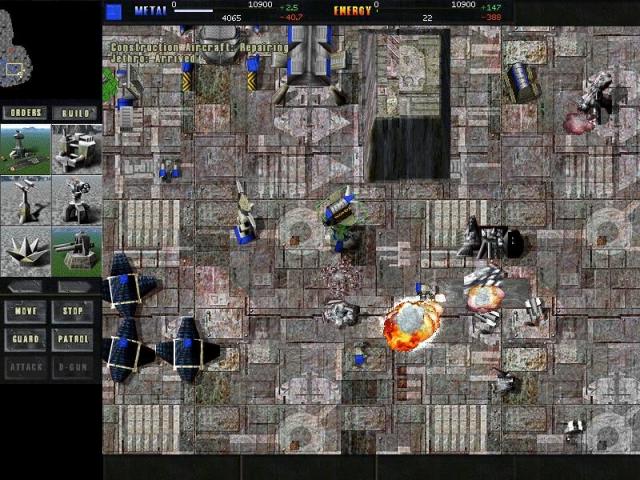
The first half of 1997 was somewhat barren in terms of notable releases, but the latter half would more than make up for that. This was the year that real-time strategy began to seriously experiment with 3D elements. Up to this point RTS games had stuck to 2D maps that had simply created the illusion of depth, but with the release of Dark Reign: The Future of War we got our first look at real three dimensional terrain that genuinely affected units' line of sight.
Dark Reign was a commercial success on release, but it was quickly overshadowed both commercially and critically by another title that also made heavy use of 3D elements in its gameplay – Total Annihilation. It featured similar elements to Dark Reign, with prerendered 2D maps that through the use of height values allows the terrain to act as if it's fully 3D. This affected units' line of sight and also influenced their movement. In addition the 3D was used alongside the game's physics engine to influence how debris and explosions behaved and how they interacted with their surroundings.
The release of Total Annihilation was significant for another reason as well, as that can be seen as the point where the stranglehold that Westwood and Blizzard had held on the RTS space began to slowly erode. Total Annihilation was the first game to truly challenge that position, but soon others would follow. Real-time strategy was about to turn into a highly competitive genre.
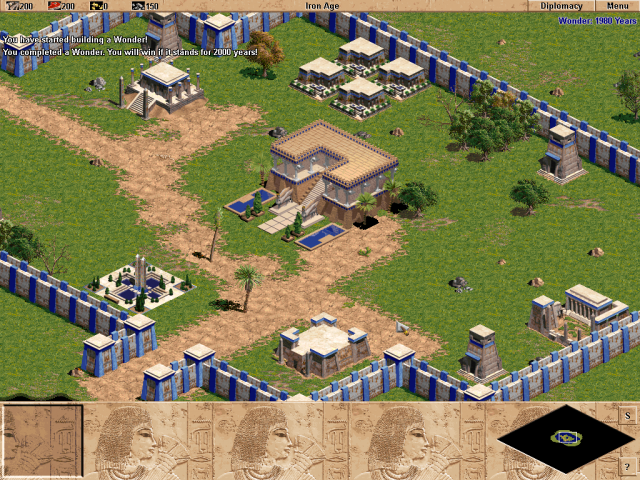
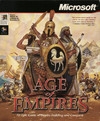
Just 15 days after the release of Total Annihilation another newly formed studio would throw its hat into the ring. Ensemble Studios had been formed back in 1995, and since then the developer had been busy working on its first title, initially titled as Dawn of Man. The game would eventually be renamed - and become famous as - Age of Empires. The third big RTS franchise had been born (Total Annihilation never properly translated its success into a lasting series).
Unlike the other RTS games on the market, Age of Empires took its setting from real history. This setting not only allowed it to stand out amongst the competition, but also appeal to a wider array of casual gamers. Designer Bruce Sperry specifically cited Civilization as a big influence on the game's design and ultimately it proved to be a smart decision, as AoE would eventually go on to sell over 2 million copies worldwide, placing it firmly as the third largest game on the market.
Finally, at the very end of the year Bungie would release Myth: The Fallen Lord, a real-time tactics game which featured a fully 3D engine that truly showed what a controllable camera could do for combat and overall control of the battlefield in an RTS game. It would take a few years before any actual real-time strategy games would make use of an engine like this, but that particular title will have to wait until next time.
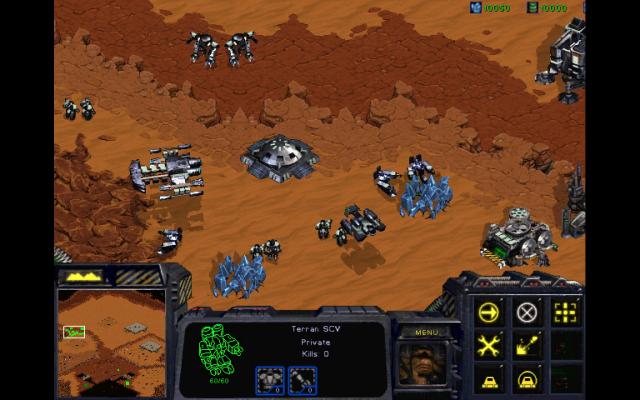
1998 would bring a number of sequels and expansions to already existing titles, and one massive release that would shape the entire genre going forwards. Games like Dark Colony, Dark Reign, Total Annihilation, Age of Empires, and Earth 2140 all received expansions, while entirely new games such as Dune 2000, Populous: The Beginning, and Myth II: Soulblighter also saw the light of day. And then there was that one other game as well.
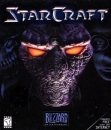
The rise of the RTS would not be complete without the game that to this day is the most successful single release within the genre's history, and a game that is still played competitively around the world. Of course, the game I'm talking about is Blizzard's StarCraft. Not only did it become by far the most successful RTS game ever released, but it also showed that the traditional isometric 2D style still had its place.
StarCraft went further than any other game before it by introducing three warring sides and making them clearly distinct from each other. The Terran, the Protoss, and the Zerg each had their own look, strengths, and weaknesses, and had been designed to balance each other out. Of course, this was also a huge part in making the game such as massive success as a competitive game, especially in South Korea, effectively facilitating the eventual rise of e-sports around the world.
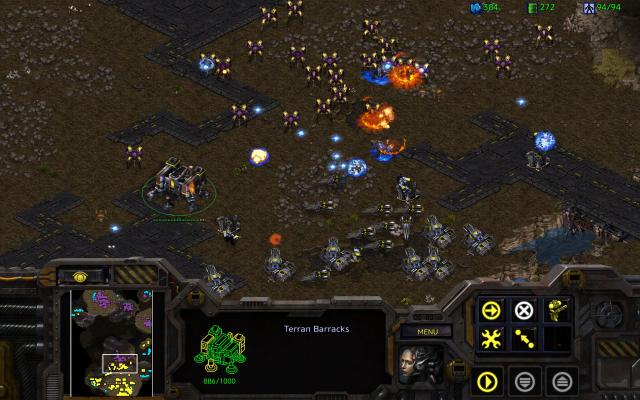
Development for StarCraft began very soon after the release of WarCraft II, using the same engine for its early build. However, the reception for the initial reveal wasn't very strong, with a lot of people labelling it ”WarCraft in space”. Because of this the entire project was overhauled, leading to the addition of a third faction to the game, and the hand-drawn graphics were replaced with computer rendered graphics. Thanks to these and other changes the subsequent showings of the game were received far more positively, and when it was finally released on March 31, 1998, the game become an instant massive success.
Today the original StarCraft has sold in excess of 10 million copies worldwide, with almost half of those in South Korea. Critically it was also very well received, and while it may have had some minor issues with its AI, the impact the game has had on the RTS genre and the world of competitive gaming is undeniably massive. Other games may have been more innovative or groundbreaking, but few succeeded as well in balance as StarCraft.
As we came to the end of 1998 most of the major players of the RTS genre were in place, and its rise to the top of the gaming world was more or less complete. What would follow are often considered the peak years of genre, as many of the biggest real-time strategy franchises released their most revered titles over the following 5 years. In addition, the genre went through a period of refinement as developers further experimented with various gameplay mechanics. However, that's going to have to wait until next time.
Sources:
- 1001 Video Games You Must Play Before You Die
- History of real-time strategy games (Ars Technica)
- The History of Warcraft (IGN)
- Games that changed the world: Command & Conquer (GVG)
- Command & Conquer: Origins (CVG)
More Articles

I remember playing the demo for Age of Empires I got from a Burger King demo disk for days on end, and that was even before AoE II came around and was even better. Good times. Thanks for the article, always great to read things about this genre.
Nice article I enjoyed reading this. I personally was a big fan of the Red Alert series and the Age of Empire series. I assumed at the end of the article you'd say that one massive game would be Age of Empires 2. I remember that being huge and having several expansions on it as well. I never played Starcraft and didn't realise it was that big. Is it worth playing retrospectively?
Personally I still really enjoy Starcraft, they released a HD remastering of it as well so it looks pretty good still. The story is still really fun as well a lot of people still play it online. I still play Starcraft 2 more but I go back every now and again! Check em out they’re great!
I played Warcraft 2, Dark Colony, Starcraft and AoE2 at their time but then completely lost interest in RTS to this day.

Developers were just now starting to master the craft of the genre. I can't wait for the next part too see what you have to say about AoE II. Also I want to play some Red Alert now.