


Let's Talk About the F-Word - Article
by Spencer Manigat , posted on 26 May 2016 / 6,405 Views
I'm a tremendous fan of YouTube. I love that anyone has the ability to build something from nothing on the platform, as long as they can build a following, and I love how incredibly niche that following can be. On YouTube, my preferred niche has always been video games. Video games got me into YouTube and, in many ways, YouTube got me into video games so that it was more than just another inconsequential hobby of mine. This goes back for years, and I've subscribed to a wide array of channels, ranging from let's play channels to channels where every day gamers would provide commentary on hot topics in the gaming industry over gameplay.
That being said, my favorite channels at the time were always gaming media channels. I enjoyed the production and I admired the professionalism. That's key here - I admired, and still do admire, gaming media for their self-appointed professionalism. This was sort of shattered for me when one of my favorite journalists on one of my favorite channels at the time posted a video about two years ago on what I like to refer to as "the F-word." I call it the F-word, obviously, because I don't like using the actual word. The video was essentially an op-ed, and the topic was a criticism of "fanboys."
This really rubbed me the wrong way.

Now, to be clear, my issue wasn't in the journalist addressing these kinds of people in general. It would be ignorant of me to pretend that the console wars don't exist. They do. It would be irresponsible for me to act as though there aren't subsets of individuals who will vehemently support one console over the rest, even to the point of being irrational and, often times, disrespectful. That's a problem, and that's a problem worth talking about, but that's not the problem I'm specifically talking about here. My problem is with the use of the F-word at all.
Because, and let's be honest with ourselves for a moment here, the F-word isn't, and was never intended to be, an intelligent categorization of a specific group of people. It's a cheap insult. It's nothing but childish, petty name-calling. It's a word one party will use to mindlessly shut down any argument from the opposing party. No matter how immature you may feel that group of people are, calling them names in response is arguably just as immature.
And you know what? Maybe that's fine. Maybe calling people names on a forum is fine. Maybe calling people names in a comment section is fine. Maybe calling people names on a let's play video or a commentary is fine. But, to me, there is supposed to be a line drawn in the sand in the form of professionalism in the media. There's a sense of responsibility and a sense of accountability. What rubbed me the wrong way about that video and its use of the F-word was how normal it was being presented. As though "fanboy" truly was the most acceptable, intelligent, or even preferable term by which to describe and generalize an already poorly defined group of people.

This is a word I've seen used everywhere. It's in gaming. It's in tech. Many articles have been published on this one little word and many more videos have been created addressing these title-bearers online, both by amateurs and on a professional level. Through my research for this very article, I learned that the origins of our current understanding of the F-word came from a 1973 fanzine, unsurprisingly called Fanboy, that was distributed at a comic convention in Chicago. Yes, the F-word really came from comic books. If you wish to learn the whole story about the word's origins, Technologizer's Harry McCracken wrote a brilliant article detailing the word's etymology throughout the 1900s and early 2000s. It's truly fascinating to read.
Perhaps the biggest thing I took away from learning about how the F-word came to be was how it was never intended to be as vitriolic as it has since become. As McCracken describes it, it was merely meant to be "gently satirical, not surly and accusatory." And in some ways, it still is that. In some ways, it still is just an example of gamers poking harmless fun at themselves, much in the same way many anime fans will proudly proclaim to be "otaku" or "weeaboos." It's an in-joke and even, occasionally, a passionate badge of honor.
And that usage of the word is awesome, but that isn't how it's being used in the types conversations I'm citing. That's not how it was used in the video I watched, and that's not how it's been used in the countless other articles and videos I've consumed since on the topic. It's always used as little more than a dismissive put down, and it always comes off as uncharacteristically immature language for otherwise professional media outlets with otherwise professional and talented staff to be using.
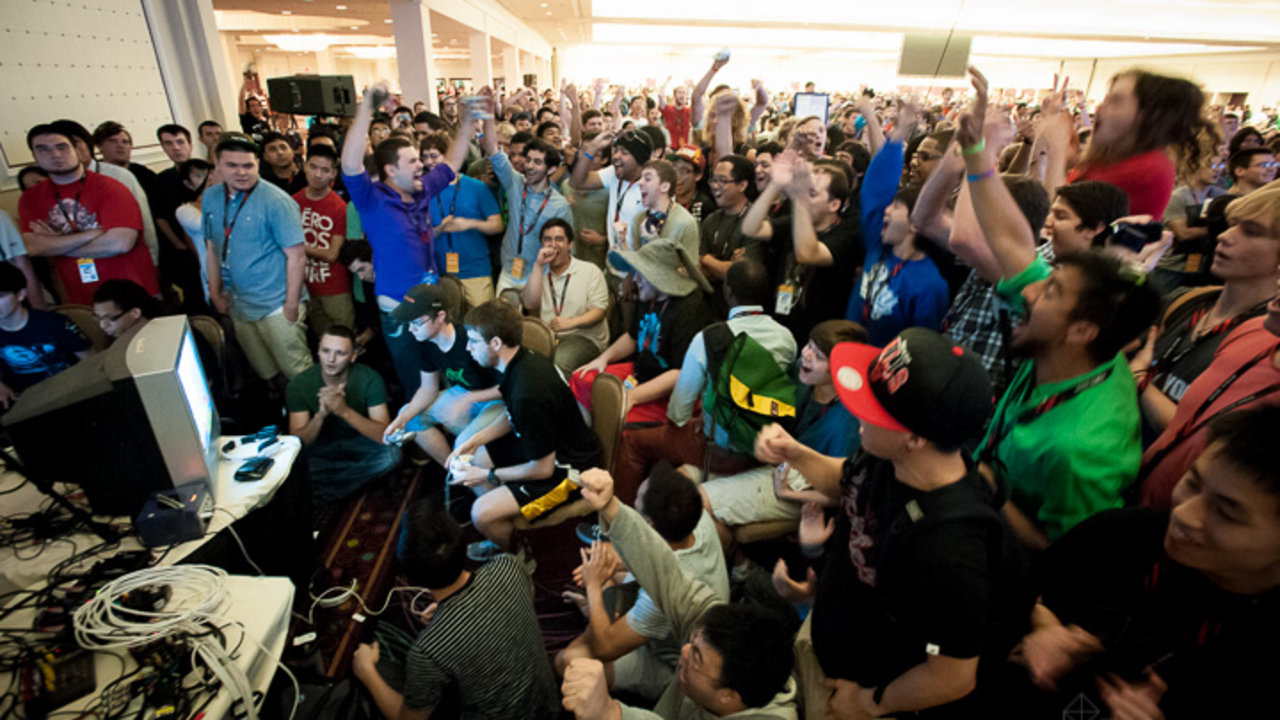
That's the biggest reason why it rubbed me the wrong way. Because we should all, as gamers, be above something as infantile as name-calling, and our media is supposed to represent the best in us. It's supposed to represent the passion we share for this hobby and how seriously we take it. Though gaming is rapidly becoming more and more respected as a legitimate form of media, and even as art, it still carries a large stigma for being an unproductive, immature hobby. Frankly, it's difficult to blame anyone who may be ignorant to the nuances of such a complex form of media for not taking it seriously when so many of its most influential and public representatives are using such juvenile language to generalize whole groups of its consumer base. It's even hard to blame every day gamers who use that kind of dismissive language regularly amongst themselves when the people they are supposed to be able to look up to as an example are essentially condoning insults and telling everyone that name calling of this ilk is okay.
It's not okay. It's mean spirited and ostentatious. If video games want to ever truly legitimize themselves as a form of media people no longer scoff at, even while the medium is booming with success on all sides, the games aren't what need to grow up - we are. We have to be better than the F-word, from comment poster to big gaming personality. The word, as it is currently being used, needs to be eliminated from the gaming vernacular altogether.
If you find yourself speaking to someone who you feel is being irrationally fanatical about any gaming brand, responding by saying almost anything else is more thoughtful than simply labeling him or her a "fanboy." The F-word is not helpful to anyone, and we are all better off not using it.
 Playing video games since the age of 5, Spencer Manigat has been fascinated with the possibilities of this interactive medium for nearly as long as he could speak. Recently, his growing obsession with learning about tactile mechanics, interactive narratives, and all things on the academic side of gaming has lit a new passion in him to discuss, debate, and critique various topics in this brilliant medium of video games that we all find ourselves participating in. The Legend of Zelda: The Wind Waker, Pokémon: Platinum Version, and Super Metroid are a few of his favorite games. You can contact Spencer at spencer.manigat@gmail.com or follow him on Twitter @spencewashere.
More Articles

I've faced problems in the past because of this ridiculous characterisation of a term behind what the word says. A fan and a fanboy or fangirl are the exact same thing. A boy fan is a fanboy. I don't understand this sudden derrogatory conotation given to the word like it says retard or something. It's all quite silly imo.
The word says that there is a fan with a bias. Wether you call him fan or fanboy is the same thing to me. But alas forum rules...


"If video games want to ever truly legitimize themselves as a form of media people no longer scoff at, even while the medium is booming with success on all sides, the games aren't what need to grow up - we are." I think this gets to the heart of the matter. The majority of the time, we're a generous, friendly, inclusive community. But we can also be surprisingly juvenile and nasty, especially when we feel the medium is under attack.
I think we all have a bit of growing up to do.

A wise man once said "Even as videogames become increasingly accepted as art, and even educationally or scientifically beneficial in some instances, it seems that “we”, for our part, are not doing much to present it as something inviting, potentially beneficial, artistic, or as something that should be “taken seriously”." Full article here: http://www.vgchartz.com/article/261295/online-gaming-etiquette-a-brief-rant/
Also, are we aloud to plug ourselves in other articles like this? Perhaps I should have asked first.

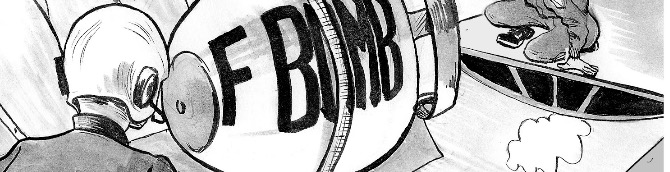
Am I the only one who thought they were going to talk about the word "fuck" and give some neat fun facts?
Word. Not the F bomb i clicked for. xD
No it fooled me too.

indeed, was very disappointed.... Fuck!

Many of the people who use insults like "fanboy" are often unable to maintain a coherent argument. It's the equivalent of "uh, well, maybe, but you're a doodoo head!"
Like many other words "fanboy" has changed its meaning throughout the years. It is used by gamers to describe a certain type of behaviour. Is it mean spirited? Perhaps. This doesn't mean we have to exclude it from our language or ban it.

I agree. People find it easy to use dismissive words though. Requires less thought. I'm sick of seeing the terms feminazi and SJW myself.
Oh yeah. If I never see "SJW" again it will be too soon.
I cringe and cry myself to sleep when I see SJW's and third wave feminists
Listen, SJW's aren't "empathetic" when they go from whining about any joke about black people to making jokes about white people that are actually offensive. When the liberals from Tumblerinaland and other places get it together, then maybe I won't see feminism and SJW's with such a negative light. However, that's not the case nowadays Skratchy. We live in a world where saying anything triggers people, but these triggered people can say the same things to other people because...uh, "social racism doesn't apply to whites, males, CIS, and straights" or something along those lines.

Next let's talk about the N-word. Nintendo.
Wait, which one?
"individuals who will vehemently support one console over the rest, even to the point of being irrational" I'm not sure I like that phrasing. Can anyone guess why?
All right I'll tell you. It suggests PC enthusiasts are above those sorts of attitudes. But clearly the attitudes that get people called fanboy applies to a subset of PC gamers as much as it does to a subset of console gamers.

You're right. I should have used the word "platform" instead of "console." My mistake. - Spencer Manigat

I really don't think gamers or whoever is using the "f-word" is anything other than humans. Please think about this. These individuals (myself included) have gaming as one of their passions. Its not the industry, its not a certain type of medium, it is just people. Those who are gamers are not some kind of magical aliens.
Your problem with the use of the f-word is a problem with people, and it is happening all over the world.

firstworldproblems

Exactly. I see no issue with calling someone or being called a fanboy. This article seems to be written by someone who is overly sensitive and simply cannot accept, that a word, he believes its derogatory, is being used to characterize a group of people. Since when does gaming or gaming culture in general need the "respect" of the mainstream media or consumer? Is that really where this path has to take us? To be considered high-quality, mature or artistic by a group of overpaid snobs? No thank you. And yes, I am a fanboy, I am proud of it, as it is part of my hobby, life and I know exactly that just like the word "friend" it can be used in oh so many ways...
I think there are bigger problems in the world, and words in the English vocabulary that limit a person's intellect, and show disrespect to people's various faiths and beliefs in blatant disregard for those things than the word "fan-boy". The console war of all console wars was between the Genesis and SNES. It was a great time and the rivalry was fierce. Everything we see today is the product of that rivalry. It was the day someone stood up to Nintendo and said "We can do it better". Both Sony and their business strategy, and Microsoft spawn from that very day.
No, there are greater issues in the world today than the use of the word fan-boy. I like your posts but, your priorities are out of whack.

This is an article on a video game website. The topic of this article belongs here more than an article about many of the other worldly problems we can read about anywhere else. He's talking about the stunted growth of the video game industry due to its members, not Russia's ego.