Examining the Boss Fight - News
by Jake Weston , posted on 23 November 2011 / 6,367 Views
Warning: Spoilers for the Metal Gear Solid franchise below
No gaming trope has been around arguably as long as boss fights have. From most gamers' earlierst memories of sending Bowser into a lava pit, to fighting each boss at the end of Legend of Zelda's dungeons, the concept of the "boss fight" has not only persisted in gaming culture, but popular culture as a whole, with many science fiction and fantasy films featuring "boss fights" of their own (and 2010's film adaptation of Scott Pilgrim vs. the World taking the concept to a literal level). However, this begs the question: what makes a good boss fight? Why do games even have them? What separates a good boss fight from a bad one?

Demon's Souls is famous for its well designed (and difficult) boss fights
First, let's examine why games have boss fights in the first place. From the advent of arcade gaming, boss fights were introduced not only as a visual reward for players who have already pumped dozens of quarters in their favorite machines, but were also designed to be incredibly challenging (often unfairly so) in order to get players to spend even more quarters. When the majority of gaming migrated from arcades to home consoles, boss fights were one of the many quarter-grabbing tactics invented for arcades that also switched over.
From a narrative stand-point, boss fights give players a singular entity (or group of entities) to act as antagonists impeding the player's path to the story's end. While more linear, less interactive narratives such as movies and books put various obstacles in the way of the protagonist completing his goal, video games by definition almost always require the player to constantly succeed in order to progress the story. So, instead of providing the player protagonist setbacks that keeps him from reaching their goals (or end of the story), boss fights provide not only dramatic weight but also a more challenging enemy then what the player has been fighting up to that point.

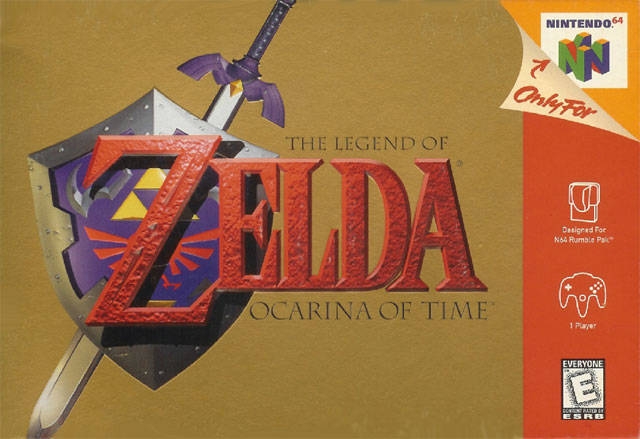
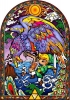
The climactic boss fight at the end of Ocarina of Time acts not only as the climax of the story, but the emotional climax for the entire series
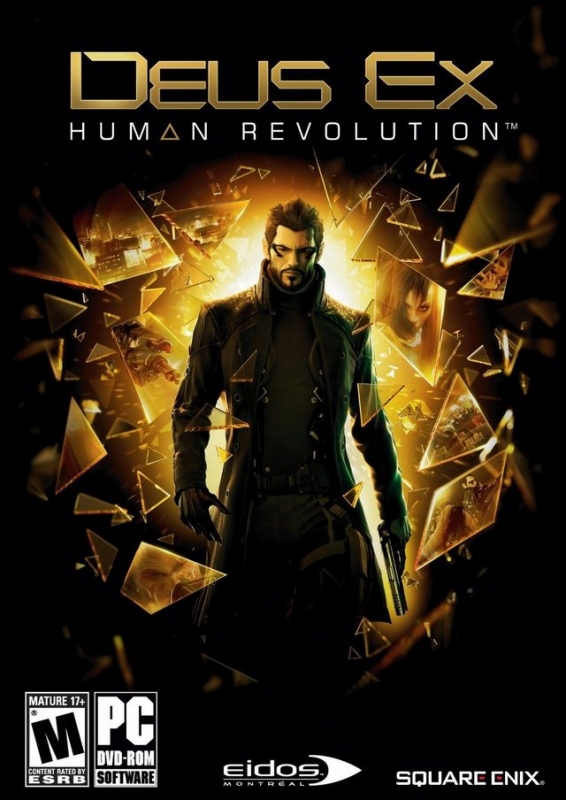
Of course, that doesn't mean every boss fight in a game is good. For every memorable, well designed, flat-out fun boss fight in a game, there are dozens that were equally forgettable and poorly thought out. This year's Deus Ex: Human Revolution, which mostly earned critical acclaim, was universally derided for its poor boss fights. So where did Deus Ex, and many other games, fail, where classics like Mario, Zelda, and Metal Gear succeed?
For a boss fight to work, it must do two of the following three things: Introduce new gameplay mechanics, test the player on game mechanics introduced earlier in the game, or be emotionally resonant in some way. If a boss fight only does one or none of those things, then it simply doesn't work. To prove this, we take a look at many gamers' first memory of a boss fight, Bowser from the original Super Mario Bros.. Each encounter with Bowser succeeds in testing the player's platforming skills, introducing a new twist to each fight, and being emotionally resonant (in this case, the triumph of beating the world).
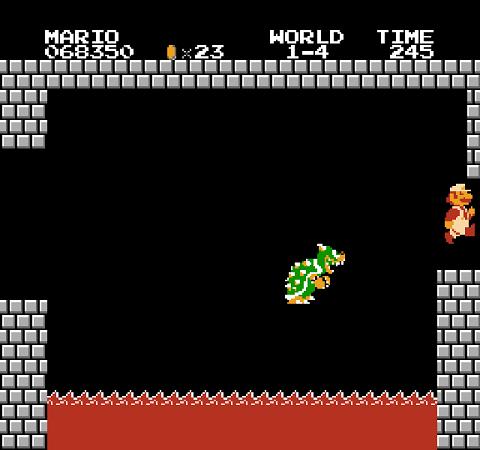
The quintessential boss fight
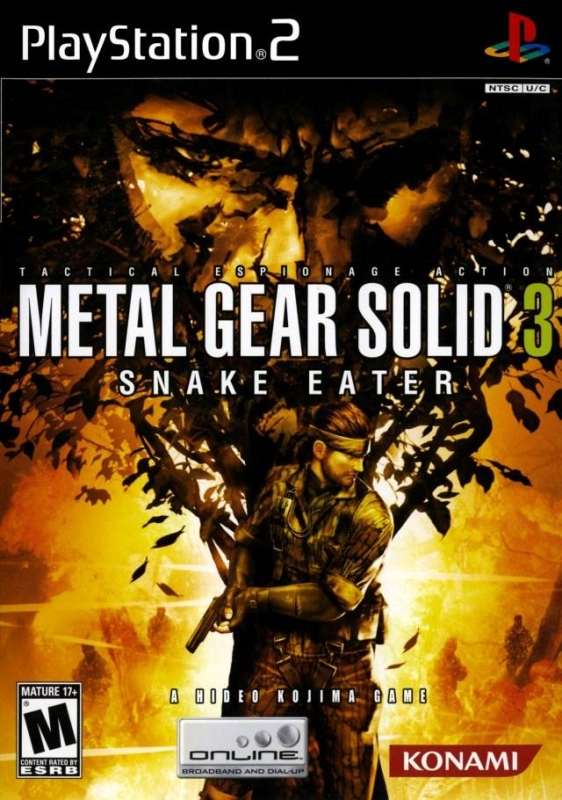
A great example of a boss fight accomploshing all three of the things listed above is the famous "The End" boss fight in Metal Gear Solid 3: Snake Eater. First off, the boss fight tests players on all of the stealth techniques introduced up to that point in the game. Second, the game introduces a new mechanic by having a boss that is almost invisible to the naked eye, and requires cunning and sharp wit to be able to defeat. Third, the boss fight is emotionally resonant because of the tension raised by the "cat-and-mouse" dynamic that the boss fight introduces. Coupled with the potential for this boss fight to stretch on for hours (for better or for worse), this is one of the most remembered boss fights in gaming history.
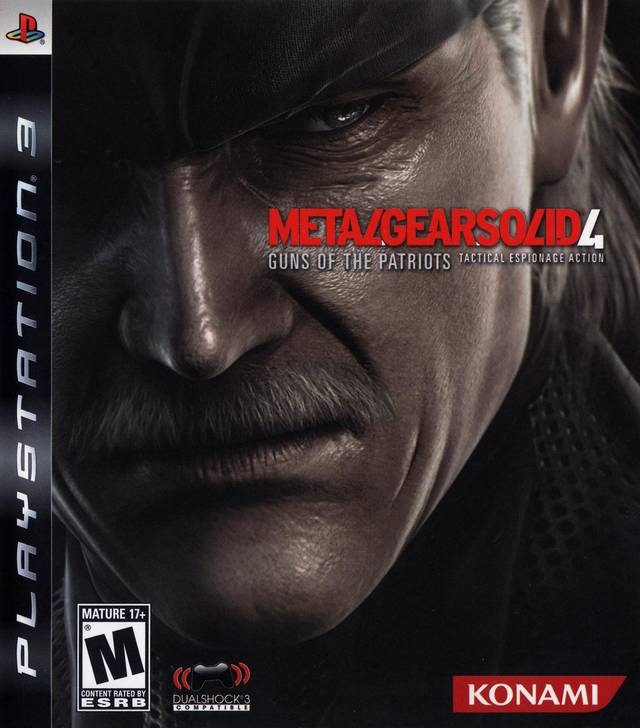
Continuing with the Metal Gear Solid series, we look to Metal Gear Solid 4: Guns of the Patriots for boss fights that don't quite work. While nearly every boss in the game introduces a new mechanic in someway, each fight often boils down to shooting the boss enough times, with little to no skill or thought often required. Plus, we know nothing about each boss before fighting them, so they fail to emotionally resonate. Conversely, the final boss fight against Liquid Ocelot at the end of the game succeeds because it introduces new mechanics (a fighting system that was not present in the game up until then) and is emotionally resonant because it conjures up memories and nostalgia for the entire 10+ year series.

The Metal Gear series is known for its creative and memorable boss fights
This brings us back to the critically acclaimed Deus Ex: Human Revolution, whom many reviewers' only complaint about was the poor boss fights. Why were Deus Ex: Human Revolution 's boss fights so universally derided? Because they failed in accomplishing any of the three facets described above. No boss fight in Human Revolution built upon the open-ended, choice-based mechanics that the game (and the whole series) is known for; they were just bullet sponges that required no thought, and were incredibly frustrating as a result. No new mechanics were introduced in any of the boss fights, and they were not emotionally resonant because we hardly knew anything about the enemies we were fighting. Thus, Deus Ex: Human Revolution is merely a good game, instead of a great game, solely because of the failed implementation of boss fights.
When done correctly, boss fights provide a fun, memorable experience that gamers will talk about years, possibly even decades after a game's release. When not, they can be seen as frustrating roadblocks that compromise an otherwise fun experience. Boss fights are not solely about spectacle; fighting a bigger version of the enemies that have already been in the game just doesn't cut it. Developers who hope to implement boss fights into their games have to make them interesting, fresh, and emotionally resonant. By doing this, developers not only make awesome games, but help move forward the medium as a whole.
More Articles

I don't like articles like this because they are written as if they are from a psychological analyst, but are just an opinion piece.
I for one don't think a good boss fight needs to introduce a new gameplay mechanic to be good. I think a Good Boss fight just needs to be well designed and challenging. The Legend of Zelda games always had great boss fights because they often required you to use the new weapons you obtained in the dungeon to strategically defeat the enemy. Sometime these boss fights would be challenging, and the memorable ones were the ones with enemies who were talked about during the game (Gannon, Dark Gannondorf, and the ones who appear in multiple games, etc).
However they didn't require you to learn a new game mechanic, or have to be emotionally resonant. Yes the fight against Gannon at the end of Ocarina of Time was emotionally resonant, but that's not what made it good.
emotionally resonant might make you remember the boss fight better, but it by no mean is a requirement to be a good boss. My favorite boss was the one at the end of Golden Sun, and I like it because it was hard. You have to essentially defeat someone with 100,000hp, who has a super attack that can nearly take down your party at full hp. So after every of his super attacks you have to heal like crazy. In Both Golden Suns, after using my more powerful combined element summons, my single element summons, my strongest magic attacks, and having 3/4 (or 7/8 in Lost Game) party member die, with the last party member out of MP, critically low on health, and out of revives I win with a basic attack dealing 137 damage...137 damage attack on a boss with 100,000 hp or more, that's insane!
and I don't even remember who the boss was, I think in Lost Age it was a 3 headed dragon, and in the original, a regular dragon.
When I look back, some of the best boss fights I ever faced were against those which were well designed, and of the factors you listed, only had to be challenging.
Bowser in Super Mario 64, Metroid Prime in Metroid Prime, many bosses in Pikmin.. I remember them because they were well designed, challenging, and involved strategy to beat.
So this article, I full out disagree with.
However, it could be argued that since they were challenging, it engaged you more than a non-challenging boss did, making it more emotionally resonant.

Zelda games always provide the best boss fights.

Mario has the best boss fight :-)
well... besides the 3 hits rule they generally go by ^^

Them Dark Souls boss fights are badass.

Some Bosses just need to the heck
Well said...
this gen boss fights have been lacking.