
Orbitals (NS2) - Review
by Evan Norris , posted 4 hours ago / 431 Views
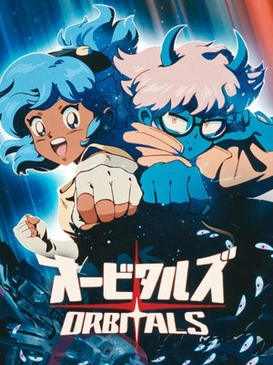
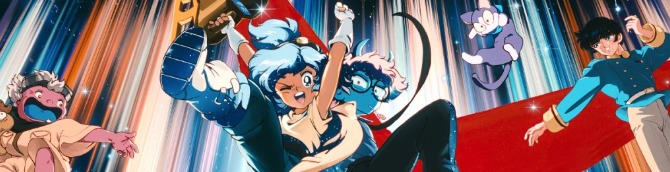
If art direction alone decided the year's best game, we could skip game-of-the-year voting and crown Orbitals the winner right now. It's one of the most visually striking games in recent memory, thanks to a hand-painted anime aesthetic, techno-futuristic production design, and rich painterly backdrops. Of course, a lot of things feed into the overall quality of a video game — not just its look and feel. So, how does Orbitals stack up on the other important stuff?
In terms of world-building, it performs admirably. From its opening scene, in which engineers attempt to avert a disaster within a deep space station, it captures your imagination and refuses to let go. Years later, when the game's young heroes explore the inky vastness of space, cluttered with derelict ships, debris, and the remains of a fading civilization, Orbitals convincingly transports you to a corner of the galaxy with a troubled history and an uncertain future.
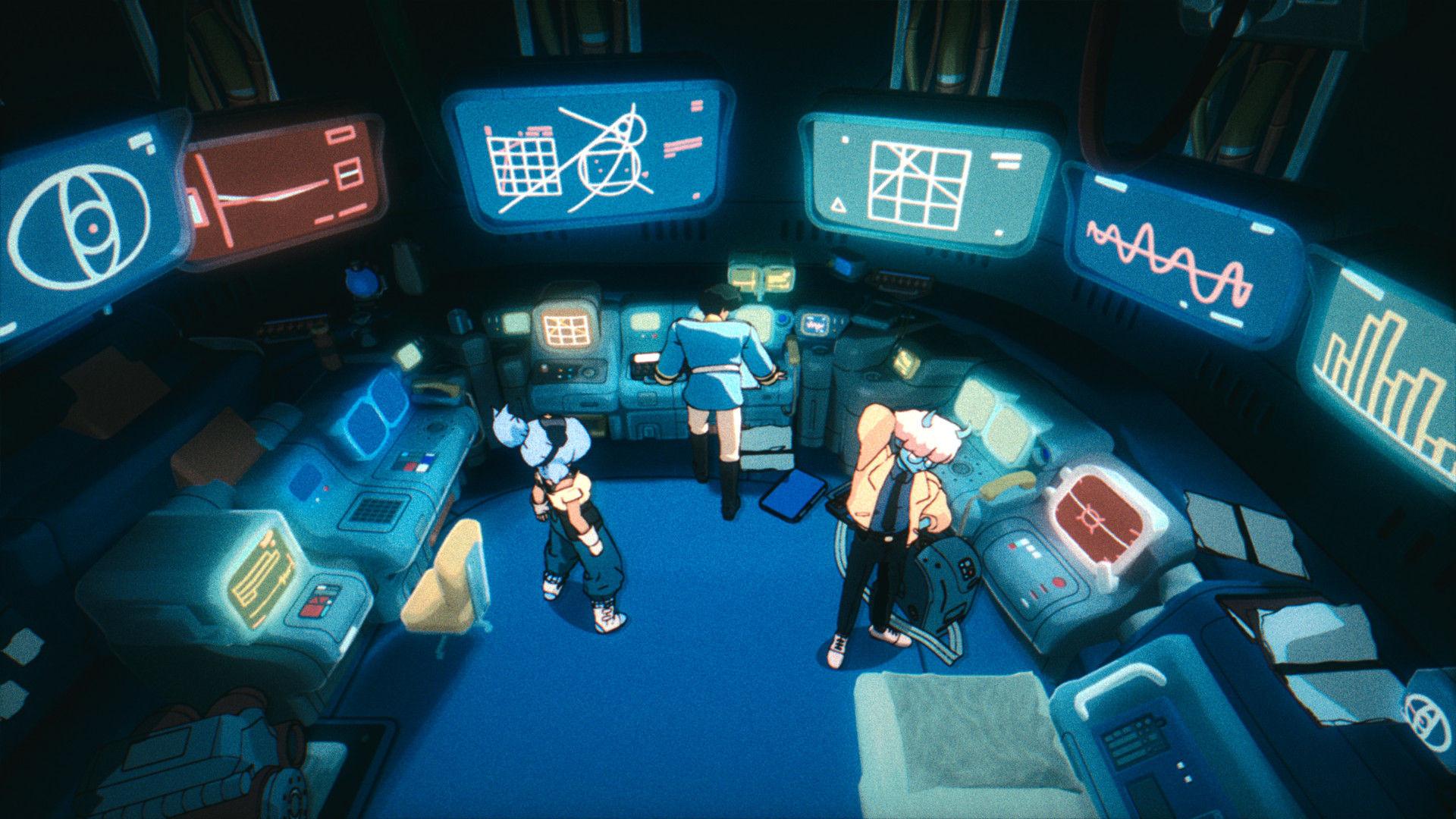
Orbitals doesn't only establish an interesting mythology; it also weaves an interesting story, starring several memorable characters. The protagonists, Maki and Omura, are a lot of fun. Childhood friends and would-be explorers, they're bold, courageous, and eager to do the right thing. Led by their mentor Togen, they board a modest ship and head through a rift in a raging cosmic storm wall in search of Reactor Cassettes to power their station's shields. While things start slowly and straightforwardly, they become far more complex by the final act. It's not as black and white as it seems.
For the majority of the game, though, the story takes a backseat. The game is far more invested in the adventures of Maki and Omura. Using unique tools, acrobatic moves, and problem-solving skills, the duo must work in concert to clear the way forward, survive encounters with hostile forces and death-dealing traps, and make it home alive. Designed according to the template of games like It Takes Two and Split Fiction, Orbitals was built with two cooperative players in mind; you simply cannot play the game alone. While that's bad news for solo players, it's great news for twosomes. Developer Shapefarm has gone all out with the co-op experience here, designing a framework built around complementary tools, collaborative mechanics, and multi-faceted physical and mental challenges that demand mutual reliance and trust.
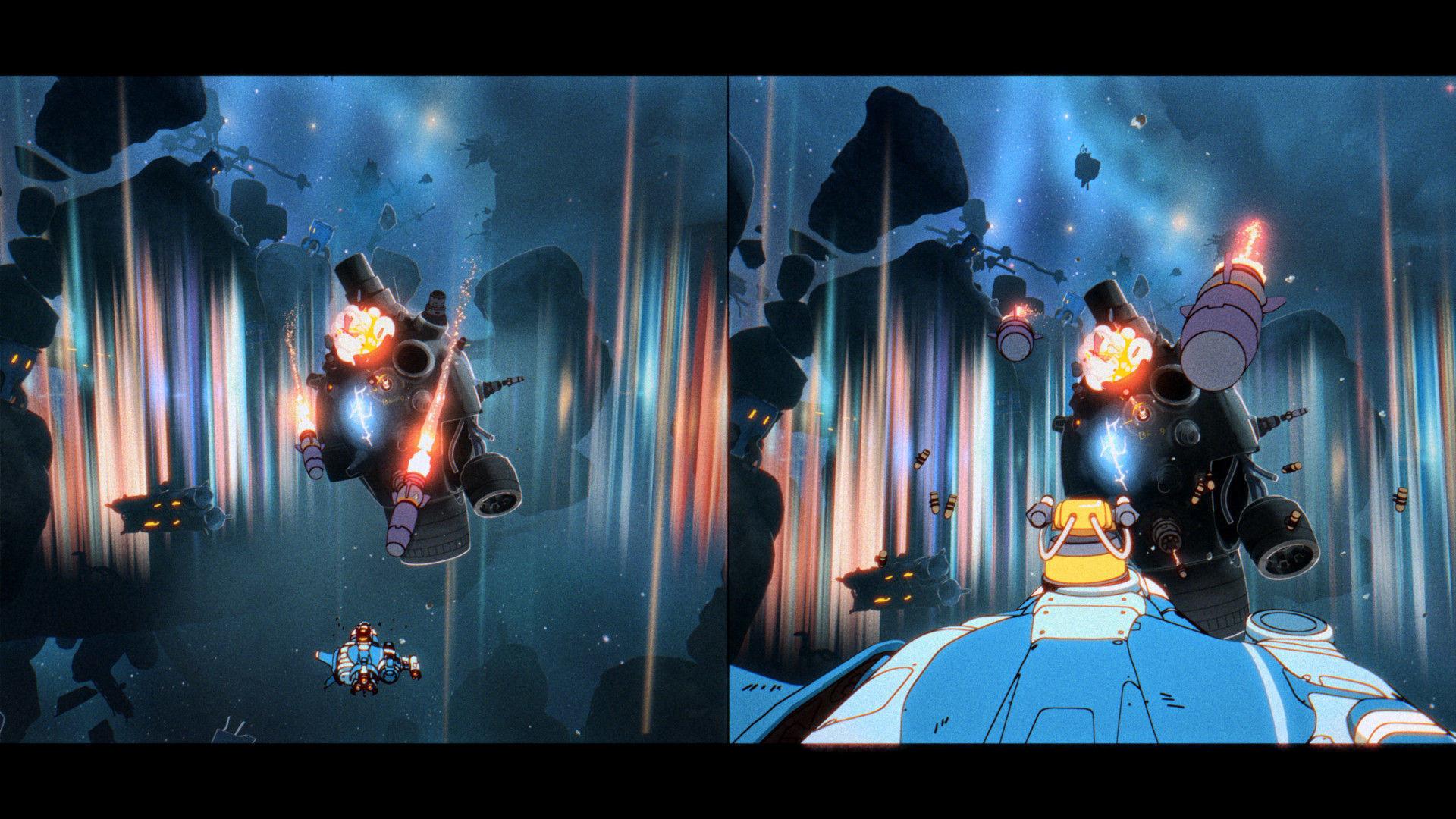
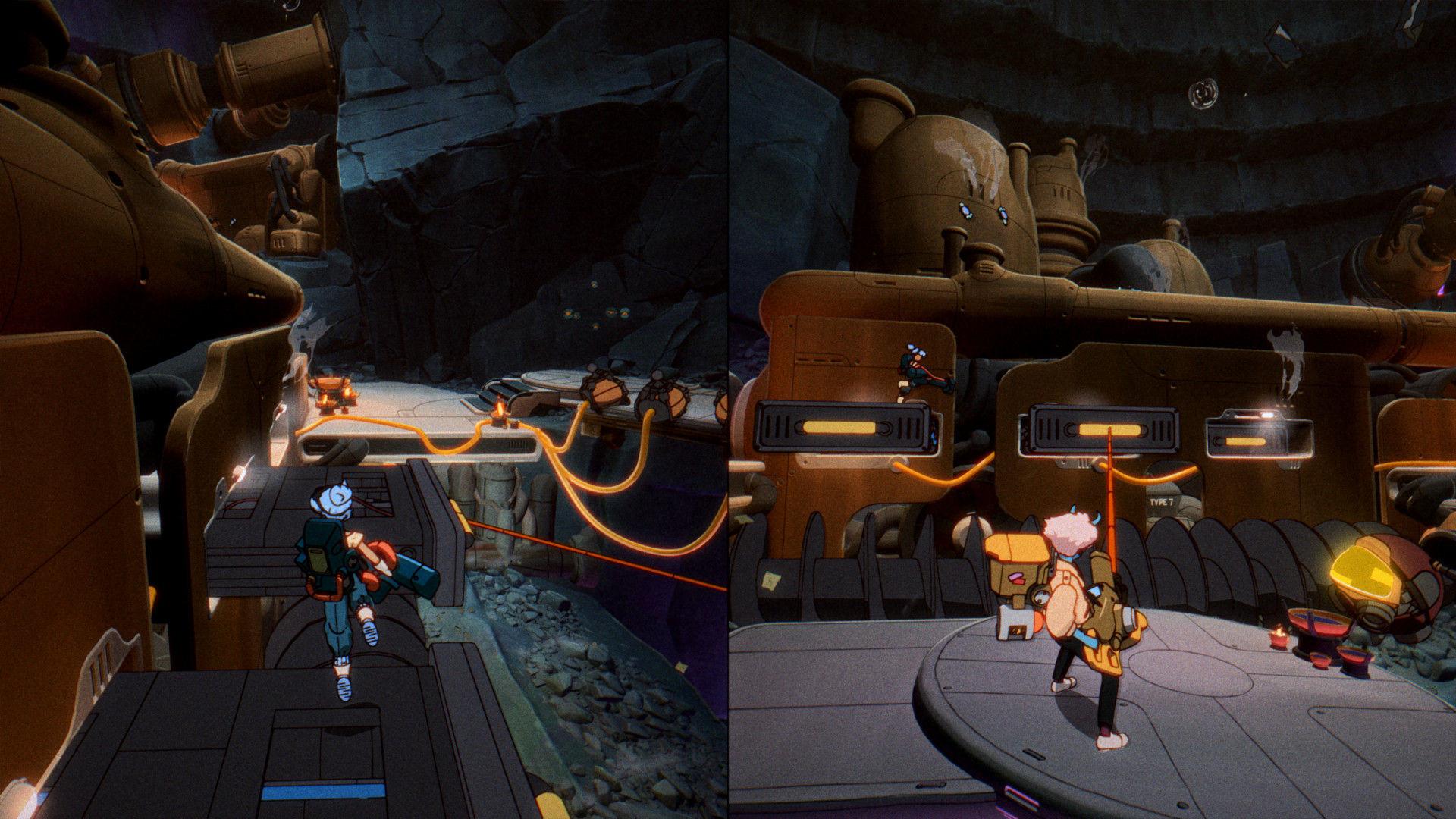
One housekeeping note, for aspiring co-op players: there are many ways to experience the Orbitals campaign with a friend. You can play on a single console, via local wireless connection, or online. Your partner can even download the Global Friend's Pass and play with you online for free — as long as you own a copy of the game. The screen will be split vertically regardless of how you play.
As Maki and Omura, you and a friend will steer your ship through asteroid fields and space debris until you arrive at one of several abandoned stations. Once there, you'll dock the ship, equip yourselves with the right tools for the job, and enter the station on foot. These tools are essential to the experience, since they dictate what you're allowed to do and interact with, and how you'll engage with your partner. A very early challenge has one player heat a piece of exposed metal with a laser beam and the other player pry the malleable metal back with a hook device, thus creating a path forward. This is the co-op loop in Orbitals in a nutshell, although things get much more complex the deeper you explore.
Later on, you'll work together to reduce and expand the size of a rolling snowball, with heat and water weapons respectively; reveal hidden doorways with the help of a spirit-possessing microwave; and survive a high-stakes game of Dance Dance Revolution. The game constantly throws new obstacles and puzzles at its players, often experimenting with perspective. Most of the game operates in a fully three-dimensional space, but some challenges take place on a 2D plane. One exciting, nerve-racking 2D episode takes place inside a tall tower, where one player must make the jumps and the other must control the platforms. This is the beauty of Orbitals: each player has a different role to play, but each role is challenging and rewarding in its own way.
While the level and puzzle design in Orbitals is strong, it's not as diverse, surprising, and ingenious as it could be, especially compared to the giants of the genre, e.g. It Takes Two. It tends to reuse and riff on the same general loop: set out from home base, fly to the destination, disembark, and solve the discrete problems within. It all gets a little too familiar after a while. Thankfully, there are a few distractions and deviations, including mini-games in your ship's living quarters and, about two-thirds into the game, a cleverly-designed multi-stage boss battle, which has one player dodging projectiles and another shooting down missiles and redirecting explosive charges. The final boss battle is also a highlight.
Still, the game could use a little more depth and variety. One thing that would have helped in this area is a greater focus on exploration. While the game is visually expansive, it's mechanically rather linear. Even in your spaceship, you don't have full control; you can move forward, back, left, and right, but not up and down. If there were hidden derelict ships to discover in space, or even optional paths within levels with especially difficult puzzles and secret rewards, the game would be fuller and richer. It would also be longer. Right now, you can finish everything in about eight hours.
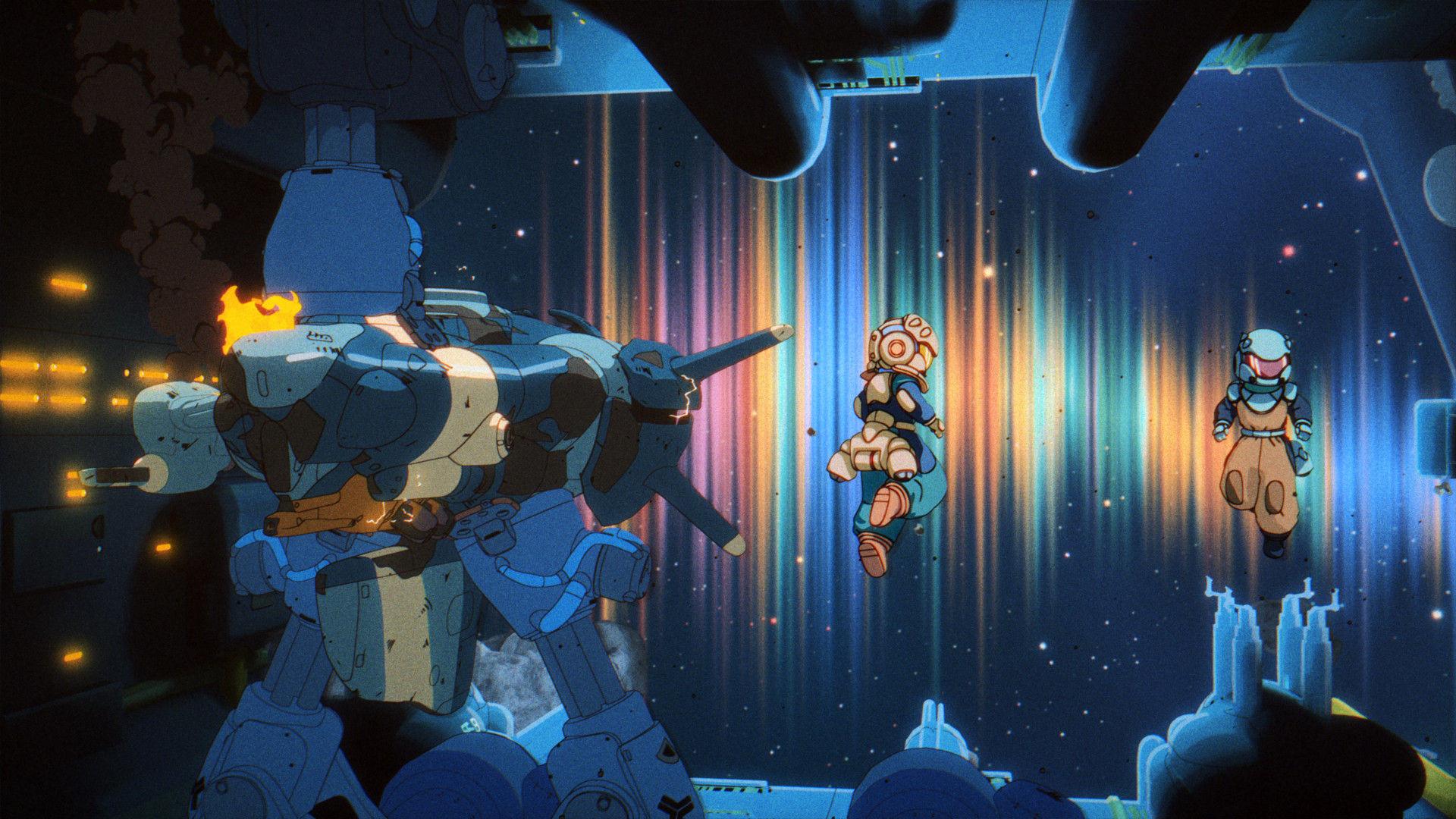
While you can poke some small holes in Orbital's gameplay loop, you can't find fault with its audiovisual identity. Voice acting is expressive and genuine; sound design is atmospheric and immersive; and the soundtrack is stellar. Composed by Falk & Klou (Fredrik Segerfalk and Carl-Johan Dahlberg Fogelklou), it's a beautiful recreation of the 80s anime soundscape, infused with elements from jazz fusion and synth-pop. "At Our Horizon" is simply one of the best songs of the year.
As for art direction, well, it's the single best part of the game. If you ever dreamed of playing an anime, dream no further.
Unfortunately, at least for Orbitals, art alone doesn't guarantee excellence. Despite its spectacular sci-fi production design and anime aesthetic, the game falls just short of greatness. If it was a little longer, a little more diverse in its level design, and a little more explorable, it would stand firmly alongside other GotY candidates. Even without those things, however, it's absolutely worth your time and attention, particularly if you have a trusted friend or loved one in the wings. The puzzles are clever and challenging, the world is rich and mysterious, the characters are lovable, and the cooperative experience provides different but equally rewarding tasks for each partner.
VGChartz Verdict


7.5
Good
This review is based on a retail copy of Orbitals for the NS2