









Kyoto Xanadu (PS5) - Review
by Thomas Froehlicher , posted 43 minutes ago / 142 Views
Once you’ve visited Tokyo, Kyoto is generally your next destination. Falcom has decided to follow that logic with its Xanadu RPG series, in the form of Kyoto Xanadu, which comes some 11 years after the remarkable Tokyo Xanadu launched on PSVita.
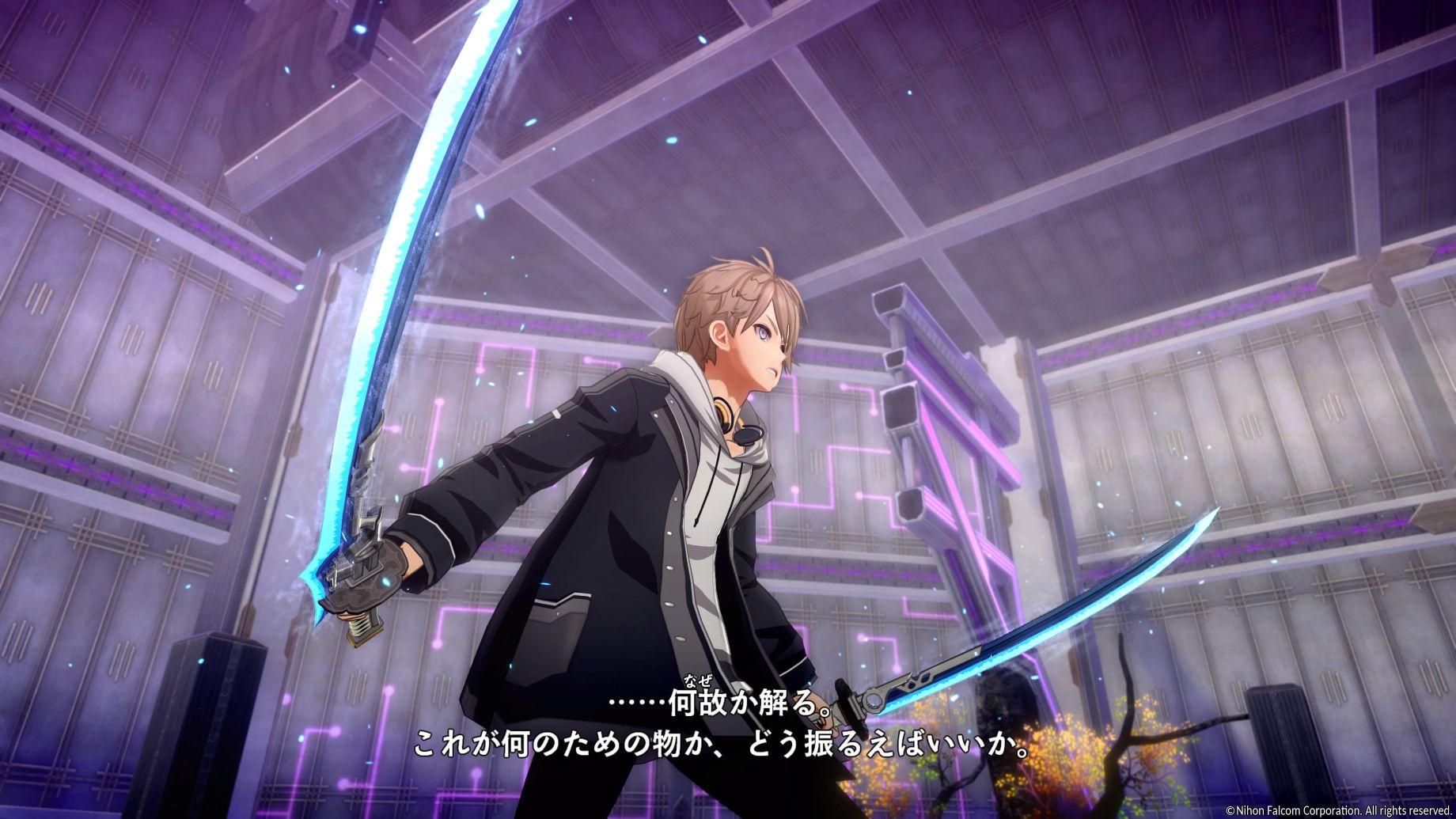
Despite the change of scenery, Kyoto Xanadu remains similar to Tokyo Xanadu in terms of both its lore and the general universe. The protagonist, Rei, enrolls at Hirasaka school, a special institution designed to train students to fight in the Great Labyrinth, which is an immense dungeon crawling with monsters beneath the city of Kyoto. This maze itself is actually part of Xanadu, an eerie parallel world that's always at risk of overflowing into the real world. Very much like in Tokyo Xanadu, the goal of the party in Kyoto Xanadu is to keep this dark world in check and fix any leak that could harm ordinary citizens. So the game is divided between modern city life and dungeon exploration.
Even more so than Tokyo Xanadu, this sequel is organized very much like a Persona game. In the morning you have classes, during the afternoon you can tackle the Great Labyrinth, and the rest of the day you meet allies and friends. Dungeons provide level experience, while school and social meetups give social experience, both of which are useful for making your team stronger. At certain dates, the story will progress, and you need to optimize the use of time in order to have a team powerful enough for these major steps in the narrative.
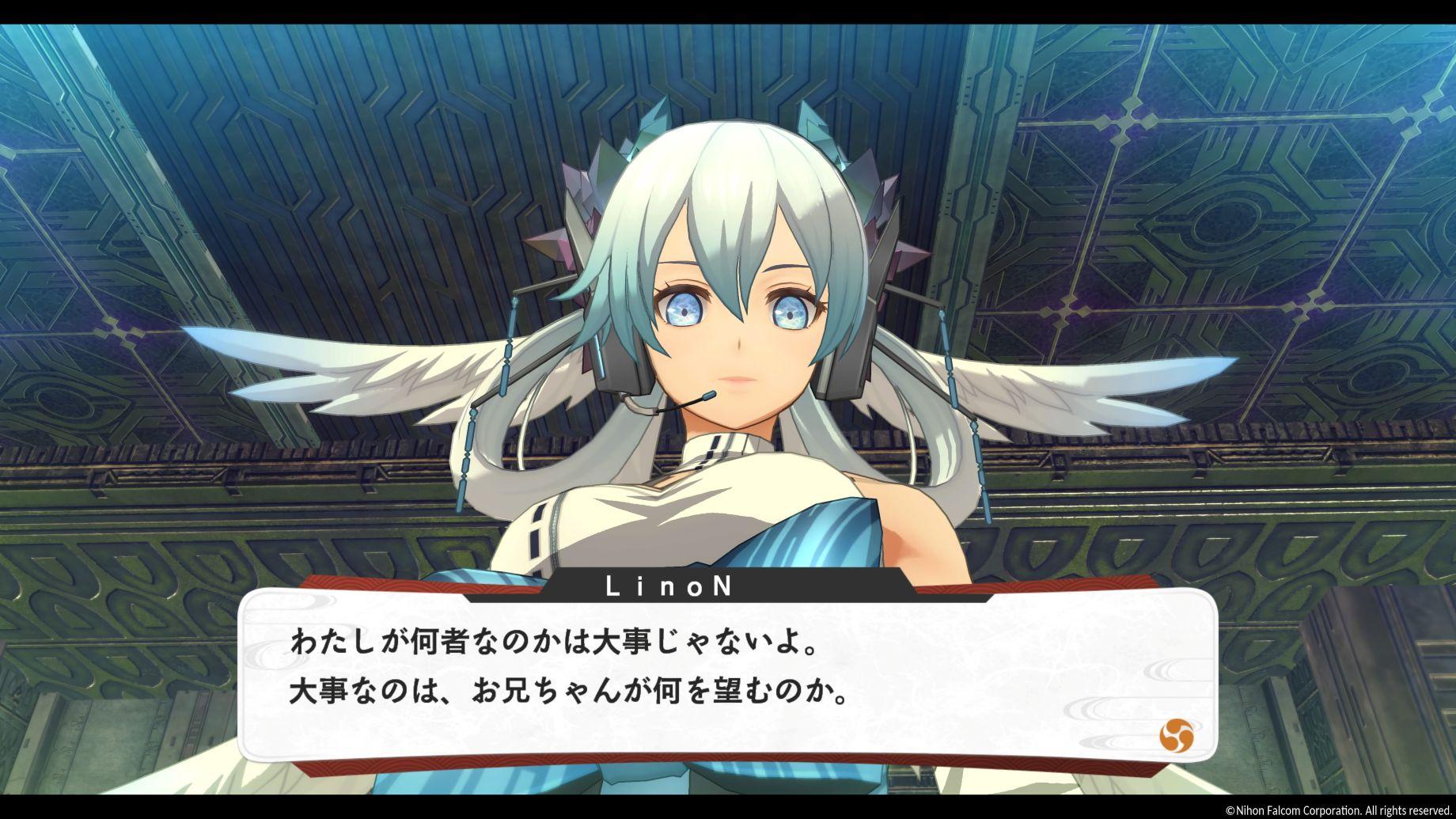
Like its predecessor, Kyoto Xanadu features a story that is more like a series of episodes. Some chapters focus on certain characters, then on the main storyline, then go back to the protagonist, and then return again to the situation in the academy, all in a very disorganized manner, which left me with the impression I had experienced a collection of short stories rather than a coherent narrative. That said, taken separately, some of those chapters are genuinely interesting to follow and well-paced within themselves. In particular, the fifth and final chapter has everything that makes a Japanese RPG great: suspense, humor, impressive antagonists, epic fights, a hardened level of challenge, team play, dense storytelling, and superb cutscenes. Just because of those 10 hours (out of a total of 50), I can say I left the game satisfied after the end credits.
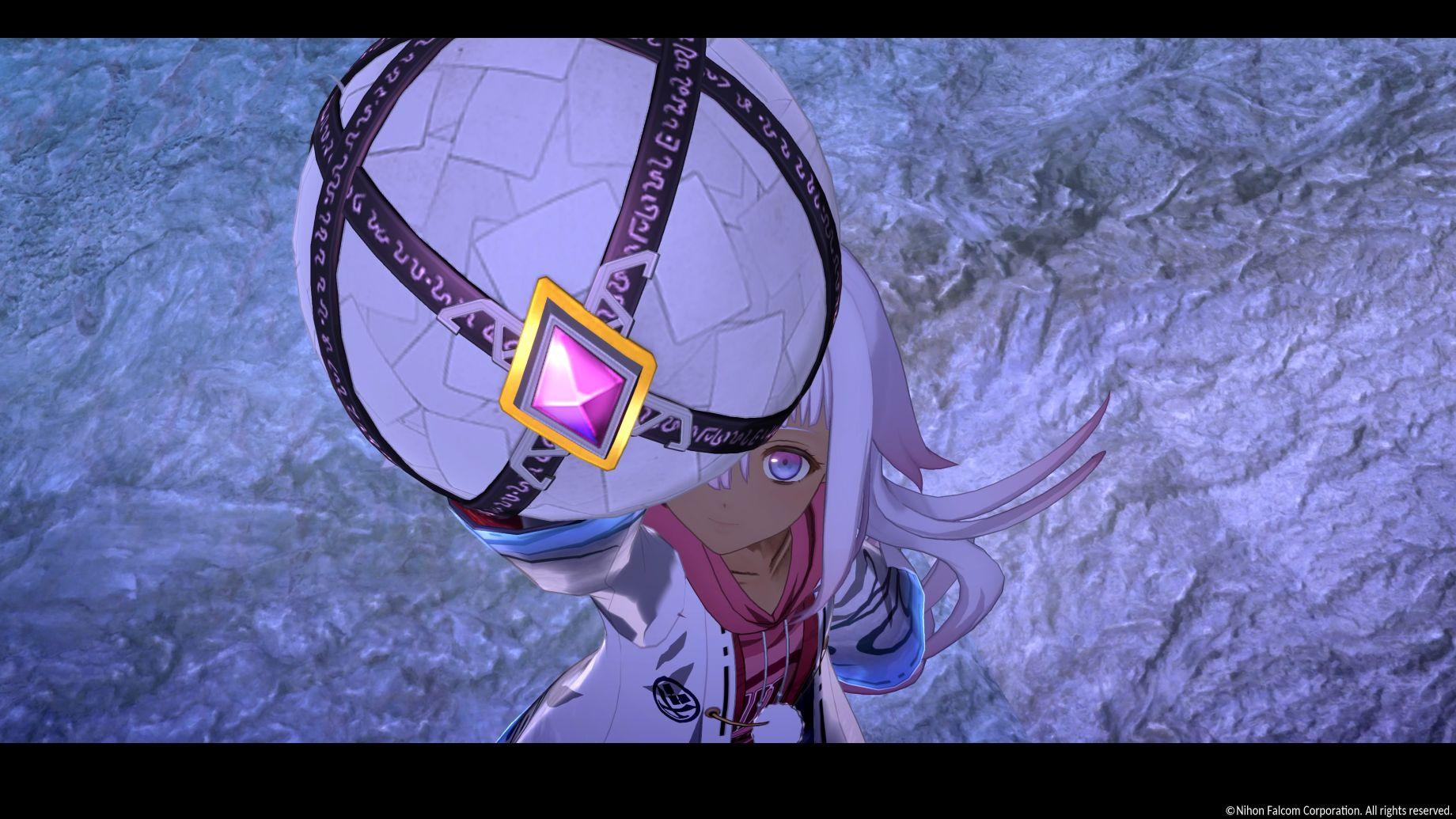
However, that leaves 80% of the play time being a very uneven experience. The fact is that Kyoto Xanadu is far too centered on its main protagonist and leaves almost no room for the other main characters. Sena and Kazuki have a decent chapter, but Fuuka, despite being the main heroine, gets an absolutely barebones personal story and little to no development in her personality or role later in the game. As for Rurui, a little girl Rei picks up from the Great Labyrinth, she turns out to be the funniest character in the game and the perfect mood maker for humorous sections, but I still don’t know who she is. I’ve cleared the game and completed most of her relationship events, and at no point did the game tell me why or how she was born there. Her role and position in the lore remains a total mystery. On top of this, no character has a proper epilogue, not even the protagonist and his sister, whose relationship is intended to be the most emotional part of the whole adventure.

Rei is nothing like Falcom’s traditional main characters: he is rude, insolent (especially towards girls, to whom he is unpleasantly insistent), and therefore got on my nerves from the first to the last second of the 50 hours I spent playing Kyoto Xanadu. Not everyone will necessarily like the main character, but that’s why a JPRG developer should balance the importance, role, and screentime of all playable characters, which clearly wasn't done here. It’s also worth pointing out that Tokyo Xanadu had seven playable characters, while Kyoto Xanadu has five. How can we have less on PS5 in 2026 than on PSVita in 2015? Maybe we shouldn’t have to wait five hours to get a second playable character, either. I know that might sound like a self-centred complaint, but that wasn’t the case in Tokyo Xanadu, where Ko and Asuka were both playable from the start, and since then the genre has evolved, with dual protagonists becoming the norm, even in free-to-play JRPGs. With all this, and Estelle being such a great female lead in Falcom’s own recent Trails of the Sky remake, I found it difficult to go back to a mandatory, overly present (and unpleasant) solo protagonist.
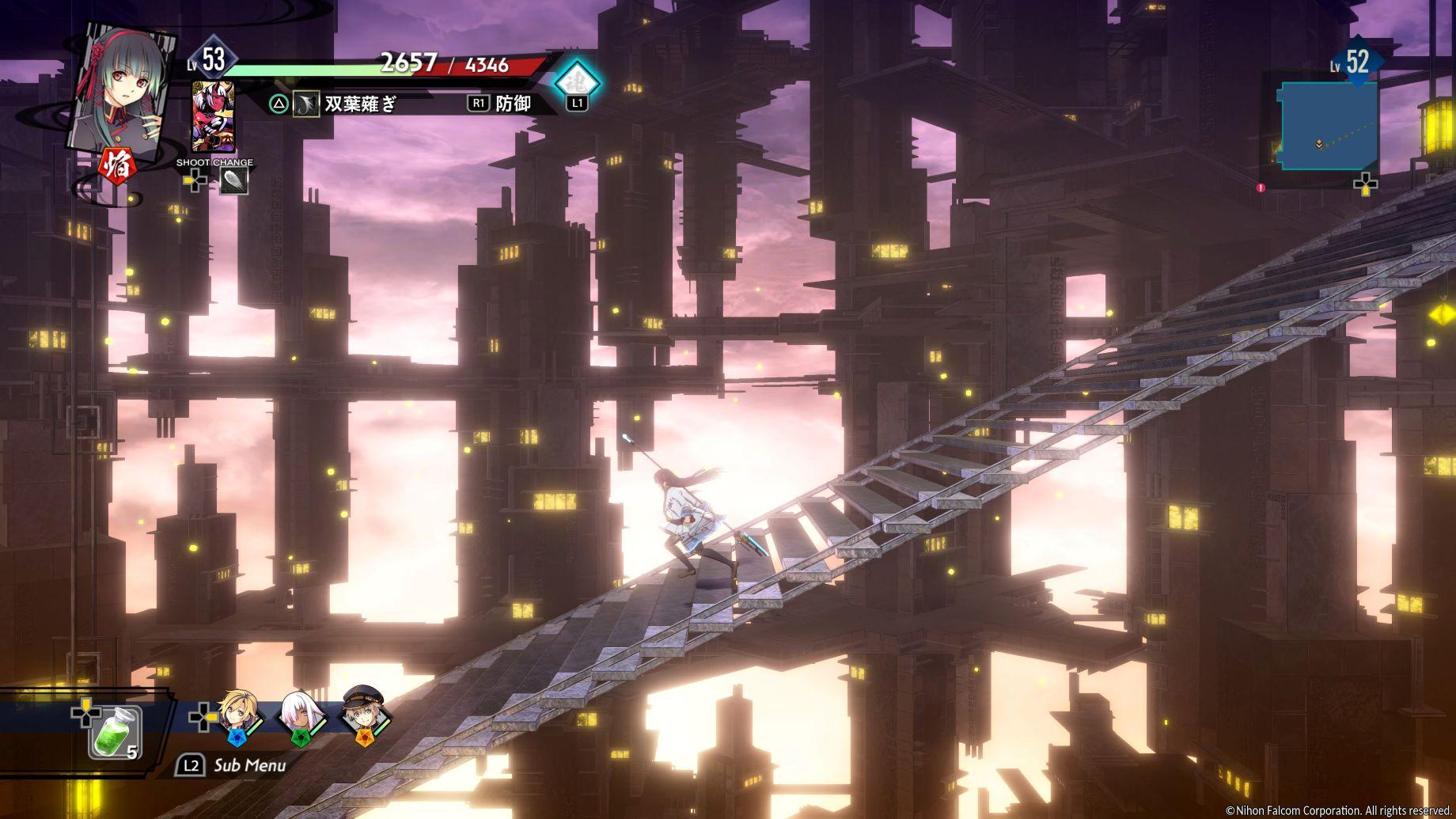
The most striking change from Tokyo Xanadu to Kyoto Xanadu is obviously the dungeons, which have gone from being 3D dungeons to 2D ones this time, which led many, including myself I must admit, to think that this entry would be a downgrade compared to the PSVita title. It’s actually a massive improvement, and I’ll explain why. The dungeons in Tokyo Xanadu were far from bad, but they were quite classic Falcom constructs. Kyoto Xanadu marks a revolution in dungeon structure for Falcom; Kyoto’s Great Labyrinth is made of five underground floors, themselves divided into many, many different rooms and, very unusually for Falcom, the map is blank, meaning you have to explore and chart everything yourself. The game will only vaguely tell you the location of some statues that you must destroy to unseal the path to the floor boss. The architecture of the floors is astonishingly complex and fascinating to explore.
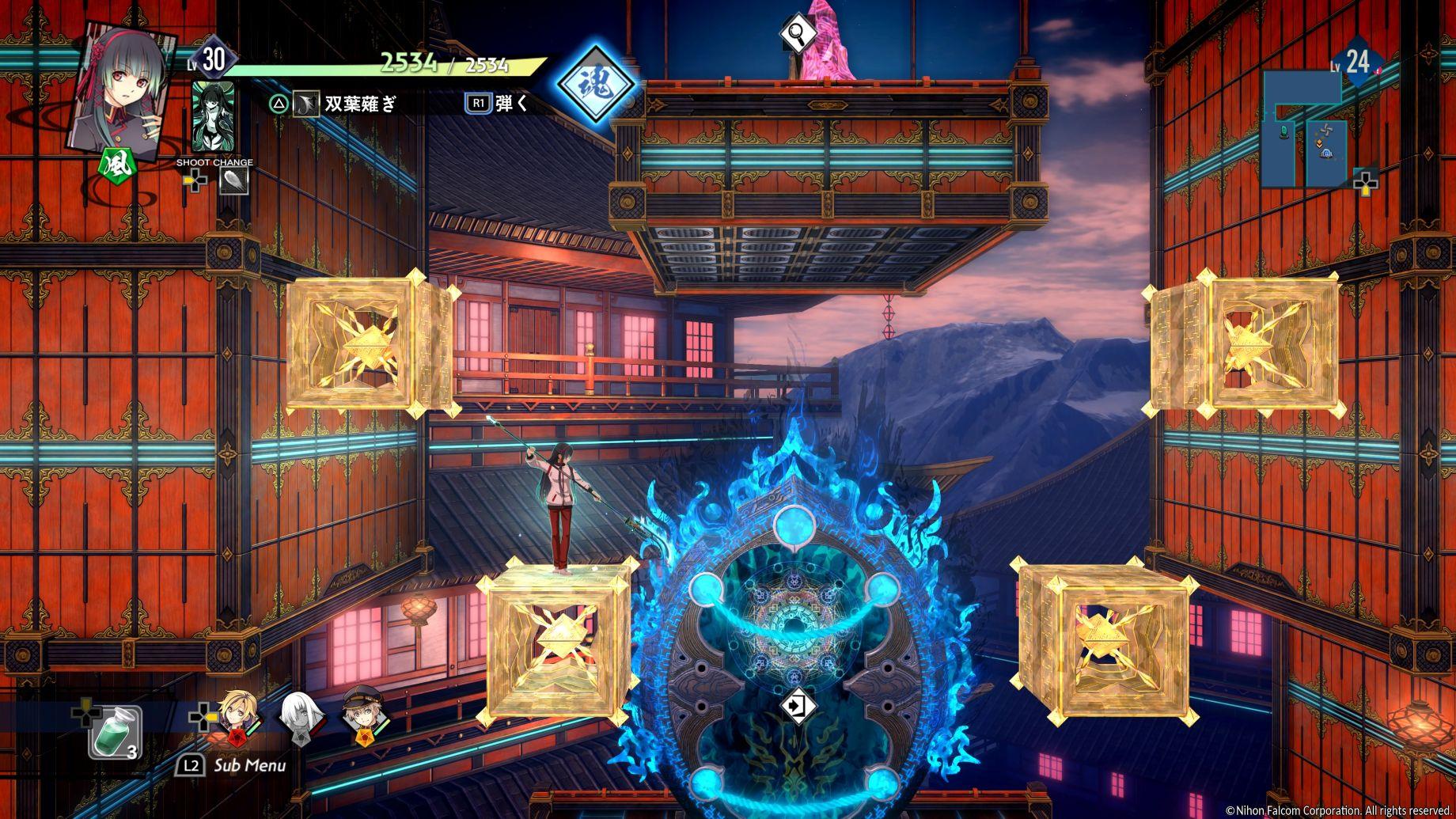
It’s like a permanent, giant puzzle that you solve little by little. Some rooms are only reachable once you acquire special abilities, like double jump, or find the right teleporter. There are a considerable number of teleporters, starting on floor 3, to the point it’s impossible to remember which one goes where. Teleporters sometimes connect to other floors, which makes things even more complicated. This world beneath the school is also poisonous: you can take a certain amount of miasma before your flask shatters, making your character lose HP, which you cannot heal. But keep in mind that all this is purely optional, as the game will never insist you beat a floor boss, although you should if you want to keep up with the more violent story bosses. In short, Kyoto Xanadu certainly offers the best exploration, the highest degree of freedom, and thus one of the most engaging dungeon systems I’ve experienced in 13 years playing Falcom titles.
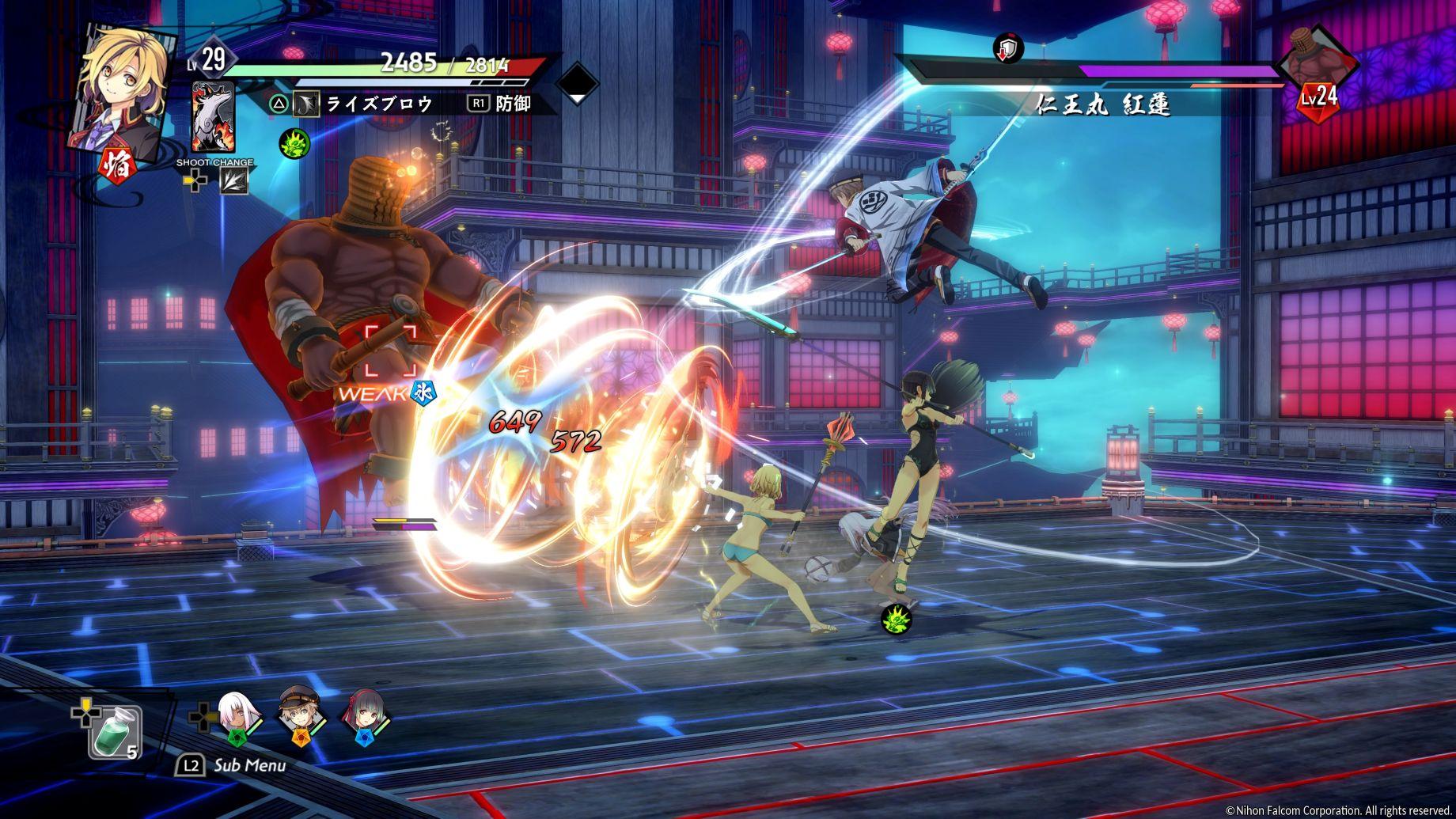
The Great Labyrinth has paths that are sealed by mid-level bosses that hide behind dimensional doors. Once you find that door (you have no indication of those either), you actually enter a 3D battlefield and Kyoto Xanadu becomes a 3D action RPG like Ys for the duration of that battle. Story boss fights are also played in a 3D perspective. These battles use combos, mixing square and triangle buttons, and you can use four different ones, including three different finishing moves. It’s decently varied, and the battle animations are definitely nice, especially Rurui’s (which are also very funny). For those who remember, this combo system is very similar to Senran Kagura's. Even common foes hit very hard in normal mode, but you have two options for survivability. One is called Soul Accel: once the Soul Accel gauge is full, you just push the corresponding button and your current character will recover HP, recover HP over time, and receive enhanced offensive capabilities. In addition, if you guard an enemy attack with the right timing, you block and counter, dealing enormous damage. The general difficulty level is quite well balanced, so even with those defensive systems battles become extremely tense and immensely enjoyable, probably as much so as in the best Ys games.
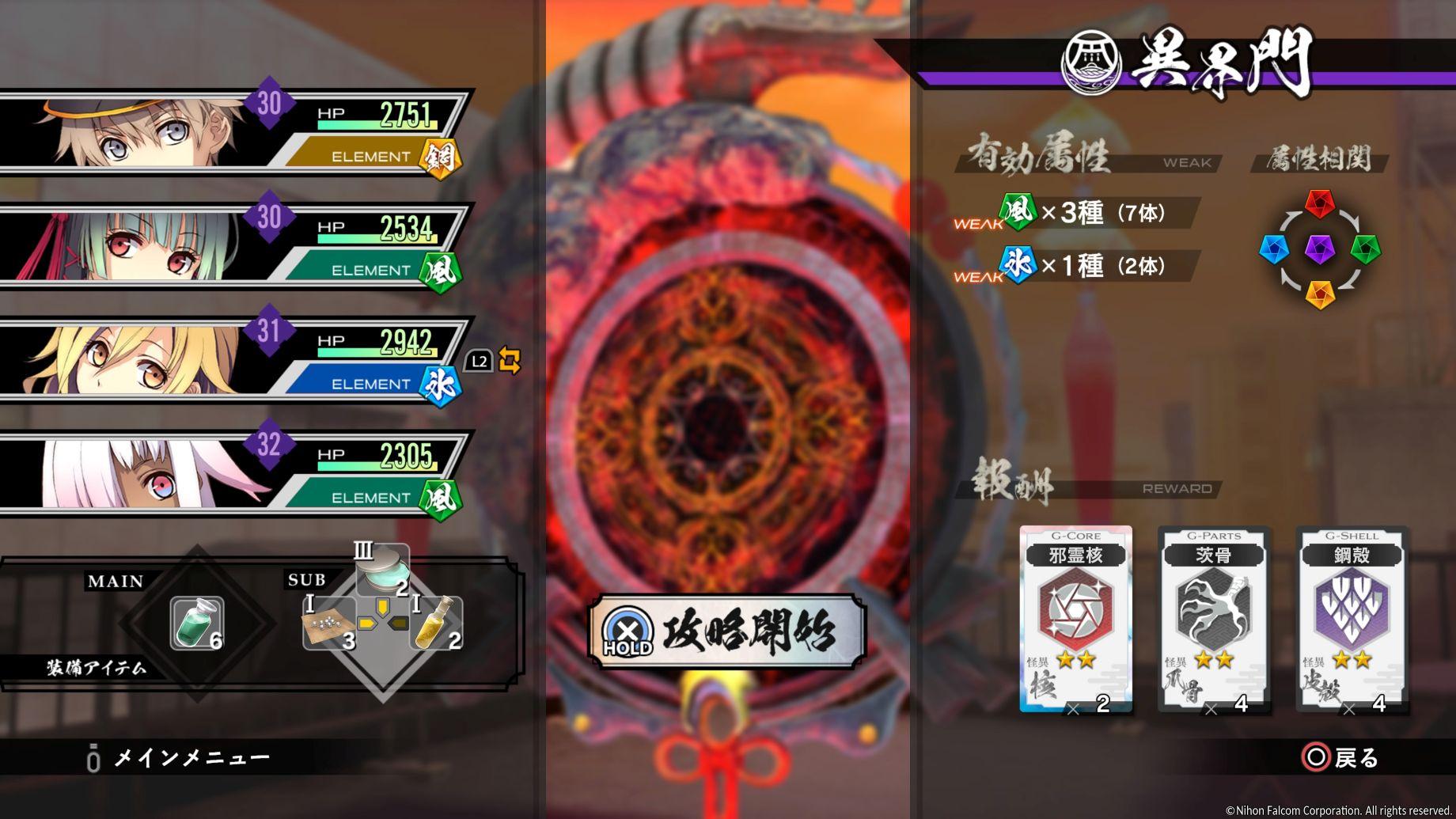
But preparation makes perfect and you have to consider your characters’ status, first by equipping an element card. Every beaten boss in the Great Labyrinth provides one. There are four basic elements your team members can use, plus two bonus ones. Fire, wind, water, and earth are the common ones, which are used to strike enemies’ weaknesses. Allies, excluding Rei, can choose between three elements, so you can just swap before entering a dimensional door, since the menu tells you which weakness to expect. Element cards can be improved by consuming duplicates. This way you can gain powerful passives, like more defense, gradual healing, or stronger finishers. Once you’ve delved very deep into the Great Labyrinth, you gain the supreme “sky” element. But to my great displeasure, only Rei can equip it, and there isn’t a single justification for that. Ranting aside, Kyoto Xanadu also features extensive crafting of armor, accessories, and consumables, as well as a large skill tree. Its RPG mechanics are surprisingly deep for an action-oriented title.
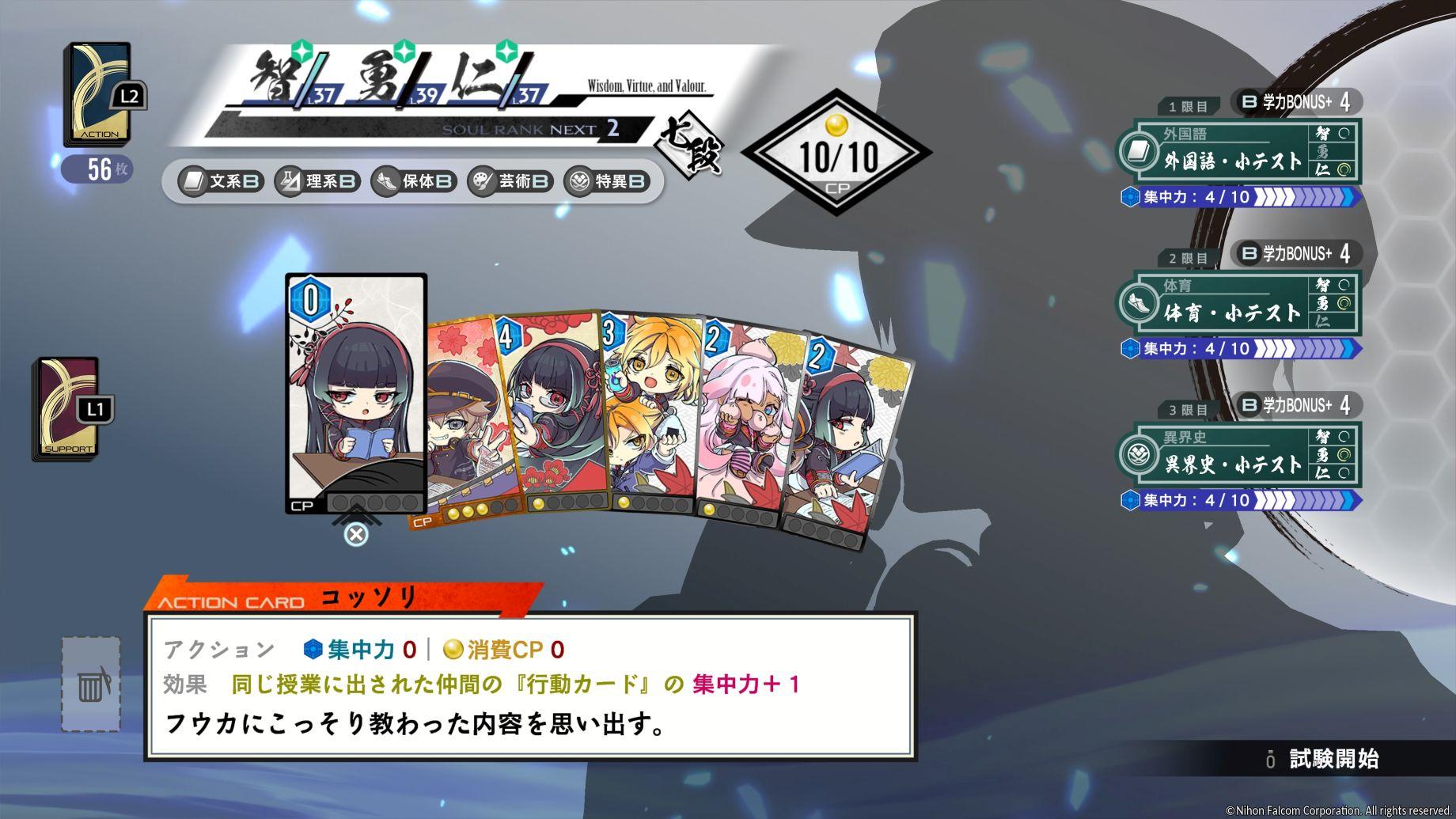
In order to progress through the skill tree, you need to make the most of your school and city life. Classes happen every weekday, where you can use action and support cards to maximize your learning and improve in the three social stats: wisdom, virtue, and valor. It seems very trivial at first, but support cards require some observation and thinking to be used wisely. You have regular exams during the year, so mastering the card system helps in getting top scores. The second option to improve social stats is to visit certain places in Kyoto, like temples, bookshops, restaurants, and leisure centers. You can go to one or two every day, depending on whether you tackle the dungeons or not.
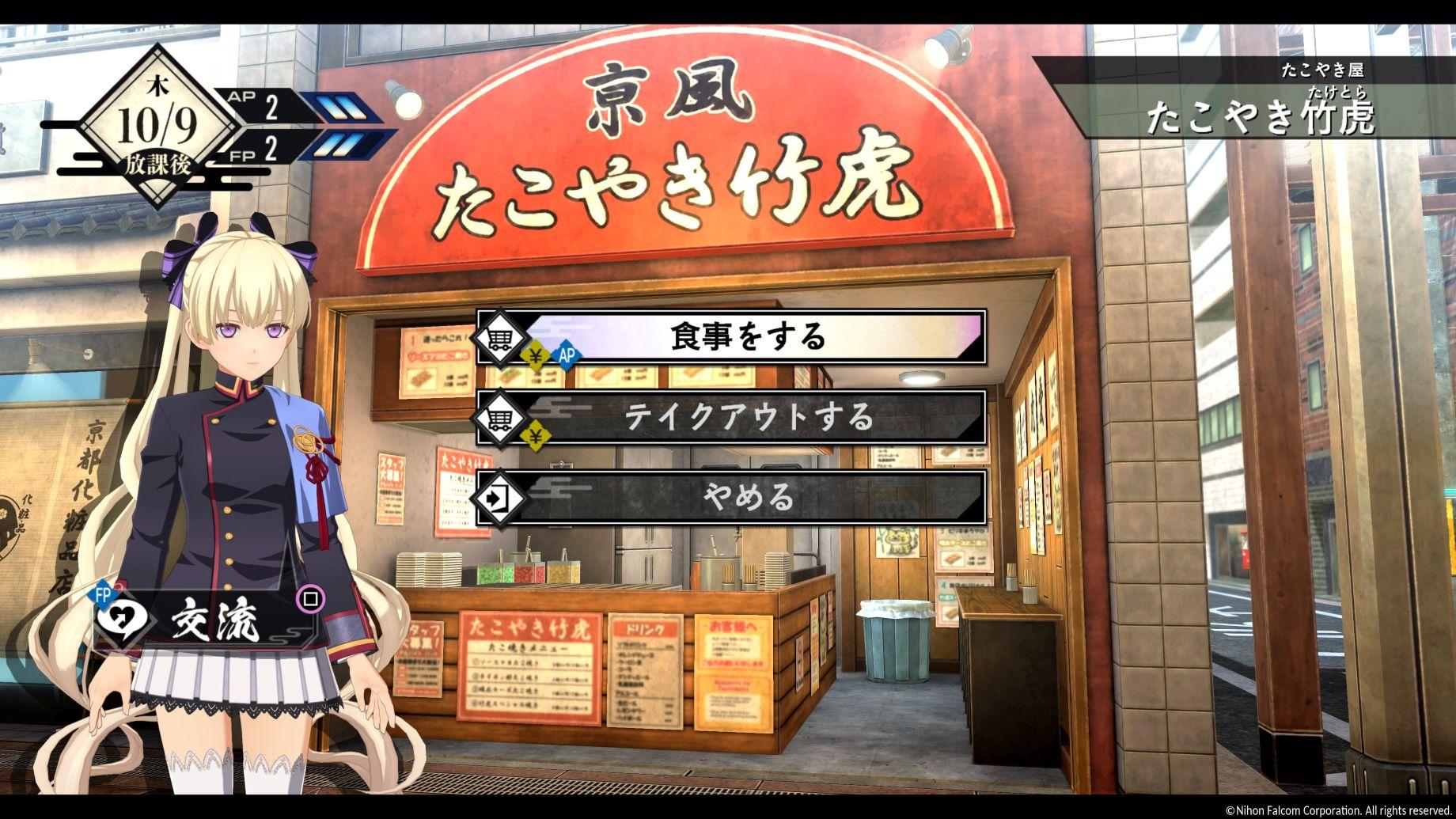
That’s where you'll meet your allies, and most NPCs too. The friend level you have with them can be increased that way, triggering bonus conversations. This part is actually very disappointing, as the conversations aren't really all that interesting, partly because there's no voice acting at all in these sequences. That’s all the more annoying because there are a massive amount of these conversations. You don’t really waste time on side quests in Kyoto Xanadu, but you do have to go through countless small talk scenes that considerably disrupt the pace of the adventure as a whole. There are just too many NPCs to interact with, including some terrible designs and bland personalities. Fortunately, the system offers quick shortcuts to save time on the town aspect.
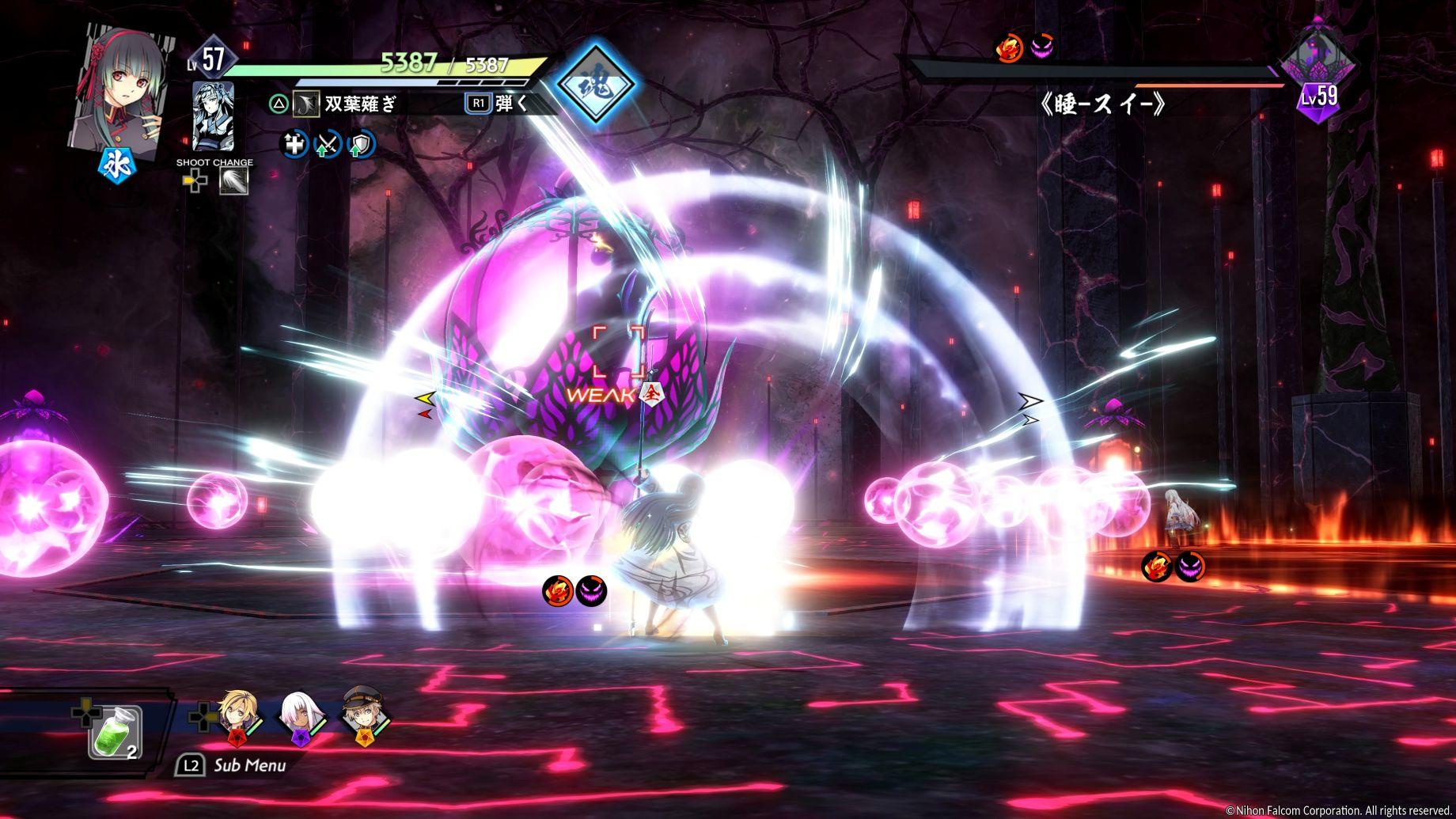
On the purely visual side, the graphics seem less sharp and rich than in Trails Beyond the Horizon, showing that Kyoto Xanadu likely wasn’t lead-developed on PS5. The character modeling and texture quality are obviously worse, although still acceptable. That said, when preparing this review, it turned out that my PS5 screenshots were surprisingly good. In terms of art design, the game boasts magnificent aesthetics, especially in the menus, which use classic Japanese calligraphy, very fitting the theme of Kyoto as a city of ancient traditions. Some of the dungeon floors look great too, and generally feature exciting music. Most of the town facilities, as well as the costumes, are carefully designed, giving this title a unique identity that's faithful to its model city. Kyoto Xanadu exhibits Kyoto significantly more than Tokyo Xanadu did Tokyo; a lot of work was clearly done in order to build this immersive atmosphere.
On the whole, Kyoto Xanadu is a textbook title that should offer a superb experience for most JRPG enthusiasts. Yet I can’t help thinking that, as a smaller scale project, it suffers from many little shortcomings that would be unthinkable for a flagship Falcom Trails game, for example. The narrative pacing isn’t great, and the character balancing is even less ideal. It's paradoxically both very tedious and very exciting at the same time. Fortunately some great gameplay and a delightful progression system still place it among the better games I’ve played this year. There are lots of unanswered questions in Kyoto Xanadu, and I'd gladly come back to find out more in a future Osaka Xanadu.
VGChartz Verdict


7.5
Good
This review is based on a retail copy of Kyoto Xanadu for the PS5