







Chivalware (NS2) - Review
by Evan Norris , posted 56 minutes ago / 172 Views
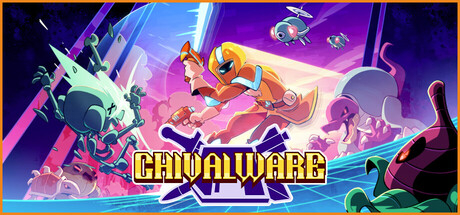
Don't let the name Chivalware fool you. Despite its punny title, the game takes its Rogue-like mechanics and loops quite seriously. Like Runbow and Them's Fighting Herds before it, it uses a play on words to disarm the player before introducing them to the depth of its gameplay. As Shakespeare wrote, "That which we call a rose by any other word would smell as sweet." So does Chivalware represent a sweet-smelling flower or something sour and malodorous?
Chivalware takes place in a sword-and-sorcery world on the brink of collapse. You control a Disk Knight who has returned to a kingdom that is now unrecognizable. The King has gone mad and spread his affliction throughout the land. As one of the few individuals able to wield Disks, ancient artifacts that contain powerful weapons, you're tasked with exploring each embattled zone, defeating the King's lieutenants, and, if you're strong and lucky enough, taking on the monarch himself.
The story in Chivalware is more or less disposable. It gives you a goal and something to fight against, but that's about it. This is certainly not a Rogue-like in the style of Hades, which pulls back layer after layer of narrative tissue, revealing a tapestry of allegiances, jealousies, betrayals, and familial bonds. To be fair, there are a few exposition drops that tease out the history of the King and his thralls. We learn, for example, that some tragic event turned the monarch toward madness. Still, if you're looking for a game with a deep, involving story, you should look elsewhere.
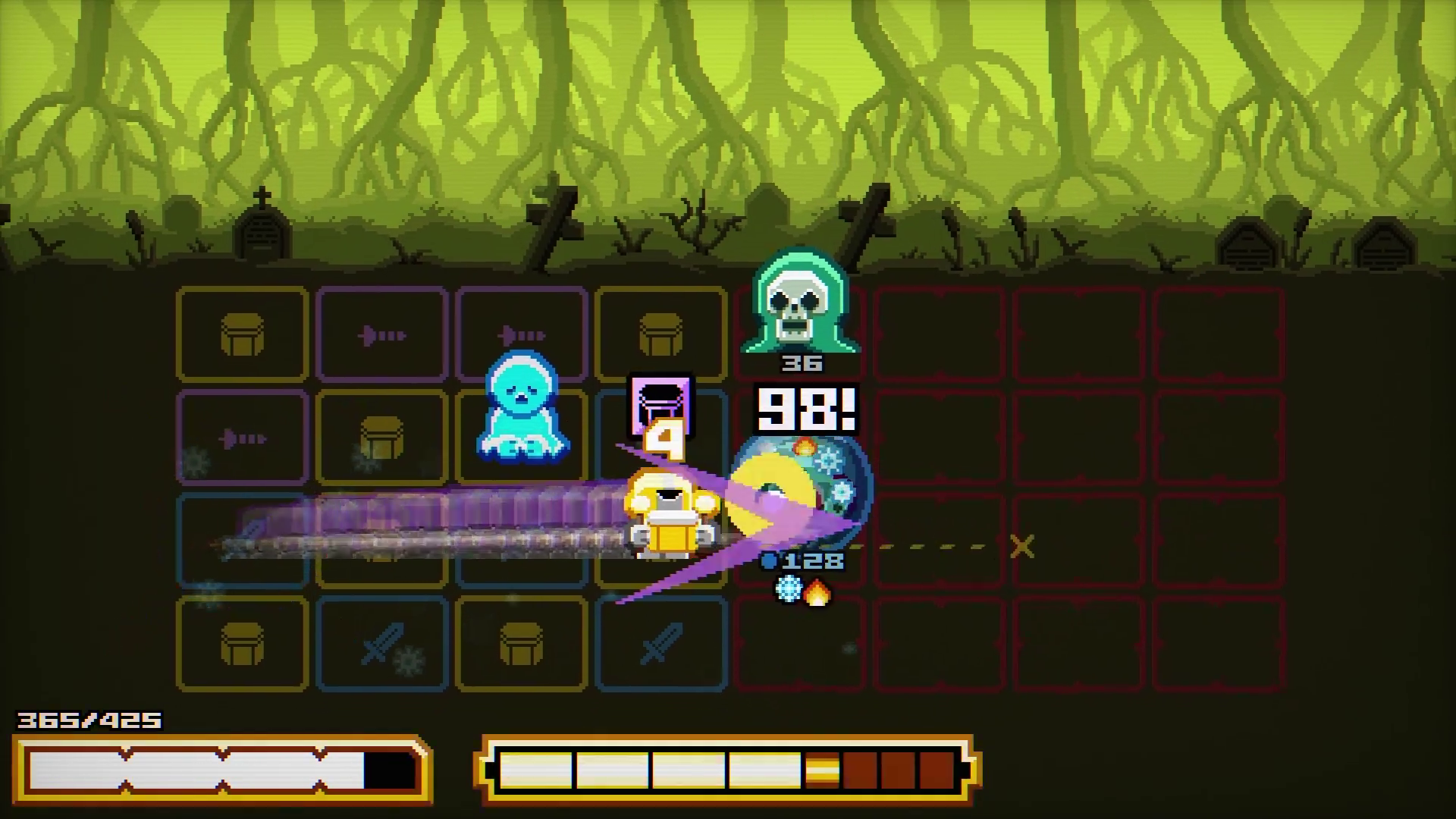
If, however, you're interested more in the mechanics and rules of Rogue-likes, look no further. Indeed, despite its humble appearance, Chivalware has a lot going on under the hood. The basic building blocks are simple: you guide your Knight along a 4x8 grid, in the vein of Mega Man Battle Network, using Disks to defeat summoned monsters. On the left side of the grid (your side) are colored tiles, with each color linked to a specific Disk. By pressing A, you will destroy the tile you're standing on, as well as all matching connected tiles. By destroying three or more tiles at once, you will create a "chain", which equips the corresponding Disk and fills your Energy Meter, which provides the power to actually use the Disk.
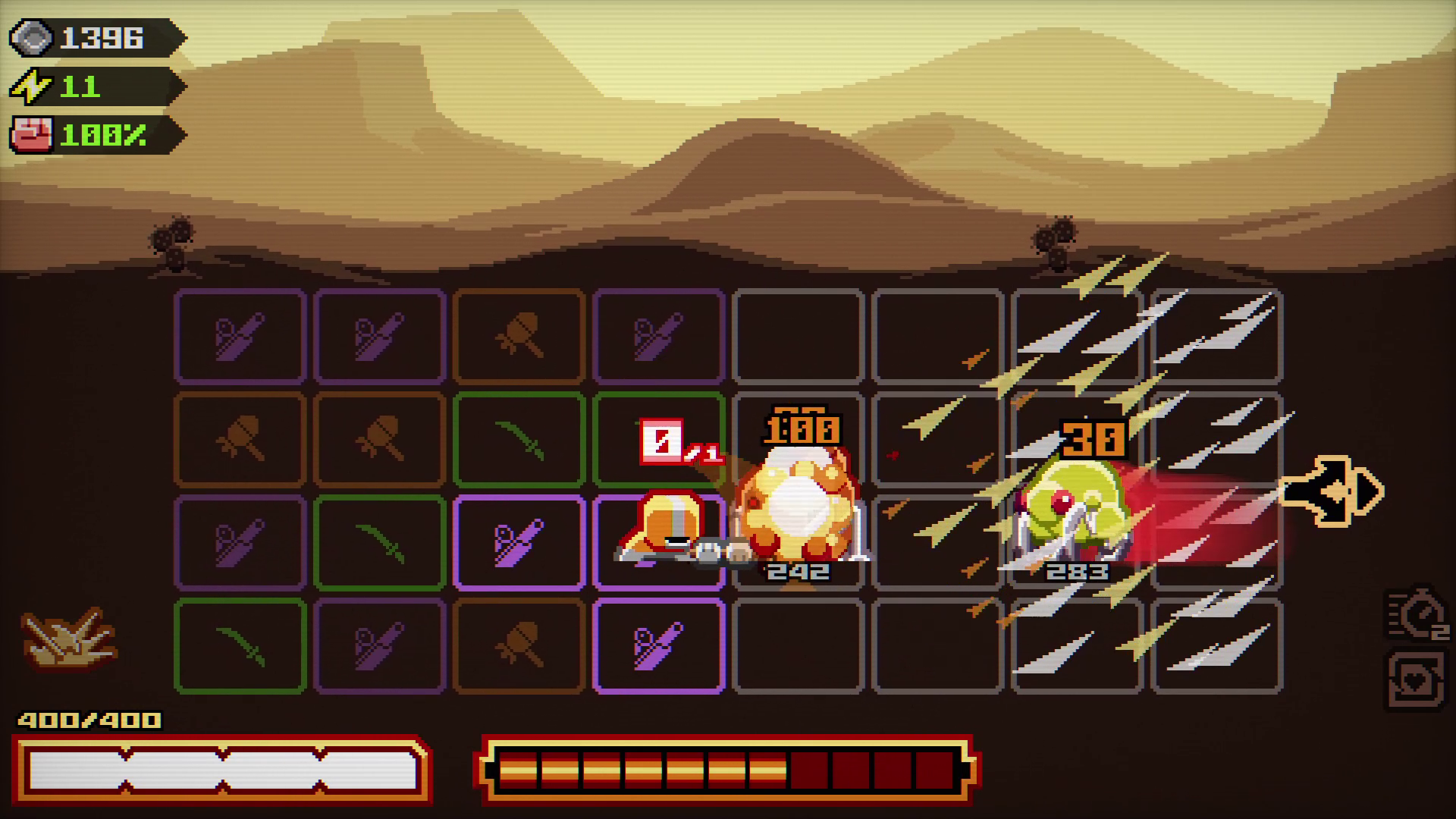
This doesn't happen in a vacuum, of course. Monsters will spawn and attack you throughout this "chaining" process. Consequently, you must move quickly across all 32 tiles to avoid traps and enemy fire, while constantly equipping/unequipping weapons and charging your Energy Meter. It's hectic, unpredictable, and quite satisfying once you get the hang of it. In order to succeed, you must think on your feet, react with lightning-fast reflexes, and find creative ways to use the battlefield to your advantage.
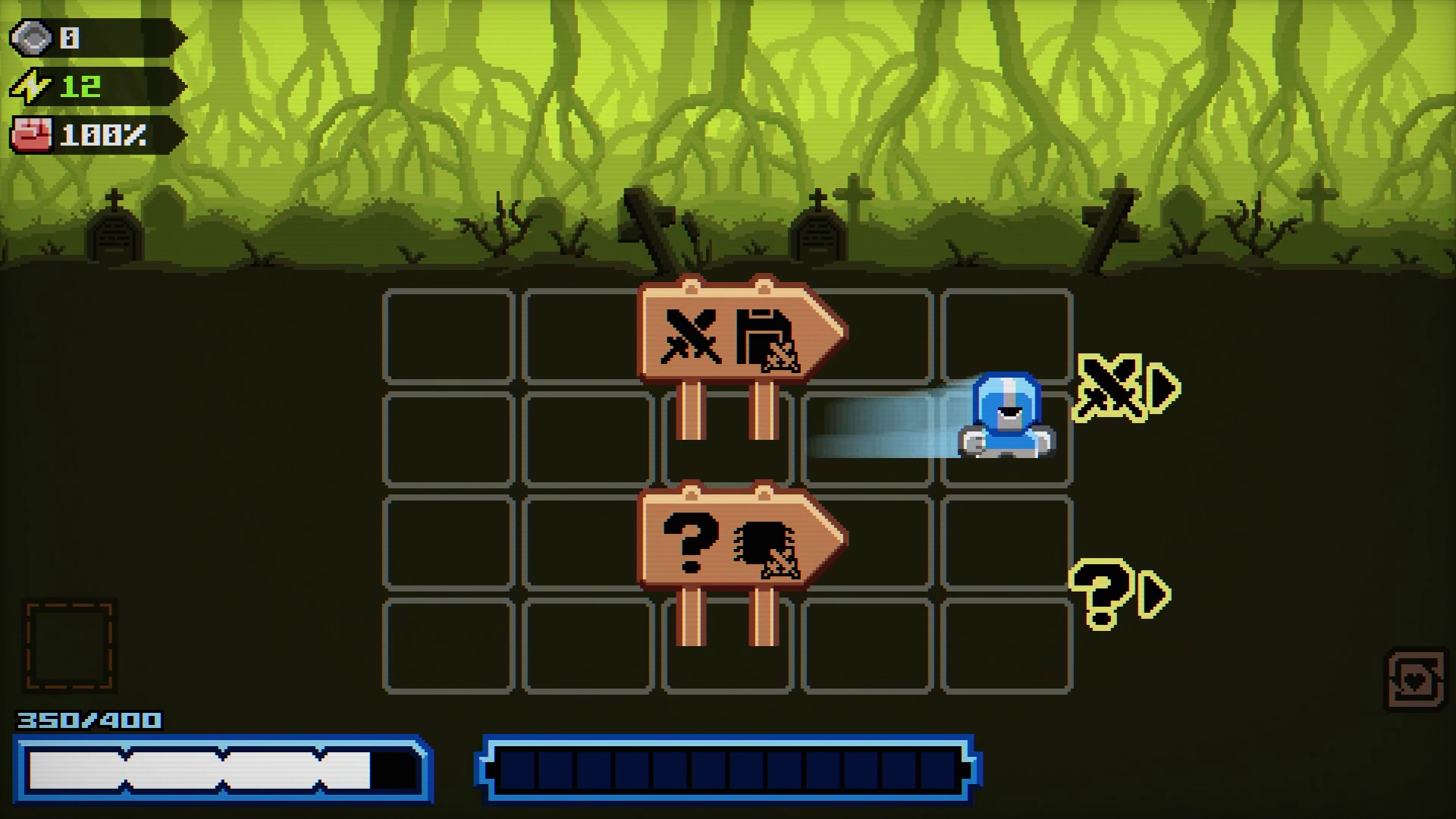
Mastery over the d-pad will only get you so far, though. Like any Rogue-like worth its salt, Chivalware is all about achieving the ideal run by gathering the right combination of weapons, boons, passive perks, and synergistic abilities. You must choose the best weapons, buy or earn chips that support your fighting style, take the right path at the fork in the road, and risk hoarding money for later when you may die before you have a chance to use it, along with a hundred other decisions. Luckily, each run lasts only about 30 minutes, so if you die prematurely, you can hop right back in without feeling too deflated. Also, if you fail before the end, you'll accumulate plenty of points and achievements, which will unlock new weapons, chips, features, and bosses. Even when you don't win, you open up new paths toward victory, which is essential in a game like this.
That said, the luck of the draw is still important, for better or worse. Because the game tends to reward players with an increasingly large pool of things they may find, instead of permanent upgrades that endure across each run, it's possible to fall into a losing streak. A few unlucky encounters or a bad batch of chips can destroy your progress, no matter how much you've unlocked.
Eventually, though, you'll arrive at that perfect intersection of skill and luck, as I did around hour nine, and see the credits roll. That's not the end of the adventure, however. In his wisdom, Max Roberts, who leads the small team at Regal Pigeon, added several different types of Knights and difficulty settings, which are huge for replay value. You can play through the game at six different tiers — which add tougher enemies, randomized zones, debuffs, etc. — and you can do so as one of several Knights, each with its own starting weapons and gimmick. There are potentially dozens of hours of content here. At $9.99, it's a steal.
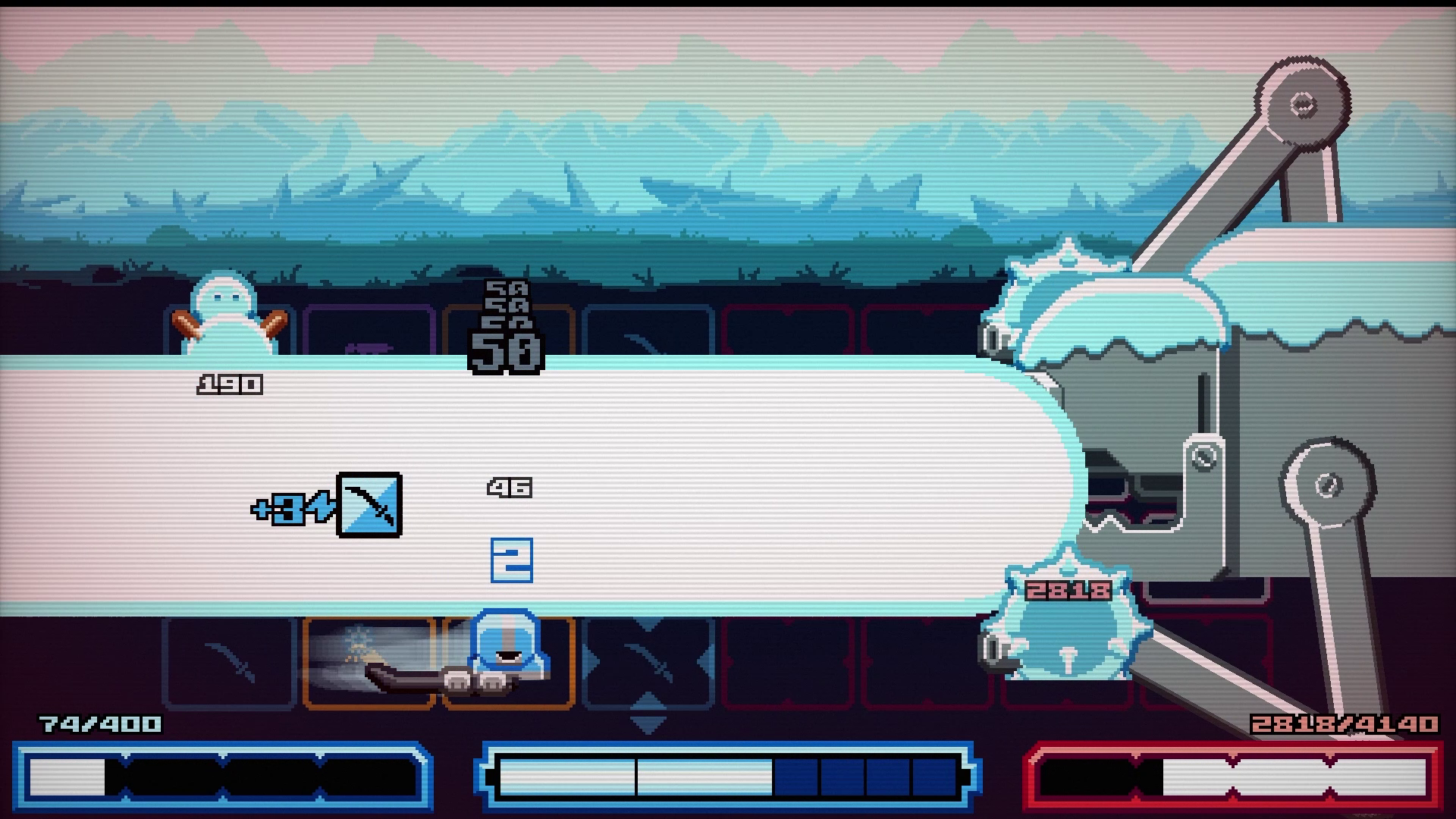
While Chivalware is ambitious in terms of its mechanics and modifiers, it's rather humble when it comes to graphics. The backgrounds are basic, the models simple, and the textures flat. Roberts clearly went with readability and clarity over opulence here, which is certainly the right move in a fast-moving grid-based game. Still, there's plenty of room for improvement.
The game's soundtrack, composed by Fat Bard, fares better. It's 35 minutes of groovy drum and bass tracks punctuated with futuristic ambient sounds that bring to mind anti-gravity racers like WipEout.
To lean again on Shakespeare's Romeo and Juliet metaphor, Chivalware is decidedly a sweet-smelling rose. Maybe not an award-winning rose, but something worth keeping around the house. While it suffers from simple graphics and a disposable narrative, it has it where it counts: tactical, improvisational battles; lots of variety in terms of weapons, perks, and symbiotic abilities; and a huge amount of replay value despite its modest asking price.
VGChartz Verdict


7.5
Good
This review is based on a digital copy of Chivalware for the NS2, provided by the publisher.