



D-topia (XS) - Review
by Lee Mehr , posted on 02 September 2026 / 2,169 Views
The letter 'D' in D-topia is deliberately playing with its two most closely associated words. Not to be confused with dys-topia, for starters; no, life within this far-future village is rather tranquil and outwardly decent. There's no blatantly outrageous gimmick used to control the masses like in Orwell's 1984 or Bradbury's Fahrenheit 451, for example. Given the circumstances of being lorded by an AI tasked with crafting a u-topia for humans, getting to this point required ages of subtler iteration. Of course, any sci-fi fan would reflexively ask: "utopia according to who?" To what degree has individuality and freedom been stripped away to get here, and what are the consequences should one not conform to this… soft technocracy? Marumittu Games explore those quandaries (and more) with an intriguing insight – and also puzzles!
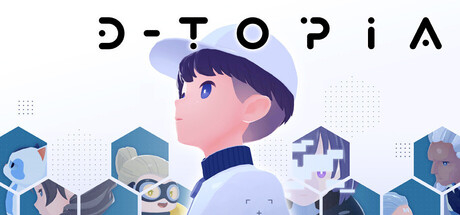
Step into the synthetic shell of Shiro, D-topia's newest Facilitator: a rare & specialized occupation for androids meant to handle problems with this complex and its residents; at the same time, there's another layer to Facilitators commiserating with residents by also having human-like features, like similar hunger cycles and anatomy. The mornings are all about preparing for the day – like a normal person – and working at the factory, which requires you to complete logic puzzles seemingly plucked from The Witness; granted, Johnathan Blow didn't invent line mazes, but its clean interfaces feel so reminiscent. Even daunting conundrums feel therapeutic, especially when complimented by Kenchiro Saigo's lo-fi melodies. After that, afternoons involve exploring various hubs and handling concerns foisted upon you by distressed NPCs.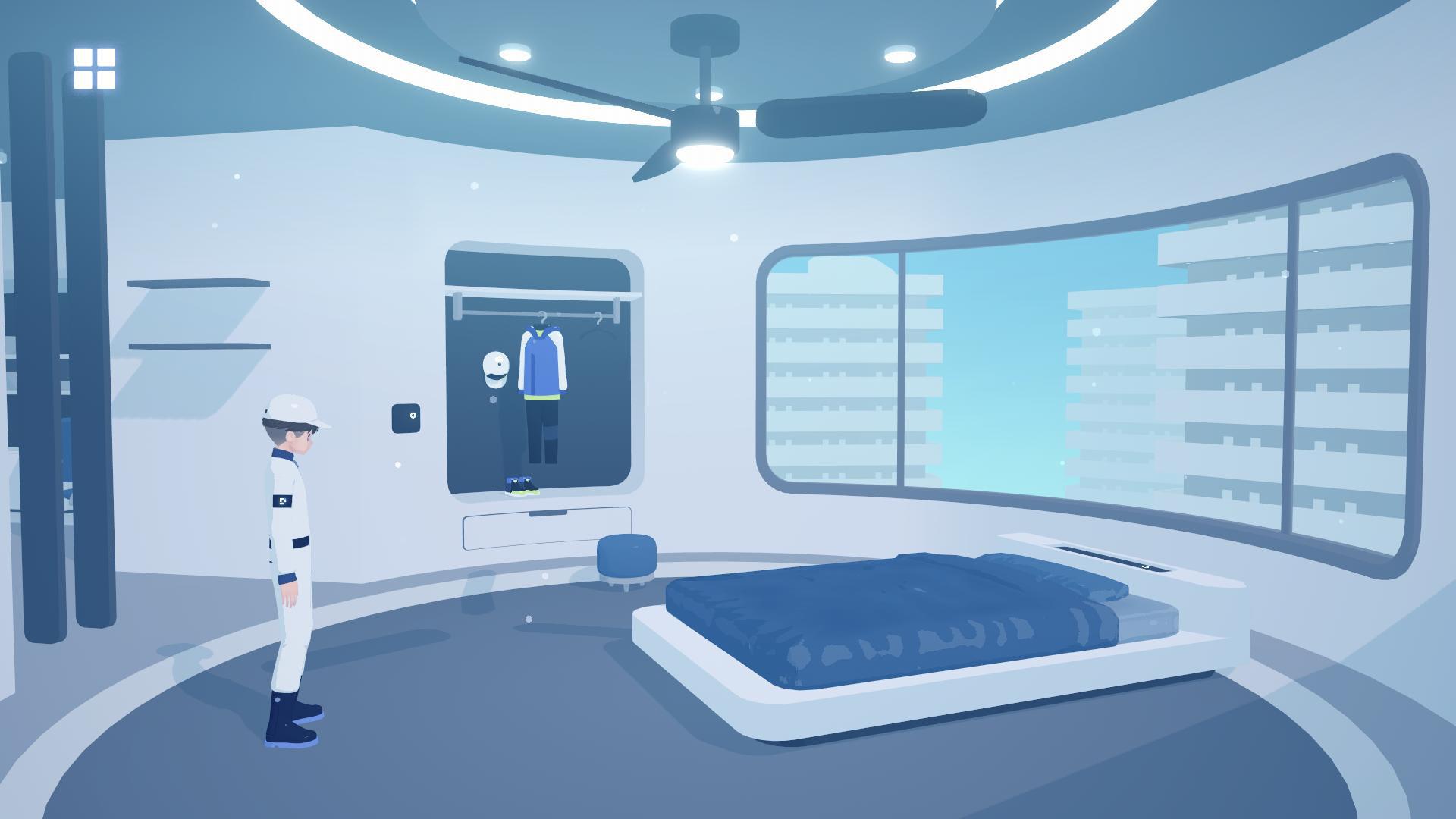
Pre-work morning routines can also be disrupted by side character dilemmas and small mechanical nuisances, but they're served more as a primer for afternoon affairs. Whether preceding or following Shiro's puzzle tasks, handling these specific problems involves going to 'block side': the true reality of D-topia's mechanical inner workings. The antiseptic, brightly-lit hallways filled with white-shelled service droids are replaced with hard surfaces, exposed wires, and uglier true forms of those robots overlayed with a bluescale visual filter. Through this lens, you're able to spot and address visual glitches within the environment and residents; sometimes said issues are caused by mice (which can only be seen through block side) while others can be connected with faulty brain chips.
These micro-quests can be ameliorated by solving simple logic puzzles, but some of them don't stop there. Specific ones are connected to personal dilemmas that require thinking through an ethical decision. In keeping with his Facilitator role, Shiro's synthetic mind palace is a flowchart in which he internally addresses the central problem, breaks down subsequent contentions at play, and arrives at a conclusion. Just a few extra steps above a good/bad/neutral choice system, but it congeals with the game's broader themes and visual design.
Marumittu's strengths stem from learning more about this alien world through environmental and mechanical discoveries. Shiro's first impasse is dealing with a "defective" resident on the verge of getting his third strike (funny how baseball rules still pop up in the distant future). Given the AI's mindset about maintaining order, should we enable a higher authority to send him to a lesser -topia, or perhaps lie for him and hope his aggressive outbursts will subside? The more dilemmas you face, along with the strange dual worlds, the more you understand just how different these people are. The block side in particular is a funny one because that angular world is real, while its Star Trek/Apple aesthetic crossover is the result of carefully conditioning humans with a sensory overlay. Potentially millions of people over the years have only seen and engaged with a curated fiction.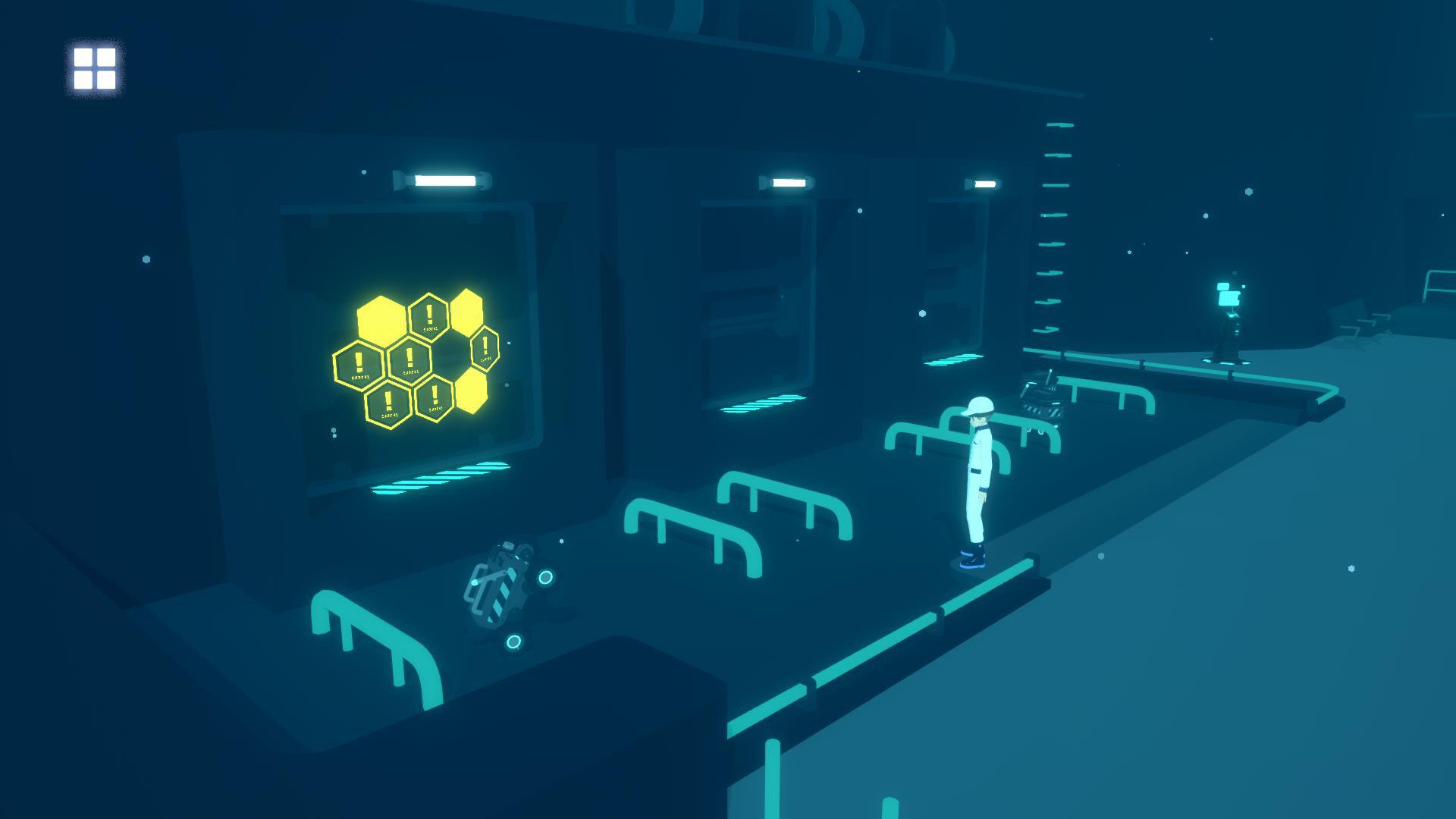
It's a sci-fi story that fuses the alien with the familiar. Modern societies run sharply athwart genetically pairing potential soulmates (even if consent is still the ultimate decider in D-topia), but technologies like CRISPR show we're less averse to tinkering with reproduction. All of this is presented in clean, brightly lit areas, and with Chibi-esque character models, as a means of papering over the implications. The pitfalls of broad-based solutions for such variegated personalities are uncomfortable to consider without veering towards bloody ends like HAL 9000. Through meticulous iteration, this community has grown to accept certain limits, and even suspicious inequalities like special access to swanky clubs; despite zettabytes of processing power, this computer overlord can't – or won't – topple a society of haves & have-nots.
Hiroco Shiino's narrative design doesn’t desperately call attention to itself when exploring this, though. Whether your Facilitator's dialogue choices commend or admonish other residents, he stolidly does so – in keeping with his programming. A more modest, pared-back approach marries with the subtly-repressive doldrums of his daily work life. By its very nature, the cycle itself can't help but tempt anyone into interrogating a greater purpose. Do brainteasers like line mazes, sequential number pathways, & Minesweeper-like node selections solve some greater mystery for this supercomputer? Is the Facilitator somehow fueling this place through work? What's being communicated with optional overtime challenges?
Unfortunately, most of said answers are too flimsy for their own good. In fact, there's more… "ludonarrative harmony" (pardon the pretension) in its most simplistic mini-puzzles scattered about the world than in everyday work; granted, those examples – mostly during overtime – are more mentally taxing and engaging, but their broader point isn't properly explained. It's the means to engaging in empty purchases for your residence, or perhaps wasting on snacks and energy drinks. One could argue a point's nestled within Shiro's consumerist opportunities, but it's not as visually creative nor thematically consistent as something like Mosaic. It's missing real bite.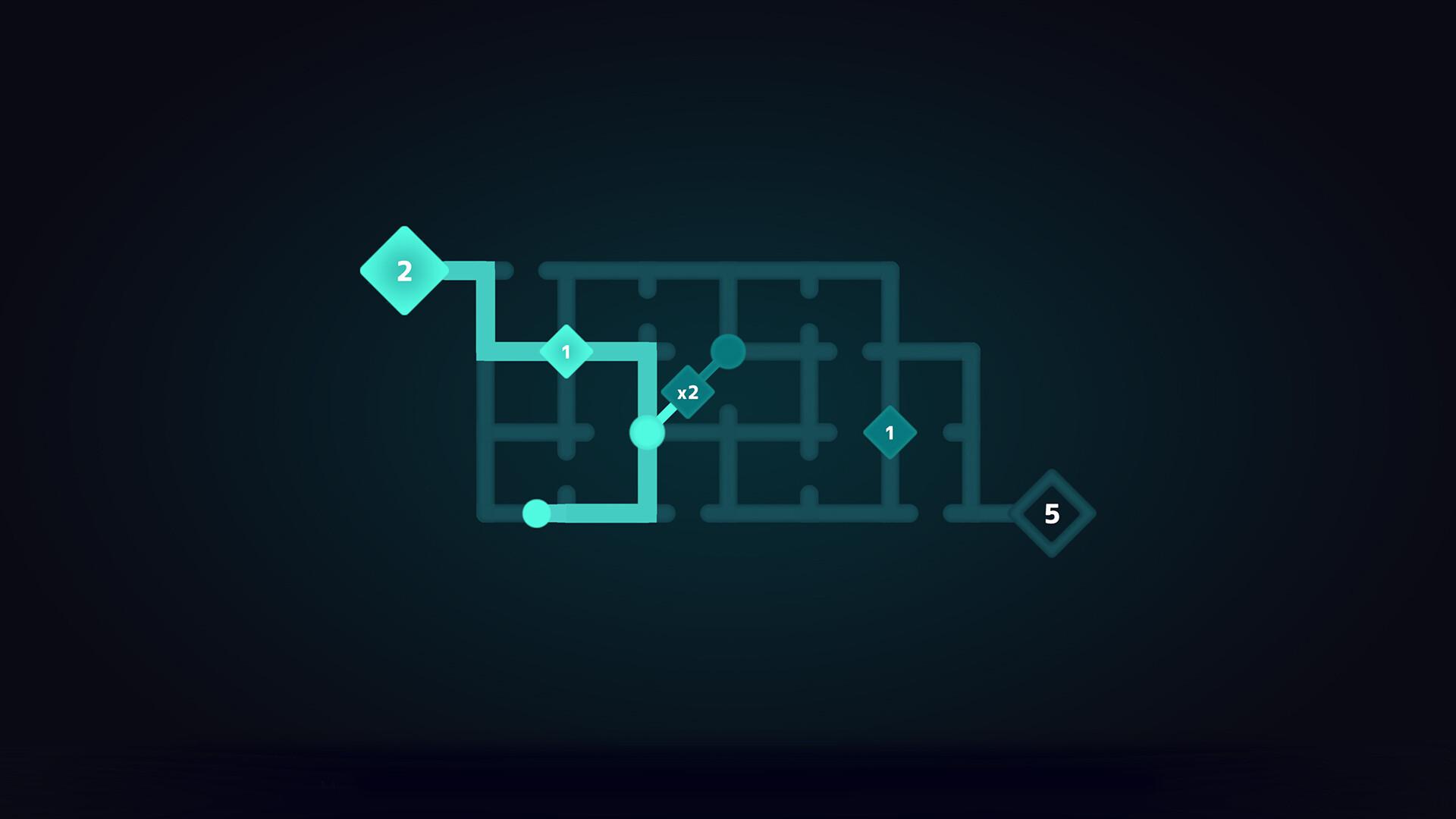
Pulling punches also applies to Shiro's ethical dilemmas with important NPCs. Like mollifying the aforementioned third-strike resident, several situations are about whether or not to contort the rules for individual flourishing over collective unity. Their empathetic personal tales tap into the difficulties of a universal rule set by reams of computer code. The problem is virtually every one of these issues can arrive at a cozy solution. Good, neutral, and bad ending splits only land if each one comes with a set of definable & challenging drawbacks.
Keeping with the comparison, Mosaic is mechanically closer to a walking sim and also has a cyclical work cycle, yet it feels more propulsive. There's more stuff here – tougher brainteasers, important dialogue decisions, platonic relationship gauges, and so on – but that risks Marumittu stepping on more rakes. "So, there's only one block side terminal per hub that I have to walk over to in case I missed anything? And Shiro can only run after consuming energy drinks? Why not make that a default option?" Small as that particular critique may seem, it speaks to the artificially slower pacing overall. Shaving away the fluff would still get you around six hours or more (which isn’t controversial for $19.99 standard). The more one investigates any secondary or tertiary concepts, the less cohesive it all starts to seem.
Overall, where D-topia risks becoming a Zzzzz-topia is through structure instead of mechanics. On the surface, its peculiar fusion of sterile futurism, Chibi-like character models, logic puzzles, and special character dilemmas sustain genuine interest. Fractures begin forming once its routine is understood. There's intention behind the tedium, sure, but that argument loses traction after interrogating various quibbles that could've been avoided altogether. Certain brainteasers, mostly Shiro's overtime examples, have solid A-ha! moments, but they serve more as speedbumps to its broader narrative goals. For an AI designated with a utopian vision for humanity, you'd think it would strive higher.
Contractor by trade and writer by hobby, Lee's obnoxious criticisms have found a way to be featured across several gaming sites: N4G, VGChartz, Gaming Nexus, DarkStation, TechRaptor, and Cubed3! He started gaming in the mid-90s and has had the privilege in playing many games across a plethora of platforms. Reader warning: each click given to his articles only helps to inflate his Texas-sized ego. Proceed with caution.
VGChartz Verdict


6
Decent
This review is based on a digital copy of D-Topia for the XS