


Metroidvania Corner: Bloodstained: Ritual of the Night - Article
by Paul Broussard , posted on 26 May 2023 / 7,741 Views
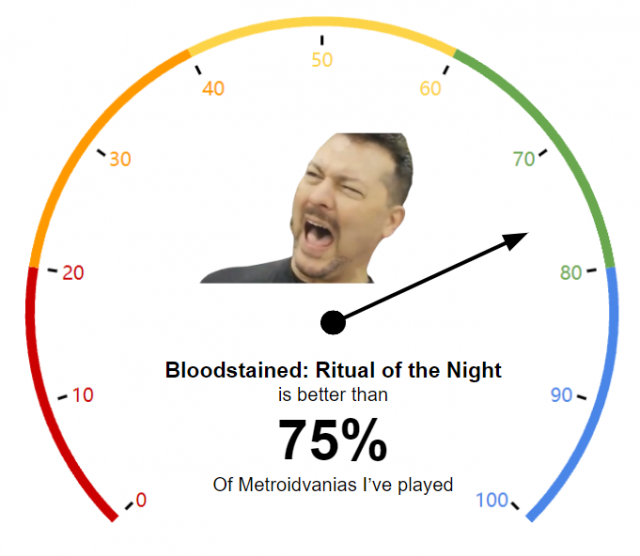
Welcome to the first in a series of reviews of older Metroidvania titles; games that didn't get a review when they initially launched but I thought deserved one anyway, even if it is very late. Being a late review, and thus not factoring into any aggregate site averages like OpenCritic, I'm using a bit of a different scale for these. Instead of a standard 1-10 numerical rating, I'm going to go with a percentile representation of how many games in the genre a title is better than. So a 70% doesn't necessarily mean a flat 7/10, but rather that it's better than 70% of Metroidvanias that I've played (so far). Is this a particularly great way to evaluate games? I don't know. But this whole thing's an experiment, so I'm trying out new things.
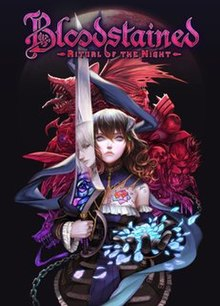
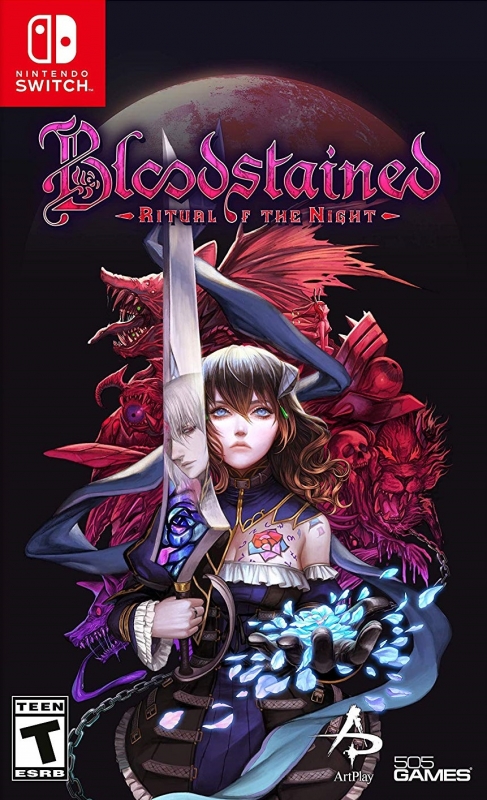
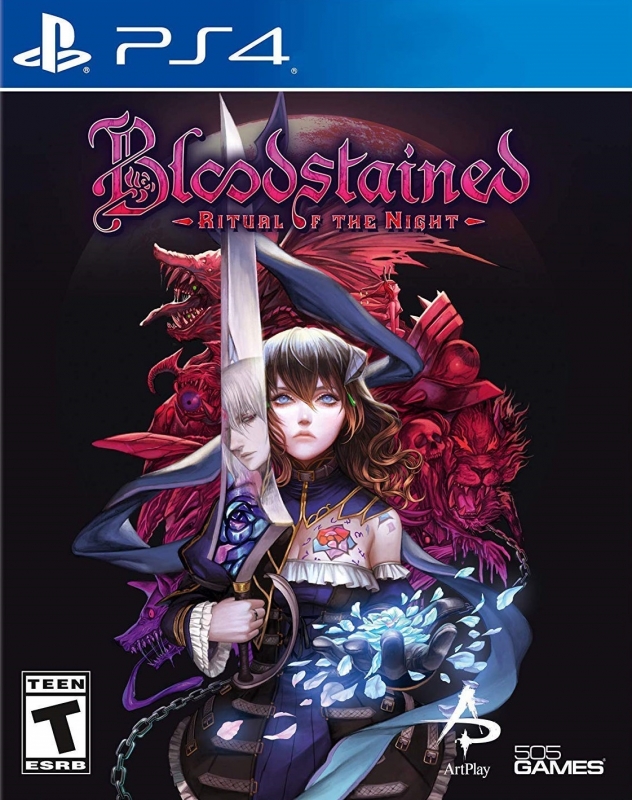
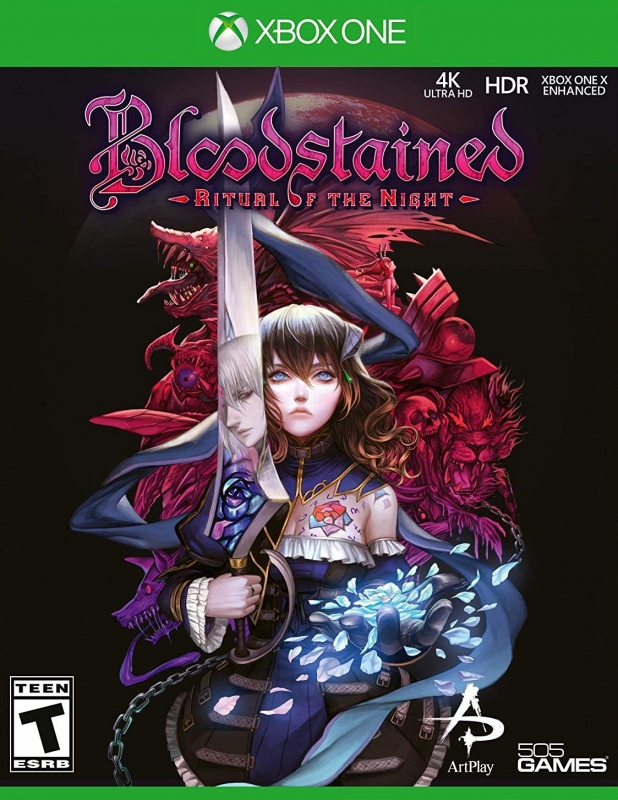
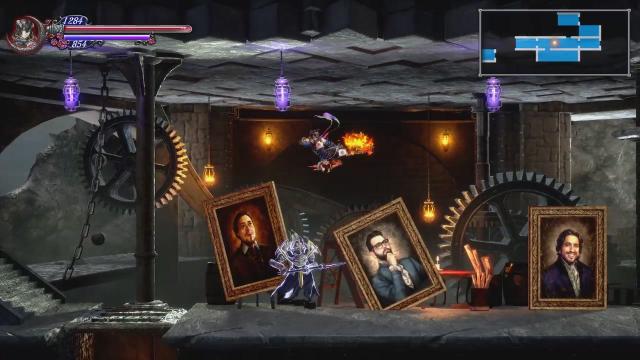
Bloodstained: Ritual of the Night is one of the myriad of successfully Kickstarter-funded Metroidvanias born out of the mid-late 2010s. It describes itself as a spiritual successor to Castlevania, and makes no attempts to hide its inspiration both in terms of its name (each ending with “of the Night”), setting (a castle summoned from the underworld by powerful demons), and in its absolutely god-awful voice acting. I do wish Ritual of the Night had been willing to branch out a bit more in the early-mid game; I’m all for taking inspiration from good titles, but when you start jumping around a clocktower area with gears as platforms, the line between “inspired” and “rip-off” starts to get blurred. That said, the latter half of the runtime does really start to show some creativity in terms of level design, so I’ll give it a pass.
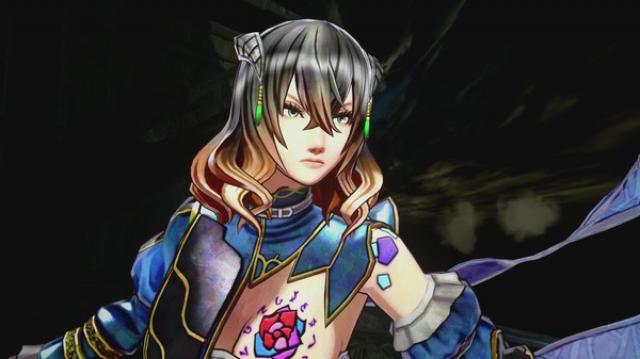
The story of Ritual of the Night focuses on Miriam, an amnesiac girl thrust into an impromptu career as a demon hunter when she wakes up to find a giant evil castle has popped in from another dimension. Unlike a lot of its contemporaries, the game doesn’t really lean into a particularly dark narrative, instead opting for a more upbeat adventure with primarily well lit environments, up-tempo music, and silly story moments to lighten the mood. The lore is largely a bunch of gobbledygook about a nefarious plot by some incredible dipshits to end the world so they can prove how much they’re needed, but the characters are, for the most part, pretty well written and fun to talk with. It's simplistic, but it works; it gives the player adequate motivation to start the adventure and the characters are memorable & charming enough (albeit often in a "so bad it's good" kind of way) to keep the player invested the whole way through.
Aesthetically, Ritual of the Night might be one of the strangest looking Metroidvanias I can remember. It’s one of the few to go with full 3D models, and there’s no question that the animations can be… pretty janky, at times. That said, the environments are generally quite attractive and the music very much has a nostalgic Castlevania vibe to it. While the story isn’t exactly light, the atmosphere as a whole is also pretty mellow as well, which is something of an oddity for these types of games (but hardly a bad thing).
Ritual of the Night earns some brownie points right off the bat for being one of the few prominent self-described Metroidvanias to actually remember what the core of Super Metroid and Symphony of the Night were. As opposed to many modern “Metroidvanias” that seem to think that the genre label is just about exploring a large environment in 2D, Ritual actually has an item based progression system that slowly unlocks more of the map. It has you consistently faced with areas you can’t reach yet for one reason or another, then gives you a power-up and lets you organically remember to return there and use said power-up. It makes exploring the castle rewarding, like it should be.
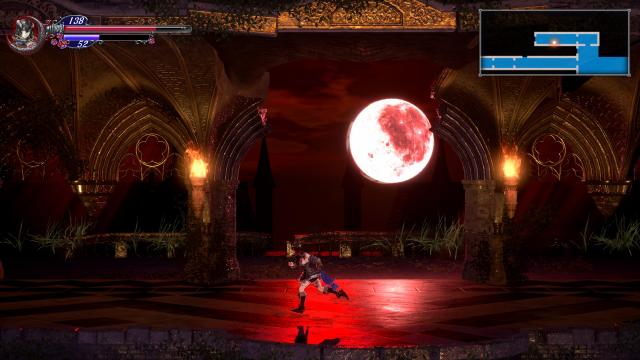
Power-ups themselves are mostly obtained by acquiring “shards” from killing enemies, which is one of Ritual’s key mechanics. Basically, if you kill enough of a certain type of enemy, you’ll get stabbed in the pancreas with an absurdly large crystal, which then grants you some new ability tied to the defeated enemy. The vast majority are optional, but the game does tie major power-ups to shards obtained from bosses, which adds a nice reward for overcoming Ritual’s toughest encounters.
That said, if I can nitpick for a moment, there is one particularly frustrating moment towards the end where a mandatory shard is hidden behind grinding a regular enemy, which had me running in circles wondering what the hell to do for an hour or so before finally just looking it up. There are a few other occasions where I think Ritual might have benefitted from narrowing its scope just a bit; some later game power-ups and/or story elements have so many places you need to look that you can very easily spend an hour or so running around the castle looking for the one spot that you need to visit.
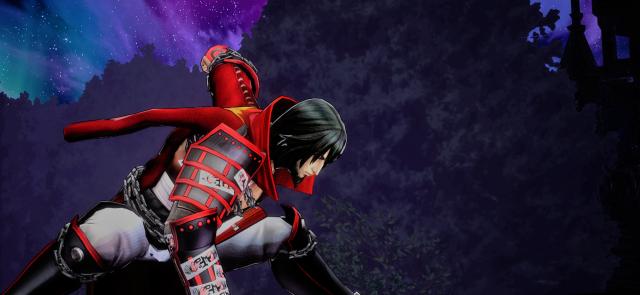
Speaking of the castle, it (and its various surroundings) is one of the largest environments I’ve seen in an indie Metroidvania. Despite the scope, Ritual of the Night does a good job of making it consistently feel worthwhile to explore. Aside from the aforementioned shards, there are max HP/magic boosters, new weapons, new armor, NPCs, and some… very odd side quests (like a hair-styling minigame) to discover. If you’re so inclined, you can even find an entirely optional power-up that seems to exist for no other purpose than to turn the final boss into a complete laughing stock. There are also a surprising amount of purely optional bosses to tackle as well if that’s your thing, with some even more heavy nods to Castlevania with a portal that takes you into an 8 bit dimension. There’s a ton of content here, and if you’re looking for a title that gives you proverbial bang for your buck, it’d be hard to find many better value propositions in the genre.
Having said that, while the exploration is mostly great, I do feel the need to nitpick a bit about a couple of elements that on their own probably wouldn’t be that bad, but combined make things rather annoying at points. The first is that enemies do not drop health. If you need to heal between save points, you have a few options, but they’re all limited (like consumables) or complete garbage (like the healing spell, which even when fully upgraded has an awful health for magic ratio). That said, minimal healing opportunities isn’t a problem in and of itself; games within the genre like Blasphemous handle that reasonably well. The problem comes when you combine that with the fact that all the enemies in the current room respawn as soon as you step out, even if it’s only for a second. You can spend several minutes clearing out a particularly tough room, glance into a side room quickly only to find a dead end, and then have to re-do that whole process again, which is not only time-consuming but usually hurts a lot too. And running through/tanking enemies is often just not an option, especially with how much damage they deal and the limited healing opportunities at your disposal.
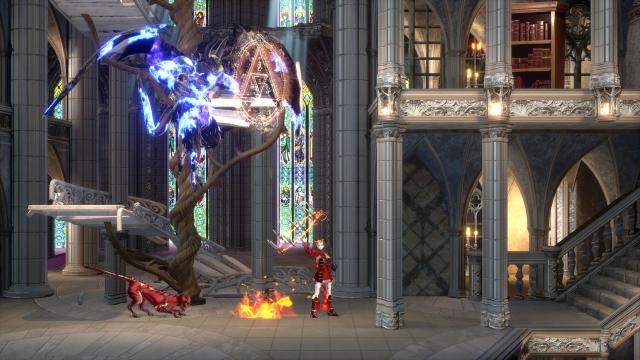
Another point against Ritual of the Night is that, while it mostly nails exploration and progression, the combat is… more problematic. The lack of even a basic upwards angled attack means that many of the weapons with smaller hitboxes are just a pain to use against smaller enemies. And things can really fall apart against certain bosses, particularly those that like to run around erratically. I’ve said before that ever-present contact damage really has no place in a game where the primary means of attack are short range melee weapons, and I think Ritual of the Night is about as good an argument for that proposition as one could imagine. Miriam just doesn’t control snappily enough for this to work especially well, and even on a second playthrough it felt more like I was stumbling my way through fights rather than perfecting them, despite clearing most encounters without having to use healing items at all.
I suppose the healing items are the flipside to the combat complaints, as with a little bit of grinding for money/food you can very easily come in with so much healing that getting hit is more of a minor convenience and less a genuine obstacle. But I’m frankly not a fan of this approach; while the idea of adaptive difficulty is good on the surface, asking a player to balance the game on an initial playthrough is always poor design in my opinion. The extreme of “all healing” undermines much of the exploration factor. After all, why bother discovering optional upgrades if you can just plow through everything while eating half a grocery store in the process? And the opposite extreme of “no healing” just winds up highlighting the unpolished combat and constantly respawning enemies while exploring even more, making things more annoying than challenging. The “ideal” experience is probably somewhere in the middle, with some number of healing items, but the developer should be the one that provides that, not the player having to guess where it is and risk over or undershooting an enjoyable difficulty.
Despite whatever annoyances I have, there’s no question that Ritual of the Night is a very good start. It handles exploration and item progression about as well as any indie Metroidvania I’ve played, and has some really good location variety to supplement it. The combat and balancing are problems that hopefully get smoothed out in the now-announced sequel (I think that’s still happening? It’s been two years since we heard anything concrete), but if it can improve on those, it’ll be a highlight of the genre. For now, though, it's still a good example of the genre. Bloodstained: Ritual of the Night gets three and a half screaming David Hayters out of five, and I'll bump it up to a full four if they can figure out a way to give me a real life version of Riga Storaema. It’s not quite Symphony of the Night, but it’s as close as anyone’s come.
More Articles

One of the best games I've played. I'll have to revisit it some time.

Awesome read! Looking forward to news installments in your series.

Neat read. This is one of the games I still need to get my hands on eventually.
Also, if I could recommend another Metroidvania, what about Megaman ZX? So few people actually think of it as a metroidvania...

Funny coincidence as I just finished Bloodstained the other day after taking a break from it when TotK released.
While there were many thing I liked about it I agree strongly with the healing issue you mentioned. It's pretty frustrating since you're clearly expected to go into most boss fights with a good stock of potions, but they're rare to find and surprisingly expensive so you end up having to spend much of what you earn on them. (And apparently it was a patch that made them that expensive? The wiki says they cost 100 but in my game it's double that. Not exactly the best change if so).
That being said my biggest more overarching issue is that almost every fibre of the game's design pushes the player towards grinding. Shards have not only one but two ways to be upgraded, one of them often requiring rare materials that you have to grind for, and the other simply being grinding for multiple of the shard. Then you've got late game equipment and cooking which also require rare materials and probably a visit to Google if you want to find out where that material is optained. I probably wouldn't take issue with all this if it felt completely optional, but even on normal the latter part of the game (mainly the bosses) feels like they're balanced for a heavily upgraded Miriam and that doesn't really come naturally enough. The permanent stat boosts of cooking, the crazy scaling of shards or how you can even get "free" passive shard slots by fully upgrading them all adds up to a very exponential character scaling and while it can be fun once you get there running on and off the screen a hundred times to kill the same enemy isn't exactly my idea of a fun metroidvania. (To be fair I probably ended up making the process longer than it needed to be because I stubbornly wanted to beat OD).
Well that turned into a long complaint, but like I said at first there were also many things I liked about the game. I actually quite enjoyed the combat itself and really liked some shards like Invert (clever way to give us an upside down castle without the extra work) and basicly being able to turn into sonic with Accelerator (Bloodstained best sonic game confirmed?). And while I took issue with the grinding elements I can also see that those same elements can be a positive for players that just want A LOT of metroidvania, don't think I've played another one with this much content.
I would probably give the game a 7.5 on a regular scale but to me that's definitely not higher than 75 % of the metroidvanias I've played though (I suppose I mostly play the high profile ones).

good article man! .
Lol, I recall backing this