


The Dead Still Walk in Raccoon City - A Resident Evil 3: Nemesis Retrospective - Article
by Issa Maki , posted on 02 October 2020 / 5,745 Views
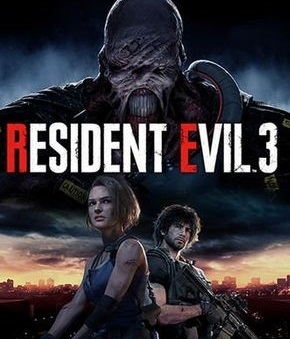
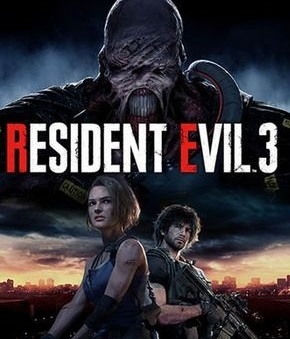
Resident Evil 3: Nemesis is one of the more neglected entries in its series. On paper, it's difficult to understand why. Randomized enemy and item placements keep playthroughs fresh, while the amount of combat options continues to inspire future releases. It introduced The Mercenaries to the franchise, and its main villain is one of the most iconic in gaming history. The legacy it bears is so great, its own remake proved unworthy of inheriting it.
So why isn't the game more popular?
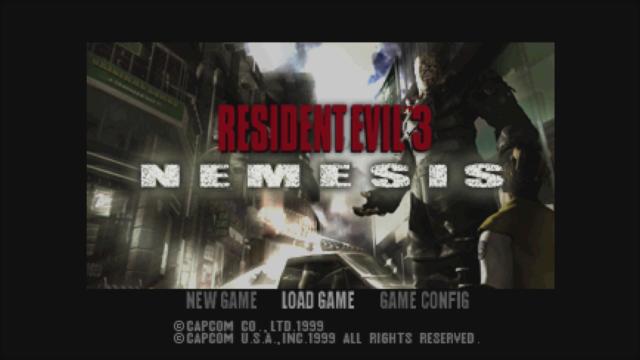
From its debut onwards, the Nemesis presents a problem that generally has two solutions: gun or run. Resident Evil 3 assumes players know what they're doing, and that they came to play. Those who prove worthy will enjoy one of the most rewarding experiences Capcom has ever made.
An odd prequel-sequel hybrid to the previous entry, Resident Evil 3's greatest asset certainly isn't the storyline. The T-Virus outbreak from the original game has made its way down from the Arklay Mountains, infecting the denizens of Raccoon City. Disgraced former member of S.T.A.R.S, Jill Valentine, unwillingly teams up with the remnants of a mercenary unit sent in by Umbrella, the clandestine corporation responsible for the incident. As she navigates her way through the remains of the city that failed to heed her warning, Jill is relentlessly pursued by an unknown enemy with a singular purpose: the death of all remaining S.T.A.R.S. - and one name is on the list.

The story has its moments, but it's clear that Resident Evil 3's focus is on gameplay. It takes a more action-oriented approach to its material than either of its predecessors, marking the beginning of a change in direction Capcom would take going forward.
Despite the flak earlier games in the series receive for their 'tank' control-schemes, Jill is more nimble than ever. The ability to Quick Turn is introduced (a feature retroactively added to revisions of previous titles). This alone gives players more confidence in themselves and their surroundings. Such a small addition is laughable by today's standards, but circa 1999 sacrifices were offered to Capcom in gratitude.
Until Capcom realized that it had also accidentally given players the primordial fire they needed to elevate themselves beyond the level of the gods. This fire we called Dodge.
Initially, the ability seems like an afterthought. Activated by pressing R1 (the same button used to aim), dodging quickly feels clunky and unreliable. A grey area emerges, making it difficult to tell if Jill is going to deftly roll away from harm, or futilely raise her gun as she feels an enemy's cold embrace. This might seem unforgivable, as the feature could have easily been mapped to a different button, but I suspect that this was done intentionally by Capcom for balance purposes. Dodging is simply too powerful.
This can't be emphasized enough. Dodging is to Resident Evil 3 what Issen is to Onimusha, or what Royal Guard is to Devil May Cry 3, 4, or 5. Mastery of the ability grants experienced players almost limitless influence over the direction the game can take. From dogs, crows, and spiders, to newcomers like the Drain Deimos or Gamma Hunters, up to the Nemesis itself, all grovel before the might of Dodge. Ironically, the standard zombie is the most resilient to this tactic, a decision as equally fitting as it is infuriating. Learning to properly dodge is the most valuable asset a player can have in their coffers. Capcom was justified in seizing it for over a decade.
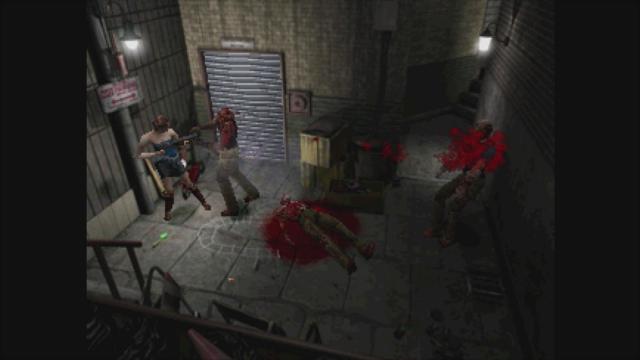
The second addition that opens up the gameplay is the ability to craft ammunition. Recent titles have returned to this mechanic, yet none of them take advantage of the possibilities the way Resident Evil 3 does. Why they haven't remains a mystery.
Scattered throughout Raccoon City are various caches of Gunpowder, which come in two types: A and B. Gunpowder C can be made from combining them. As a general rule of thumb, Gunpowder A crafts Handgun Bullets, B makes Shotgun Shells, and C creates Grenade Rounds. The more times a certain type of ammunition is made, the more players receive. This is where a major portion of the game's replay value resides, allowing for a level of customization that makes its successors look back with eager curiosity.
Let's say a player happens to have a soft spot for their Benelli. Instead of using one Gunpowder B to craft a meagre 7 Shotgun Shells, a combination of AAB makes 20. If one prefers the Handgun, a combination of BBA nets 60 Handgun Bullets, dramatically increasing the 15 Gunpowder A normally provides. Combined with Grenade Rounds, they can target specific enemy weaknesses with various elemental effects. Need Magnum Rounds? CCC (initially) makes 24 of them, trivializing later portions of the game.
With enough proficiency, Enhanced Handgun and Shotgun Ammo can be created. The caveat is that improved rounds will not work with any of the exclusive weaponry earned from defeating Nemesis. This prevents them from becoming overpowered, while retaining the viability of previously acquired equipment. What this amounts to is a level of freedom that transcends the game's genre. RPGs exist that have fewer options than Resident Evil 3, and there are still more facets to explore.
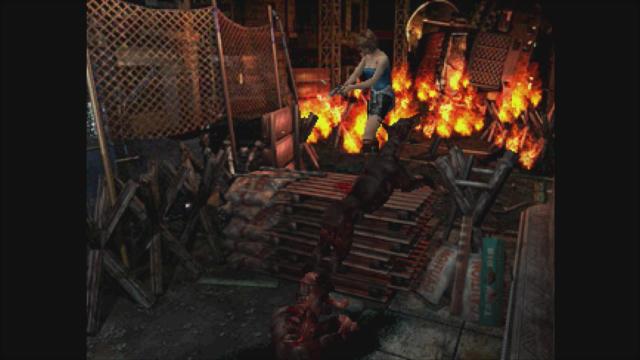
There is a varying degree of static 'randomness' concerning enemy placement, attributes, and variety, as well as item allocation and distribution. The prominence of randomizers in the speedrunning community proves how valuable unpredictability can be, and Capcom was hip to this idea back in the 90s. It only takes a couple of missing Gunpowders or Red Herbs to create a sense of uneasy tension. A roomful of dogs is always trickier to navigate than a room of crows. That zombie players avoided earlier might gain a speed boost the second time around. These changes can be miniscule, but combined with Ammo Crafting, they all add up to the most replayable entry of the series. My playthrough of the game this year was different than last year, and will be different from the next time, and I know that. There are reasons to revisit Raccoon City.
The greatest of these is the game's namesake, Nemesis. Veterans may have initially scoffed at the passing similarities to Mr. X and the Tyrant, but after their first encounter they're singing the same song as everyone else: a dirge.
In 33 years of gaming, I have yet to encounter a single enemy scarier than the Nemesis. It wasn't until the release of Alien: Isolation 15 years later, that a game dared to encroach on its territory. If sales of that title are any indication, the gaming world still isn't quite prepared to face its fears.
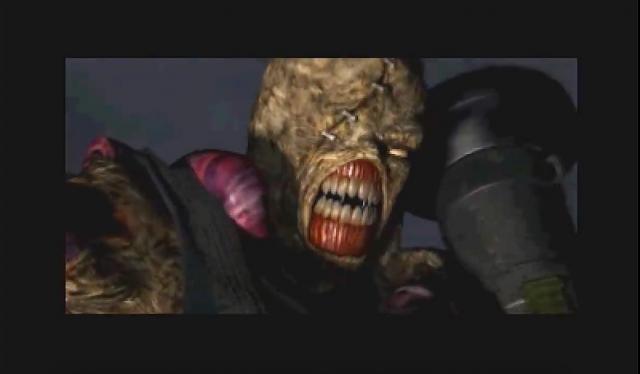
But face them it must. Any degree of success in Resident Evil 3 is predicated on how the player answers the problem Nemesis presents. This is analogous to Phoenix in Marvel vs. Capcom 3. Phoenix is a problem independent of the match itself, and if she enters the battlefield against an opponent who has no solution in place, their chances of survival visually resemble a bagel.
A player's odds against Nemesis aren't quite that bad, but it's solely up to each individual's own personal skill level to win, and here lies the issue people have with the game. If they're the kind of person who can't wrap their head around the fact that up on the D-Pad always means forward (regardless of their personal perspective), or that left always means the character's left (not the player's left), what chance are they going to have against an enemy that can follow them from room to room? Ironically, it can take more skill to avoid Nemesis than fight it. With the rewards as great as they are, there's little reason for players not to improve themselves. Remember the adage: “to be brave, one must first start by being afraid”.
A variety of exclusive weapons and spoils are the rewards for a player's tenacity. The Assault Rifle comes in handy during later stages of the game, but only comes with one clip, so make those shots count. A lever-action shotgun (inspired by Terminator 2: Judgment Day) devastates enemies with twice the fire rate and reload speed of its predecessor. A personal favorite is the STI Eagle, a speedy handgun that favors Critical Hits. First Aid Boxes (that can hold up to 3 canisters) create invaluable inventory space, while the truly dedicated can potentially happen upon an Infinite Ammo Box, which can be bestowed upon any firearm of choice. Any and all of these can be attained in a single playthrough (though the Ammo Box replaces the Assault Rifle in subsequent runs). Acquiring just one of these items can be enough to shift the odds back in the player's favor. Gather them all and even Nemesis will have no choice but to acknowledge the new sheriff in town.
The greatest contribution Resident Evil 3 offered the franchise might not be its most recognizable enemy, but it's most celebrated mini-game, The Mercenaries. Popular enough to warrant its own spinoff, it remained a staple of mainline entries until Resident Evil 7's release in 2017. Each iteration differs from game to game, but the core concept remains: kill enemies, gain time. Though admittedly antiquated, Operation: Mad Jackal is the most unique of them all, and is still as frustratingly addictive as ever.
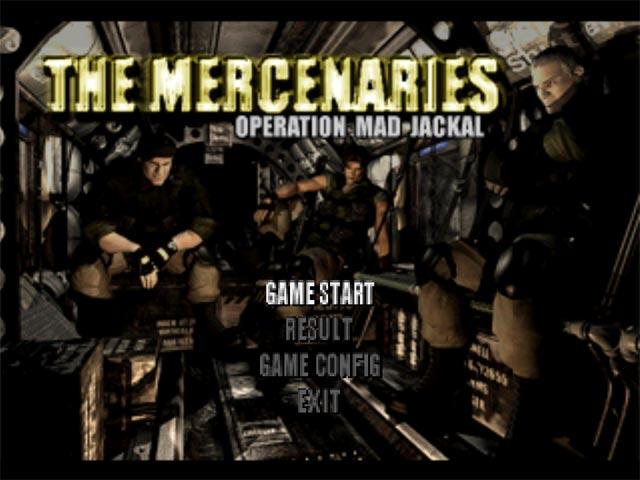
Players choose between three members of the U.B.C.S.: Carlos (with an improved loadout over the main story); the heavily-armed Mikhail; or everyone's favorite, the knife-wielding, handgun-toting Nikolai. After a small briefing, the game begins with a simple task: finish the level, before time expires. Killing enemies gains time, defeating multiple enemies earns a bonus, and the bigger the enemy the more time granted. This is the foundation of The Mercenaries, but Mad Jackal raises the stakes further than its successors have dared.
Hidden throughout Raccoon City are six survivors, all of whom are on the verge of death. Players only have a limited amount of time to reach them. Failure to do so not only denies a reward, but wastes invaluable time which grows more precious by the second. Since the only way to acquire more equipment is by rescuing these people, it becomes evident that the mercenaries are as equally dependent on the citizens as the citizens are on them. The fact that certain survivors reward each mercenary differently invites bias and strategy. Saving Brad with Mikhail is an obvious choice, but a more ambiguous proposal for Nikolai. Going to the Press Office is virtually required for Nikolai, though Carlos might consider conserving his resources. The level of depth in Mad Jackal not only rivals the main game itself but at times can make its successors seem too simple for their own good.
Rewards are applied to Story Mode, offering further incentive for playing. More exclusive weaponry, such as the Gatling Gun, can be found here, along with other infinite ammo opportunities. With eight Epilogue Files to unlock, completionists will definitely be spending some time with The Mercenaries. Others looking to sharpen their dodging skills, familiarize themselves with the early parts of the game, or test their mettle with Nikolai's sparse toolset will have a fair amount of content to explore which is both addictive and fun. The rest of us will be taking bets on the Nemesis vs. Nemesis fight in the back alley, behind the bar (I'm not making that up).
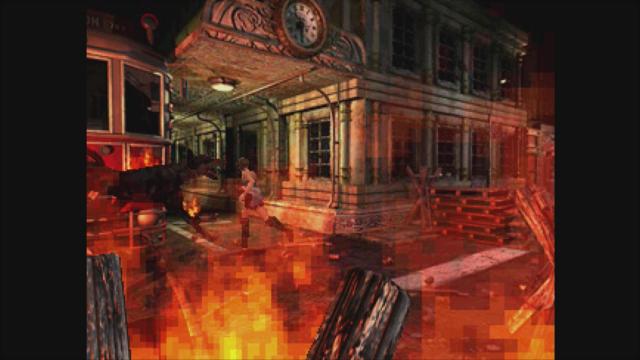
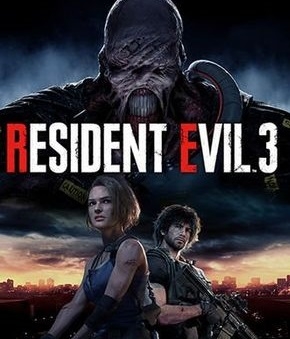
Over 20 years later, it's still hard to accept that Resident Evil 3: Nemesis doesn't get the recognition it deserves. This would have been easier if the remake - released earlier this year - did the game a fraction of the justice that Resident Evil 2 (2019) did for its source material, but it only furthered to damage a legacy that had already been forgotten. It wasn't terrible overall, but the removal of a location as iconic as The Clock Tower is simply unforgivable. Neutering Nemesis to the point where it was less of a threat than Mr. X is also a sin. Where are The Mercenaries, the Live Selections? Whatever Capcom tried to prove with Resident Evil 3 (2020), remaking the original game into less than what it used to be was definitely a strange way of going about it.
Perhaps the disappointment of the remake will inspire people to look back further to the game they should have never left in the past. With the Year of Hindsight coming to a close, there may never be a more appropriate time to revisit the streets of Raccoon City.
Party like it's 1999.
More Articles

Best RE game of all time for me! Back in the day I was scared to turn it on, because I knew that Nemesis encounter awaits.


Nice article, Issa! I've never been a huge fan of RE3 but you've inspired me to revisit it!
Great article!

I hope they'll make a Remaster of RE2 and RE3, just like they did with the excellent Rebirth. The remake was a joke that capcom didn't want to do in the first place but had no other choice than doing it so they picked sloppy amateurs.
Thanks for your article. Now i see the original game in a very diferent way, and i want to play that again.