Existing User Log In
New User Registration


Register for a free account to gain full access to the VGChartz Network and join our thriving community.





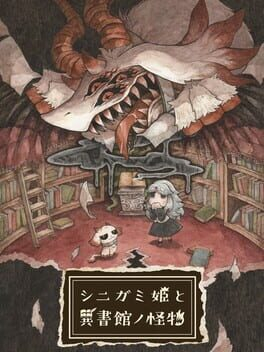
America - Front

America - Back

Nippon Ichi Software
Adventure
 (Add Date)
 (Add Date)
 (Add Date)
| Owners: | 0 |
| Favorite: | 0 |
| Tracked: | 0 |
| Wishlist: | 0 |
| Now Playing: | 0 |
Reviewer's Note: This review is based on the Japanese version of the game. Shinigami Hime to Ishokan no Kaibutsu has yet to be announced for western markets.
Once an influential mid-sized developer and publisher, Nippon Ichi Software hasn’t been very convincing to me since the very solid 2022 release Yomawari: Lost in the Dark. So it was about time they stopped producing Disgaea clones and focused on what they’ve done best over the last 15 years: producing artistic games.
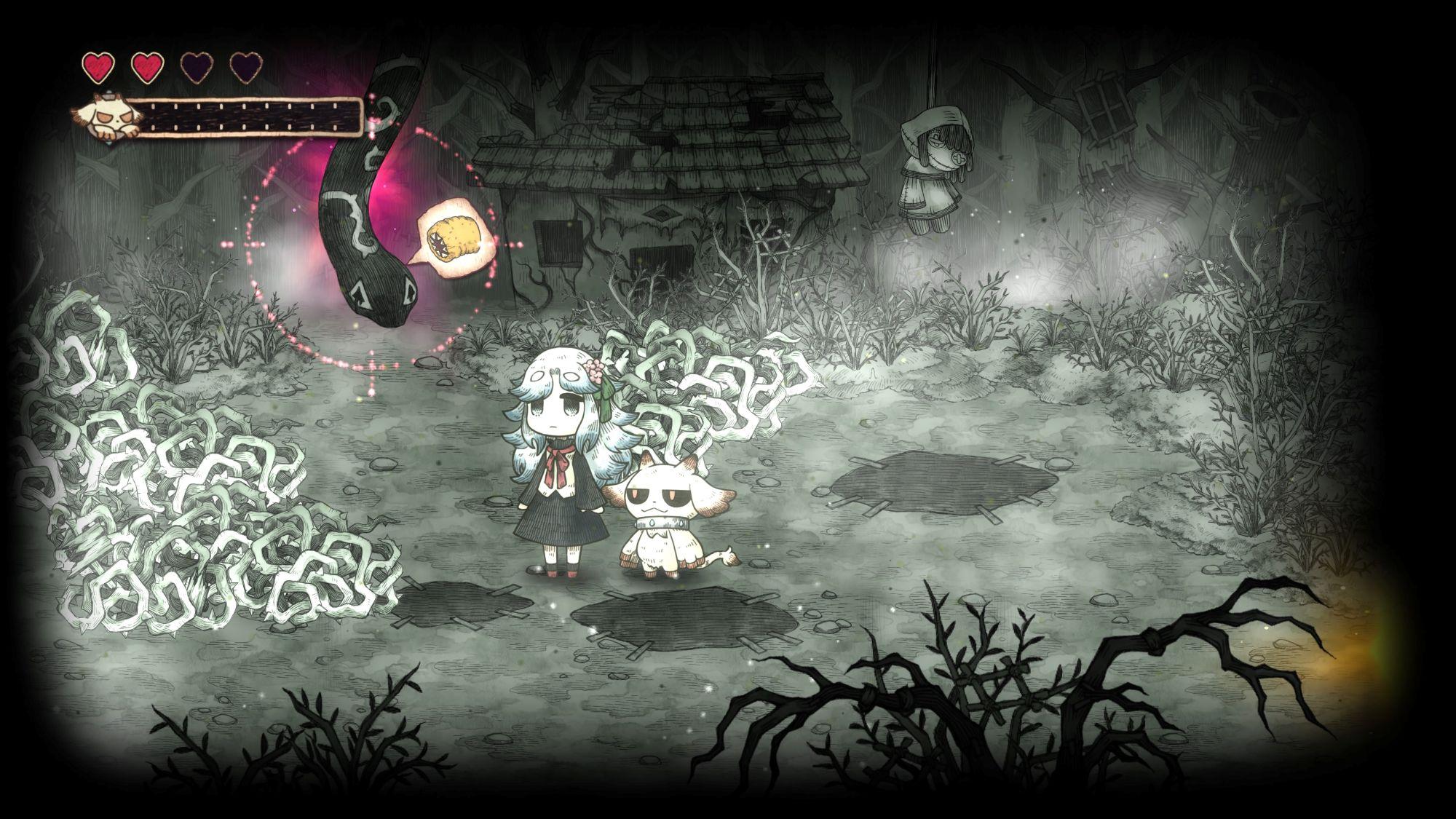
Shinigami Hime to Ishokan no Kaibutsu is the third entry in what Nippon Ichi Software calls its “picture book series”, which began with The Liar Princess and the Blind Prince. This title maintains the pencil-drawn art style of its predecessors, delivering a unique and deeply charming visual experience, the kind that gaming badly needs in an industry which I think tends to always offer more of the same. Displaying a lovable universe, stunningly well-designed (and even better drawn) monster-like characters, and some magnificent storytelling reminiscent of children's books, Shinigami Hime shows itself to be an artistic masterpiece within minutes.
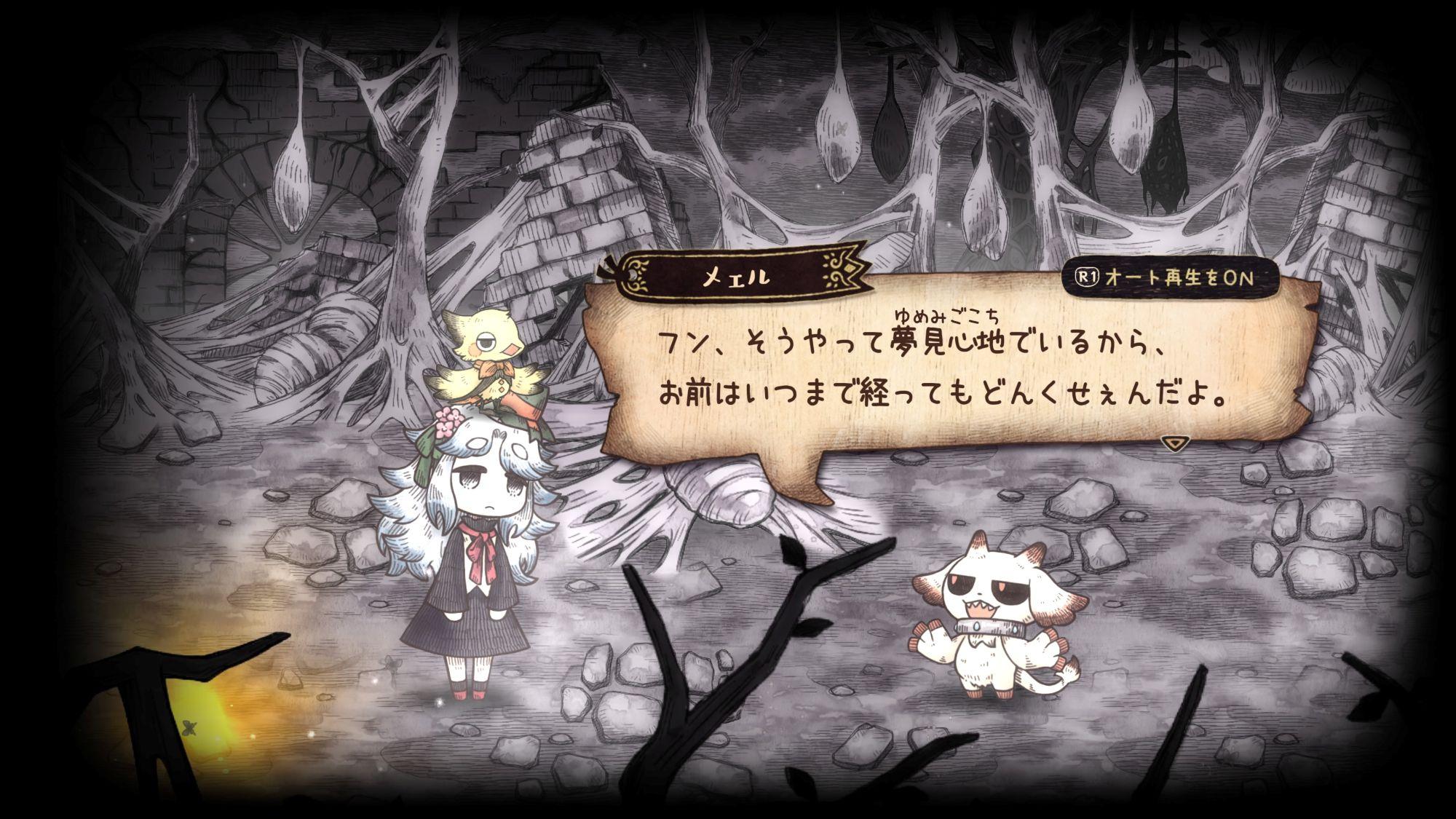
You play as Mono, a young girl who visits a haunted library looking for her big sister. Her latter was sent there following a strange illness that turns girls first into books and then into demonic creatures called Shinigami Hime. There, Mono meets a little sheep demon called Mehl, with whom she forms a pact, securing his help in her perilous endeavours. Shinigami Hime then takes the form of an adventure game in which both characters enter several books that take the form of game stages. You progress within 2D areas, solving puzzles and collecting memories to clear each stage.
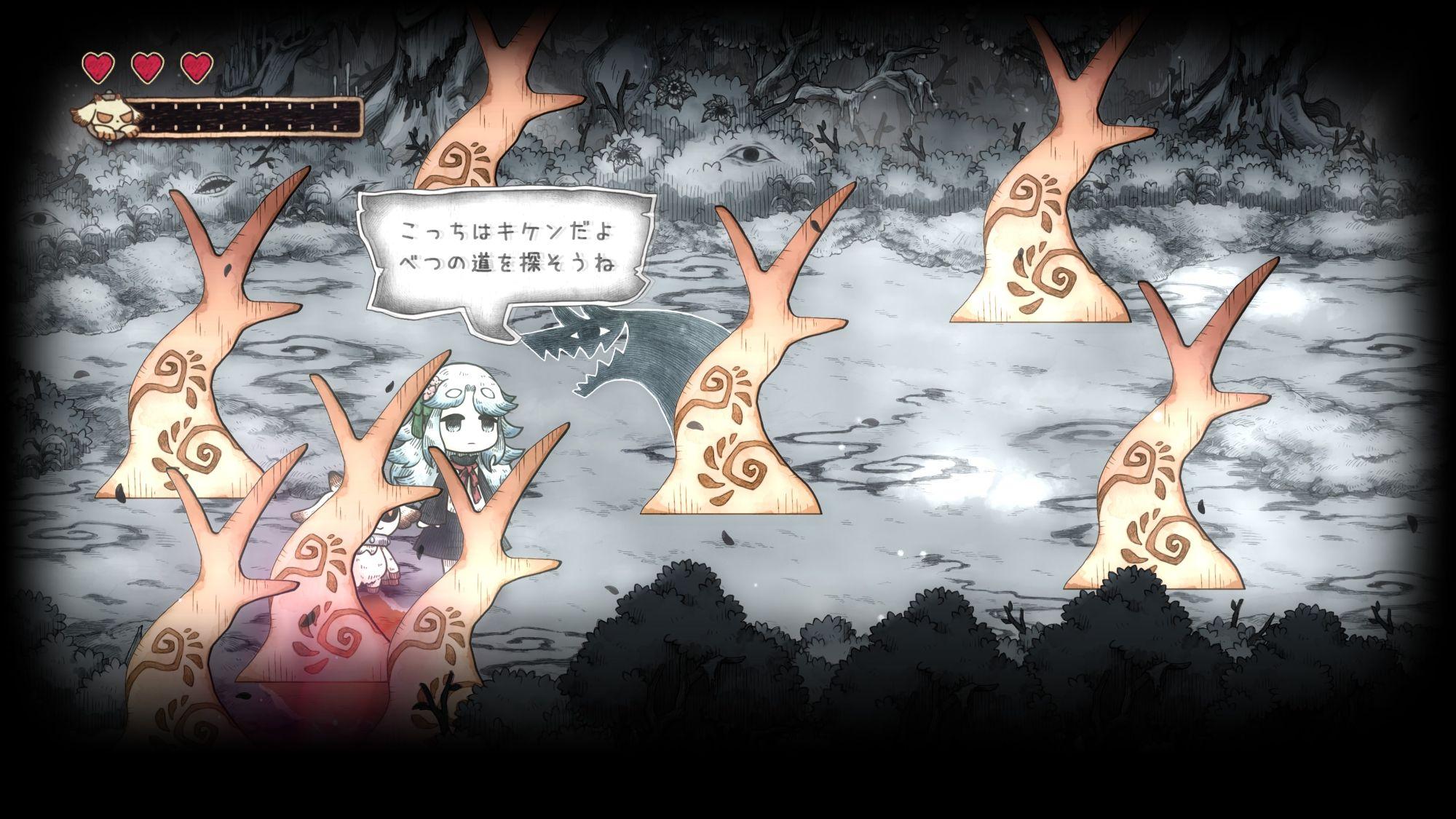
While Shinigami Hime is quite inventive in terms of puzzles in the very first stage, that’s not so true for the rest of the game. During gameplay phases, Mehl can eat everything that is black and white - enemies, objects, and even the floor, or background of the stage itself. Later, Mehl acquires new powers, such as the ability to breathe fire or fly. Mono also gains two skills of her own. The problem is that each later stage generally has you use the most recently obtained skill in a rather simplistic way. There isn’t much thinking required, which is disappointing, especially as the demo led me to expect a lot more from the game in that respect. It’s as if the creators ran out of ideas too quickly.
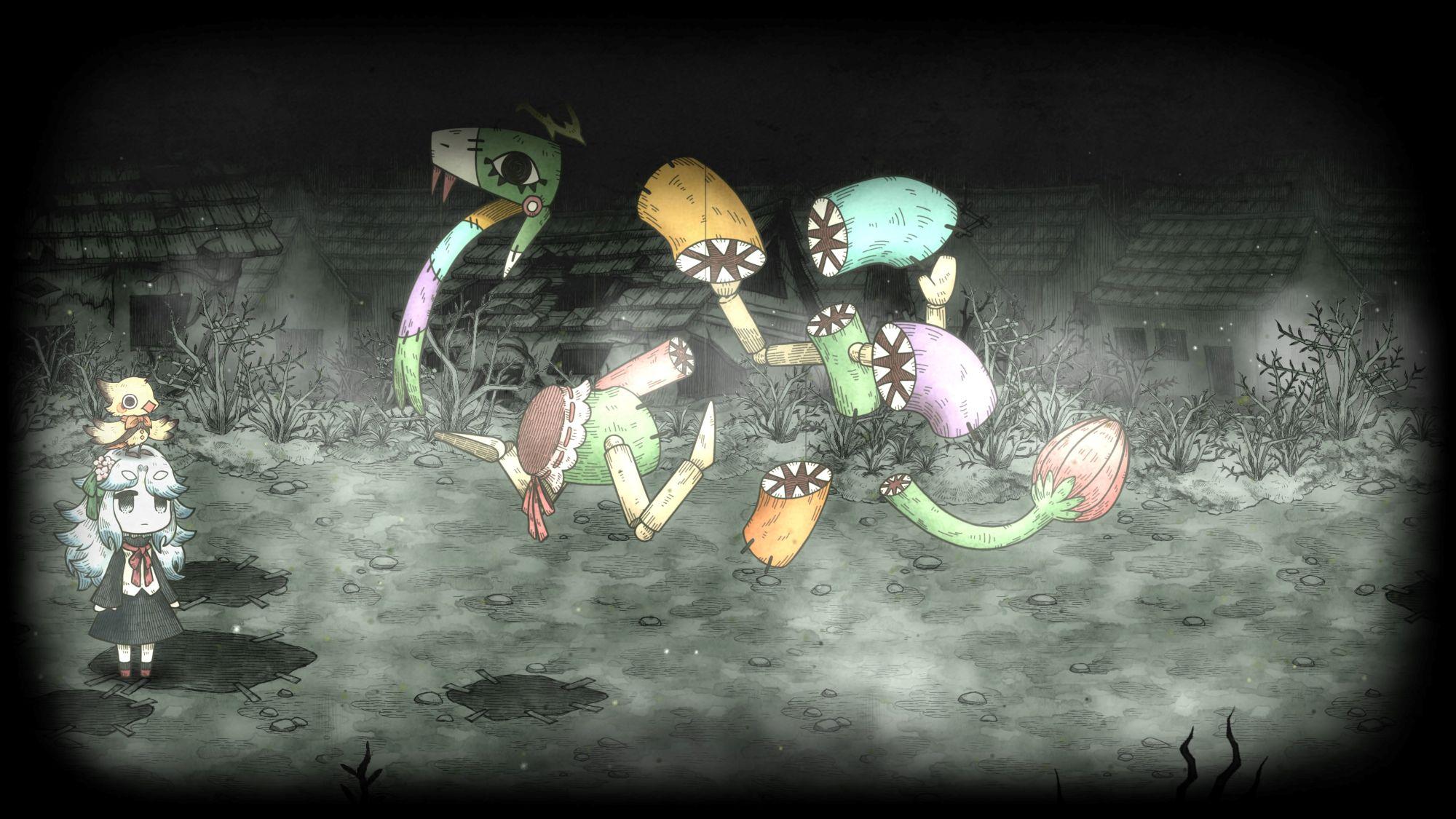
Even the boss fights are surprisingly easy. The bosses possess quite simple attack patterns and, here again, the strategy to defeat them is obvious and doesn’t require much effort on the player's part. I remember the Yomawari games being far more intense and thrilling in terms of difficulty, so the gameplay side of Shinigami Hime did let me down. But it so happens that the final boss suddenly turned out to be ten times harder than all of the others, almost to the point of frustration given the steep difficulty spike and the fact that you can’t skip dialogue scenes, which makes you waste a lot of time between retries. There is undoubtedly some weird balancing of the game on the whole.
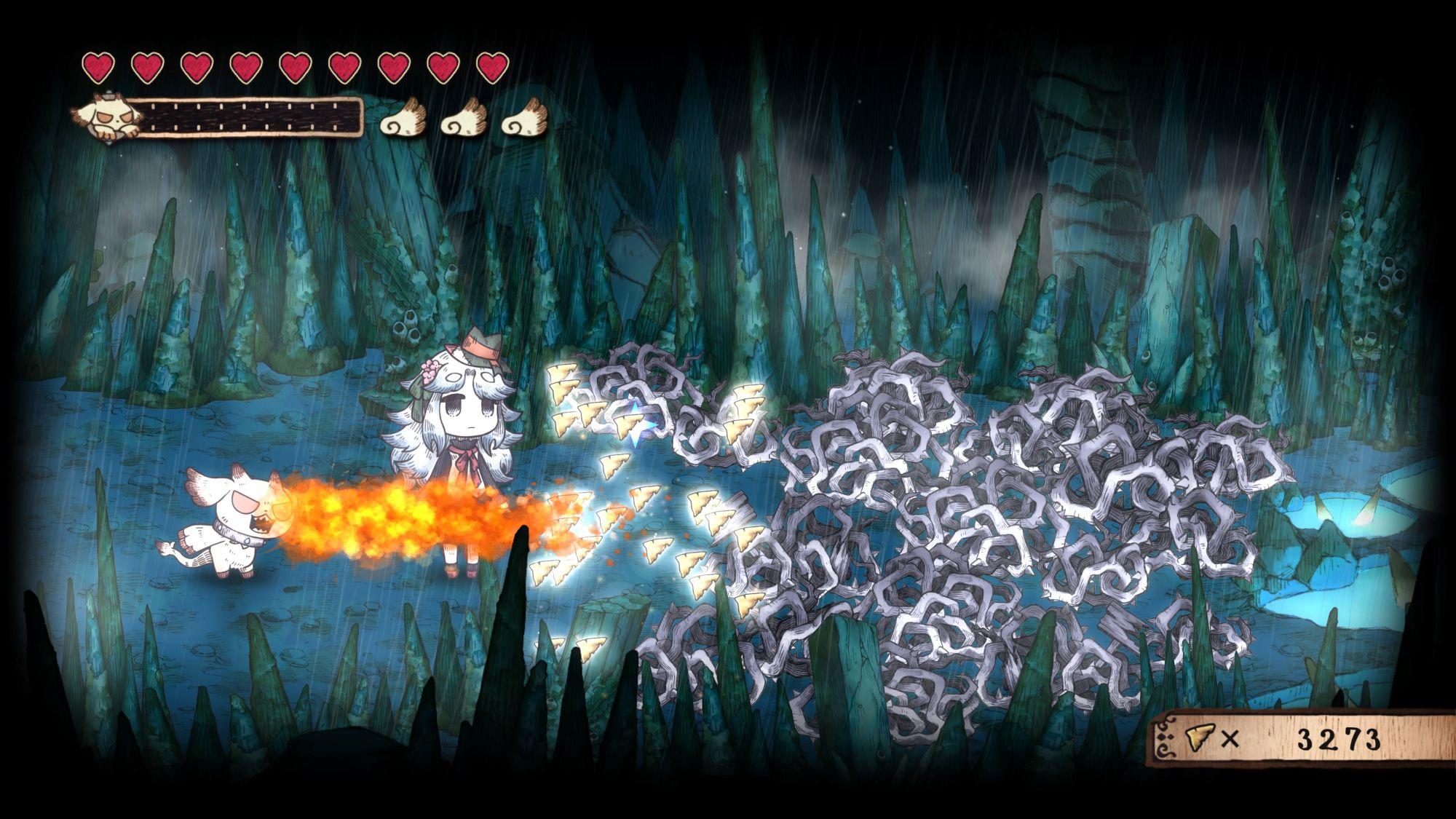
The controls aren’t fully optimal either, notably when Mehl swallows foes or uses the fire ability: it’s common to miss or fire in the wrong direction because you have to control Mono with the left stick and Mehl with the right, in addition to all of the other buttons for each skill. This isn't a major issue but the controls can be imprecise or overly complicated at times, which can lead to unnecessary retries. Shinigami Hime takes around twelve hours to clear, and there are a few additional trophies and cosmetics to unlock outside of the main story.
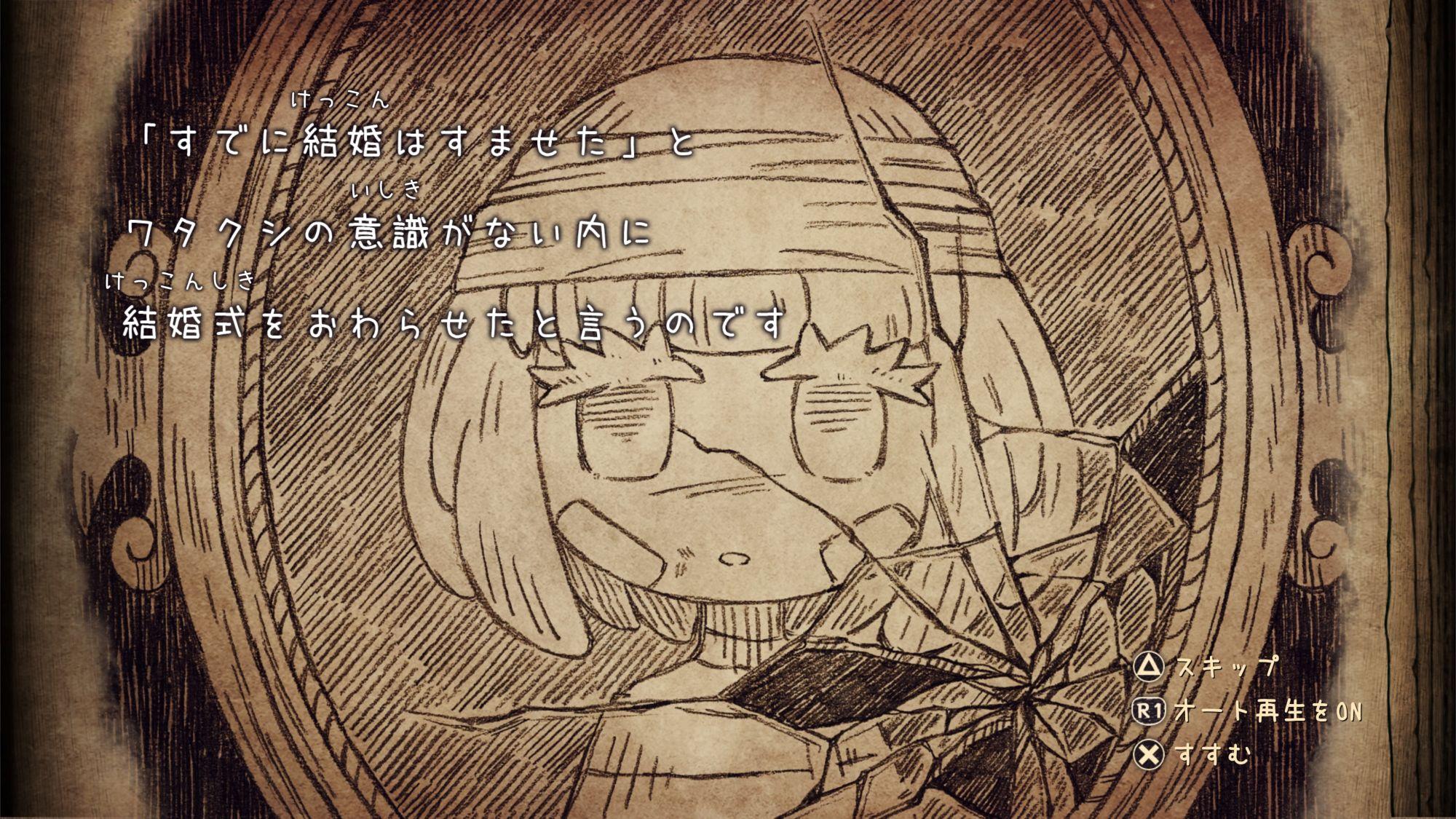
Despite the problems outlined above, I consider the purely narrative side of Shinigami Hime to be a considerable achievement. The storytelling of each book, as well as Mono’s own personal story, is deeply enjoyable and emotional. Each book tells the tale of one Shinigami Hime, a girl that eventually turned into a monster. As you collect various memories of that character by progressing through the stage, you watch how her life unfolded in short episodes, with plenty of suspense in-between and a brutal conclusion. The tales are very grim, but they’re told with great mastery, terrific artwork, and equally effective voice acting. The truth behind Mono’s story, a girl hated by her parents and forced to live in the attic, is even better related, and the extremely cold “truth" at the end is all the more striking.
If it were a visual novel, Shinigami Hime to Ishokan no Kaibutsu would be perfect. The storytelling experience is incredible and moving, and its art style is fascinating, but it has very underwhelming gameplay. Too easy and too simplistic, the gameplay stages feel like bland filler between the numerous stellar narrative sections. Even if the foes weren’t challenging, the puzzles could at least have been more interesting, but the game fails to deliver on both gameplay fronts. Shinigami Hime to Ishokan no Kaibutsu is a very paradoxical adventure title, but I do still tentatively recommend it to players who enjoy dark stories and eerie presentation.



About Us |
Terms of Use |
Privacy Policy |
Advertise |
Staff |
Contact
Display As Desktop
Display As Mobile
© 2006-2026 VGChartz Ltd. All rights reserved.