Existing User Log In
New User Registration


Register for a free account to gain full access to the VGChartz Network and join our thriving community.





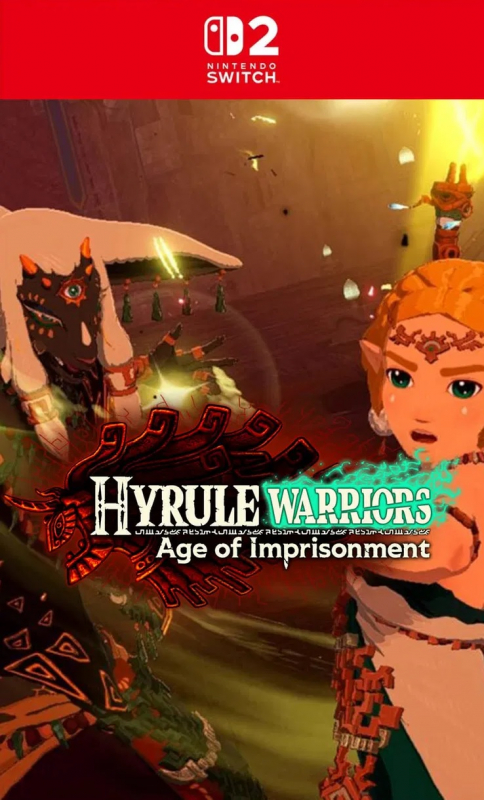
America - Front

America - Back

Koei Tecmo Games
Action
 11/06/25 Nintendo
  (Add Date)
 11/06/25 Nintendo
| Owners: | 2 | |
| Favorite: | 0 | |
| Tracked: | 0 | |
| Wishlist: | 0 | |
| Now Playing: | 0 | |
Reviewer's Note: This review contains spoilers for The Legend of Zelda: Tears of the Kingdom.
If history is any guide, it's going to be a while before the next big "AAA" Legend of Zelda game. Luckily for those of us who have trouble waiting, Nintendo and Koei Tecmo have partnered to deliver Hyrule Warriors: Age of Imprisonment, the latest in the Zelda-flavored hack-and-slash series. While it's not a replacement for the brilliance of Breath of the Wild or Tears of the Kingdom, it certainly scratches that Zelda itch — even more so than the previous two Hyrule Warriors games.
Because Age of Imprisonment takes place in parallel with the story of Tears of the Kingdom, it's difficult to avoid spoilers for the latter game; so, please, read at your own risk. Age of Imprisonment follows the heroic deeds of Princess Zelda, who has been magically transported to Hyrule's distant past. There she meets the founders of the kingdom of Hyrule — those who paved a path for her own reign — and learns much about her legacy and her own latent powers. The joyfulness is interrupted, tragically, by the ascension of a new power in Hyrule: the Demon King Ganondorf. Soon, Zelda and her friends are on the back foot, fleeing from Ganondorf's terrifying army of monsters and crisscrossing the kingdom searching for allies to help mount a counterattack.
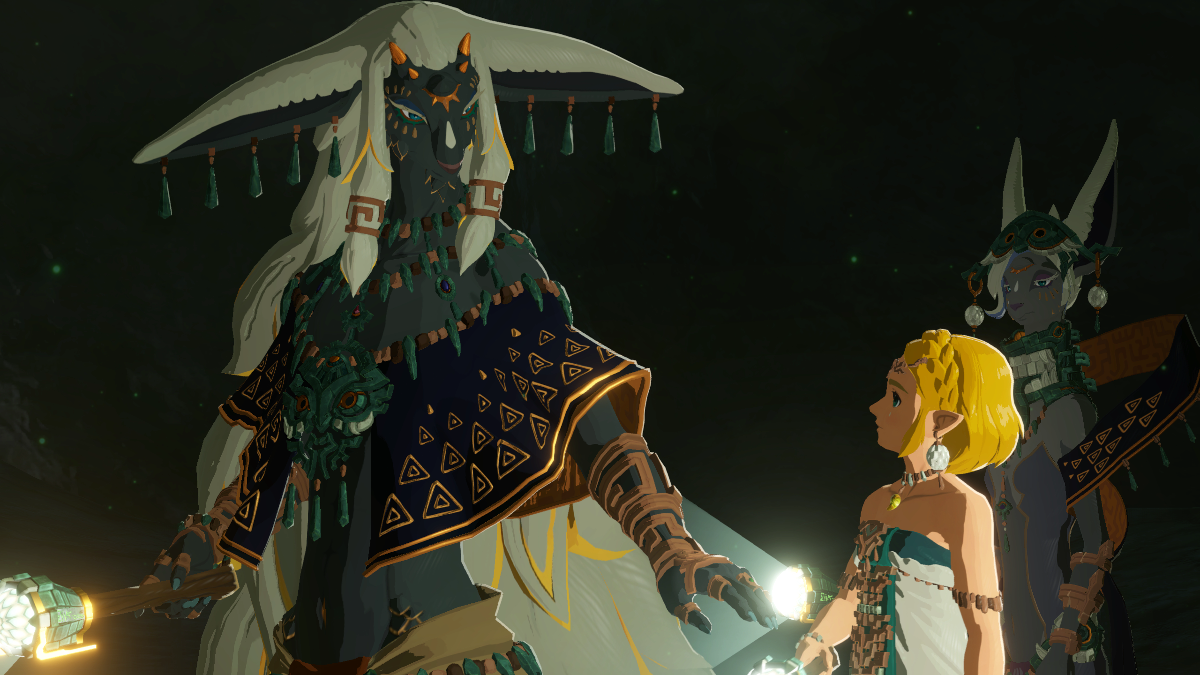
Anyone who played Tears of the Kingdom knows the basic contours of this legendary tale, but it's nice to see in detail how everything played out. Zelda is a pivotal part of the plot line, for sure, but this is really the story of King Rauru, who was already one of the best characters in Tears and comes off even better here. His journey to assemble an army to repel the Demon King is epic and filled with a rousing sense of fellowship and fealty. It's also marked by notes of pathos and tragedy. Rauru is wise and brave, but imperfect. His lack of vision led to the worst day of his life, after all.
While the story in Age of Imprisonment helps fill in the narrative gaps from Tears of the Kingdom and fleshes out several important characters, it definitely pulls its punches at times. In the end, this is a fairly safe and conservative narrative, ostensibly because it's completely canonical — something Nintendo has been quick to point out. There were times I wished the game unraveled some Hyrulean political threads, leading to greater conflict between the diverse tribes of the land. It would make the payoffs all the sweeter.
Then again, Koei Tecmo wants to get its players into the action as quickly as possible, so perhaps days of diplomatic wrangling don't make sense with the genre. Age of Imprisonment, like the original Hyrule Warriors and Age of Calamity before it, is a 3D hack-and-slash game in the Warriors, or Musou, family. The general idea is that you control incredibly powerful heroes who do battle with hordes of relatively underpowered enemies — the so-called 1 vs. 1,000 framework.
The genre itself is famous, or perhaps infamous, for a certain level of repetition. And, to be perfectly transparent, Age of Imprisonment doesn't escape this entirely. But it gets as close as possible to escaping the orbit of tedium, in large part due to its deep and tactical move set. The basic way to attack foes is with light attacks (Y button) followed by a strong attack (X button). Each character has several different combinations that end in a stylish finisher. But this is only the beginning.
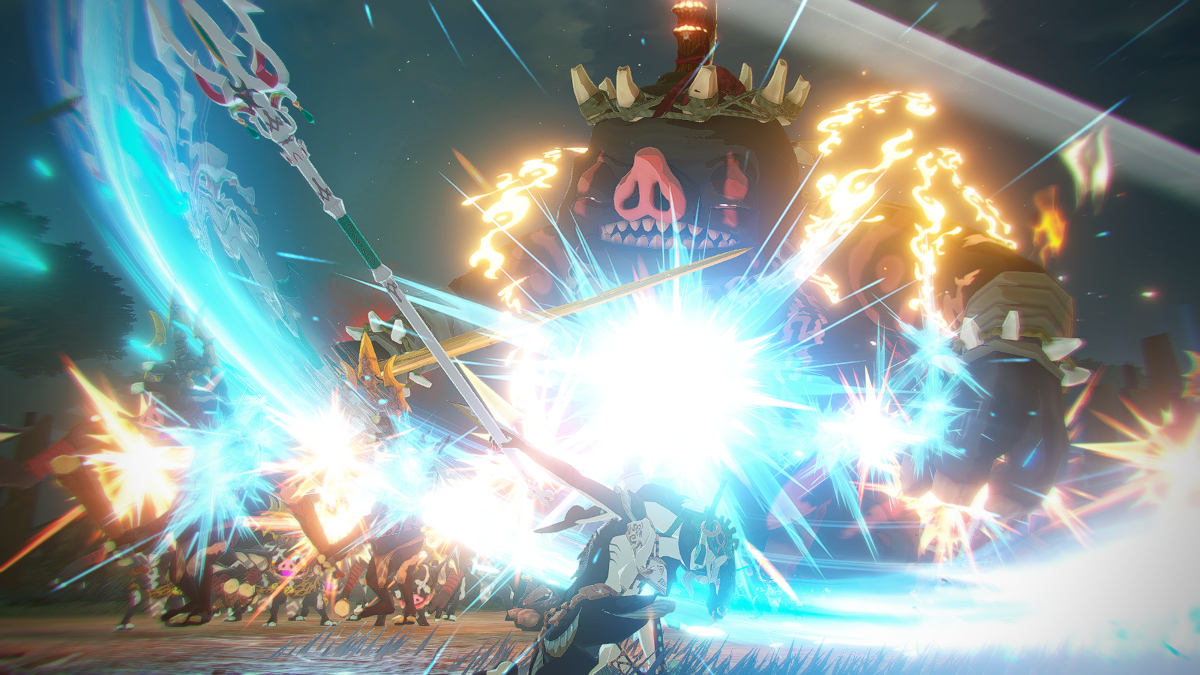
All the game's heroes have multiple unique skills, powerful attacks that must cool down upon use. These moves are great on their own, but they're even more consequential when used to reverse "dangerous attacks" (threatening actions used by boss type enemies). Each unique skill and dangerous attack is tagged with an icon explaining its purpose. So if a Boss Bokoblin leaps into the air and attempts to crash down on your party, you can trigger Zelda's Bow of Light to interrupt the attack and do serious damage to its armor gauge. This adds a healthy amount of tactical maneuvering and decision-making to the flow of battle.
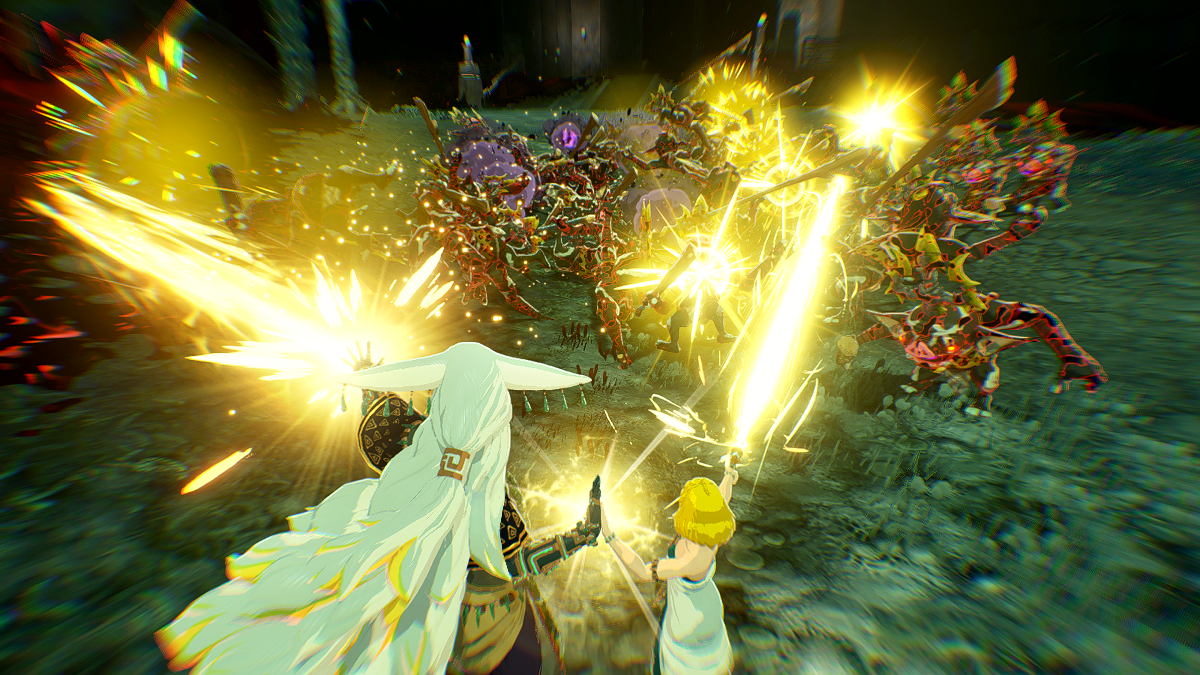
But wait, there's more. The series now supports sync strikes, devastating attacks performed by two characters working together. Once you and your partner have filled your sync gauges, you press L to start the process. There are dozens of unique combinations, all of which are visually spectacular and mechanically interesting. It's great fun to discover them all. Oh, and make sure to sync between Mineru and the Mysterious Construct; just trust me on that.
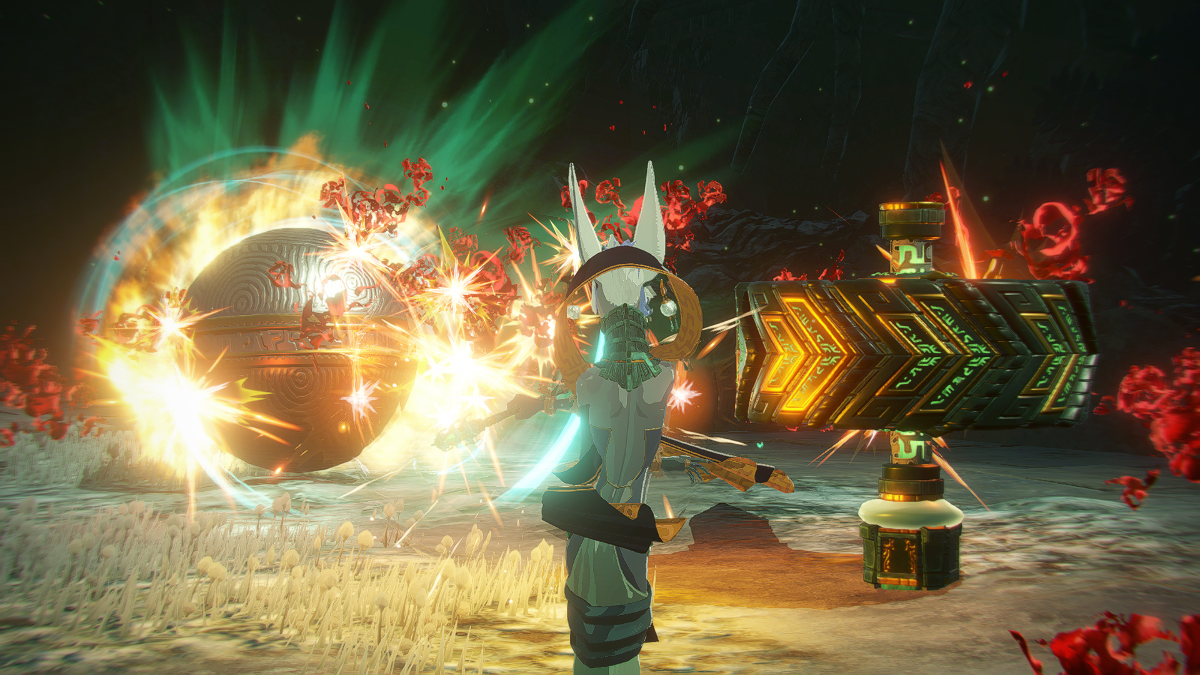
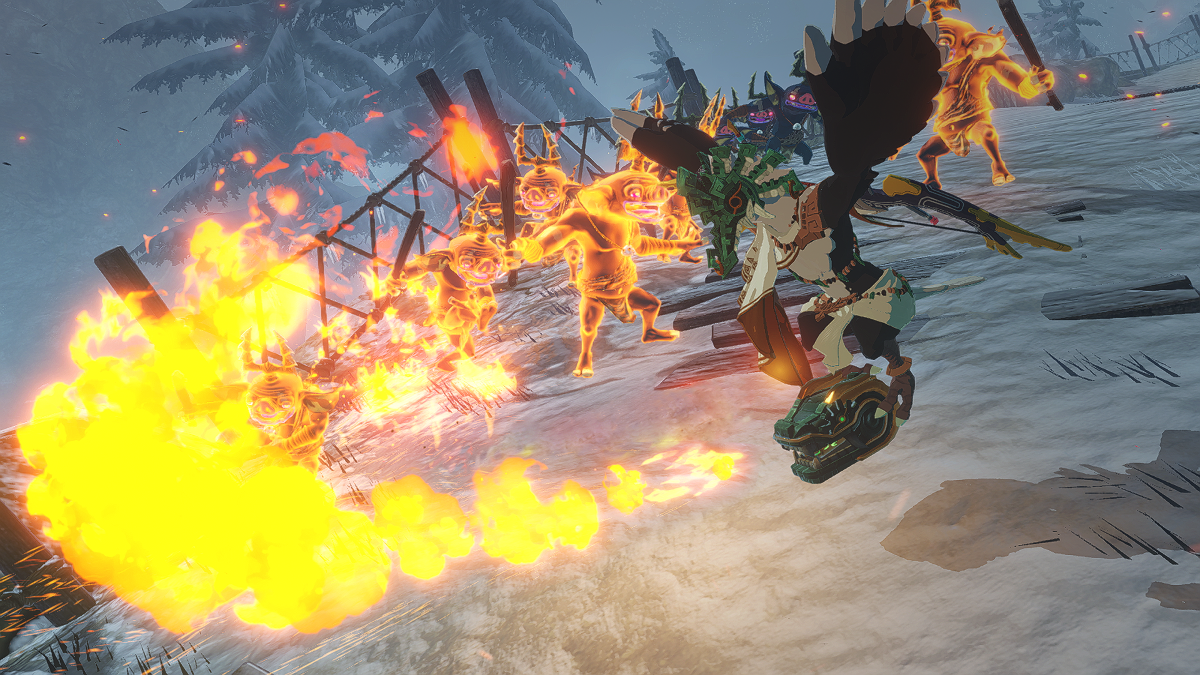
Koei Tecmo isn't content to stop there, though. It adds two more elements, which raise the stakes in combat and create a meaningful mechanical connection to Tears of the Kingdom. The first is a collection of Zonai devices. Each hero can replace individual unique skills with various Zonai devices, which prove to be incredibly useful in battle. The fan can repel projectiles back at the sender, while the time bomb can break the stance of shielded enemies. These items also interact with the elements. The effects of the frost emitter are amplified when used near water, for example. Eventually, you'll even gain the ability to slot Zonai tech into strong attack finishers for select characters, meaning each combo ends with a rocket, a bomb, a flame emitter, etc. It's incredible.
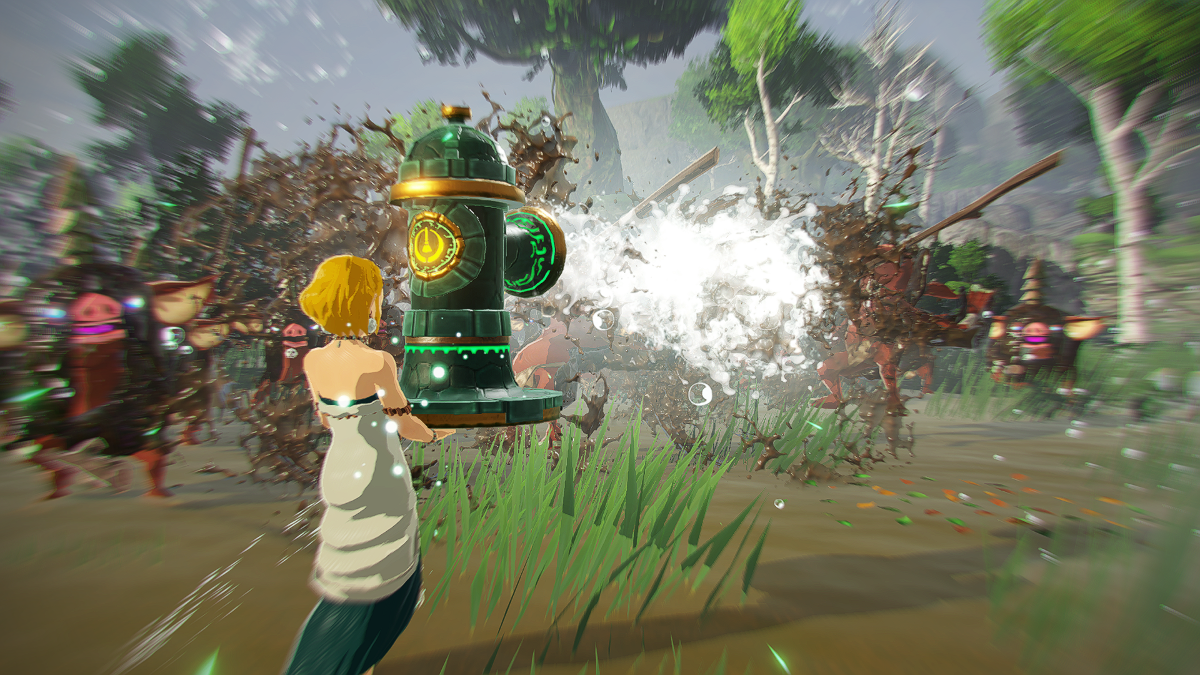
The second is a collection of fuse materials. A handful of characters can fuse monster materials to their blades to deal extra damage and take advantage of certain modifiers. It's a nice callback to one of Link's signature abilities in Tears of the Kingdom.
While the moment-to-moment action in Age of Imprisonment is outstanding, the mission parameters within each level are regrettably straightforward. Typically, you depart from HQ, fight minions on your way to one or more occupied outposts, and defeat the bosses there to liberate the area. The game would benefit from more interesting victory conditions or strategic wrinkles. The best levels of the bunch tend to involve the main campaign battles that advance the story. The maps here are larger and more complex, and it's essential to issue commands to your party members in order to conquer bases and, importantly, keep them from being retaken by the enemy.
The most exciting type of level, though, doesn't take place on the ground, but in the air. At certain intervals, two newcomers to the franchise — the traveling Korok Calamo and the Mysterious Construct — take to the skies to battle Ganondorf's airborne or entrenched forces. These flight mode battles are essentially rail shooter segments, and they're excellent. I just wish there were more of them.
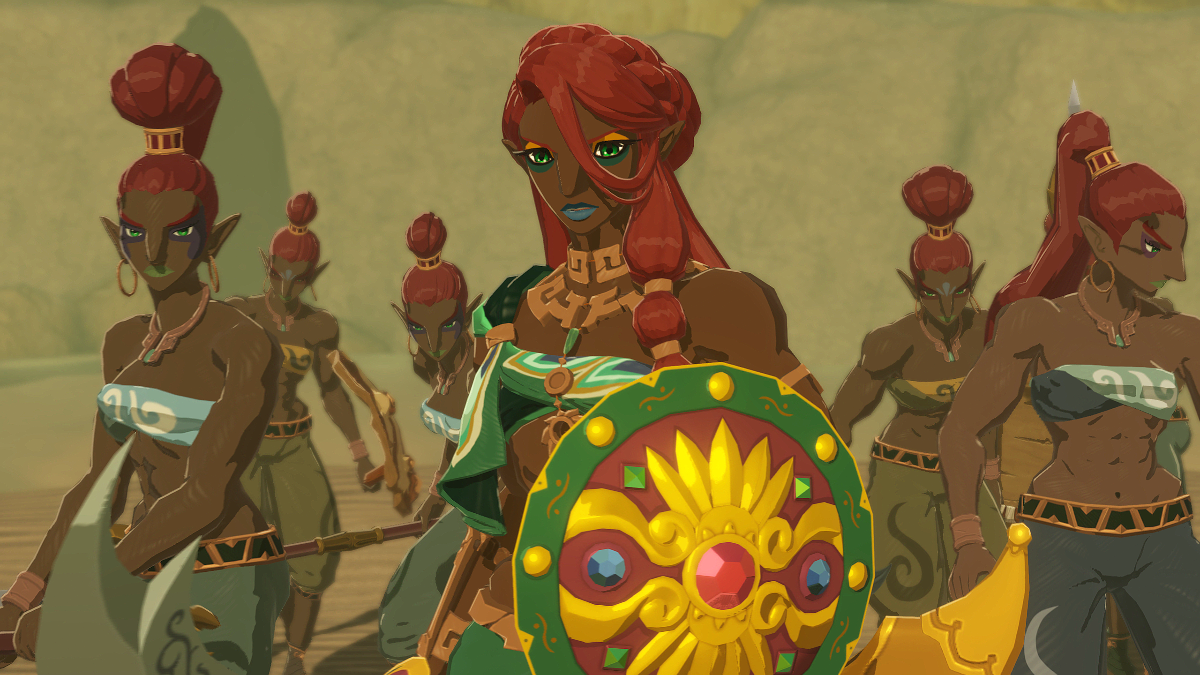
Calamo and the Mysterious Construct are two of the more exciting combatants in Age of Imprisonment, but they're hardly the only ones. The game features a whopping 19 playable characters, some of them invented just for this adventure. The most impressive party members are generally those essential to the narrative: Zelda, Rauru, Mineru, the sages, etc. Zelda, who can use the power of time rewind to deflect enemy projectiles and recall her own offensive attacks (essentially doubling their damage output), is a force to be reckoned with. Mineru, who deploys various Zonai devices and friendly constructs in battle, is great for crowd control. And the sages, each of whom is imbued with some elemental power, are lots of fun. My favorite is Qia, a Zora princess who commands the tides and swallows her enemies in giant whirlpools.
You won't start with all these characters, of course. You'll unlock them here and there as you explore the vastness of Hyrule, represented on screen by a regional map. This map serves a double purpose: for one, it's the window through which you access all the missions, shops, and challenges of the game; for another, it tells the visual story of the game. Once Ganondorf springs his trap and seizes control of the continent, certain regions become covered in red, impenetrable smog on the map. You won't be able to take quests in these occupied areas until you drive the monsters back and reclaim the territory. And if you leave an allied territory undefended for too long, it will fall right back into the Demon King's hands. The game does a great job creating the illusion of an ongoing war of conquest, with you as its supreme allied commander.
Soon enough, the map will be positively littered with icons representing many different ways to interact with the campaign: story quests, challenge battles, smiths, shops, Zonai device dispensers, conversations, character upgrades, etc. There are so many things to do, unlock, and upgrade in Age of Imprisonment; it's almost overwhelming. And because of all these options, the game will take up weeks, if not months, of your time. You should set aside at least 25 hours to finish the main campaign. And you should triple that number if you want to experience absolutely everything.
Whether you spend 25 or 75 hours in Hyrule, you'll experience it all in a silky 60 fps, at least in single-player (split-screen co-op is locked at 30 fps). For those burned by the performance issues of Hyrule Warriors: Age of Calamity, worry not; Koei Tecmo's AAA Games Studio has delivered the goods. Sure, there are a few dropped frames during especially hectic scenes with lots of particle effects, but for the most part the action is remarkably steady. The reliable performance is all the more impressive considering the sharpness of the image and all the moving pieces on screen: enormous, detailed bosses; dozens of swarming enemies; and screen-filling explosions, tornadoes, whirlpools, and electrical storms. Overall, Age of Imprisonment is a big step up, in terms of performance and image quality, from the WiiU and Switch installments of Hyrule Warriors.
The only technical hitch, really, is the graphical disparity between in-game action and out-of-game cut-scenes. These pre-rendered scenes are much softer, visually, and they clock in at 30 fps. It's jarring, moving from the action to the cinematic side of things.
Another problem worth mentioning: some missions in the main campaign are locked to a single player, meaning not everything in Age of Imprisonment is playable cooperatively. This makes sense from a narrative point of view, but it's still frustrating. At several intervals during the adventure, I was told, "The battle cannot be played in two-player mode. End two-player mode and return to single-player mode?"
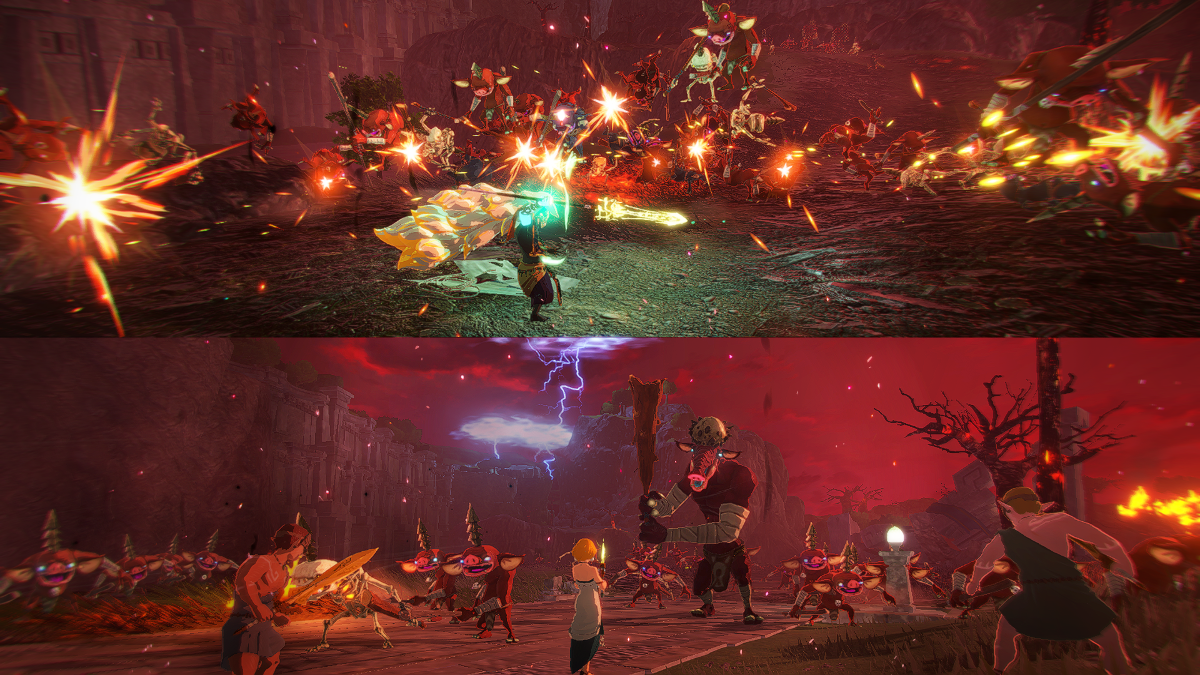
As for the audio side of things, it's excellent. The music, in particular, is extraordinary. Composed by members of Monaca, who also worked on NieR: Automata and Stellar Blade, the soundtrack is an exciting amalgam of new tunes and remixed tracks. "Battle for the Forest", which playfully reinvents the Korok Forest theme, is one of many highlights. Don't sleep on this one; it's a contender for best score of 2025.
The wait for the next big Zelda game has gotten a lot easier, thanks to Hyrule Warriors: Age of Imprisonment. It's the best game in the Hyrule Warriors sub-series so far, due to excellent music, sharp visuals, smooth performance, hours upon hours of rewarding content, a large roster of diverse heroes, and, most importantly, an extensive and flexible combat framework that helps the game rise above the limitations of its genre. The story and map designs could be more ambitious, and the pre-rendered cut-scenes more polished, but overall AAA Games Studio has done both the Zelda and Warriors franchises proud.


 |
Machina
posted 26/01/2026, 03:12
1 million https://www.vgchartz.com/article/466854/hyrule-warriors-age-of-imprisonment-sales-top-1-million-units/ Message | Report |

About Us |
Terms of Use |
Privacy Policy |
Advertise |
Staff |
Contact
Display As Desktop
Display As Mobile
© 2006-2026 VGChartz Ltd. All rights reserved.