
Allusions of the Future: A Half-Life² Retrospective - Article
by Issa Maki , posted on 11 December 2022 / 4,339 Views
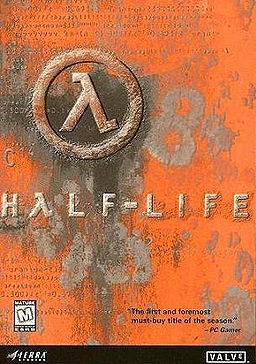
After 18 years, I finally understand. I know why Half-Life² was so revered back in 2004: it was a generation ahead of its time.
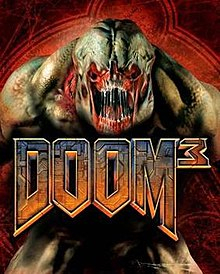
Which is saying something, because this was a watershed moment in video game history; Nintendo DS and Sony PSP would release this year (their respective company's highest-selling handhelds), alongside a stockpile of critically-acclaimed software: Grand Theft Auto: San Andreas, DOOM 3, Ninja Gaiden, Metal Gear Solid 3: Snake Eater, World of Warcraft, Halo 2, the remakes of Pokémon Red/Blue, Metroid Prime 2, Jak 3, Legend of Zelda: The Minish Cap, The Sims 2... there are easily another 15 titles I could rattle off (Katamary Damacy, anyone?). The point is that virtually everybody was going nuclear to see who would leave the biggest crater in the video game world.
And Half-Life² trumped them all – but this doesn't necessarily tell the entire story.
While impressive for its time, an examination from the lenses of our modern day reveals legitimate weaknesses that have existed since the beginning – virtually all of which (aside from the awkward, sparse soundtrack) center around its gameplay. As much as Half-Life² advanced the medium forward from a production value perspective, its gun combat almost feels like a step backwards from the Unreal Tournament/Quake 3 era; the simple fact it lacks the strategic depth of something as old as DOOM (1993) is also enough to question its virtually unassailable reverence.
Unlike most fans, I was apparently the only one miffed by the ending of Half-Life; its 'Catch-22', illusion of choice (conscription or death) still lingers in my mind as one of the weakest finales in a game I've played. Though I remained a consistent Counter-Strike player, to say the least I was not one of the masses who drank the Half-Life² Kool-Aid in 2004. That being said, I'm glad I didn't; because in spite of my criticisms, they do little to hinder the reality that I appreciate the game far more now than I ever could have then.
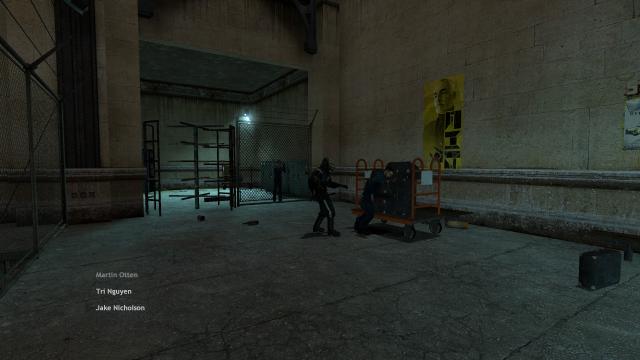
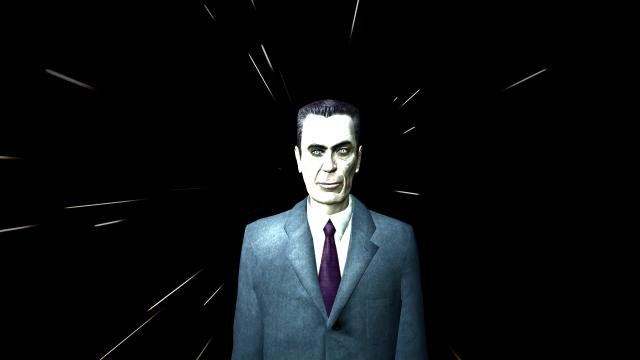
Frustrating ending of the original notwithstanding, much of it is redeemed by the sequel's bizarre, slightly abstract opening. Featuring the enigmatic 'G-Man', who explains that the reason why he plucked Gordon from space and time was to remove him from the events of the world – which he would have been unable to influence in any meaningful way. Declaring that 'the right man in the wrong place can make all the difference', Gordon is weaved back into the fabric of our dimension and into a world vastly different than the one he left.
In the intervening years between his absence and return, a hostile alien force known as the Combine has conquered Earth, gathered the remaining humans into internment camp-like zones called 'Cities', and are harvesting what remains of the planet's natural resources for use on their other worlds. Armed with technology that can actively negate the population's reproductive process, it's not too hard to see how the collective military force of every nation was defeated in a mere seven hours. Building-sized, biomechanical monstrosities called 'Striders' stalk the citizenry with seeming omnipotence, ready to stifle the very idea of resistance at a moment's notice.
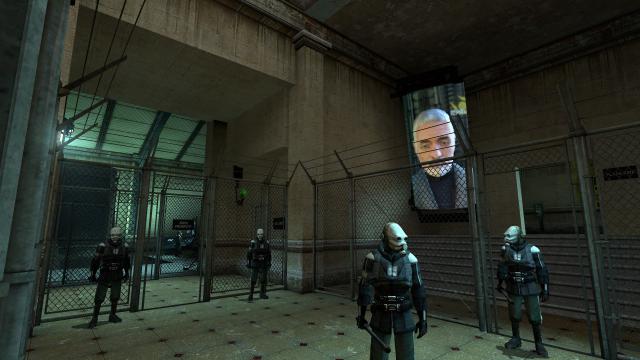
What's most horrifying about the Combine isn't how 'alien' they are, but rather their similarities to humans. A faceless police force (the Overwatch) brutalizes the remaining pockets of civilization with senseless public beatings, unwarranted search and seizures, and unmonitored interrogations; all under the auspices of Dr. Breen, whose sedating propaganda is spewed across every monitor in sight. With drones constantly recording everyone's locations, any notion of privacy has gone extinct. When someone says to me: “was that you knocking outside?” (it wasn't), “I didn't realize we still had a door...” (they didn't) – my thoughts bend towards Carl Sagan. I'm sure throwing a golden disk into outer space revealing: a) what elements are on our planet, b) how ignorant we are, c) how primitive our technology is, d) what our weaknesses are, and e) where to find us, was an idea that could only be generated by the most brilliant of human minds.
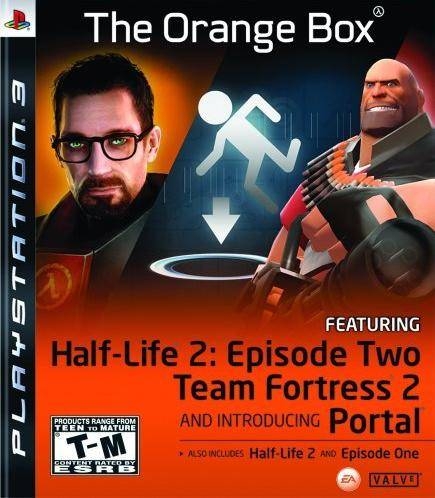
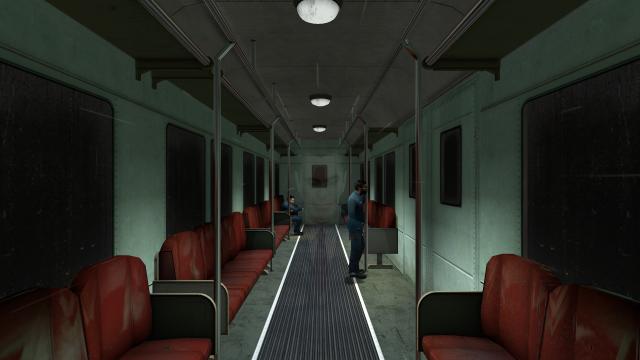
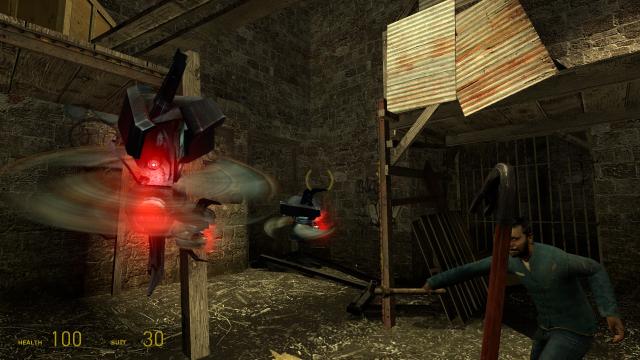
As I step off the train into City 17 for central processing, what today's eyes notice looking onto the past is how modern it appears. The significance of the janitor Vortigaunt was lost on me back in the day; but in the act of sweeping, it's actually collecting debris into a pile (as opposed to a pre-rendered pile with nothing being moved by the broom) – and it's pretty remarkable. When a Combine officer coerces Gordon into picking up and disposing of the can (an act I once balked at for 'earning' an Achievement in The Orange Box), I see it now for what it was: the brushstrokes of a masterpiece. The physics engine and overall graphical prowess are still a marvel to behold; the blurring effect of a Manhack's whirling blades alone remains a more impressive feat of technical wizardry than anything Nintendo has created as of 2022. This level of production value and dedication was just as alien to the gaming world as the Combine themselves; it would be at least another half a decade before Valve's contemporaries could approach this quality. In fact, I might even say that Half-Life² was the flagship title in this 'high-definition' epoch of gaming we currently reside in – a fact we'll bear in mind as I argue that the rest of the game is relatively overrated.
Sifting my way through oppressive officials and the mentally distraught, I happen upon an old man who reminds me of my grandpa. “Don't drink the water”, he cautions, “they put something in it that makes you forget...”. A needless concern, for Gordon Freeman is an American: the fluorides, feces, and microplastics that have laced his drinking water for decades afford him ample resistance towards xeno-psychotropics. And just as I'm about to board the next transport to Nova Prospekt (for whatever twisted fate awaits inside of those weird pods), I'm unexpectedly rescued by Half-Life: Blue Shift protagonist Barney Calhoun. This wouldn't be the only holdover Valve quietly lifts from their former partner in crime, Gearbox Software, but the lineage is there for all to see.
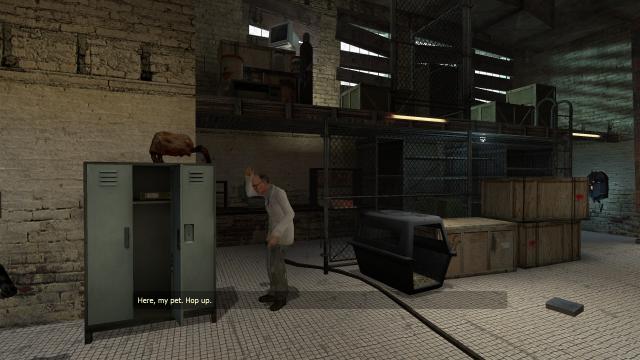
A failed attempt to evade law enforcement ensues, culminating with meeting Alyx Vance, one of several characters who will claim to have met Gordon back before the events of the original Half-Life. What proceeds is a 'reunion' with a series of people who simply didn't exist in 1998. It's almost more confusing coming into Half-Life² as a fan of the first game, as opposed to going in blind; I'm reminded of the sequels to The Godfather, where half the cast spends the first twenty minutes of each movie trying to convince viewers they've been around since the 'good old days'. We also might to have to address Dr. Kliener coupling with his debeaked headcrab 'Lamaar' at some point, because there's no way that conduct could be considered ethical by any man of science.
Following a teleporter malfunction that inadvertently reveals Freeman's presence on Earth, the entire Combine military is put on full alert. Within moments, City 17 is swarmed by the Overwatch, determined to end the 'Free-Man' at all costs. As both the liberator and destroyer of alien species, Gordon becomes the unexpected trump card in a game thought to have been won long ago, deployed and mysteriously bound to those who have him under contract.
From there, the narrative of Half-Life² blends into a messianic version of The Fugitive and The Underground Railroad, with Gordon bouncing across a number of various vignettes, ranging from: chase scenes, a beach invasion, zombie-infested derelict towns, to War of the Worlds-like urban warfare. The game both rises and falls on the success of these set-pieces, some of which have aged much better than others. If one thing's for certain, Half-Life² distinctly feels like it was stitched together by teams working in their own isolated baubles; the relentless pacing tries to disguise it, but the rapid-fire delivery of each scene is ultimately what shows that everything isn't nearly as cohesive as Valve wants players to believe.
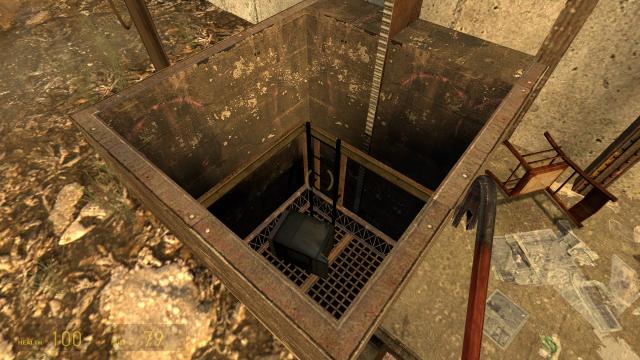
Though certainly tolerable, traversal segments such as 'Water Hazard' or 'Highway 17' drag on for too long during subsequent playthroughs, confounded further by somewhat pedestrian level design. Heat gets thrown at Gordon Freeman for being 'uninteresting', or the crowbar being a series' calling card, how come nobody ever talks about the five cinder blocks that determined the fate of the resistance? Similar to Return of the Jedi, where an empire was dealt a mortal blow by a race of diminutive bears, do the Combine reflect on the fact that they were legitimately one washing machine away from ruling the galaxy? We should be worshiping Emperor Maytag and the Acme Brick Company for the contributions to mankind.
The good does win out overall, and what were considered highlights during release are just as memorable as they were then. Even gamers who haven't played Half-Life² know the name 'Ravenholm', which still remains the strongest act. This fore into survival horror sends Gordon to the middle of a desolate village overrun by hundreds of headcrab zombies. Aided and indirectly hindered by the assuredly mentally-sound Father Grigori, I remember being completely dismissive of the possibility that Ravenholm could rival Raccoon City in scariness, but there were more than a couple moments where I was feeling anxious. I will say that despite being billed as a mining town, Ravenholm has more than a suspicious number of saw blades used for logging laying around; a minor critique, but it serves to emphasize why that portion of the game exists in the first place (to showcase the Gravity Gun).
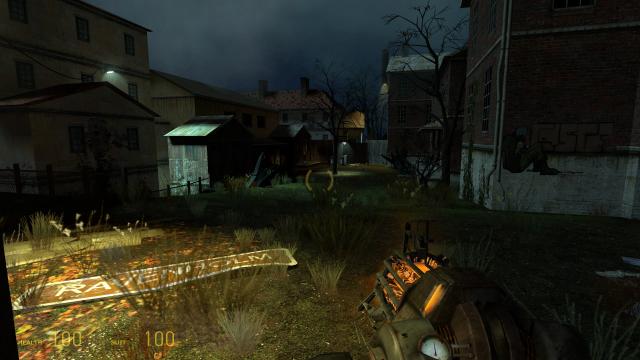
Personally, I tip my hat to 'Sandtraps', a sci-fi equivalent of the beaches of Normandy and the bug army from Starship Troopers. Aside from featuring one of the few traditional boss fights, Sandtraps unlocks the final tool in the Half-Life² utility box: squad-based combat. And while it's undeniably cool, its origins also lie with Gearbox and Opposing Force. Even if we ignore that the concept was arguably done better in 1999 (though too ambitious for its time), this again highlights the undeniable truth about Half-Life²: compared to its graphics, aesthetics, and overall production value, progress from a gameplay perspective is virtually non-existent.
I'll give you one esoteric example from DOOM (1993) that shows the nuance that went into its combat: Blue Armor absorbs 50% of all incoming damage, compared to a Green Armor's 25%. And though it has a faster rate of deterioration, because of how much more damage it absorbs, it gives the player more total defense and health. Therefore, a Blue Armor at roughly 30-40% durability is always superior to a Green Armor at 100% (don't let the bigger number fool you). It's these small design choices that consistently keep DOOM in the conversation of greatest games of all time.
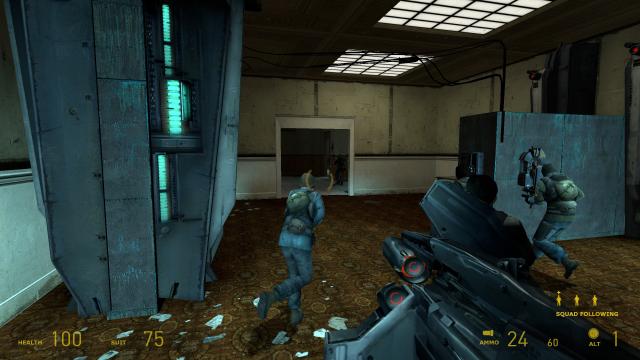
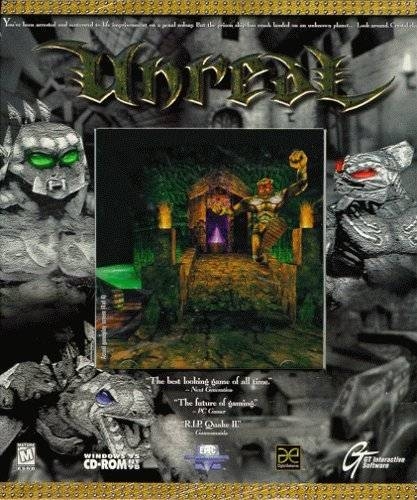
This level of detail doesn't exist in Half-Life². There isn't even a weapon/enemy hierarchy, nevermind something like in-fighting (except for poorly staged background pieces). When we compare Half-Life²'s loadout to Unreal (1998) or Unreal Tournament, the disparity here is even more apparent.
In those games, a gun's secondary fire could turn it into an entirely new tool: the Flak Cannon doubled as a shotgun/grenade launcher; the oddly named Eight-Ball Gun could pre-emptively load up to six(!) missiles or rockets to deploy upon enemy forces, while the Pulse Rifle became a nuclear mini-game with players shooting their own shot out of the air to create a devastating A.O.E. explosion. Strategies involving the Bio-Rifle alone could warrant an article in themselves.
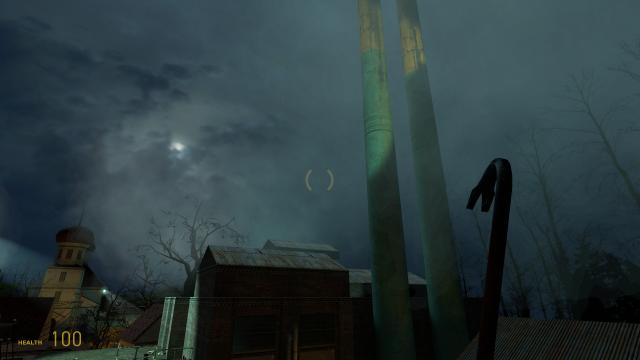
By contrast, the only thing worthy of note concerning Gordon's arsenal is how ordinary it is: you have your guaranteed 1-hit kill weapons like the RPG and crossbow; there's the 1-2 shotters (magnum and shotgun), complementary spray-and-pray SMG's (with secondary features that are at best, underwhelming), and batting clean-up are the utility weapons – grenades and the single finest pistol I've ever held in my digital hands. I love pulling the trigger, but the fact that I can't do anything more with it than what the situation allows is a bittersweet experience (could I at least carry more ammo, somehow?).
Then there's the Gravity Gun, and I'm just going to come out of the gates firing on this one: the Gravity Gun is the single most overrated weapon in any video game I've ever played. Nevermind the Blades of Chaos, Master Sword, Buster Sword, or any other sword – this is the epitome of inflated hype.
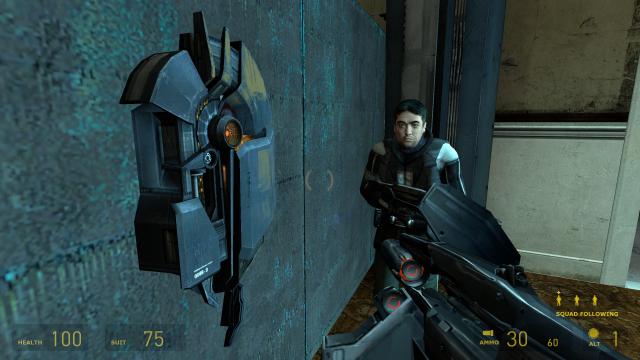
I didn't want things to be this way; I was beyond elated when I finally held it in my hands. “Use the gun to create a path to the next area”, Alyx says; I do so – and it's awesome. “Oh, you know, this is what the rest is going to be like...”, I say to myself as my mind races ahead, thinking of all the puzzle possibilities that could be brought to the table. To my extreme disappointment, there isn't a single instance of using the Gravity Gun more memorable than its initial introduction. Aside from firing conspicuously placed sawblades or using a random object as a shield (and projectile), that's about the extent of using it for anything that resembles thought. That's what Portal was for, I guess – but how much credit should Half-Life² retroactively receive for the efforts of its children? Because from where I'm standing, the descendants of Half-Life are the very reason why the series itself is so revered.
Which raises the ultimate question: why wasn't there a Half-Life 3? There are any number of possibilities, but here are a few that when combined together, may offer some peace of mind for those waiting for something that will (probably) never happen.
The first is that Valve wrote themselves into a corner with the Combine and the whole 'Seven-Hour War' angle. Similar to The Borg from Star Trek: The Next Generation, when such a powerful force is introduced into a lore, it becomes exceedingly difficult to write stories that can play out within the medium's logic. I'll admit that I haven't played Episode I or Episode II yet, but I have a hard time believing that a satisfactory ending can be found to an alien species that conquers planets twice as fast as I can try writing about them.
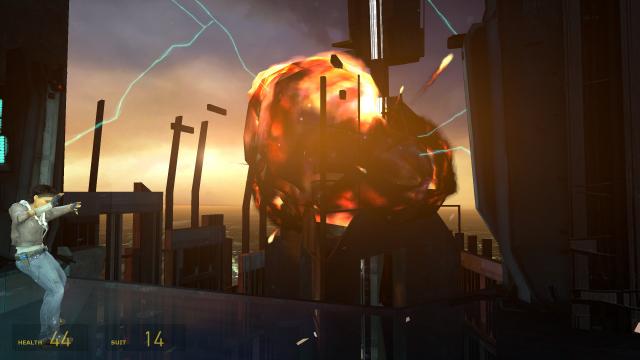
The second is that there wasn't a studio like Gearbox to kick around and make do the legwork that would have brought about its fruition. Between Opposing Force, Blue Shift, and the PS2 port of Half-Life (there's also valuable work that was cancelled), a significant part of the series was lost when the two companies parted ways. And with Valve taking on more publishing rights from developers (and the burden of carrying billions of dollars to the bank), a more obvious answer begins to stand out.
The third is that Valve doesn't feel like making it – a stance that I genuinely respect. In fact, I'll raise the ante: what if there was never a Half-Life 3, because there was never a Half-Life 2? If you look at the number in the game's title, that isn't a sequel indicator – it's an exponent. What is Half-Life multiplied by Half-Life? The Source Engine: Counter-Strike: Source, TF2, Left 4 Dead... none of these bear the DNA of a Half-Life 2, but all bear the brand of Half-Life². Perhaps Valve was never obligated to create a follow-up in the first place.
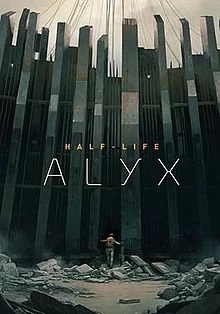
If fantasy doesn't help you cope, perhaps reality will: after Half-Life, Opposing Force, Blue Shift, Decay, Counter-Strike, Half-Life², Episode I, Episode II, Counter-Strike: Source, CS: Go, and Half-Life: Alyx, is a Half-Life 3 even necessary? Having played Half-Life and its various kin for over half of my actual life, can't we be content with what we have?
So, is Half-Life² one of the greatest games of all time? Yes, but there's more to it than that. Is it overrated? Absolutely – though the tale doesn't end there. It would be more apt to think of Half-Life² as one of the most significant games of all time; because if we're talking straight gameplay, Ninja Gaiden (the Souls game of its era) had Half-Life² dead to rights in 2004 – and who could forget the millions playing WoW? The difference is that Ninja Gaiden (which was no slouch in the production department) would peak on Xbox before falling into obscurity, whereas Half-Life² 's status continues to shine on as bright as ever.
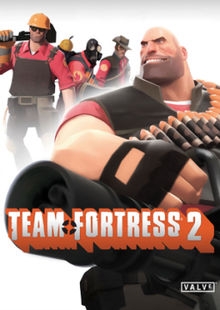
For me, the Half-Life series will always be best remembered through the legacy of its descendants: Opposing Force, Counter-Strike, Portal, Team Fortress 2 (which, like the Half-Life engine, originally comes from Quake stock) – and there's nothing wrong with that. Though I still believe that Half-Life² is overpraised by those who look past its shortcomings, the fact that I retroactively declare it in my own mind as GotY 2004 proves that innovation comes in more forms of a game's production than mere gameplay; the dedication to audio and visual fidelity, the details of the overworld, and especially adherence to story and lore (Half-Life is surprisingly lore-heavy, despite having few characters). The growing pains Valve experienced almost 20 years ago still resonate in lieu of companies that refuse to undergo the trial; and while I'll always have beef with the underwhelming gameplay, its place in video game history - and the future it has ushered in – teaches all of us the most important lesson:
The right game in the right place can make all the difference.
More Articles

This is a masterpiece yesterday, today and tomorrow!

I had not played this in over a decade and installed it to my steamdeck... wow it runs great. Way better than my PC ever did for this game. It made it feel like a modern game with how well it looked and played. I get why valve has been sitting on part 3 for so long... how do you top the excellence that is part 2?

I can get behind this. The gunplay isn't particularly special, but a lot what surrounds it is, especially the setting, set-pieces, and the opening section. And it's a highly important game, not least because it enabled even more excellent titles to follow in its wake (not least the sublime Portal series).
As for there being no Half-Life 3 - they've certainly attempted to develop one, but I expect living up to Half-Life 2 (or Half-Life²) and the reputation it's garnered over the years has set such an extraordinarily high bar on any follow-up that it's been incredibly difficult to make. Alyx is an exception because Valve was able to leverage the relative novelty of VR to produce a spin-off that didn't need to be a worthy sequel to Half-Life 2, so much as 'just' be a stellar VR game.