
The Real Reason Call of Duty Sticks Around - News
by VGChartz Staff , posted on 06 April 2011 / 5,645 Views
Six heavily armed men rush off to various directions of the ruined farm. Idle chatter is covered up by a hail of gunfire and explosions in a matter of moments. Scattered voices attempt to relay the enemy positions.
“We got one in grandma’s house,” says one member of the team.
“I got him, but watch out, they’re already camping the stone bridge,” miffs a recently killed and resentful teammate.
“I totally shot that guy,” says everyone at least five times during the skirmish.
Seven minutes pass and we find ourselves on the losing end of the battle. After a minute’s reprieve it’s off to another spot in the world to do it all over again.
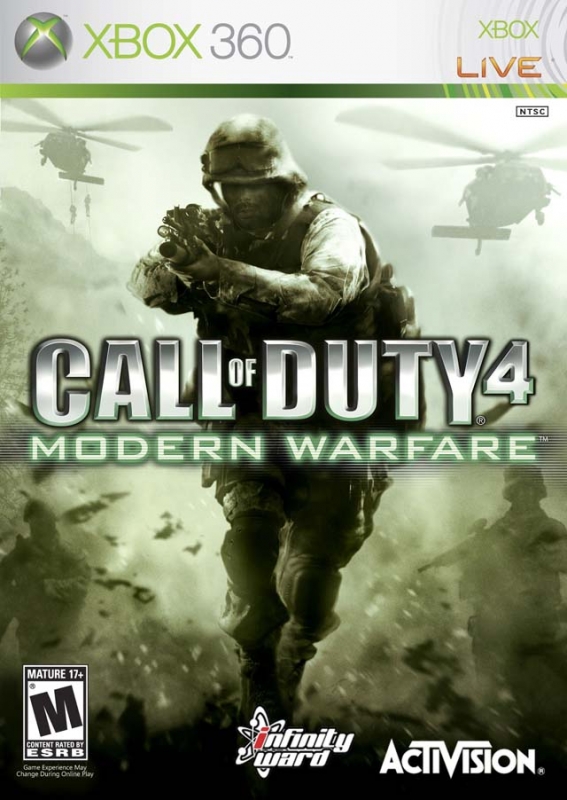
It is through these endlessly monotonous yet unique matches that I spend almost all of my time socializing with my still close but long-distance friends. In a world where everyone is busy, finding common ground to do an activity everyone enjoys becomes difficult. It is for this reason that the Call of Duty franchise has seen so much success over the years, especially since the release of Call of Duty 4, when the “new wave” of Call of Duty found its place firmly entrenched in online gaming.
The Call of Duty franchise is immensely popular. Call of Duty has broken sales record after sales record, selling millions of copies and generating incredible revenue streams for Activision, publisher of the franchise. With so many people buying into a singular activity, there is more than just shared experience generated. I wager that a good number of Call of Duty players can name the map I was referring to above just by the two locations named. That intense familiarity with the franchise has created and reinforced social bonds that primarily and even sometimes universally reside on multiplayer servers.
I realized that many people use Call of Duty primarily to maintain social ties with loved ones across distance. I know plenty of people that stay in touch with family and friends over death matches. I’ve personally made dozens of fairly developed friendships over the several years I’ve played Call of Duty. Only one has made the jump from Xbox LIVE to Facebook though. The others reside entirely in the realm of multiplayer matches.

“Hey dude, why don’t you play Call of Duty anymore?”
I rolled my eyes as I looked at the text message. My friend Nick is a master of guilt trips and this was his most recent attempt to get me to play the game again after a several month hiatus. To put his expertise in perspective, he paid for half of Black Ops so I would play it on launch night with him and our friends. He even paid for half of my 360 just so I would play Call of Duty 4 with everyone since I was the odd man out. Turning down a match of Call of Duty is more than just refusing to play a game; it was refusing a request to hang out with friends. My hiatus from Call of Duty was also a hiatus from speaking to some of my closest friends. With the right pair of eyes, there was another translation for the text message, one that I think is more accurate and to the point.
“Hey dude, why don’t you hang out with us anymore?”
Have you ever been playing a Call of Duty and wonder why you’re playing something so frustrating and so seemingly full of bugs and latency at all the worst times? Have you ever asked yourself that and continued to play for several more hours with your friends?
Call of Duty is not specifically a game for people trying to maintain social networks. I argue that it is more like cell phone service. When you call someone on a cell phone, the service or equipment may be terrible, but that is incidental to the act of calling someone to talk about what’s been going on in their life. In much the same way, quality has no bearing on a Call of Duty title. As it is a vessel of social interaction for so many, the game itself is incidental. What’s really going on is a pair of brothers hanging out across an ocean or a group of three close friends on three different continents.
The striking thing that always gets me though is that while people may play together, they might not necessarily speak to each other. I’ve been in a game with friends I’ve not seen for months, yet we’re all quiet because we’re on the business end of a 2100 – 6700 score. Some may say that we’re not really sharing time together because we’re not speaking and not in the same room, but the fact is that we’re all still together, and we’re mad at the same things. We still are sharing time, though we may not always be sharing words.

I’ve tried to introduce my friends to other popular FPS titles, but to no avail. With so many hours of almost universal Call of Duty play over the years, every other FPS becomes instantly othered because it simply is not Call of Duty. To them, Battlefield: Bad Company 2 is simply not fast-paced or accurate enough, all because of an intense familiarity with the Call of Duty franchise. It's not that these games are better or worse, but simply that they are different.
The stranglehold that Call of Duty holds on the FPS genre is more rooted in social networks and less in actual game quality. So many people play Call of Duty that it will take an incredibly potent franchise to be able to draw enough people away so as to create a new social gravity well elsewhere.
If you ever wonder why a new Call of Duty comes out every year, just look to your friends. If a few people buy the new game and you have the old one, you’re going to be left out of their shared experience. You may end up purchasing the game not because you want the game itself but because you want to be around your friends.
I know that’s why I bought Black Ops. I know that’s why I’ll buy the Call of Duty that comes out every November as well. Enduring the frustration of these titles may be too much too bear sometimes, but I know one thing for certain. If it comes down to complaining about killstreaks and lag with friends or being content with an average singleplayer experience, I’ll take my friends any day of the week. What good is a hobby without friends to share the experience with?
Disclaimer: This article is the work of one writer, and does not necessarily reflect the views of gamrFeed or VGChartz.
More Articles
@px54
This is Nick from the article. How could you not call it hanging out? It's kind of hard to meet in person when we live 4-5 hours away from each other and have to tend to our daily lives. It's not a 5 minute drive.
Watching a movie while on the phone is totally different then hanging out and playing Call of Duty simply because of the interaction that you have with the other players.... Let me explain it to you, I see SSDNINJA and associate that player name with my friend and who he is. I interact with him not only by talking but by strategizing with him to accomplish a similar goal, and all that is accompanied by leisurely talk between matches. The only difference between us hanging out "in person" and online is that I cannot see him physically. Mentally and emotionally we are chilling like we would be if I were at his house or he were at my house except we'd probably be playing Smash Brothers.
All in all you would not get the same experience from talking on the phone while watching a movie/tv show with your friend.

@PX54 Since moving, my closest friend is a 4 hour drive away.
What I'd like to do is watch some livestreams together at least, mimic that movie-watching experience.
@Esquoret Sometimes being able to talk and be around old friends is more important than enjoying what they all want to do to hang out.

"Hey dude, why don’t you hang out with us anymore?"
Yeah, i still wouldn't call it hanging out. When i want to hang out with my friends we meet in person. I mean if you call playing online with your mates 'hanging out' then so is phoning them while you're all watching the same film/tv show at home.

Only lame people give in to peer pressure.

It reminded me of why people play MMoRPG's
killzone is better

I am bored shit of BO now. On both versions!! KZ3 is sooooooooo mich more funner. I like Reach as well but the matchmaking sucks now days :(
Cod is easy to pick up. any 3 year old can spam grenades and go positive... it will never recover though sales mean nothing when the product is garbage. Cod4 is the last in the series to be good and i doubt they will change any time soon

This article is basically a story of my exact same experience and why i always complain about COD so much yet have bought the last 3 titles on day 1

Nice article and totally makes sense. Me and my friends barely talk over headset when we played though. So it was more of silent venture together.
@walkerj
I couldn't disagree with you more. this explains it perfectly if you read the ENTIRE article like a grown up, instead of quitting half way through because his opinion differs from yours.
Great article Joseph. And i do have to agree with you. I, too, have tried to get my CoD buddies to play BC2 or even Homefront (even though i wasn't impressed by it). For some reason they can't get over the kill-em-all-as-quickly-as-possible gameplay that is CoD.
It's nice to play a game online with some friends and get away from the real busy stinking smog filled noisy world for a moment. But... There is nothing more fun than hang out with your friends 'in real life'.
my god call the media, multiplayer means playing with other people? Unheardof...if only some other franchise realised this and created there own form of M..Molty-pleer they would have great success too!
Stupid article. it doesn;t say anything about why they choose CoD over anyrthing else

I approve of this article very interesting read
Me and my buds have giving up on COD (Didn't buy BLOPS) instead we play KZ3 :D
Luckily all my friends have also grown tired of CoD.
wow this is really interesting
Really lovely article :)

i stood my ground with black ops and didn't but it and we most probably will not have a call of duty this year