Existing User Log In
New User Registration


Register for a free account to gain full access to the VGChartz Network and join our thriving community.





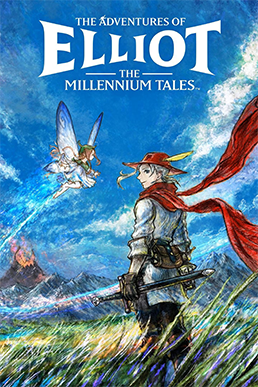
America - Front

America - Back

Square Enix
Claytechworks
Role-Playing
 06/18/26 Square Enix
  (Add Date)
 (Add Date)
| Owners: | 0 |
| Favorite: | 0 |
| Tracked: | 0 |
| Wishlist: | 0 |
| Now Playing: | 0 |
Imagine the sales pitch: "what if Zelda, but HD-2D?" Personally, I can't think of a much more enticing premise. The best video game formula matched with the best art style? Sign me up. Clearly, Square Enix felt the same, because it empowered developers Team Asano and Claytechworks to make The Adventures of Elliot: The Millennium Tales, a new action-adventure game in the mold of The Legend of Zelda, featuring its trademarked HD-2D style — which has become, in the last eight years, one of the industry's most arresting visual designs. We already know the design works splendidly with turn-based RPGs, but how does it handle an action game that unfolds in real time?
The Adventures of Elliot takes place in the magical, medieval continent of Philabieldia, one of those fantasy proper nouns that's easier to read than say aloud. Most of the continent is inhabited by feral beast tribes. The lone exception is the Kingdom of Huther, a castle town where humanity flourishes under the protection of a magical barrier. It's against this backdrop that the king requests that Elliot, an accomplished adventurer, brave the wild lands outside the town walls and investigate recently unearthed ruins. Inside those ruins, Elliot discovers a mystical doorway into the past. While the king is reluctant to investigate this new discovery, his minister Kaifried (who struggles to conceal his mustache-twirling scheming) goes full steam ahead, stepping into the past to rewrite history in his own name. Elliot chases him backward in time, only to become entangled in mystery hundreds of years in the making.
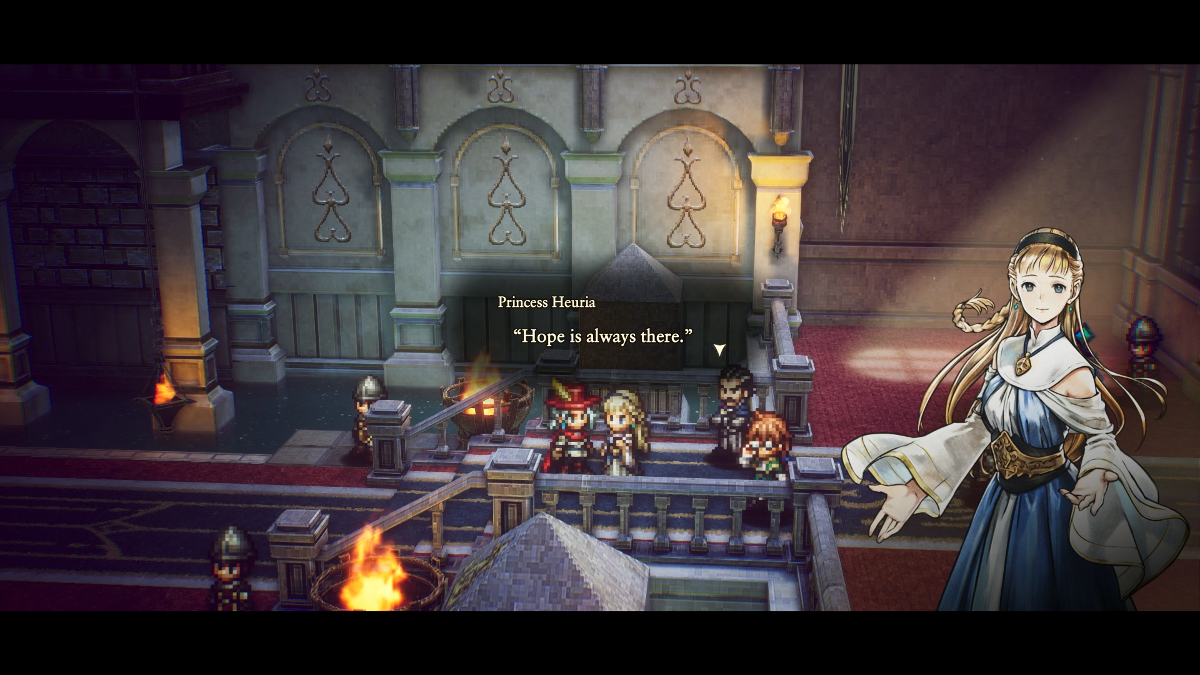
The story in The Adventures of Elliot is a mixed bag. On one hand, its ambition deserves applause. It endeavors to spin a tale with plot points in four different time periods, each separated by several generations. On the other hand, the delivery of the story is sometimes jarring and melodramatic. Part of this has to do with the fact that the game discards its principal antagonist halfway through, only to pivot to what feels like an entirely new threat (in an entirely new game). The other part has to do with voice acting, which is professional but theatrical, i.e. overwrought and overly staged.
Voice acting is actually one of the biggest issues in this game, believe it or not. Well, not just voice acting, but direction as well. The game constantly talks at you. Early on, Elliot is joined by the disembodied voice of Heuria, the princess of Huther. She comments on everything Elliot sees and does and doesn't do. Later on, she's replaced by Faie, a fairy companion. What sort of Zelda-like would this be without a fairy by your side, after all? Faie is even chattier, constantly providing unsolicited comments and suggestions. If you see an enemy, or a treasure chest, or a door, or a save point, she will chime in. If you open the map, she will say "let's see, where are we?" And since you need to reference the map a lot, you will hear this one phrase dozens, if not hundreds of times. If you're one of those old-school gamers who still harbors bad feelings toward Navi in Ocarina of Time, well, all I can say is you don't know how good you had it.
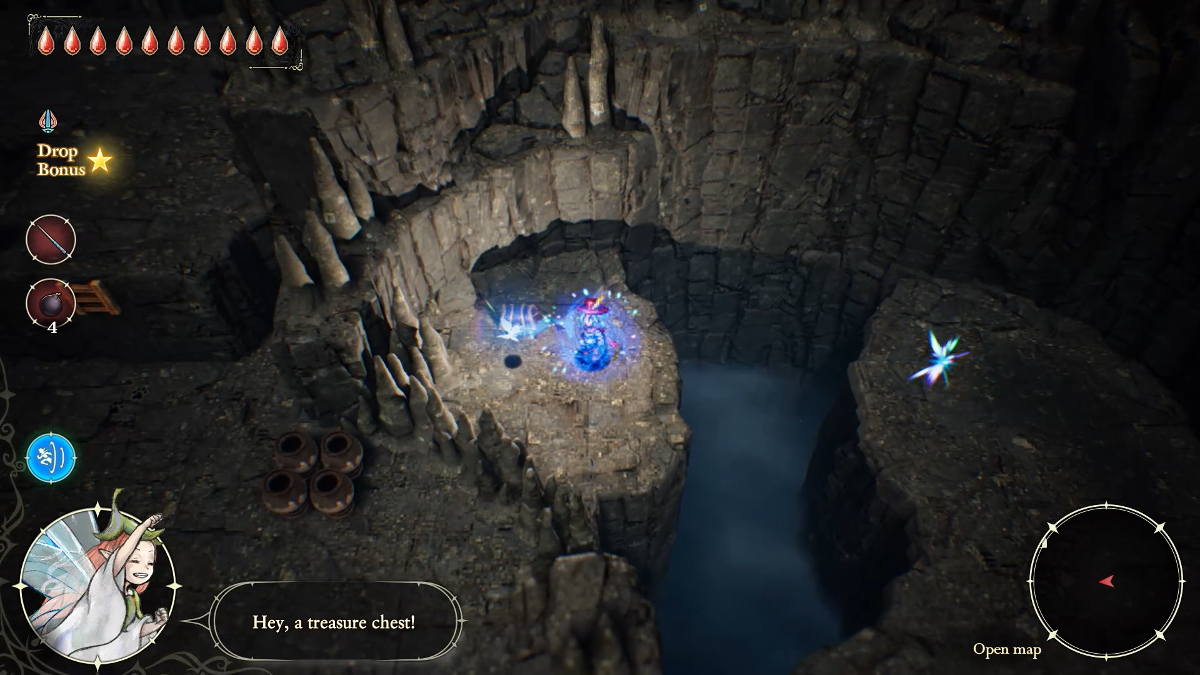
Team Asano does allow players to change the frequency of these interjections, but in practice it doesn't make a major difference. Note: on July 10, Square Enix announced a version 1.1.0 update that allows you to silence Faie entirely. However, it doesn't seem to be live on PS5 as of this review.
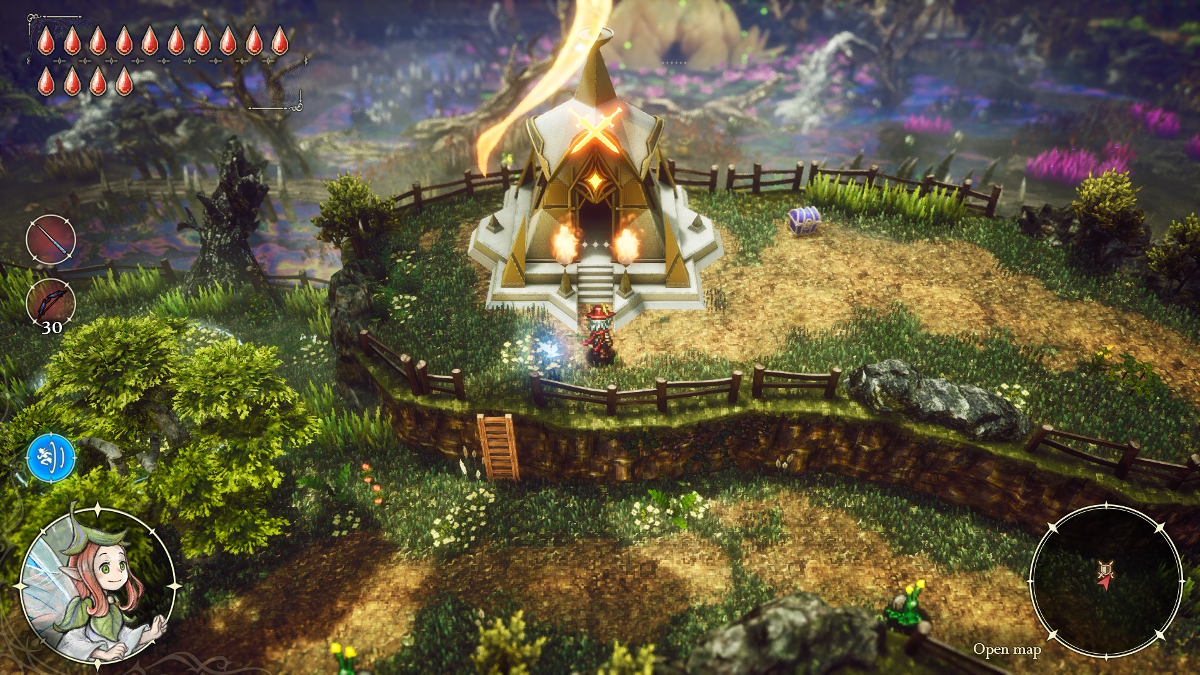
If you can look past the voice direction issues, you'll find a polished, mostly dependable action-adventure experience. In true Zelda fashion, Elliot will crisscross the diverse biomes of Philabieldia, fighting beast tribes and seeking treasure in the overworld and inside monster-infested dungeons. While the continent isn't huge in terms of real estate, it's densely packed with secrets, shortcuts, and temples that grant health upgrades or augment Faie in some way. There is a lot of optional side content, which is great.
The big missed opportunity with the overworld is the way it changes (or doesn't change) along with Elliot's travels through time. The heroic adventurer will visit four different time periods, each separated by hundreds of years; yet they look and function in more or less the same way, apart from the human-inhabited area. Team Asano and Claytechworks passed on a golden opportunity to surprise players with different enemies, architecture, and geological features across the ages. Similarly, it passed on an opportunity to create puzzle-solving opportunities that stretch across multiple eras. There is one instance where you must lower a ladder in the Age of Magic so you can climb it in the Age of Reconstruction, but this is a rarity.
While the developers didn't maximize the potential of the time travel mechanic, they absolutely nailed the combat side of things. The fighting framework in The Adventures of Elliot is one of the game's best features, for a few reasons. First, there's weapon diversity. Elliot carries seven different weapons and can arm two at once. He can select from four melee weapons (sword, spear, hammer, and scythe chain) and three projectile weapons (boomerang, bow, and bomb). Second, there are more powerful variations of these weapons hiding somewhere on the continent, waiting to be found. Third, Elliot can transform Magicite fragments, found in the overworld and dungeons, into dozens of different augments for his weapons, granting them extra powers, e.g. improved critical chance. At one point I modified my bombs to freeze enemies on contact and then leave behind a pool of molten lava after exploding. The potential for custom builds is impressive.
If, for any reason, you struggle in combat, you can call in a friend for help. In a pleasant twist, The Adventures of Elliot allows a second player to control Faie. This player can't interact with the game world in the same way as player one, and is limited to Faie's complementary abilities, but they can certainly make a difference, especially during boss battles.
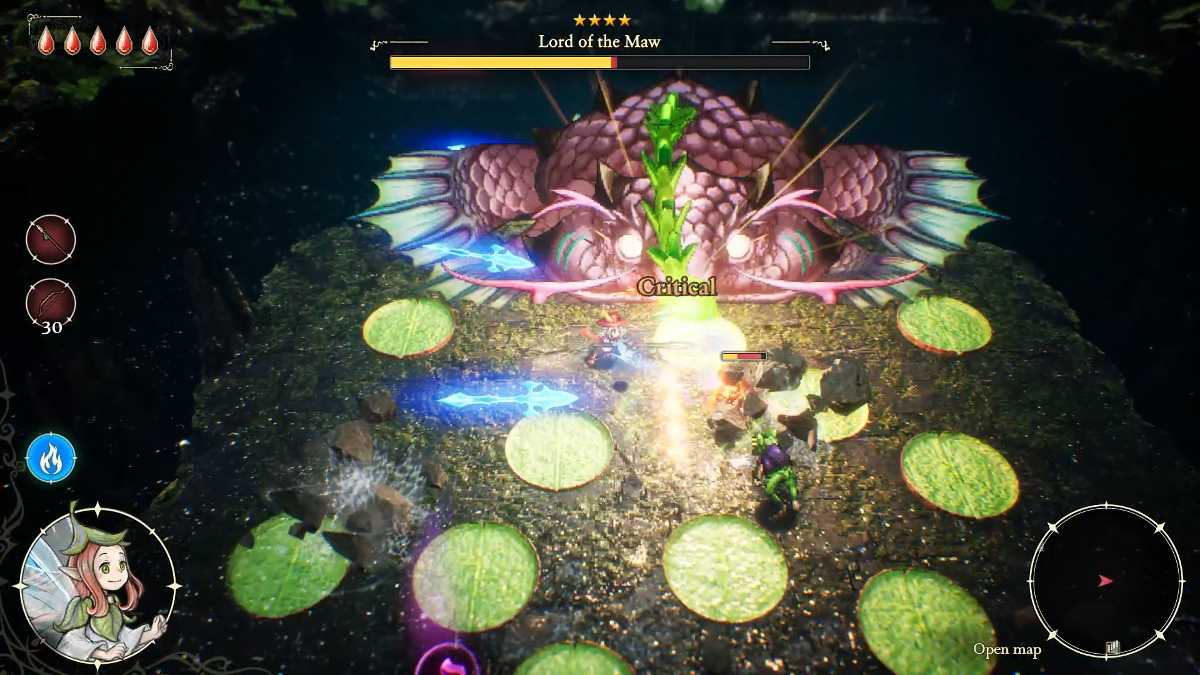
Speaking of those boss encounters, they're quite satisfying. The game makes great use of space in each encounter, creating opportunities for Elliot to dodge and deflect projectiles, set himself up for a perfectly timed shield block, and deploy any variation of weapon types. The most memorable fight takes place in a half-submerged cave, and appears to draw inspiration partly from King Dodongo from Ocarina of Time. During this encounter, you must leap up lily pads to avoid a gigantic tidal wave and also attempt to weave your way through swirling water spouts. If there's a problem with bosses, it's that Team Asano and Claytechworks tend to recycle enemies across the ages.
Still, it's difficult to complain about seeing the same guardians and beast tribesmen over and over when they look so good. Boss designs in particular are stunning, in part because of their scale, but everything in The Adventures of Elliot looks phenomenal: characters, buildings, terrain, monsters, even something as simple as water. HD-2D works wonders here, often winning you over even when the game is chatting at you incessantly, or spinning its wheels, or sending you on another fetch quest during its long, drawn-out end game.
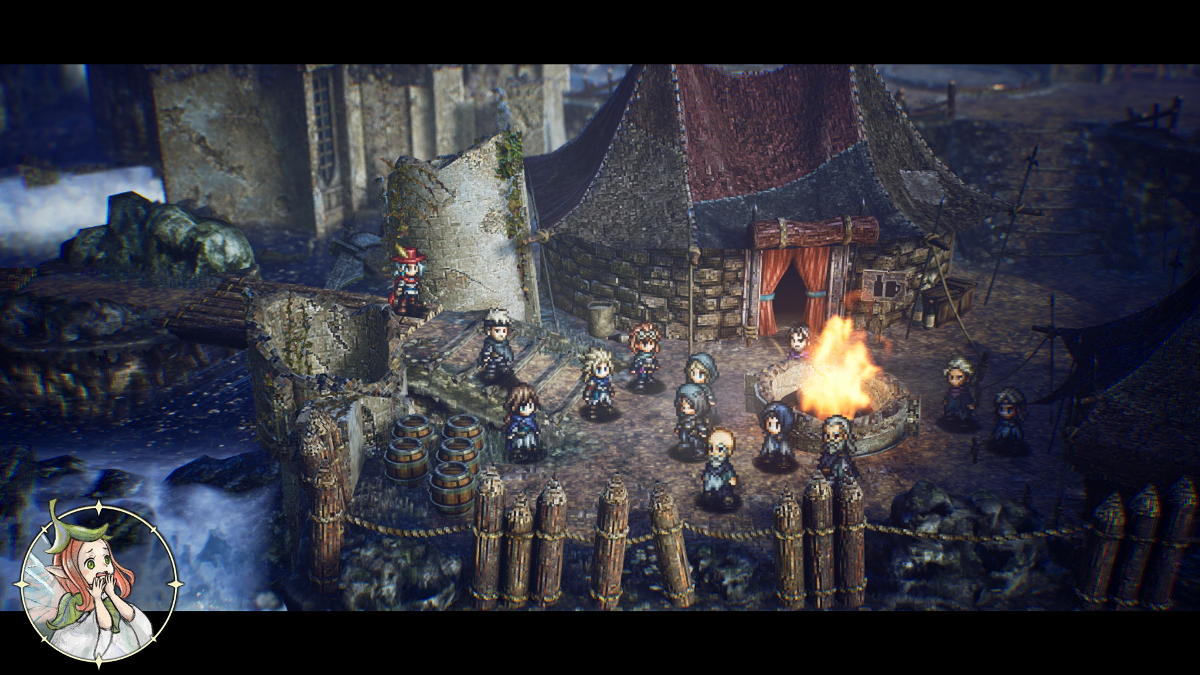
Let's talk about that end game. While, for the most part, The Adventures of Elliot draws inspiration from The Legend of Zelda, it actually veers toward visual novel territory in its final few hours. The first time you see the credits roll, it will probably be after the bad ending, which leaves several questions unanswered. When you reload your save file, you can continue to investigate Philabieldia across time, pulling at narrative threads until you reach the good ending. That's not all there is, though. Keep triggering important conversations and events to reach the true ending, which finally ties together all the lessons learned from the previous conclusions. This part of the game is powerful from a narrative perspective, although not so much in terms of gameplay. You'll find many tedious quests and cut-scenes around this time.
Still, it does extend the playing time. If you rush through the game and content yourself with a single bad ending, you could retire after 14 hours. If you pursue all the optional content and every single ending, however, you could squeeze approximately 30 hours from the adventure. For those who want even more, there's a New Game+ option after the true ending.
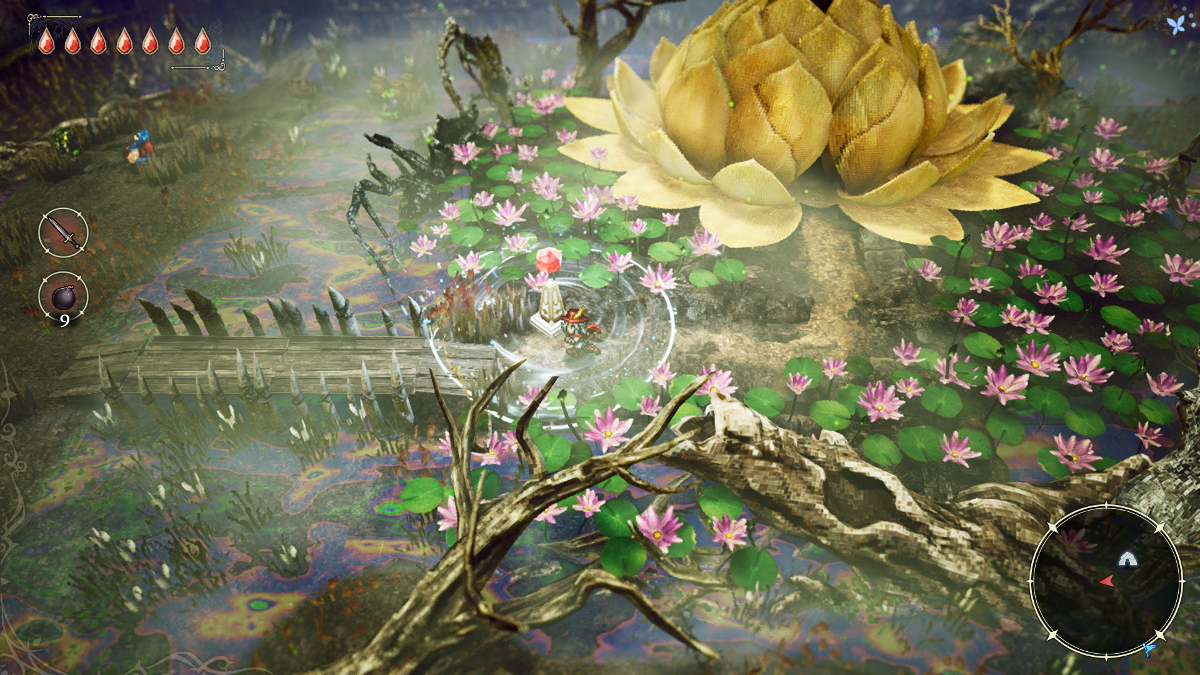
Whether you spend three or 30 hours in Philabieldia, you'll be treated to some lovely music, courtesy of Tomohiro Nakamachi and Yuto Moritani. The main theme, in particular, is excellent. It starts gently with flute and fiddle before climbing to a rousing, sweeping chorus. It also has the subtle sound of a ticking clock, foreshadowing the time travel element. The two composers even went the extra mile to craft unique tracks for all four time periods, in order to summon a specific atmosphere and identity for each. "Hucarea" is bouncy and warm in the Age of Safekeeping, but tentative and reserved in the Age of Reconstruction.
As it turns out, HD-2D works for action-adventure just as well as it does for role-playing. Indeed, the best part of The Adventures of Elliot: The Millennium Tales is its visual style. It's so striking, in fact, that it sometimes helps you forget the game's flaws. If you're a fan of Team Asano's previous work and of games in the Zelda tradition, you may want to pick this one up, once update 1.1.0 is live and the asking price has dropped somewhat. It's not an essential piece of the HD-2D collection, but it's an adequate adventure that will help scratch that Zelda itch.



About Us |
Terms of Use |
Privacy Policy |
Advertise |
Staff |
Contact
Display As Desktop
Display As Mobile
© 2006-2026 VGChartz Ltd. All rights reserved.