
REANIMAL: The Prisoner (XS) - Review
by Lee Mehr , posted 1 day ago / 685 Views
Reviewer's Note: Though kept as minimal as possible, there will be certain SPOILERS for story and gameplay detailed below, both for this expansion and the main title. Read on at your own risk.
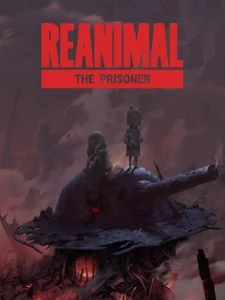
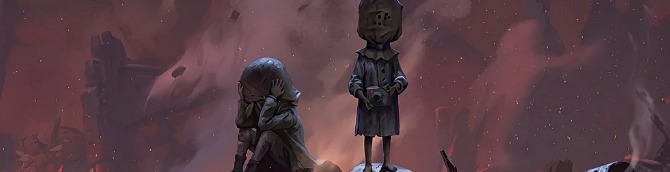
A new pair of young protagonists, another boy and girl, find themselves at the center of Tarsier Studios' twisted world, and perhaps for all three entries in the planned expansion trilogy. The subtitle of this opening salvo, The Prisoner, refers to a co-protagonist who is initially locked away in a dungeon. "You can't stay here," a girl in suspiciously kid-sized military garb says, standing outside of his cell, "you'll freeze." "I'll live," he somberly responds. As with REANIMAL, David Mervik's script is limited, but also selective in a way that keeps one's attention.
Action has always spoken louder in Tarsier's games anyway. A paratrooper plane is shot at, leading to one specific soldier dying right before jumping. Secretly stowed away in said plane, the duo take this opportunity to borrow his parachute and fall to the surface – not without some close calls, naturally. Below lies the last location within the main game: a war-ravaged city during what appears to be World War II (with obvious hints of being a surreal nightmare). The only way out now is through.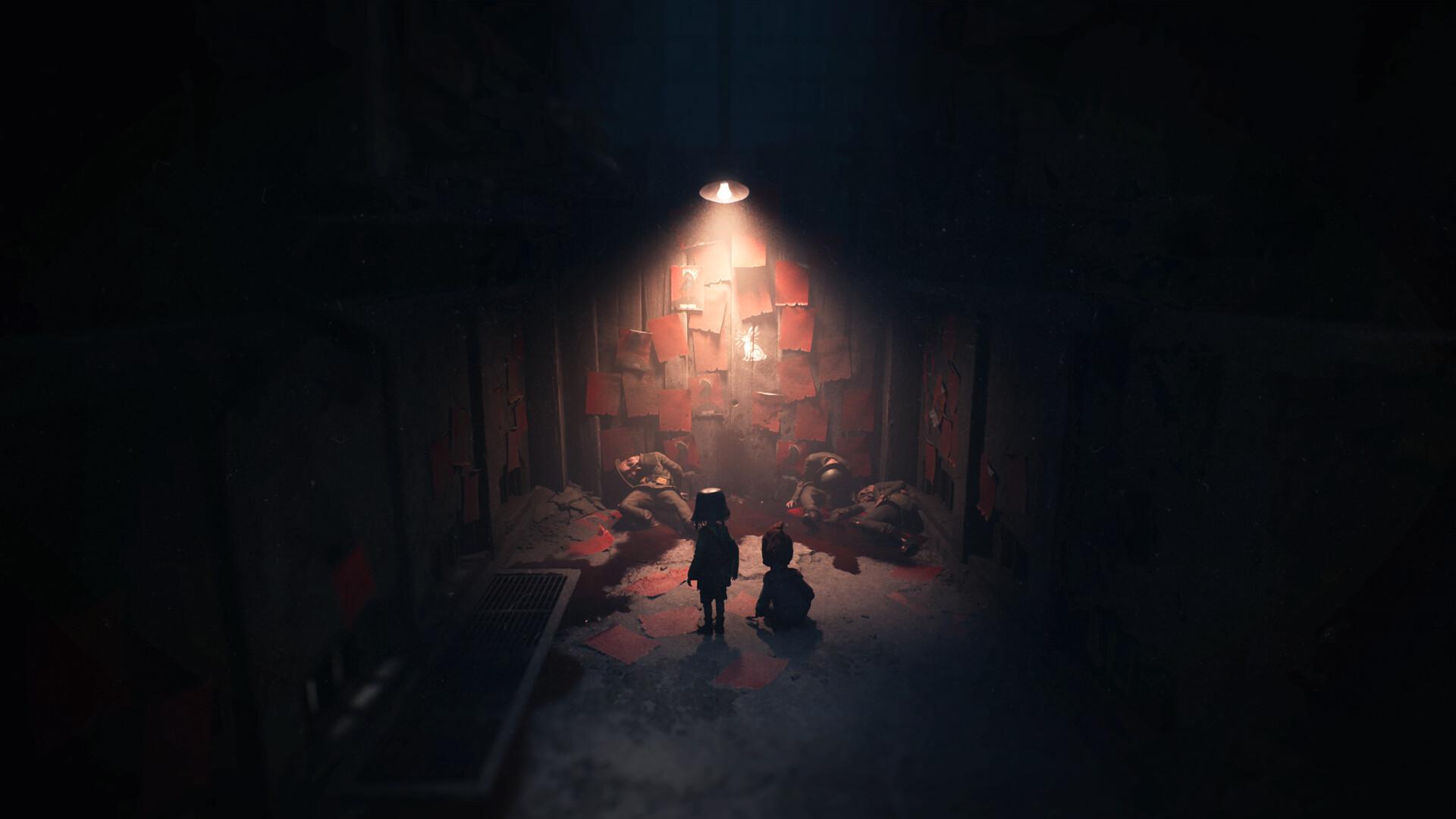
Naturally, the bones of REANIMAL remain intact: a blend of 3D puzzle-platforming, action setpieces, and macabre fail states. While there are opportunities to go off the beaten path, often to collect concept art, The Prisoner is more linear by comparison. It's tougher to expect anything else during the first act too; open-ended exploration wouldn't make sense whilst venturing through burning buildings. Even after that, this expansion overall feels more like a primer of grander things to come – for better or worse.
On the positive side, focused linearity makes Tarsier's ethos of heuristic discovery easier to stomach. There's less worry about your hypothetical co-op buddy venturing towards the camera's edge and away from the proper task at hand. Perhaps its best moment – the duo desperately escaping an armed pyromaniac – successfully captures the best of that mentality: reliable camera placement, said Flammenwerfer's unwavering dedication, and the on-the-fly thinking necessary to succeed, all congeal without relying on notifications or mission icons.
The same can be said for its cooperatively-emphasized combat & puzzle-solving ideas. Early on, one character will pick up a conveniently-placed Polaroid, and its first use 'unlocks' a putrefied corpse's stomach as a magical entrance portal – itself a nuance on a grotesque idea from the original. But this camera's flash also doubles as a short-term stun grenade against familiar foes, which creates a window for said partner (AI or human) to beat the hell out of them. No specific segment could be construed as overly taxing, but by stripping away UI clutter & assists, the solutions with a buddy feel a tad more rewarding.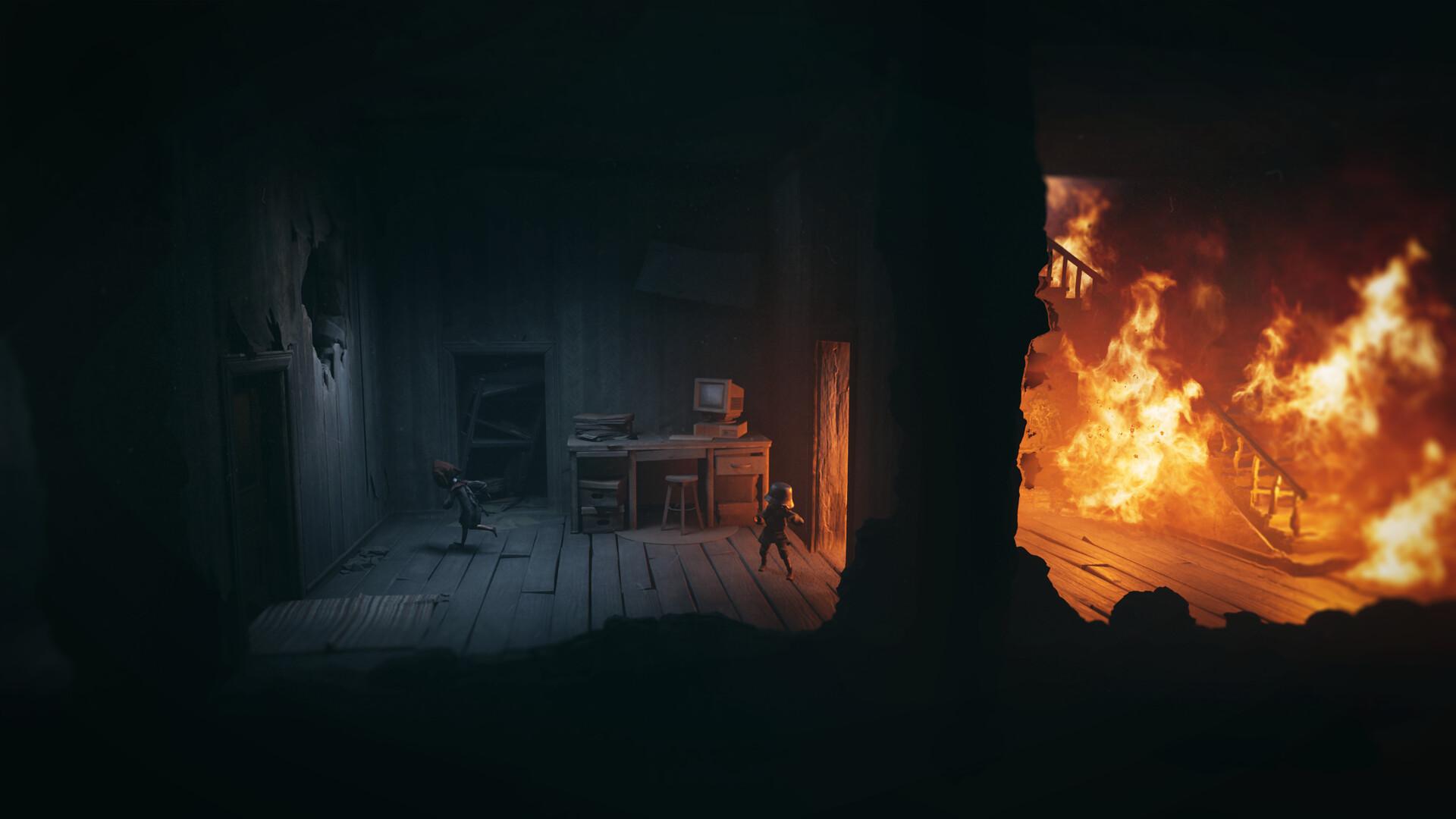
Of course, like before, Tarsier's cinematic affectations can get the better of it too. What initially appears as a simple tutorial for avoiding tripwires becomes an example of inimical camera work: a solution where you're expected to navigate around a building corner without seeing yourself. Small potatoes in the grand scheme, sure, but it speaks to this dogged insistence on The Money Shot™ trumping everything else. "Oh, what if we initially delay the camera's movement with the player to arbitrarily emphasize something in the deep background?" Fuck off. Stressed hyperbole aside, The Prisoner is more constrained than the original's similar embellishments; as a result, it's easier to read scalable ledges and other interactables, which in turn makes exploration more organically enticing.
Another hanger-on from before is price valuation – the bang for your buck, essentially. It's not the most exciting aspect to evaluate, but it seems necessary for a series that's not so price-conscious. Give or take 100 minutes (non-completionist) for $9.99 standard certainly isn't great value, and it's only partly buttressed by some collectibles. Though total cost is more bearable if selecting either the Season Pass ($24.99) or Deluxe Edition ($59.99), there's also the nagging sense of it being a primer for greater things to come, instead of enjoying a self-contained identity.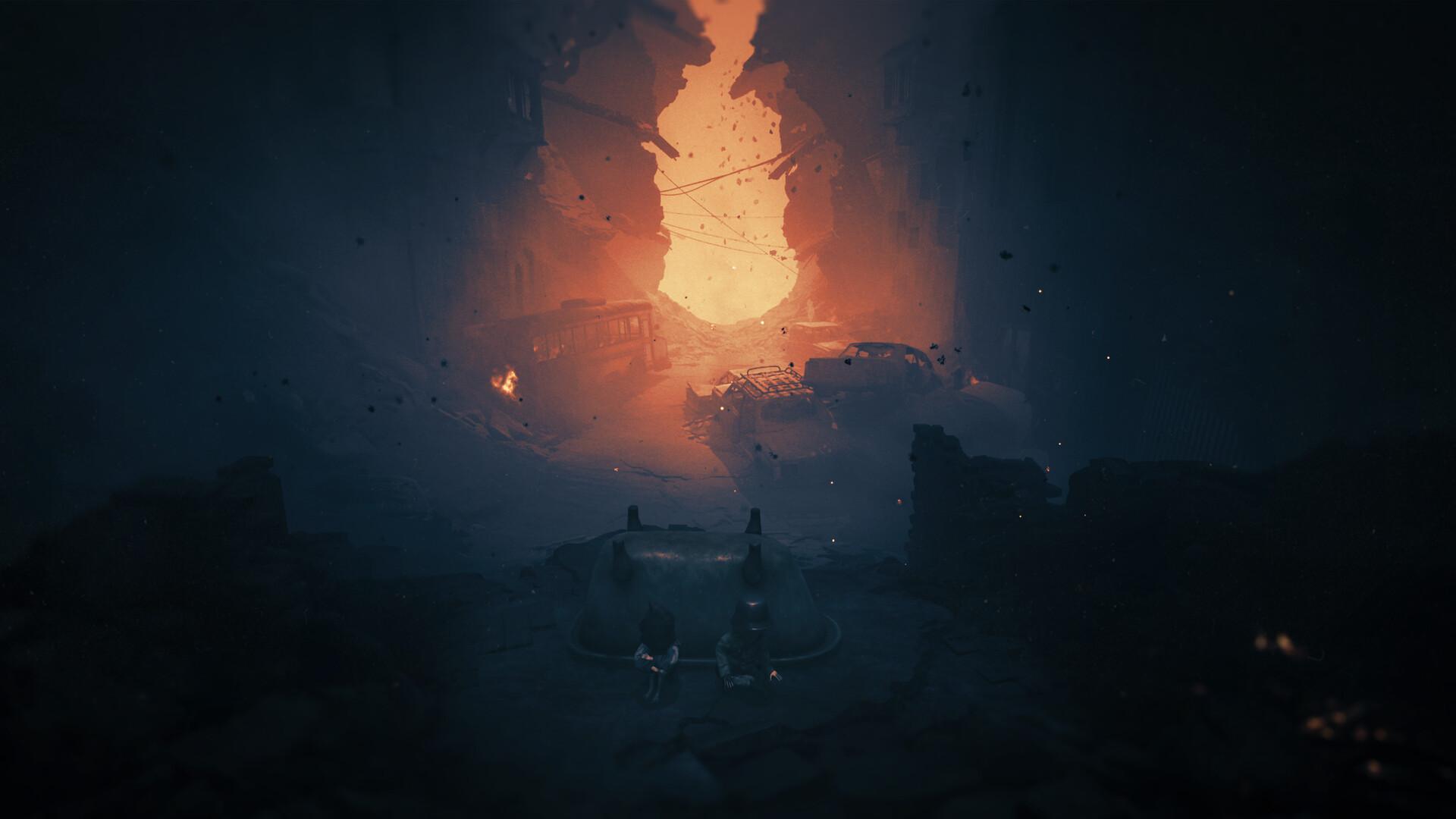
A more surprising complaint this time around is connectivity errors. Initially, pairing up with an online buddy went swimmingly. The moment after we took a break and tried to return midway through the campaign, though, we got stuck in an endless loading loop; sadly, I was left with finishing it solo for the time being. This could just currently be an Xbox-related issue that's one hotfix away, as I'm not aware of its condition on other platforms.
The long and (mostly) short of REANIMAL: The Prisoner is a lot of setup without enough payoff. That's not to dismiss these setups either: the grotesque violence, incredible production values, intense set pieces, and more can't help but grab one's attention. As far as this specific clade of cinematic puzzle-platformer is concerned, Tarsier Studios comfortably sits among the upper echelon. Though shackled by some of the original's foibles, the bigger contention is how much credit it's owed while also being a costly primer. Fans will undoubtedly be sold by it, but everyone else will have to wait and see.
Contractor by trade and writer by hobby, Lee's obnoxious criticisms have found a way to be featured across several gaming sites: N4G, VGChartz, Gaming Nexus, DarkStation, TechRaptor, and Cubed3! He started gaming in the mid-90s and has had the privilege in playing many games across a plethora of platforms. Reader warning: each click given to his articles only helps to inflate his Texas-sized ego. Proceed with caution.
VGChartz Verdict


6
Decent
This review is based on a digital copy of REANIMAL: The Prisoner for the XS