

Final Fantasy VII Remake Intergrade and Forspoken are $70 on PC - News
by William D'Angelo , posted on 03 February 2022 / 4,488 Views
With the launch of the latest consoles in November 2020, we started to see some games priced at $70 on the PlayStation 5 and Xbox Series X|S consoles. This is higher than the $60 price of games we have seen for well over a decade. The higher prices are now starting to hit games on PC.
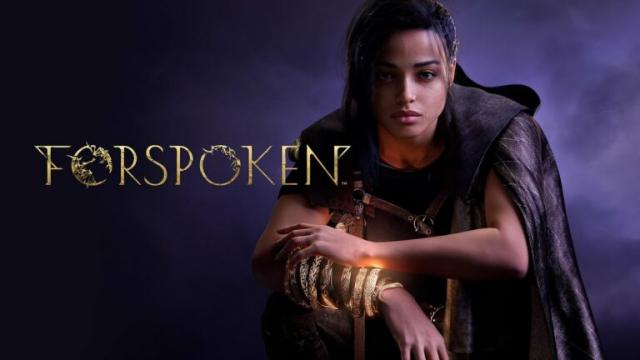
Square Enix is charging $70 / €80 for the base versions of Final Fantasy VII Remake Intergrade via the Epic Games Store and Forspoken via Steam.
Publisher 2K Games' NBA 2K21 was the first confirmed game to see the higher price for the PS5 and Xbox Series X|S versions.
Thanks, DSOGaming.
A life-long and avid gamer, William D'Angelo was first introduced to VGChartz in 2007. After years of supporting the site, he was brought on in 2010 as a junior analyst, working his way up to lead analyst in 2012. He has expanded his involvement in the gaming community by producing content on his own YouTube channel and Twitch channel dedicated to gaming Let's Plays and tutorials. You can contact the author at wdangelo@vgchartz.com or on Twitter @TrunksWD.
More Articles

In the UK, the standard game price in the 8th Gen was £50. So far, a most 9th Gen games have been £55 but with a few exceptions. Call of Duty and a few big Sony exclusives were £70. That is a steep jump from last gen.


RRP has been £60 for a while but no high street store ever actually listed them for that due to competition. But for some reason at the start of this gen, high street stores and online (like amazon) just didn't reduce the cost for competition like they usually did. It appeared as though the price of games jumped from £50 to 70 but in reality its only 60 to 70. Some places still do competitive pricing. For example, the new Saints Row can be preordered from Amazon, XBL or PSN for £59.99... or you can buy from the Game Collection for £45. Not saying it was right to put it up by £10, £5 was enough but still.
First hand experience being a tight arse living in the UK. :P
People still talk like it was Sony who put up the prices from £50 to 70 when that's just not the case. I don't agree with their £10 increase but considering games have hardly increased in price from PS3 era to now, it's hard to moan too much.
What I don't like is high street stores suddenly not playing the same game they always have. I blame them for the true increase in price in the UK, although all they are doing is sticking to RRP.
You can look up the price of Returnal for example on price history websites, just after it released it was £69.98, down to around £65 just after release as it's cheapest. Meanwhile compare that to God Of War, which had an RRP of £59.99 when released, the history shows prices from £45 when it first came out. That's £15 off for GoW vs £5 at best for Returnal.
Keep in mind, I'm no expert so take what I say with some personal bias.
This goes far older than the last couple of gens. but I'd put it personally down to just how UK competition changed over the last 2 decades or more. The idea is that at first, dedicated game stores and PC stores used to have to compete with mail order retailers who could undercut them because they were just a warehouse somewhere. High street stores had a shop/rent/staff to pay for, these mail order places did not. People would go to them because they were cheaper (this is back in the day of £60 catridges).
Over time with online stores appearing the same happened, then high street stores had to compete with the powerful supermarkets (Tesco and Sainsburys) who would lower even the cost of big released like CoD or FIFA on release day just so get people in their stores buying from them. "Hey we are buying CoD anyway, why not shop while we are here." etc.
So everywhere was competing with each other. Game would advertise "20% off" even on day one because well, it was 20% off the RRP which they were never going to sell it for anyway, it looks good.
But XboxLive, PSN and Nintendo online digital stores never did. They were seemingly stuck with a European store just you purchased in £s, there was no competition against them, so they charge what they wanted.
I presume in the US this isn't the case (I don't know) digital future there makes more sense because it's $60 in store or $60 online, no difference. In the UK it was £60 on XBL / PSN or £45-50 from some online retailer SE Steal book edition with special exclusive DLC... what are you going to go for? All UK prices are after VAT is added btw.

In the previous article about Sony charging 70 euro, delisting digital versions and make us pay 10 euro for just better graphics, i was downvoted for calling them arrogant. Now SE is entering the same fray. I got my PS5, but got ZERO games at 70E. This is insane and should not be endorsed
Then Square Enix shouldn't be shocked at the lower PC sales for both games, especially FF7R since it's Epic only. You cannot screw PC gamers over the same way you can with console gamers.
I fear some entitled PC gamers will use this as an excuse to pirate it. Starting to move PC games from $50 to $60 would be one thing, but from $50 to $70? That'll be too big a psychological jump for many, I predict.

There’s also salty because it’s coming to EGS instead of Steam.

Count me among the salty. I refuse to use the epic games store. I already beat on playstation,, but I will wait for steam to replay on PC.
Some will pirate it to protest the price increase and the Epic exclusivity. Some will just not bother until it goes to Steam and the price is lowered. The fact Square has the balls to do this before EA, 2K, and Activision shows they are taking a big risk on this price increase.
Yeah, totally agree. It'll be interesting to see how people react to this, but I'm not predicting good things.

50£ and 80€. Where's the logic? 50£ is 58€.
Edit: oh, so it's more than 50£. Now it makes sense, but it's not like that's any better.

£64.99 on steam, good luck.

I hate this move of increased prices, but I honestly stopped buying most of my games on day 1. Wait a month or so and the game will be on sale. This is another reason that I don't support a fully digital future.
Game prices will continue to rise. If selling a million copies of something isn't considered a success, you're doing it wrong.

everyone should just boycott 2k for starting this 70 dollaz fiasco
I agree.
could of been lil cheaper considering only paying 11% to epic and the millions probably got to keep it off steam
People really need to stop posting their "after tax" prices, US prices are before taxes. Complain that Europe and England have ridiculously high sales taxes, that's not Square's fault. Most of Europe (and Canada) are dying under massive taxes and the government controls 2/3 of all business.
Even still, $94 Canadian bucks BEFORE TAX is outrageous. Nope. $105 for one game? In this day and age with so many games and consoles and game pass? I was really looking forward to this game, and I feel like they put their fingers in my eye, have to wait another 6 months...


We've all gotten used to games being considerably cheaper, adjusted for inflation, than they were decades ago.
You're forgetting something, without microtransactions, modern games are generally way bigger in content than older games. Example old resident evils and tomb raiders used to be a 4 hour long campaign, nowadays its more like 10 hours.
I'm not forgetting that, but I think there's a mitigating factor that your comment doesn't acknowledge.
Those older games were often harder. I think there's a sense that games have gotten easier over time, which has created the necessity of making them more expansive to keep the hours of playtime up. I mean, if you wanted to beat Battletoads it would have take you an insanely long period of time, if you could even do it at all, as but one of many examples.
An experienced player speed-running an old RE or TR game is not the same as someone playing a modern (generally easier?) RE or TR game when it comes to game length. Those older games could take a VERY long time to play, so wouldn't have seemed as short then as they do now (to an experienced player, or a new player playing with the benefit of YouTube walkthroughs).
So comparing the number of kilometres long the map is does not necessarily directly translate to how "long" the game was to play. It does make a difference in how much work the game was to create, of course.
Hey, I recognize that games are costing more and more to make. And I recognize that they're tending to go on sale more quickly after release than they used to. But I also recognize that they're earning more and more from DLC and MTX than they used to. Increasing digital share of game sales is likely also helping the bottom line of publishers. So I don't think the move to $70 is necessary, and I'm not even sure it's productive. With DLC/seasons passes/MTX/battle passes/you-name-it being such a big revenue stream, higher prices for the games themselves may lead to lower sales of the core game. That may actually work against the net amount the game earns.
Higher prices of games also increases downward pressure on games post-release. After the move from $50 to $60, we started to see games go on sale earlier. Might the move from $60 to $70 do the same thing? And that might be part of the point. Get $70 from the early adopters, but then advertise bigger discounts earlier on in a game's life to tempt-in the casuals, and then eventually put the game in Game Pass (or similar), all the while earning big revenue from the "games as a service" side of it via seasons passes and MTX. If so, it's the biggest fans of the games that suffer under the $70 model.
Modern games are also a lot more expensive to make, even adjusting for inflation. It didn't used to take 200-300 member teams over a span of 5+ years to make the sides rollers of the SNES era. Plus now they pay voice actors, hire way more expensive story writers creating, essentially, books, people want cinematics, the list goes on. So games are cheaper to buy but more expensive to make. Microtransactions somewhat help level that, which is why they exist.
Microtransactions more than somewhat help level that. I wouldn't be surprised if between seasons passes, DLC, MTX, etc., that there are more than a few games where the "games as a service" side of the revenue now exceeds the revenue from sales of the core game.
Moving first from cartridge to disc, and now from disc to digital, is also likely improving the profitability of games for publishers.
So just adjusting game prices for inflation is nowhere close to telling the whole story.
But the worst part of all is increasing retail prices is hurting mostly the game's biggest fans. Games are going on sale faster than ever after release, and moving to $70 is going to put even more downward pressure on game prices post-release.
Publishers need the game in the hands of players to get all that sweet, sweet MTX revenue. So first $60, and now $70, hits the game's biggest fans hard, as they want the game day 1 (if not 4-5 days early if they pre-order). The rest of us can wait for it to go on sale (which is happening earlier and earlier), or wait for it to hit a service like Game Pass. So only a game's biggest and most loyal fans suffer under $70 game pricing (unless they're super-fans who're already paying $80+ for special editions at launch).
Very good point, I would even add that some DLC by itself in games like Witcher is actually more work than whole games from the 90's, at a considerably cheaper price.
Not only that but these days they add online functionality to games and also several updates, that's all extra work that didn't exist in the 90's. Also they have to program more controller features such as haptic feedback, adaptive triggers, extra buttons, extra thumbstick etc
Also, remember that many modern games are starting to have several voice language options, so that's way more actors than what used to be in early 00's
Example, back then, no game would have voiced portuguese language, nowadays many do.
Those are all good points. But it's equally true that microtransactions have become a huge revenue stream for games (sometimes bringing in more revenue than the game itself does), that games sell in much larger numbers than they did in the past, and that the shift first from cartridges to disc, and now from disc to digital, is likely better for publisher revenue.
So I see it is cutting both ways. Despite all the increases in game development costs, the big game publishers are nonetheless bringing in more profit than ever before.

Games also sell 4x more than what Games did decades ago to.


Some sucker will pay it

They also removed the price tag from VII on EGS, because of fan backlash.
I think SE are out of their minds if they think this will work. I'm done buying their shit though.
PS5 games cost 70 euros in Europe, with tax included, UK prices is 82 euros with tax included
It does vary from region to region a little bit, but prices are frequently very similar once you look at the pre-tax price. Some places do tend to be chronically more expensive even once sales taxes and exchange rates are taken into account, but those tend to be places that have import duties as well (such as Brazil).
The UK is an odd one as "street prices" for physical games tend to be cheaper than MSRP, even at launch. That's not good for digital games there, that do tend to match MSRP. They need to correct that (lower MSRP to be something more in line with "street prices" there).
Cheaper? In the uk? I preorder gt7 for 92 dollars that’s the normal price here for ps5 Sony games.
With that said i don’t pay vat as i live on a tax free zone. Also i wait for sales. Just got yesterday death stranding for £25
Final fantasy also cost me around £28 last week
I've been told for many years by UK residents that they can buy physical games at launch for less than the MSRP in local stores. I can only presume then that there's some truth in that, in at least some areas of the UK, given I've been told that so many times by so many UK residents. shrug :)
With tax included PS5 games cost 80€, not 70€.
If you grow up with one (taxes generally being included in prices, or generally not included in prices), experiencing the other for the first time is friggin' weird, let me tell you! :)
I grew up in Canada, and it's routine here to expect to add sales tax on when you go to pay. So if the final price is important to you, you learn to rough out the math in your head beforehand to make sure it's within your budget after taxes.
Things can get a little more complicated when an item is only a "one tax" item. For example, where I live, bicycles are a "one tax" item, where you do have to pay the 5% federal VAT but don't also have to pay the 7% provincial sales tax. Though in practice, it usually trips people up only by the final price of the bicycle costing LESS than they expected to so it rarely frustrates people. :)
Things that are considered good for society in Canada are generally tax free (or reduced tax), such as bicycles, food, and books. Things that are generally seen as bad for society have extra taxes, sometimes nicknamed "sin taxes", things like gasoline, tobacco, and alchohol. Oddly, the so-called "sin taxes" are a weird exception in that they generally are included in the advertised price. But then those items are also eligible for the sales taxes as well, and those sales taxes are generally added when you pay. Sometimes taxing the included sin taxes (meaning tax on tax)!
At least in Canada, all sales taxes are federal and provincial. In the U.S. there's no across the board federal tax that's on all items, but there are some federal excise taxes that are on certain things. Then about 90% of U.S. states levy sales taxes. And then, and this is weird to me as a Canadian since we don't do this, there are also local sales taxes that some cities add on top of the state sales taxes.
Nothing simple about sales taxes in North America. :)
In most places, yes. Canada is weird in that we do have a national VAT of 5%, but it's not included in prices. When you check out a video game (either physically in a store, or when buying it digitally), if the game is advertised at (for example) $70 then all applicable federal and provincial sales taxes are added when you go to pay.
Where I live in Canada there's a 5% federal VAT and a 7% provincial sales tax, so that $70 game is suddenly $78.40.
Whereas when you check out that same game in most of the world, that advertised price is actually what you pay. Canada and the U.S. are two of a VERY small list of countries where sales taxes are rarely (if ever) included in advertised prices.

Yep, exactly. Most countries use VAT rather than a traditional sales tax, and most of them expect VAT to be included in advertised prices. To the best of my knowledge no U.S. jurisdiction has incorporated a VAT yet, they all are using traditional sales taxes. Canada is a mix, with the federal tax and some provincial sales taxes having been converted to VAT, others sticking with a traditional sales tax.
But the one thing that unites Canada and the U.S. jurisdictions is not requiring/encouraging/expecting retailers to include taxes in advertised prices. And that's very much out of step with the rest of the world. Though many economists actually recommend sales taxes/VAT be separate, so that consumers know what they're actually paying, and there's pressure on government to reduce taxes because consumers are aware of how much of what they pay is tax.
They cant do it in USA, its too difficult and would become confusing. Unless they could do same sales tax for the whole country, which I think it should be. Imagine going on a website like amazon and you have different prices of games for each state. It would be almost impossible to do it.
Well, increasingly websites are having to collect sales taxes (and if they don't, the consumer is supposed to voluntarily remit them, though I imagine many don't). So to the degree that websites are collecting sales taxes anyway, it's only a matter of whether you do so at check-out, or earlier. If you have an account with a billing address, it would be incredibly easy to show tax-inclusive pricing.
So I disagree that it would be too difficult or too confusing. But I actually am a fan of pricing that doesn't include the sales tax. Like @VAMatt, I prefer knowing the actual cost of the item up front. Roughing out the tax that'll be added for where you live on before you click "Buy" isn't very hard.
I don't understand how you don't prefer the full price you will pay, upfront. In my case its the opposite, I get the full price and then I have to calculate myself 20% cheaper as I don't pay tax. So in my case I'd prefer to have the price without the tax, shown on amazon.
That's what we're all saying, I think. We prefer prices to be displayed without taxes included.
But my point is thats only because I dont pay taxes here on this small island.
But the vast majority of people in the UK pay VAT so it makes sense to show the full price with VAT so you know right away the final price.
I don't doubt the receipts break it all down, but do all consumers look carefully at their receipts? Whereas all consumers can't help but see a price of $59.99 transform to (for example) $67.19. So I think it forces greater transparency by forcing the seller and the consumer to be aware of both numbers. Whereas tax-inclusive pricing allows a consumer to focus just on the after-tax price, or for a seller to quote only the after-tax price (knowing the receipt will list both and cover their legal obligations).
I don't disagree that tax-inclusive pricing is likely more convenient for many consumers, so my preference for advertising pre-tax pricing is philosophical in nature rather than any practical advantage.
Since sales taxes tend to be much lower in North America (as low as 0% in some jurisdictions, to as high as 15% in others, with most somewhere in the middle) the price difference between pre-tax and post-tax prices is often small enough to not make a material difference (as in, whether you're actually able to afford the item). Whereas 19% would be more likely to be an affordability deal-breaker.
UK VAT is the same for everyone, so it makes no sense whatsoever to advertise the price before tax. Unless the seller would want to make things look cheaper than they are.
To do it you maybe would have to do something similar to Australia's GST that stands for goods and services tax in return for scraping certain state based taxes a flat federal consumption tax with some exemptions like medicines etc was introduced with the federal government then dispersing all the money earned back to the states on an annual basis, this was done mainly to have a more uniform and easy to understand tax model across all states but with my limited knowledge of US politics getting the various states to agree would be a miracle and whoever did it would be instantly canonised.
Canada introduced a VAT, also called the GST (which stands for the same thing as it does in Australia). Proceeds aren't given to the provinces though, but kept as federal revenue. In Canada's case the GST replaced a hidden tax levied directly on manufacturers, with the idea being to shift the burden from the manufacturers to the consumers to make Canada's manufacturers more internationally competitive. As in Australia, Canada's GST has very few exemptions and is uniform across the whole country. The U.S. could do what Canada did without the States having to agree, I think. But it would be incredibly politically unpopular in a country that is more tax-averse than most.
None of the above is what defines a VAT. A VAT is different than a traditional sales tax in that it only applies to the final purchaser. Every part of the supply chain charges the VAT, but everyone gets to credit the VAT they paid against the VAT they collected, and only have to remit the difference to the government. Because of this, only the final purchaser who keeps/consumes a product or service pays VAT on it, when all is said and done. That's what makes a VAT different than a traditional sales tax.
Where I live in Canada we have to deal with the federal VAT and a more traditional sales tax levied by the province, so I'm well versed in the differences! :)
There are difference since Australia's GST is a replacement of a raft of state based taxes and some federal ones in return for a uniform consumption tax and Australia's GST rate of 10% goes through the whole supply chain just like you described with vat with the consumer paying 10% on the final receipt the federal government oversees the system but the states and individuals collect the tax on their behalf all of that that is handled by the Australian Taxation
Office , this link wil explain it better than stupid old me. https://en.wikipedia.org/wiki/Goods_and_services_tax_(Australia)