History of Final Fantasy: Changing the Game (Final Fantasy VI) - Article
by Taneli Palola , posted on 22 October 2016 / 17,809 Views
There's a moment in Final Fantasy VI that, to me, truly defines the game, and it's probably not any of the ones you're thinking of. The opera scene, Celes' suicide attempt, and the opening scene with the magitek armors walking across a snow covered field are all among the most memorable moments in the entire series, but the one I'm thinking of is the scene where Cyan sees the ghosts of his murdered wife and child stepping into the ghost train.
It's a very small part of the game, but to me it perfectly encapsulates just what Final Fantasy VI is about. In a scene that only lasts a few short moments, the game tells the player everything about the kind of person Cyan is, how he acts, thinks, and reacts. The whole game is filled with little moments like this - ones that convey more about the game's world and characters in a matter of minutes than most games manage for their entire duration.
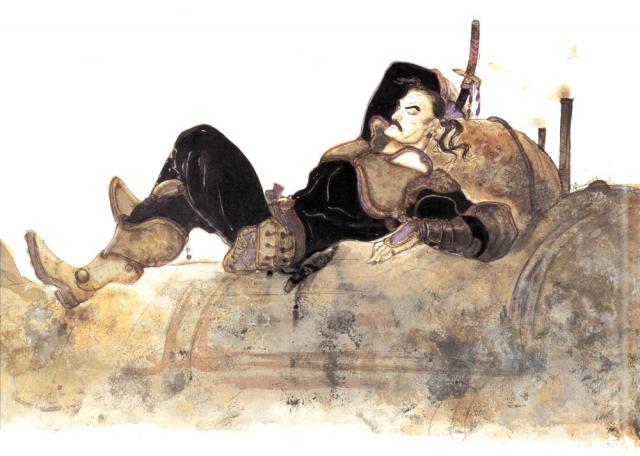
As the Final Fantasy series continued to grow during its early years, the games themselves gradually became more complex as well. Final Fantasy IV and V had featured the series' most intricate story and gameplay elements thus far. However, although Final Fantasy V had been the series' greatest commercial success, critically it was not as well received as its immediate predecessor.
As a result, when development on the next main installment in the series began, it was once again decided that the team would scrap the direction used in the previous game and do something completely different. Despite that Final Fantasy VI is the culmination of all the work and time that had gone into making the previous five installments. The lessons that had been learned in the past would all come together to create something unprecedented for the franchise.
Reaching for New Heights: Final Fantasy VI
As had been the case with every new Final Fantasy game up to this point, the development team once again grew in size, and saw some important changes as well. For the first time since the series had begun Hironobu Sakaguchi was not the game's director. This was due to his increasing involvement with numerous other projects. As a result he would now work as the game's producer while supervising the project's story aspects. The directing duties were split between Yoshinori Kitase and Hiroyuki Ito; Kitase was responsible for Final Fantasy VI's story events and scenarios, while Ito was in charge of the battle elements.
Yoshitaka Amano returned as the main concept artist and character designer, while Nobuo Uematsu once again composed the title's soundtrack. Other familiar names included Tetsuya Nomura and Hideo Minaba as graphic designers, as well as Ken Narita as one of the game's main programmers. In addition, although Sakaguchi created the basic premise for the story, everyone on the team could provide ideas for smaller storyline details, such as the various character specific events.
The basic premise behind the creation of Final Fantasy VI was that every one of the playable characters would be the protagonist. Every character was to be equally important to the game's story, and the game would feature individual episodes surrounding each of the characters. As such, many members of the team often worked on only a few characters' storylines, while Yoshinori Kitase was responsible for bringing these various different ideas and scenarios together to form the game's core plot.
Kitase also created the key scenes, such as the opera scene and Kefka's appearances, while other people worked on less important moments. However, while the original intention was for all of the characters to have equal significance on the story, that balance didn't carry all the way to the end of the game's development. Final Fantasy VI features by far the largest character roster out of all the mainline Final Fantasy games at 14. Perhaps as a result of this some of them get notably more screen time and chances to grow than others, leading to a handful of characters being left somewhat underdeveloped by the end of the game.
Despite these shortcomings, the Final Fantasy VI's focus on character development and back-story created some of the most beloved characters and memorable moments in the franchise's long history. To say that characters like Terra, Celes, Locke, Edgar, Kefka, and many others have become iconic among series fans would be to put it lightly.
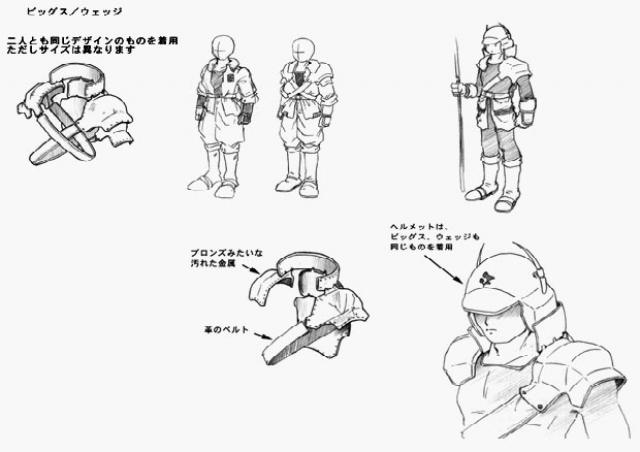
FF VI saw the now traditional debut of various new gameplay and other elements that would become recurring parts of the series going forward. Among the most notable are the names Biggs and Wedge, which would go on to appear in almost all subsequent games in some form. FF VI was also the first game in the series that allowed the player to freely change the active party at will. In earlier games the party had always been dictated by the story.
This was also the game that introduced the idea of limit breaks to the series in the form of Desparation Attacks, a set of stronger, character specific abilities that became available when a character was at critical health during battle. However, due to them being based on random chance and only occurring once an attack command has been issued on a character at low health, Desperation Attacks are rarely encountered in a normal playthrough. Later games, starting with VII, would improve and expand on the concept, making them more easily accessible as part of the battle system, but this is nonetheless where they got their start.
Final Fantasy VI tells the story of the conflict between the Gestahlian Empire (which is striving to conquer the world) and a resistance movement known as the Returners. For various reasons each of the main characters ends up getting involved in the struggle between the two sides; a struggle which eventually escalates to threaten the existence of the entire world. The game's setting is a notable departure from the medieval fantasy world found in previous titles, being more steampunk inspired with a much greater developed level of technology (it's roughly on par with the Second Industrial Revolution era on Earth, circa the late 19th – early 20th century).
Final Fantasy VI was released in Japan on the Super Famicom on April 2, 1994, and later that same year on the SNES in North America as Final Fantasy III. It proved to be an immediate success upon release, continuing the series' growth with sales of almost 3.5 million copies across the two regions. Later re-releases have added a decent amount of sales to that figure, making the game an undeniable success for Square.
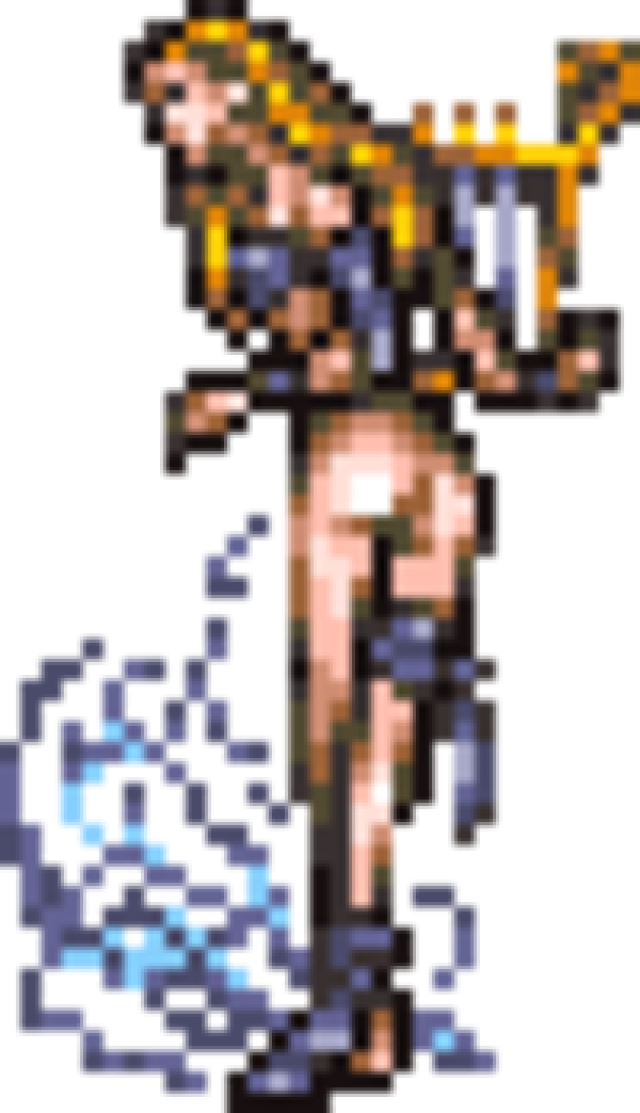
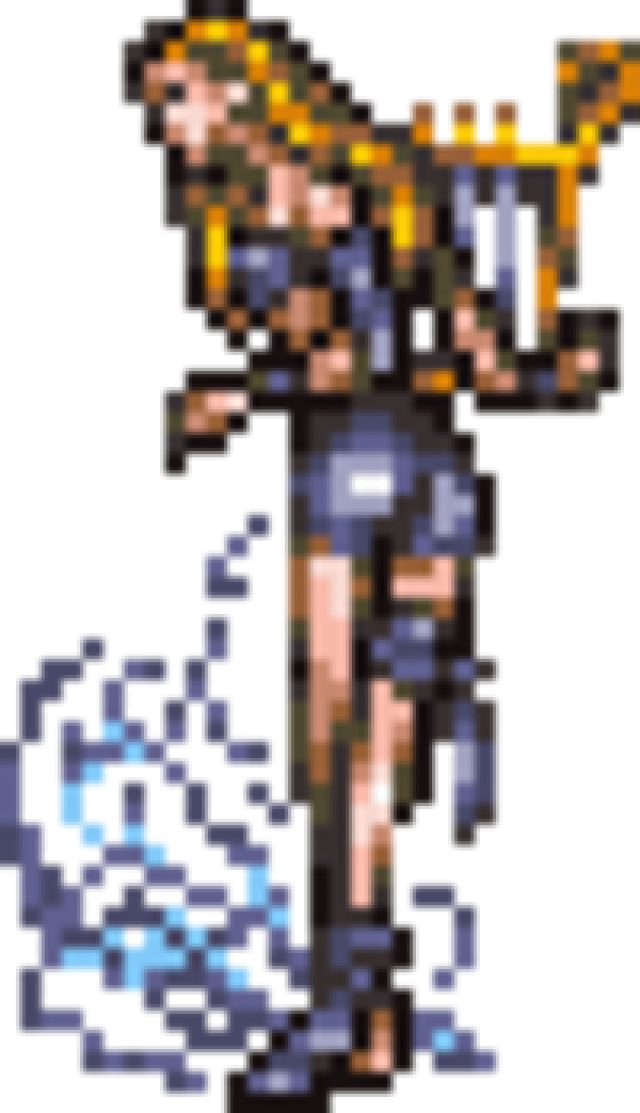
However, Final Fantasy VI also went through a rather extensive localization process where quite a few elements were changed from their original versions. Several sprites were altered slightly due to Nintendo of America's guidelines at the time to make them appear less risque, such as in the above sprite of the Esper Siren. In addition, the English script features numerous differences from the Japanese version, owing to the fact that Ted Woolsey had just 30 days to complete the translation, and very limited space to do so.
The improved technological capabilities at Square allowed the team to take advantage of even more of the SNES's hardware power. Visually the game was massively improved over its two predecessors. The character and enemy sprites were much more detailed and expressive, featuring many more frames of animation than before. The backgrounds contained significantly more detail than they did in previous titles and Final Fantasy VI also made extensive use of the SNES's mode 7 graphics, which had only been used sparingly in the previous two entries.
Final Fantasy VI also marked the first time that Uematsu was truly able to expand and experiment with his compositions thanks to newly available technology. This resulted in much longer and more intricate tracks, including songs like Dancing Mad, the entire opera section, and many more. He later commented that this felt like an ending point to him - that regardless of what would come afterwards, he could quit composing music for video games without any regrets because he had created this particular soundtrack.
In terms of gameplay, Final Fantasy VI is much closer to IV than V, since it discards the job system found in the previous game entirely and returns back to the system found in IV where every character has a set predetermined class from the beginning that cannot be changed. However, the game did improve upon the system in numerous different ways so as to still make it as engaging as possible to the player.
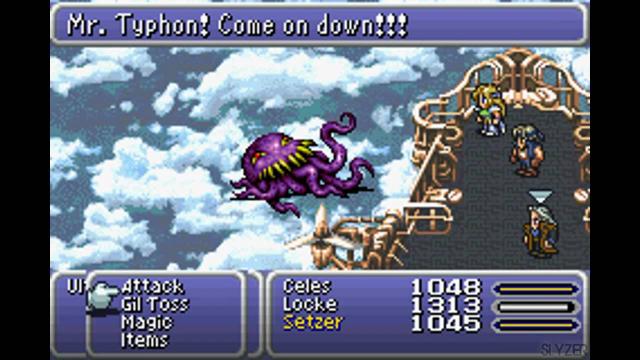
The ATB system is similar to the one found in V, while each character has its own unique abilities as in IV. The system is something of a mix of the two previous games, retaining many of their best aspects while improving on ones that didn't quite work out in the past. One of the more notable changes is the way the summons (named Espers this time) work in FF VI. Each summon can be equipped to a specific character, which then allows the character to learn spells from the Esper. Naturally, equipping an Esper also gives access to summon magic, which each character can use once during battle.
The Best Part
This is a difficult question to answer. There are so many stellar elements in Final Fantasy VI that choosing one is very difficult. The music is a highlight as is usually the case with Final Fantasy, the story is nuanced, memorable, and tackles some surprisingly dark themes, but if I have to choose just one I'll go with the characters. It really shows that the whole game began with the idea of focusing as much effort into the characters as possible. There are hardly any weak characters in Final Fantasy VI, and even they tend to get their own special moments during the story.
Scenes like Gau meeting his father who abandoned him as a child, Cyan's nightmare and guilt over the death of his family, Celes' suicide attempt, and many others have made these characters some of the best ever written for a video game. And then there's Kefka, who is one of the most enjoyably evil video game characters of all time. His utter disregard for other humans, his lust for power, and his broken mind and personality are all reasons why he's now considered one of the greatest video game villains of all time.
The Worst Part
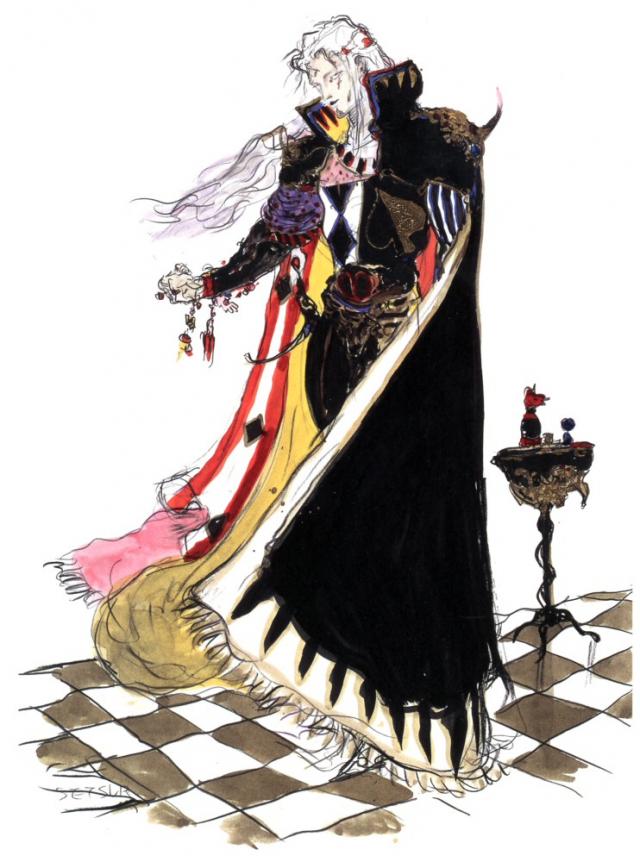
As much as I think that it was, overall, quite well done, especially considering the limitations that were in place, the original English translation is definitely the game's weakest aspect. It is serviceable and most parts do still hold up to scrutiny, but at the same time it had to deal with numerous issues caused by the limited storage available on the SNES cartridge. As such, many lines of dialogue had to be condensed or heavily edited to fit into the available space, and this led to some notable changes in how some characters act in certain scenes.
For example, Setzer's attitude towards the empire when the party first meets him is quite neutral in the SNES version - there he's reluctant to join the struggle against a powerful nation. In the original however he openly states that the empire has been bad for business and is much quicker to join the Resistance. These kinds of changes mean that a lot of the original purpose behind those scenes was lost in translation, and in some cases even changes how characters are perceived by the player.
Does Final Fantasy VI Still Hold Up?
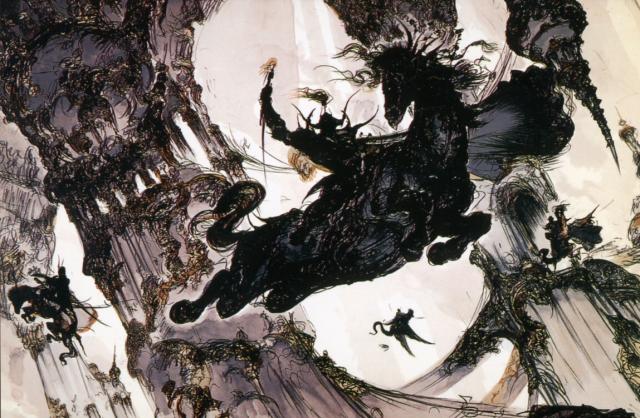
Yes, obviously. There is very little about the game that isn't still on par or better than most of the genre's most celebrated modern titles. The game's story and characters are among the franchise's finest, its score is one of the single greatest soundtracks ever composed for a video game, and the few aspects that aren't quite on the same level of quality are still better than almost anything on offer in most of the earlier Final Fantasy games.
One of the very best aspects of Final Fantasy VI are the countless small moments and scenes that give insight into the backgrounds of the various characters you encounter during your adventure. Almost every single main character gets a chance to shine at least once during the game's story; back stories are well fleshed out through excellently written scenes that make the world feel much more alive. Those little stories also make the narrative much more relatable and the player becomes more invested in each character's struggles as a result.
As mentioned earlier, the original translation can be a bit clunky at times, and the visuals, while very good for the time, do show their age now. Still, every complaint I would have about the game is easily overlooked because everything else in it is excellent. Many of the original's problems have also been fixed in later versions of the game, so they become even less of an issue than before.
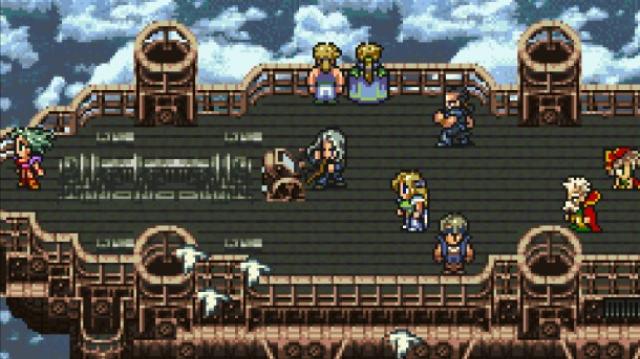
Also, while Final Fantasy VI is still very clearly a part of an older generation of RPGs, it's not nearly as unforgiving and grind-heavy as its predecessors. There are difficult bosses and sections, but they rarely feel unfair, like some of the parts of earlier games. It just feels much more balanced in terms of challenge, and there weren't really moments where I ever felt I had to stop and just grind levels in order to progress the story.
There are many different versions of Final Fantasy VI, so if you haven't played it yet doing so is quite easy. The GBA version is generally regarded as the best one, but that might be a bit difficult to find at this point. The PlayStation version is available on PSN, but is hampered by its ridiculously long load times. The mobile and PC re-release would be a good option, but the remade sprite graphics hurt the game's presentation to some extent. Still, regardless of the version, the game is well worth playing.
Final Fantasy VI is in many ways the zenith of the 2D Final Fantasy games. It took the road that Final Fantasy IV paved with its focus on character development and walked even further on it, while also improving upon its gameplay with elements taken from Final Fantasy V. This is, in my opinion, the peak of the early years of the franchise.
Basically, if you haven't played this game yet, you should do so as soon as possible. It's easy to find, it's fairly cheap, and to this day stands as one of the absolute best games of its genre. I can easily recommend it to just about anyone, especially if you're a fan of console RPGs.
Fun Fact
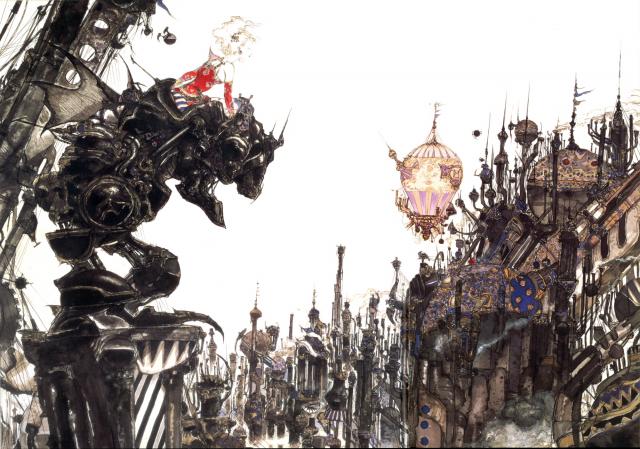
One of the many things that was changed during the English localization was Terra's name. Originally she was called Tina, but her name was changed mainly due to cultural differences. Tina is a fairly exotic name in Japan, but is more commonplace in the west, and so was switched with the more unusual Terra. Other changes included turning the spell Holy into Pearl, the Esper Jihad into Crusader, and changing bars into cafes.
Additional Sources:
- Wikia
- Nobuoueamatsu.com
More Articles
Amazing article!
Final Fantasy VI is my favorite FF game and it has my favorite characters cast from any RPG. Amazing game with a lot of memorable moments.
Would go crazy if they would announce a remake, on the level of worl of ff would be enough for me;)
Me too, I had always wanted them to remake this more then ff7.
Never heard that nomura were talking about that, but if true, don't be so shy, bring it to me;)
Absolutly the best mainline final fantasy that exists:)

Excellent series. I've really enjoyed reading it :)