Existing User Log In
New User Registration


Register for a free account to gain full access to the VGChartz Network and join our thriving community.





America - Front

America - Back

Focuspoint Studios
Racing
 (Add Date)
 (Add Date)
 (Add Date)
| Owners: | 0 |
| Favorite: | 0 |
| Tracked: | 0 |
| Wishlist: | 0 |
| Now Playing: | 0 |
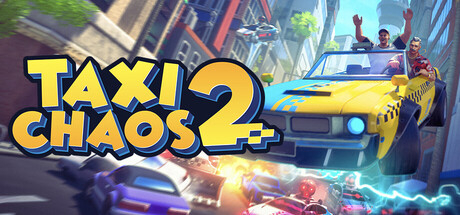
Same 'ole taxi cab, different driver. Given the unfortunate rap sheet of the first entry, substitute developer Focuspoint Studios didn't start on firm footing. Although the series' core inspiration – Crazy Taxi – has a simple setup, so much of its character stems from greater production values that enhance its punk-rock attitude. The best rides come with high fares, so to speak, so fulfilling the "Crazy Taxi at home" meme will always be a tough sell. And though Taxi Chaos 2 has a new coat of paint, it's still driving with four flat tires.
To its credit, dodging its precursor's photocopy accusations is a great way to start. The original's New York City knock-off (New Yellow City) is replaced with San Valeda: a compressed fusion of major Californian locations undergoing major construction projects. Previous co-protagonist Vinny quits retirement to help former co-protagonist Cleo deal with the blowback of her AI 'taxibot' system – codenamed H.A.N.K. – running amok. So, on top of sprinting wherever a customer desires, he's also wrestling with competition that's programmed to play dirty.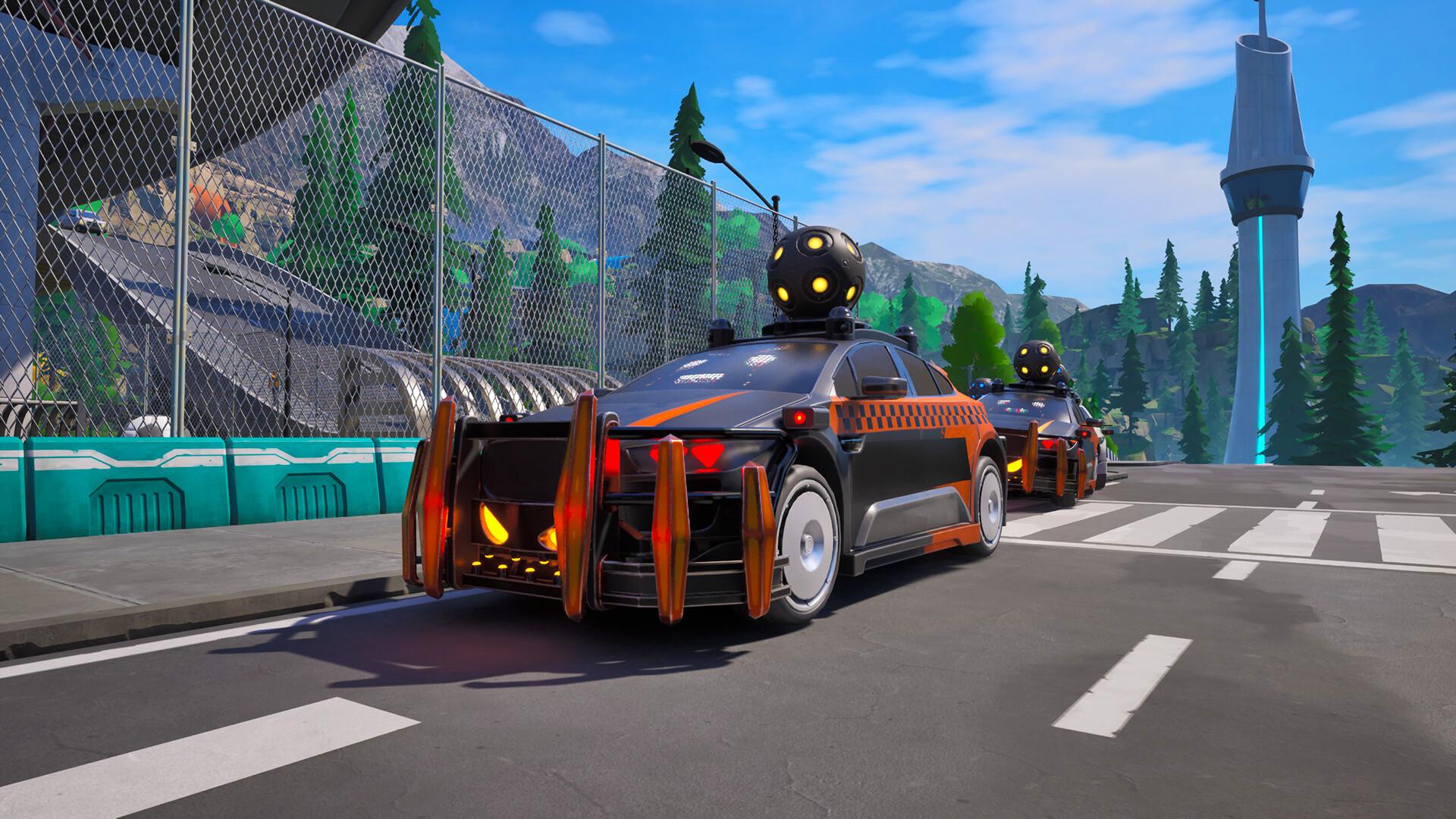
There's a nice yin and yang to this dynamic: they're docile if driving a passenger (unless provoked by you) but otherwise hostile. On paper, balancing between potential interdictors and calm AI drivers is a solid concept. Mechanically, there's a bit more variety and potential tension than dodging usual traffic; narratively, it's a tangible connection to our current world of Waymo and Tesla self-driving vehicles that doesn't rehash the same old story. Of course, as with everything else here, the execution is sorely inconsistent. Imagine Grand Theft Auto's Wanted system, but this unofficial police force vacillates between hyper-aggression and modesty. They're happy to turn into you head-on coming from the opposite direction, but occasionally have this odd cooldown where they're interested in drag-racing side-by-side before trying to spin you out.
Ironically, your greatest foe is Chaos 2's own physics engine. For starters, there are some peculiar recurring bugs – most notably what I'll call invisible rocks that randomly materialize in front of you, almost like the game is trying to trip the car over itself; likewise, every car has a natural tendency to pull leftward, as if in desperate need of an alignment. Imagine stick drift encoded into the game design. But perhaps the most consistent frustration comes down to different vehicle weights. Yes, on paper, the varied levels of acceleration, weight, and so on encourage experimentation; the problem with the lightest cars is how even moderate turns are enough to make them go haywire. The dynamics are fundamentally off: tires are made of plastic and lighter chassis of cardboard. There's no comparison to Crazy Taxi's heavier weight, thudding audio design, and better tactile feedback when striking something (even though it was also comical by design); hell, its handling is comparatively worse than the original. 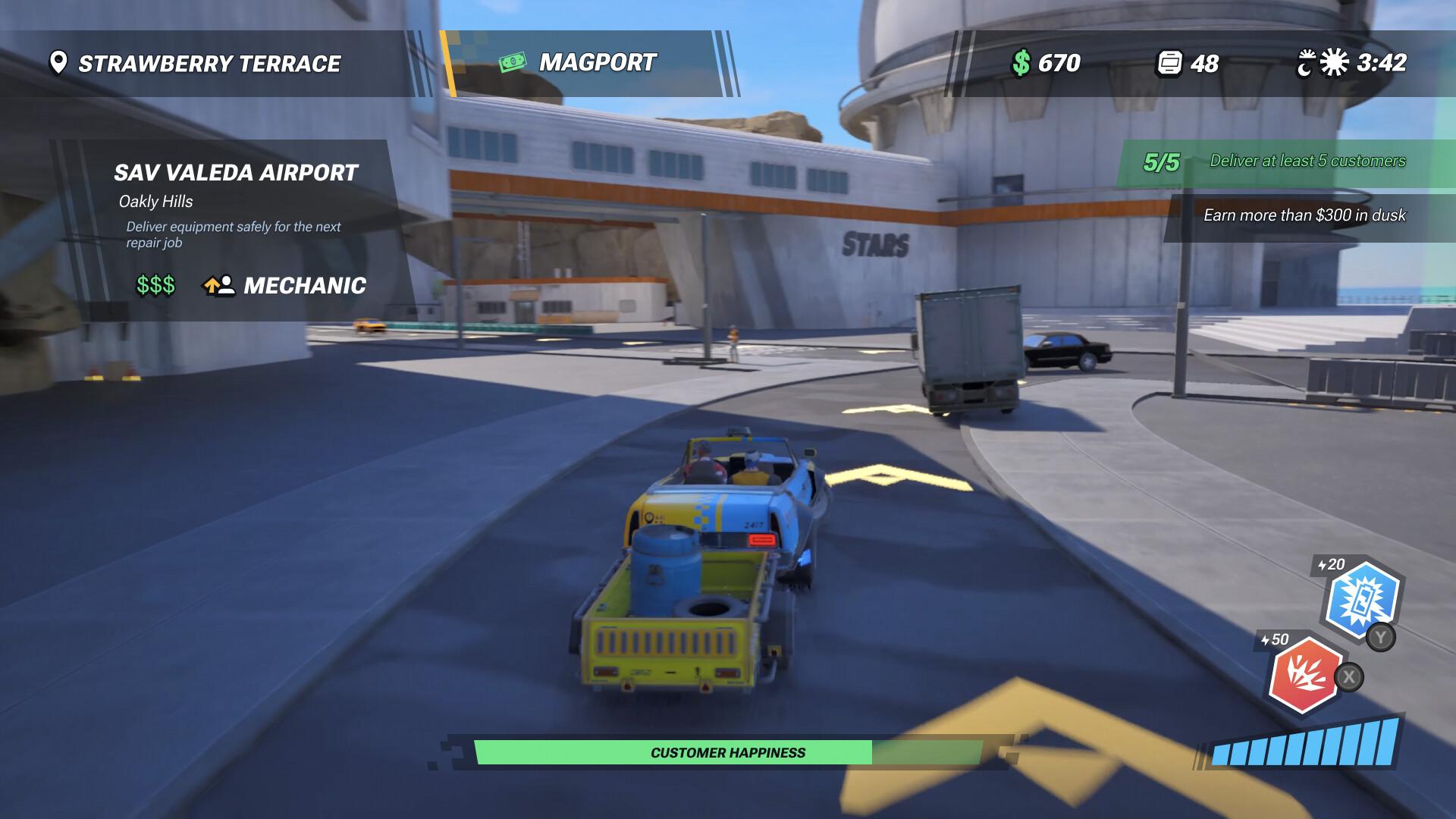
Virtually the same presentational qualms from the original return here. Expecting a plethora of licensed hits may not be realistic, but sub-ten mediocre original tracks for a campaign & arcade mode capable of eclipsing double-digit hours is absurdly limited. It's so strange in the age of Spotify and Apple Music too; decent unpopular bands are often willing to sell licensing rights for cheap and there are so many avenues to discover them. Like its OST, the paucity of unique audio barks and canned dialogue means you've heard everything in the first fifteen minutes. As fun as the Prequel meme initially was, what compelled Focuspoint to believe "now this is taxi-driving!" should be the game's most popular phrase? Not to mention how awkwardly disparate lines can be crammed together; a passenger's mood can continually switch between critical and complimentary while sounding like a run-on sentence. Combined with shoddy effects, it's distracting audio vomit from top to bottom.
Going to and fro keeps to the same template: pick up a highlighted character and drive them to their marked destination. Chaos 2 advances this in a few ways. The most substantial of them is a morning/day/dusk cycle that shifts every four real-time minutes. Each block changes not only the skybox but also various construction projects or natural blockades around San Valeda. A high-traffic intersection can be normal one moment and then magically encircled with traffic barricades the next. Your car can still jump like before, but navigating through these barricades can be bothersome. Managing natural and artificial obstructions is easier thanks to new tech abilities, such as temporarily driving on water or a holographic ram capable of shoving cars aside. Between upgrading your tech tree, managing your car's energy meter, and so on, there's some semblance of design beyond arcade-y driving in a static world. 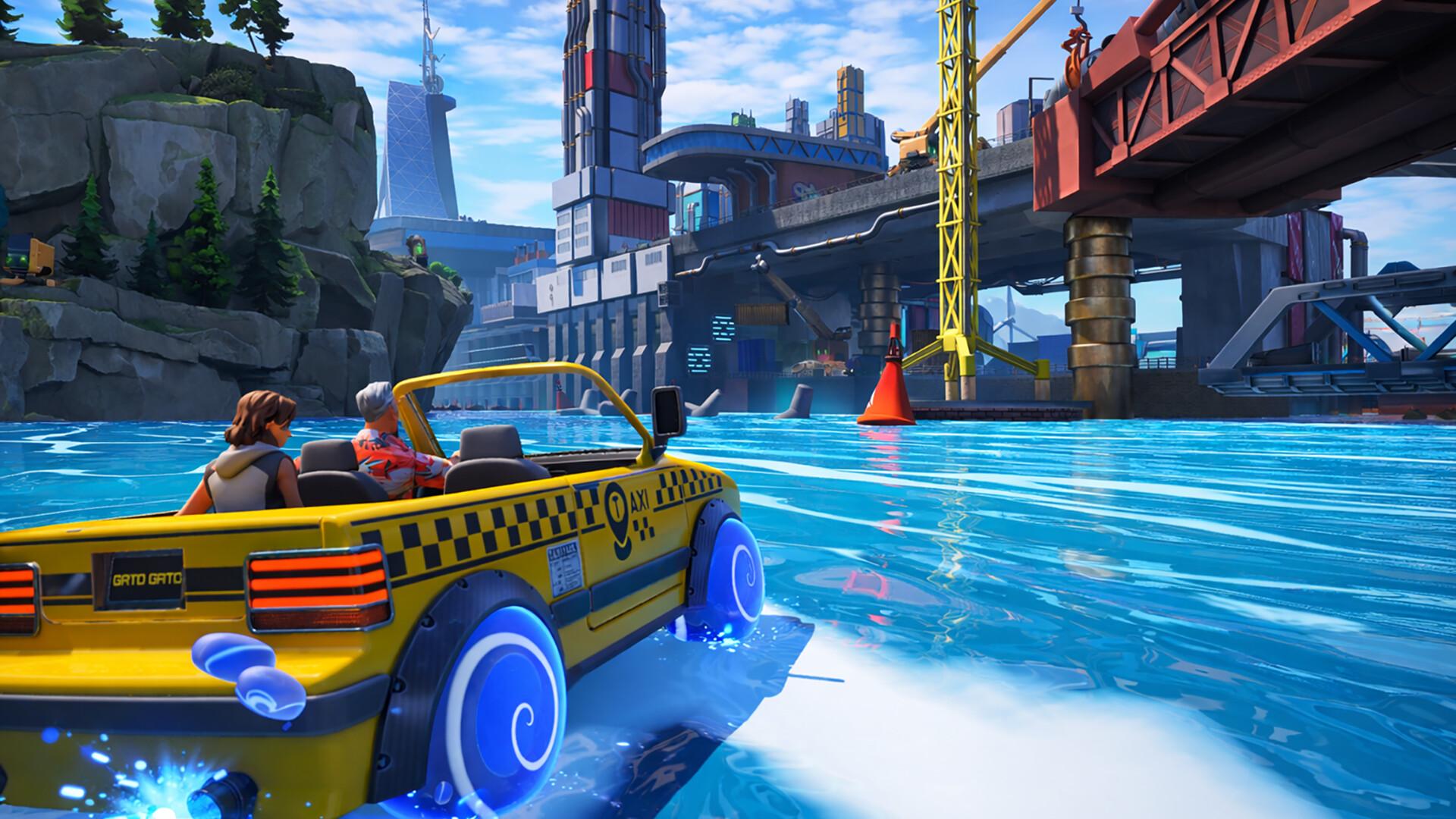
Giving such credit is a double-edged sword – oddly enough. San Valeda immediately belies a more interconnected world and it's easy to reinforce your eidetic memory with notable landmarks. It welcomes finding shortcuts to beat the UI's guiding arrow. The conflicting issue is how much better the world design could've been. The more you know the easier it is to question dull pathways between certain districts, like the designers got lost halfway through. You'll reflexively groan about climbing up the lofty hillside or crossing over certain bridges yet again because those pathways are mostly one-note; sure, bridges across large bodies of water make sense to emphasize Vinny's water wheels ability, but the layout is practically begging for more creative routes alongside it.
Perhaps such creative missteps deserve an olive branch for a slightly more modest $25 asking price, compared to the original's initial avaricious $30 (now permanently reduced to $20 on Xbox); moreover, there's a more sustained amount of playing time demanded by its campaign. Though – again – this credit feels like a double-edged sword. Since chapters are gated behind upgrading the shop, time is artificially extended by the need to improve Vinny's driver level. The sole way of doing that is through Data Points, which require an explicit objective(s) to be followed during that specific time slot. Whether more general (average driver rating) or specific (deliver x amount of certain customers), following these rules conflicts with the game's manic nature; plus, it's odd how destroying taxibots results in them spewing out data chips (secondary currency) yet that doesn't count towards your driver level. Given how stingy the game is with Data Points in the middle chapters, and how occasionally failing objectives is due to chance, progressing becomes a repetitive slog.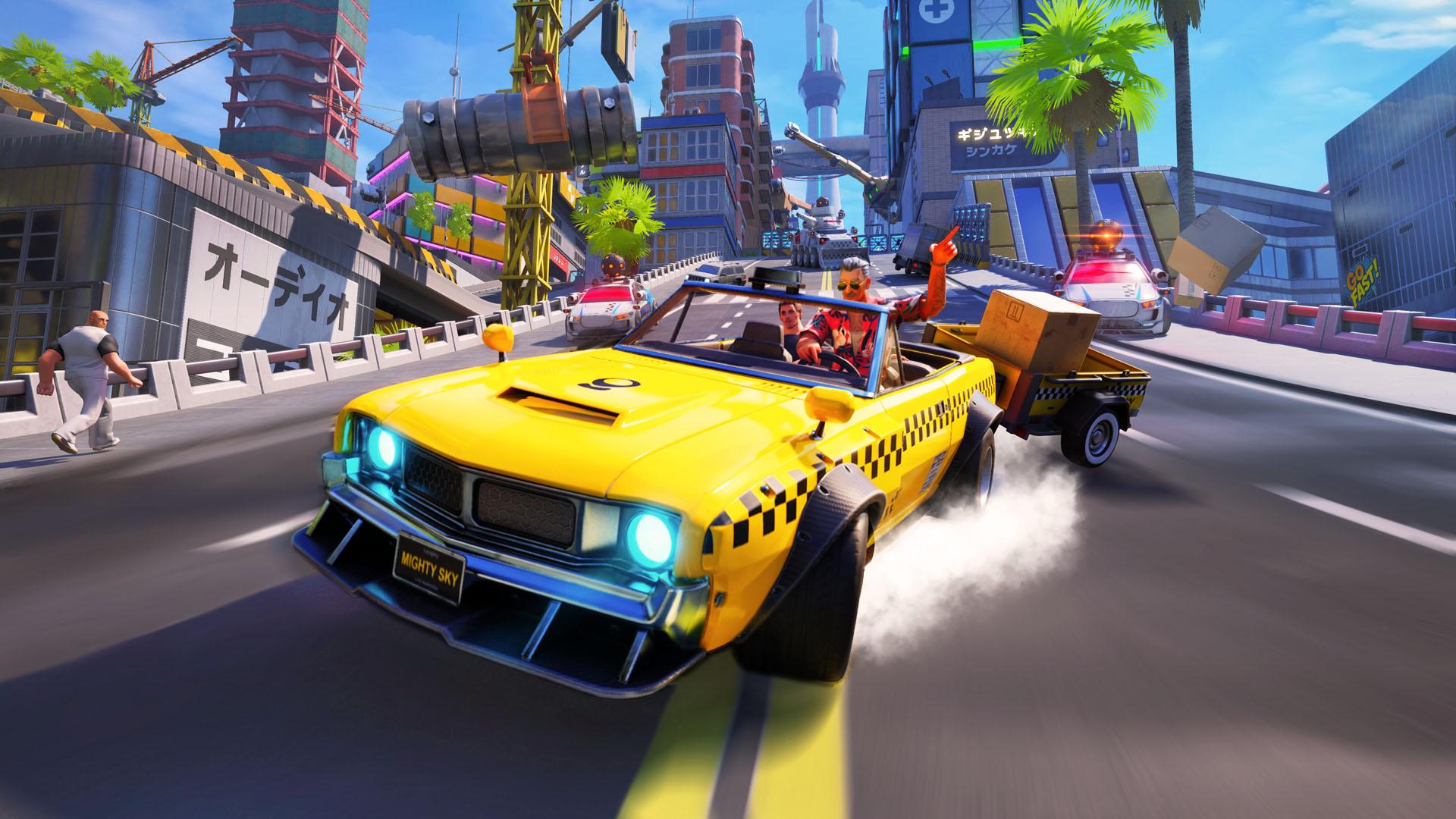
There are also a few odd omissions from the original. While it gains a tangible quasi-campaign, it (currently) lacks both a Free Roam and Pro Mode; the latter's absence in particular is strange because of how naturally engaging it would be to memorize everything compared to a flatter NYC. Regarding gameplay features, making time the only factor to get five stars here is a flagrant regression. Sure, the original could be finicky in grading you, but the core concept fits like a glove; that euphoria of reaching a destination with nary a scuff on your car makes a perfect score feel well-earned. It should've been balanced with hostile taxibots instead of being excised entirely.
Taxi Chaos 2 is a car crash that could've been a serviceable game. That aspirational limit isn't meant to be denigrating. A simple reality has to be recognized that the next Crazy Taxi won't happen without greater investment into presentation and mechanics; even getting within spitting distance won't happen until every component can eclipse the original's sub-par standards. Beneath this wreckage, however, Focuspoint (and/or publisher Current Games) has a neat foundation to work with: AI competition, real-time city changes, and so on. They're kernels of something that could be useful behind a team with the right parts; until then, you're just settling for a rust bucket with another expensive fare.
Contractor by trade and writer by hobby, Lee's obnoxious criticisms have found a way to be featured across several gaming sites: N4G, VGChartz, Gaming Nexus, DarkStation, TechRaptor, and Cubed3! He started gaming in the mid-90s and has had the privilege in playing many games across a plethora of platforms. Reader warning: each click given to his articles only helps to inflate his Texas-sized ego. Proceed with caution.



About Us |
Terms of Use |
Privacy Policy |
Advertise |
Staff |
Contact
Display As Desktop
Display As Mobile
© 2006-2026 VGChartz Ltd. All rights reserved.