Existing User Log In
New User Registration


Register for a free account to gain full access to the VGChartz Network and join our thriving community.





America - Front

America - Back

Wobble Ghost
Action-Adventure
 (Add Date)
 (Add Date)
 (Add Date)
| Owners: | 0 |
| Favorite: | 0 |
| Tracked: | 0 |
| Wishlist: | 0 |
| Now Playing: | 0 |
Reviewer’s Note: Spindle was reviewed on a Switch 2.
Over the last couple of years, I've seen more than a few forum posts on gaming sites lamenting the fact that so many recent indie games are Rogue-likes or Souls-likes. But I don't think I've ever seen someone complain about Zelda-likes. Perhaps that's because there are fewer of them, or perhaps it's because Nintendo recently steered the Zelda franchise toward open-world experimental gameplay and fans are itching for something approximating the rules codified in A Link to the Past. Or maybe (and this is my favorite theory) it's simply because the Zelda formula — equal parts action, exploration, and problem-solving — never gets old. Developer Wobble Ghost seems to agree, because it recently released Spindle, a top-down action-adventure game that borrows heavily from the adventures of Link.
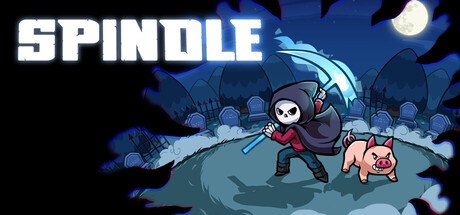
Spindle begins with a young boy fishing on a lake with a fatherly figure. Suddenly the older man disappears and the boy, Dengel, wakes up in a strange land wearing the mantle of Death. By his side is a helpful, talking pig companion. Together, the duo travel across the land, finding lost souls that have somehow become separated from their bodies, helping citizens overcome their grief, and unraveling the threads of a larger conspiracy.
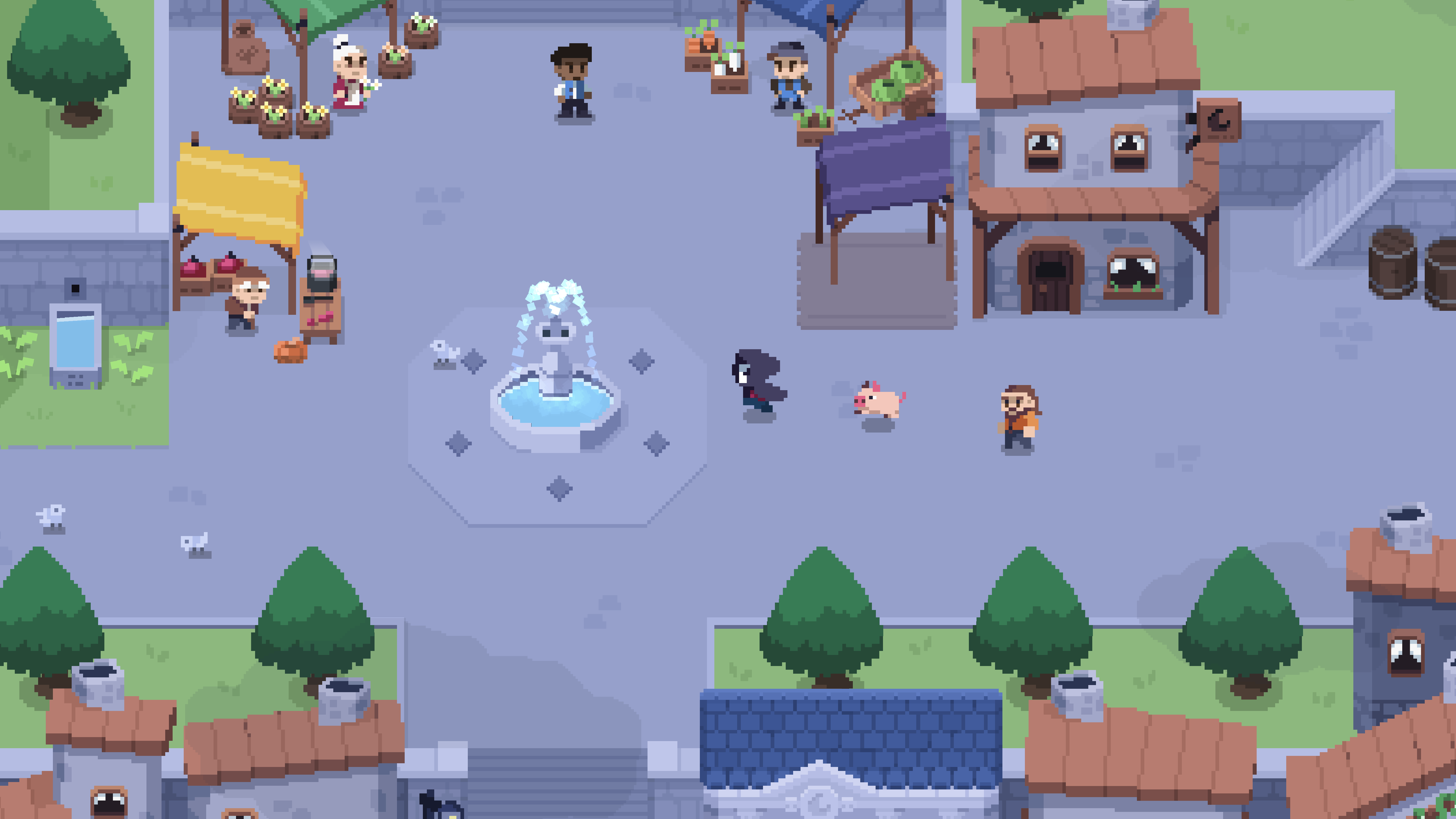
The story in Spindle is very thoughtful about mortality, grief, and the pain of loss. Each area of the land is defined by some recent death, which has sent shock waves through the local community. Dengel, as Death, must claim the wayward soul, but also bear witness to the anger, confusion, and despair that accompanies the loss of a loved one. It's all quite poignant, although it can be, at times, unrelentingly depressing. There's a heavy sadness throughout Spindle that's hard to escape. To be fair, there are plenty of moments of catharsis, including a beautiful ceremony in the Ogoi village — which I dare not spoil here. But for much of the game I found myself looking, in vain, for some humor and levity to cut through the sorrow.
Spindle treats its gameplay less solemnly; how could it not, considering its portly pig co-star? In the Zelda tradition, the game focuses on the trifecta of exploration, combat, and puzzle-solving. Dengel and his porcine pal travel from biome to biome, in each location tracking down a soul that requires reaping. You'll get general directions from Charon at HQ, then wander across the overworld until you reach a town or camp, which then leads to a dungeon with puzzles, minions, and a boss battle. It's very familiar and reliable.
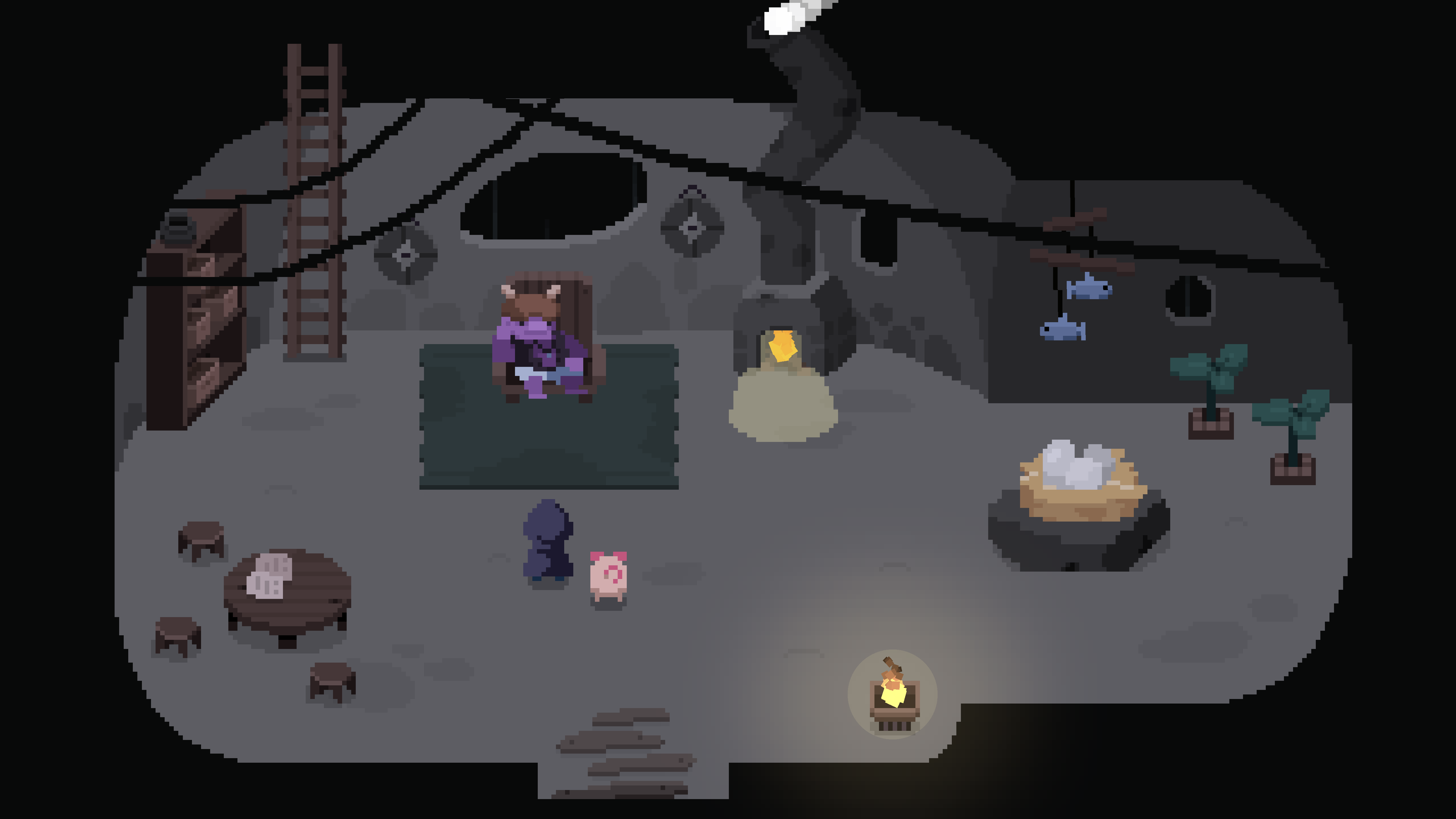
The dungeons in Spindle come in several different flavors: catacombs, mines, caves, and a mansion on top of a snowy mountain. While the puzzles within the first couple of dungeons are too simple and easy, the head-scratchers that arrive later are more satisfying. More than a few times, I had to pause, retrace my steps, and think outside the box for the solution.
In fact, things become much more interesting once Dengel unlocks the ability to turn into a stone statue and command the pig directly. This allows stone Dengel to weigh down pressure switches and act as a mobile shield against fire attacks, but it also frees up the pig to adventure on its own. Dungeons are at their best when players must swap between the two heroes, each one building bridges or flipping switches for the other until they reunite at the exit.
Regrettably, the combat doesn’t evolve in the same way as problem-solving. Early on, Dengel unlocks Death’s signature scythe, which he uses to defeat enraged animals and inky, spindly monsters of unknown origin. However, this remains his main weapon throughout the game. There are no upgrades or other offensive options like arrows, bombs, spells, etc. If the boy speaks to the right town guard, then he’ll learn a dash attack, but that’s about it.
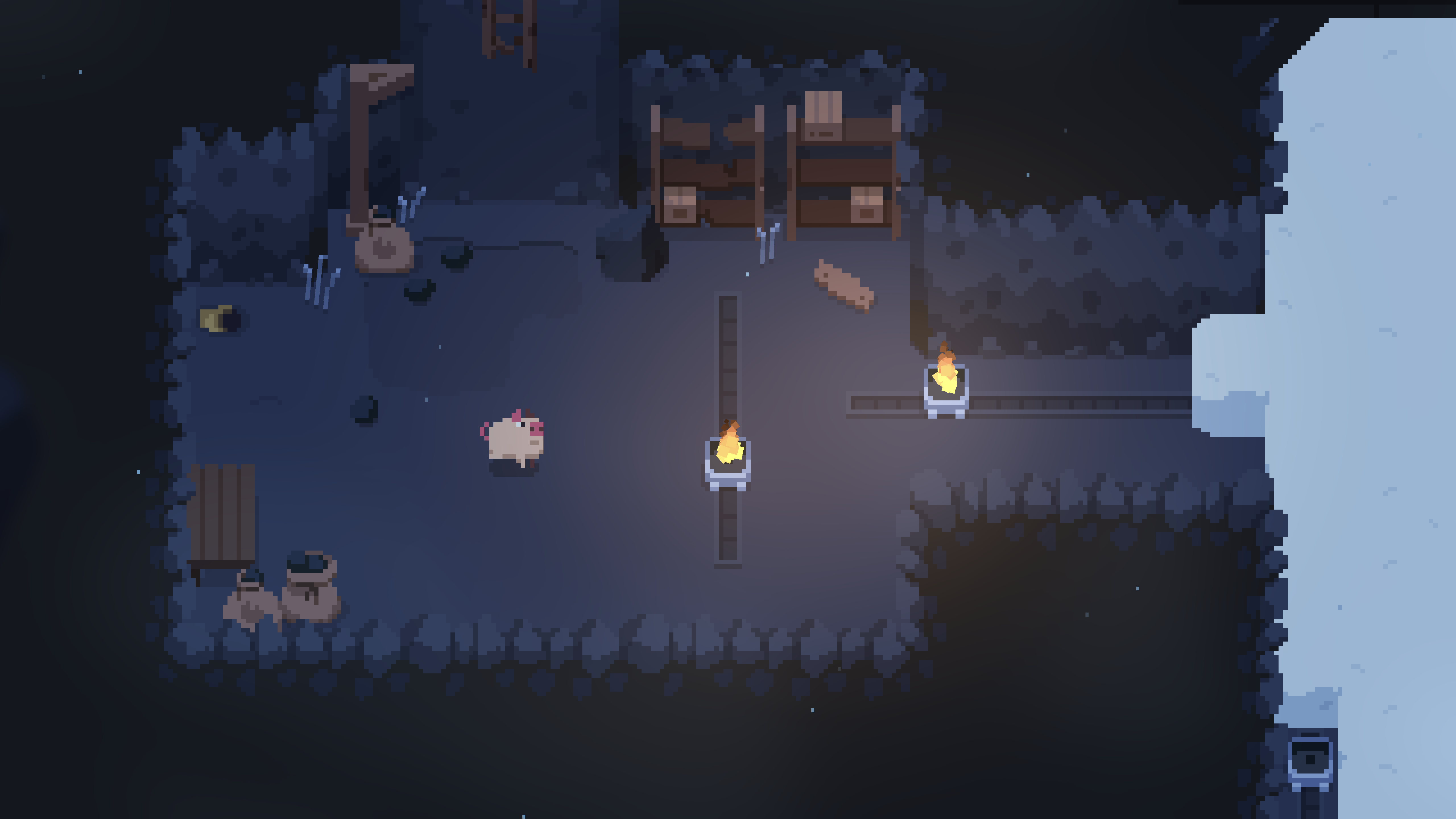
Wobble Ghost partially makes up for this lack of combat depth by way of two things. The first is a series of engaging boss battles where you have to outmaneuver and outthink the opponent. The best of the bunch is the final boss fight, a multi-stage bout that demands you deploy all the skills you’ve learned over your journey. It’s a sort of final exam that tests how well you remember your abilities — which is the ideal way to design a climactic encounter.
The second is a collection of interesting, atypical power-ups & gear. The first of these is the stone statue mentioned previously, which allows the pig to tunnel through holes, inhale small objects, and ram enemies and objects. The second is a literal Death ray that turns organic material inorganic. Focus on a vine blocking a door and crumble it to dust, for example. Or transform a cactus into a rocky stump, which can then be shoved out of the way. Don’t try it on humans though, or the pig will admonish you.
Then there’s the climbing gear, unlocked ahead of the final dungeon. This allows Dengel and his sidekick to scale the sheer, icy mountain walls, tandem style. It never gets old watching Dengel swing back and forth from the pig anchor before he latches onto the next outcropping. Many of these abilities and tools are essential in dungeons but they’re also useful when exploring the overworld looking for hidden treasures.
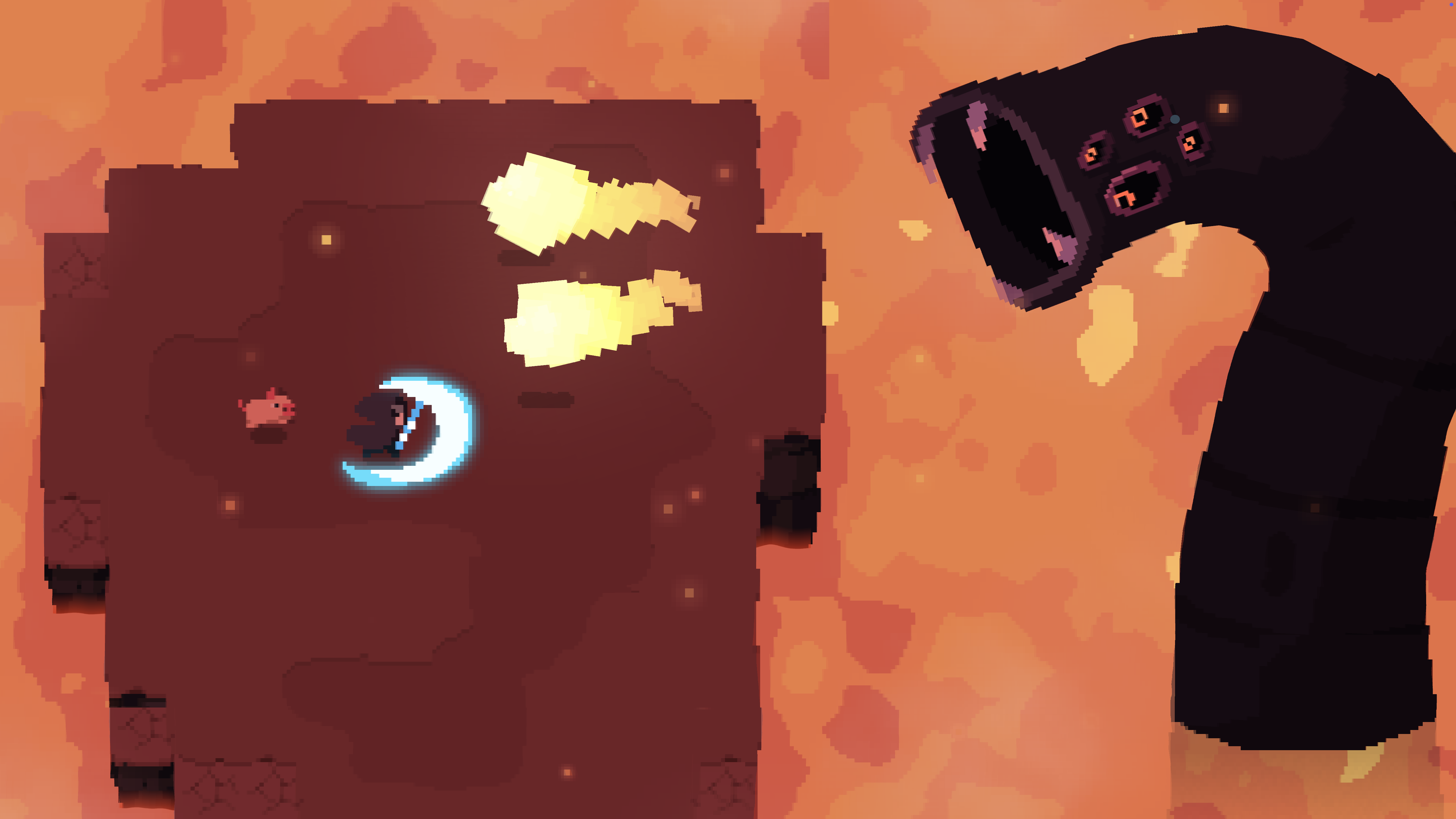
The overworld is arguably where Spindle is at its best. Mostly this is due to the game’s quest design philosophy, which is purposefully opaque. It’s reminiscent of games like Tunic and the original The Legend of Zelda in this way; you know the general direction, but you’re meant to find the destination yourself. At times I simply wandered across the overworld looking for visual hints. This same philosophy bleeds into side quests. When a lonely tower keeper remarks that he dreams of having a baby chicken companion, he doesn’t tell you where to go or what to exchange in order to get it. I had to remember where I had seen a few chicks, retrace my steps, and hope for the best. The lack of handholding and signposting was incredibly refreshing.
Even with all these goods things, I wasn’t fully sold on the game as the end credits scrolled by. However, once I saw “The End?” and was then quickly deposited back in the world, I knew Spindle had more in store for me. And I’m glad it did. The two hours of post-game content significantly enhance the preceding eight hours. There’s an entirely new quest, which will send you to all corners of the world looking for unusual artifacts; you’ll obtain a fish encyclopedia, which prompts you to catch ‘em all; you’ll encounter formerly forlorn villagers who are now in much happier states, which makes the proceedings far less morose; and Dengel, at long last, gets a proper conclusion to his story, one that explains away the mystery at the beginning of the game.
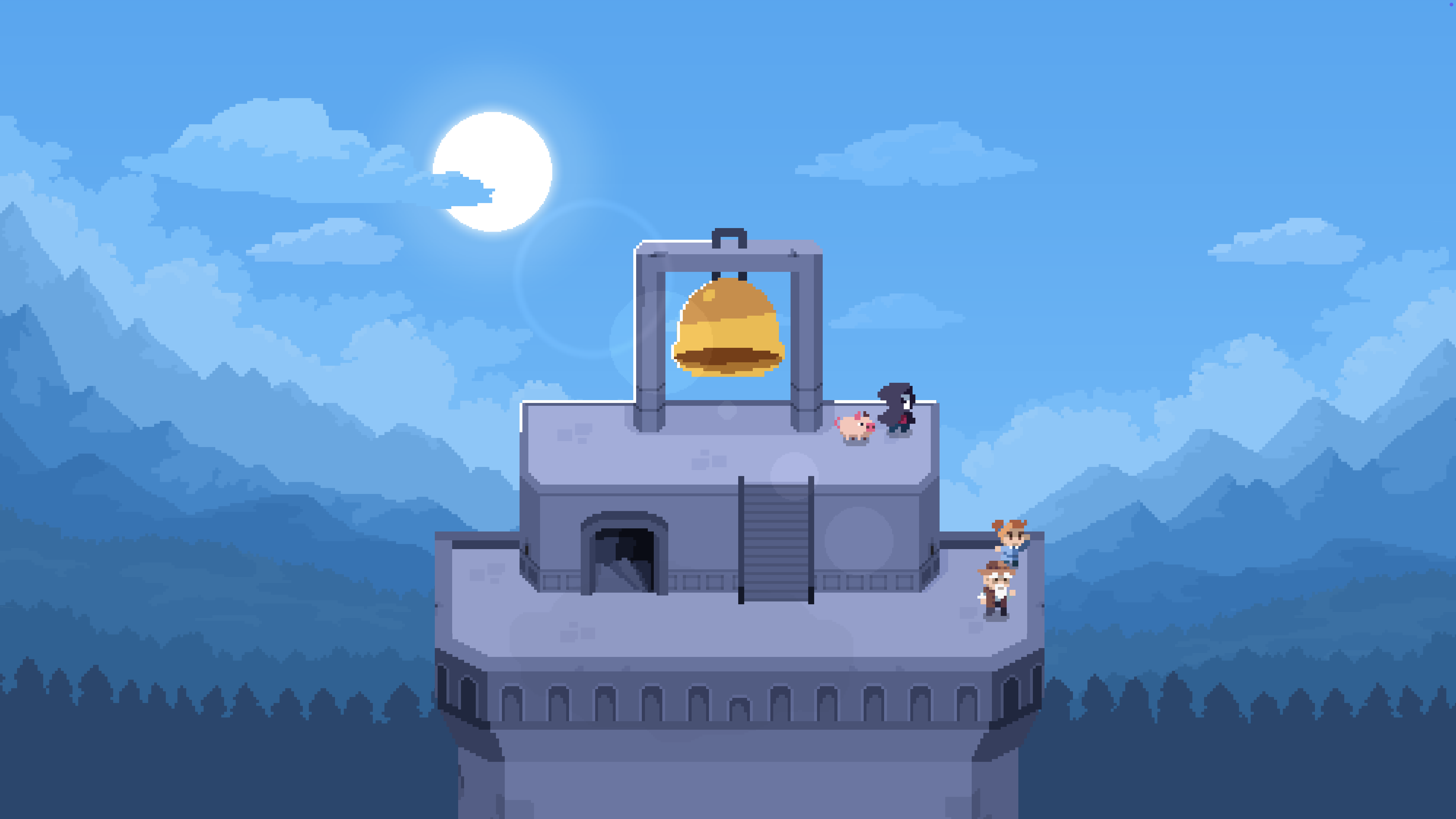
No matter whether you’re playing the central campaign or enjoying the post-game content, you’ll experience the soft edges and solid colors of Spindle. More textural detail and more nuanced lightning would be helpful here, but in general it boasts a cozy, homey indie vibe. It also boasts some lovely panoramic views. As for music, it’s always appropriate for the biome, although not especially memorable. The one exception is the theme that plays on the snowy ascent to Chilton, a hamlet in the mountains. With its lilting melody and frosty piano notes, the song really leaves an impression.
Technically, the game runs well on Switch 2, with one caveat: there are more than a few frame rate hiccups, as new areas load. They don’t detract from the experience, but they’re noticeable. Whether this is a Switch issue or a quirk of the Switch 2, I’m unsure.
Spindle is a satisfactory Zelda-like, in the final analysis. It tackles difficult topics with grace and empathy, features multiple engaging boss battles, introduces several atypical tools to solve puzzles and outmaneuver enemies, and provides rewarding content even after the credits have rolled. There are some minor problems to be sure — it can be too gloomy for its own good, the combat framework never really evolves, and the graphics could be more refined — but overall it does the sub-genre justice.



About Us |
Terms of Use |
Privacy Policy |
Advertise |
Staff |
Contact
Display As Desktop
Display As Mobile
© 2006-2026 VGChartz Ltd. All rights reserved.