



Existing User Log In
New User Registration


Register for a free account to gain full access to the VGChartz Network and join our thriving community.





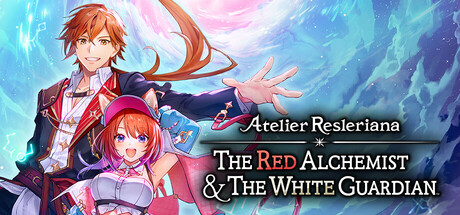
America - Front

America - Back

Koei Tecmo Games
Role-Playing
 (Add Date)
 (Add Date)
 (Add Date)
| Owners: | 0 |
| Favorite: | 0 |
| Tracked: | 0 |
| Wishlist: | 0 |
| Now Playing: | 0 |

By Thomas Froehlicher 27th Oct 2025 | 4,558 views
Releasing two full Atelier RPGs in less than a year was certainly a bold move from KoeiTecmo. While Atelier Yumia clearly aimed at renewing the series, Atelier Resleriana: The Red Alchemist and the White Guardian returns to a traditional experience. But by doing that, isn't the company just dividing its own strength?
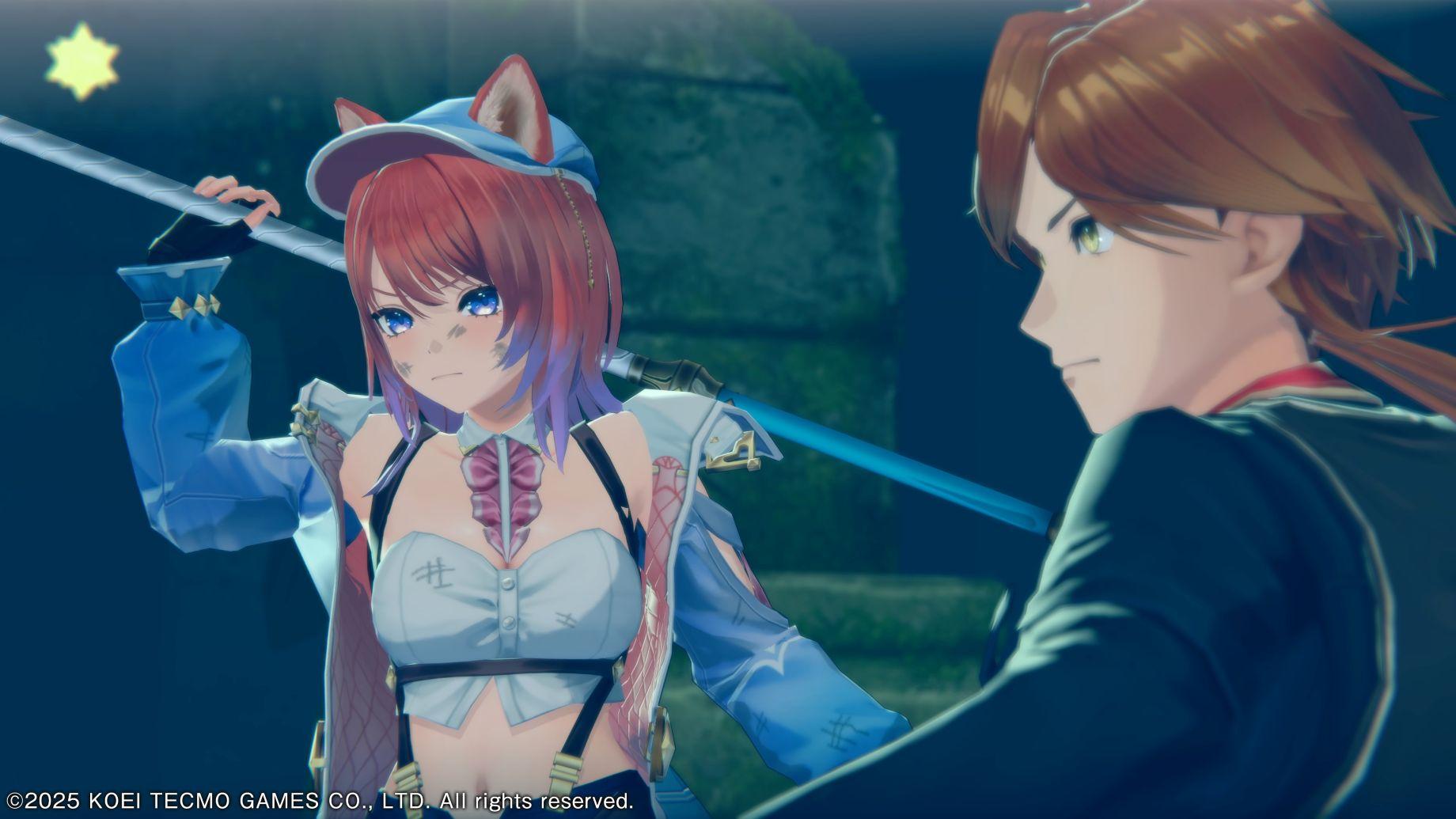
Atelier Resleriana: The Red Alchemist and the White Guardian shares the same world and lore as the mobile free-to-play game Atelier Resleriana: Forgotten Alchemy and the Polar Night Liberator, which ended operations earlier this year outside of Japan. Yet this console game introduces a totally new and independent story, as well as two exclusive protagonists: Rias and Slade. The dual protagonist system is reminiscent of Atelier Escha & Logy from 12 years ago, although Slade isn’t an alchemist like Logy was in his game. The girl with the cat ears, Rias, is a fresh alchemist seeking to rebuild her hometown, Hallfein, with her new talents. Slade is a knight of sorts, also concerned with Hallfein’s past and future. Although the player can control either Rias or Slade on the world map, Slade gets a lesser role than Logy did in his time.
Atelier Resleriana is vastly different from Atelier Yumia in pretty much every respect, for it maintains a very conservative approach to the series. While Atelier Yumia was world and narrative driven, this Atelier is completely alchemy and management driven. There's no open world like in Yumia, and the maps are quite cramped, tiny, and look awfully common (if not ugly). In short, the level design is nothing remarkable, much like the thin storyline which never receives much attention. It sounds quite sad when put like that, but in return you get something I’ve been wanting back for years: a shop.
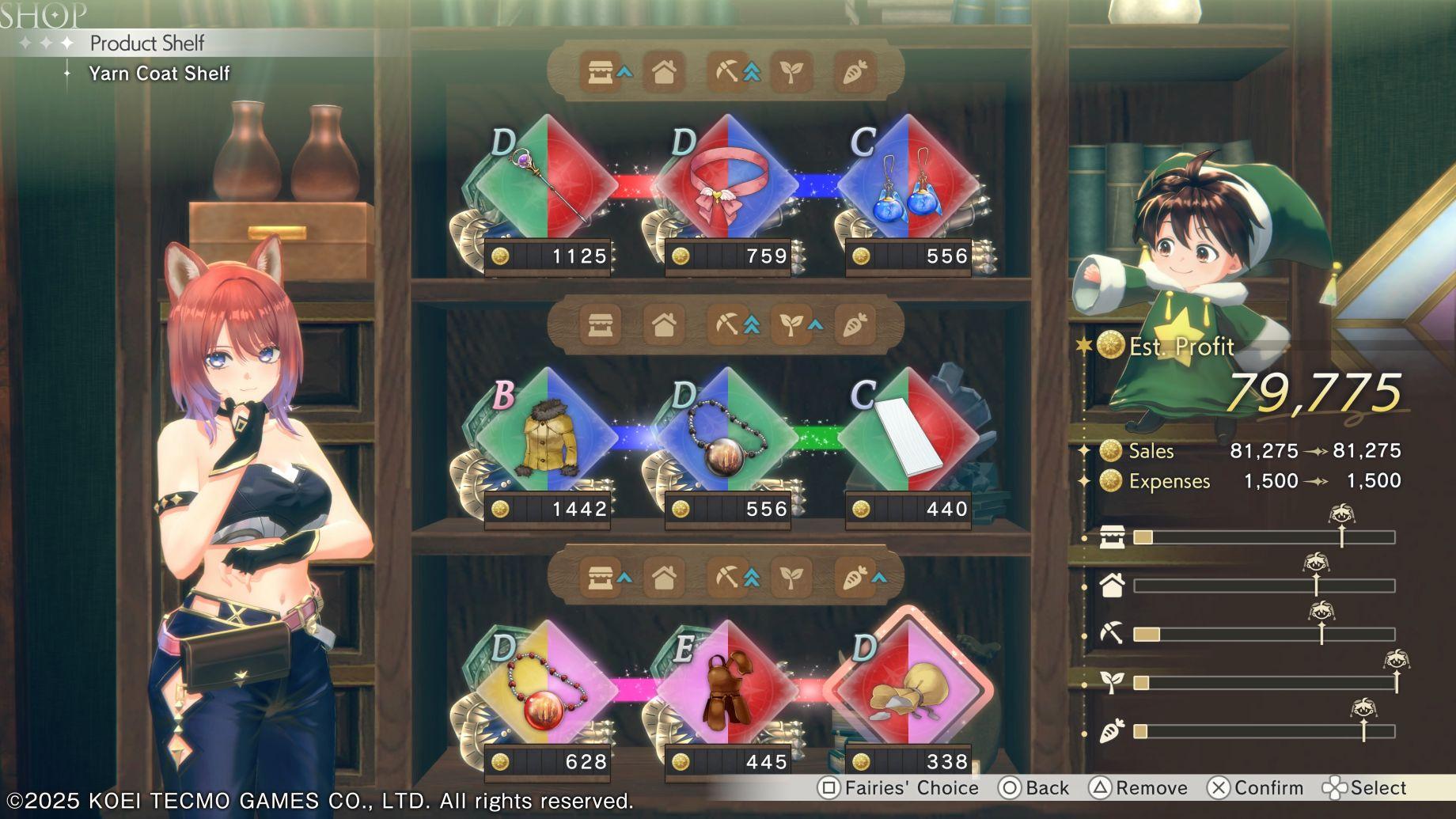
Yes, we're doing business in Atelier again. Through the story, you get development objectives for the town (that is to say restoring Hallfein to a certain level). This is partly done by selling items in Rias’ shop. The more revenue you get, the faster the town develops. So the player has to spend time in the atelier in order to make alchemy items of highest possible quality, which are likely to fetch a high price. However, the town also has level caps, so Rias also has to invest in the town hall. Each investment costs cash, lots of materials, and high-end alchemy items. The economy plays a very big role in this entry because alchemy manuals, as well as duplicating, refilling, or refining alchemy products costs a real fortune. The player must have in mind the cost/revenue balance in order to progress, which is historically the core Atelier experience of the great Arland era. Returning to such a strong management element is definitely very pleasing for an old fan like myself.
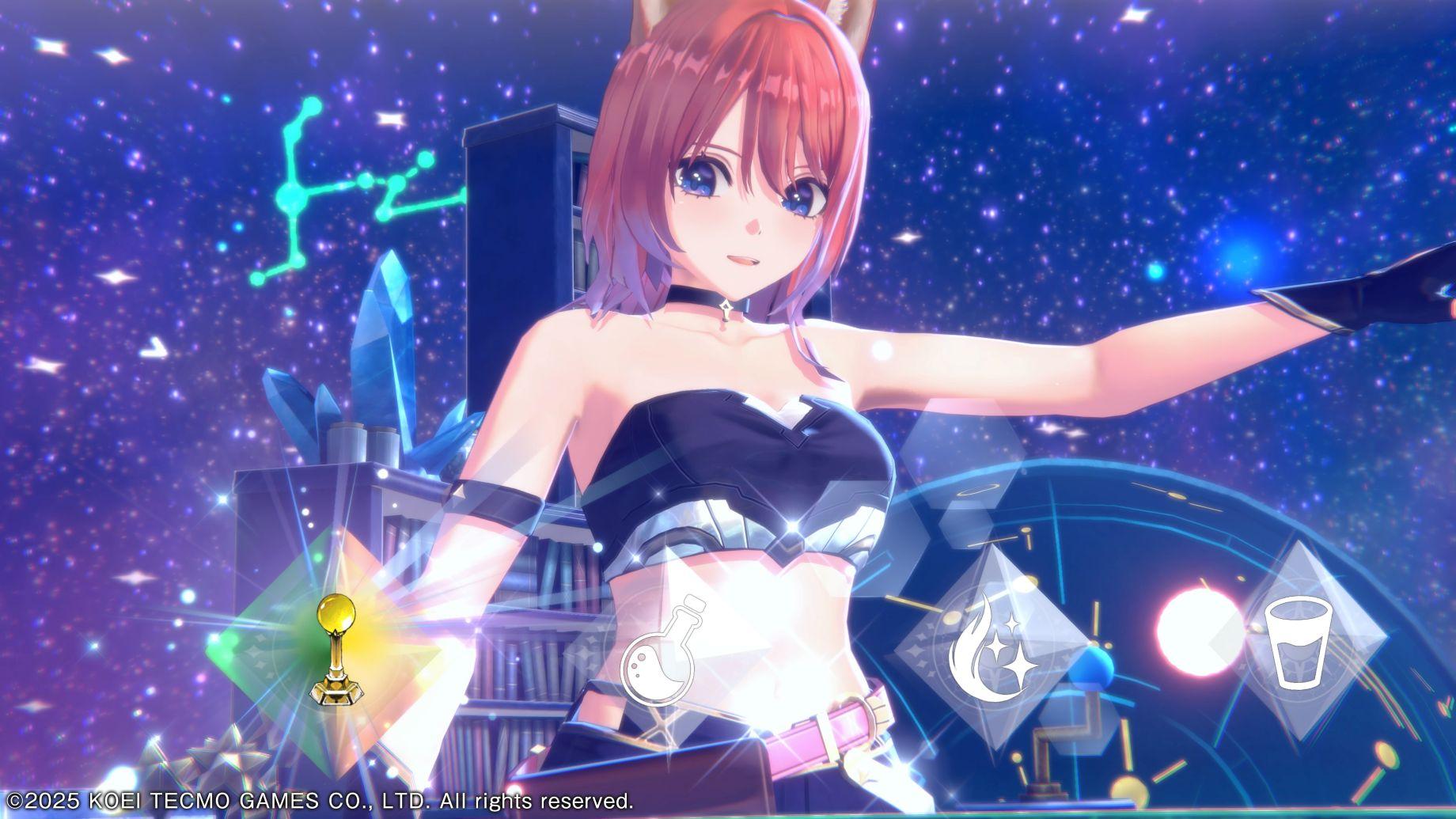
This also means you have to study the alchemy system cloistered in your atelier. Atelier’s fundamental logic is to make products of alchemy from materials found in the wild through recipes. There are two ways of finding new recipes in Atelier Resleriana: by purchasing manuals from town vendors or by using recipe morph. The latter is critically important. The game’s alchemy compendium is divided into families of items, each with a recipe tree. By looking up the recipe tree, you can find what material you need to add to the current recipe in order to unlock the next recipe, and therefore an enhanced item compared to the one you currently possess.
But it’s not that simple, because all items in Atelier Resleriana have a color scheme that must be strictly followed if you want to achieve anything. Every material put into the cauldron has a left color and a right color. If you want to discover the next recipe, colors must match on all sides until the new recipe pops. This implies spending quite some time on the maps to gather every type of material with every color scheme. Where it really hurts is that trait inheritance also strictly requires that the colors match.
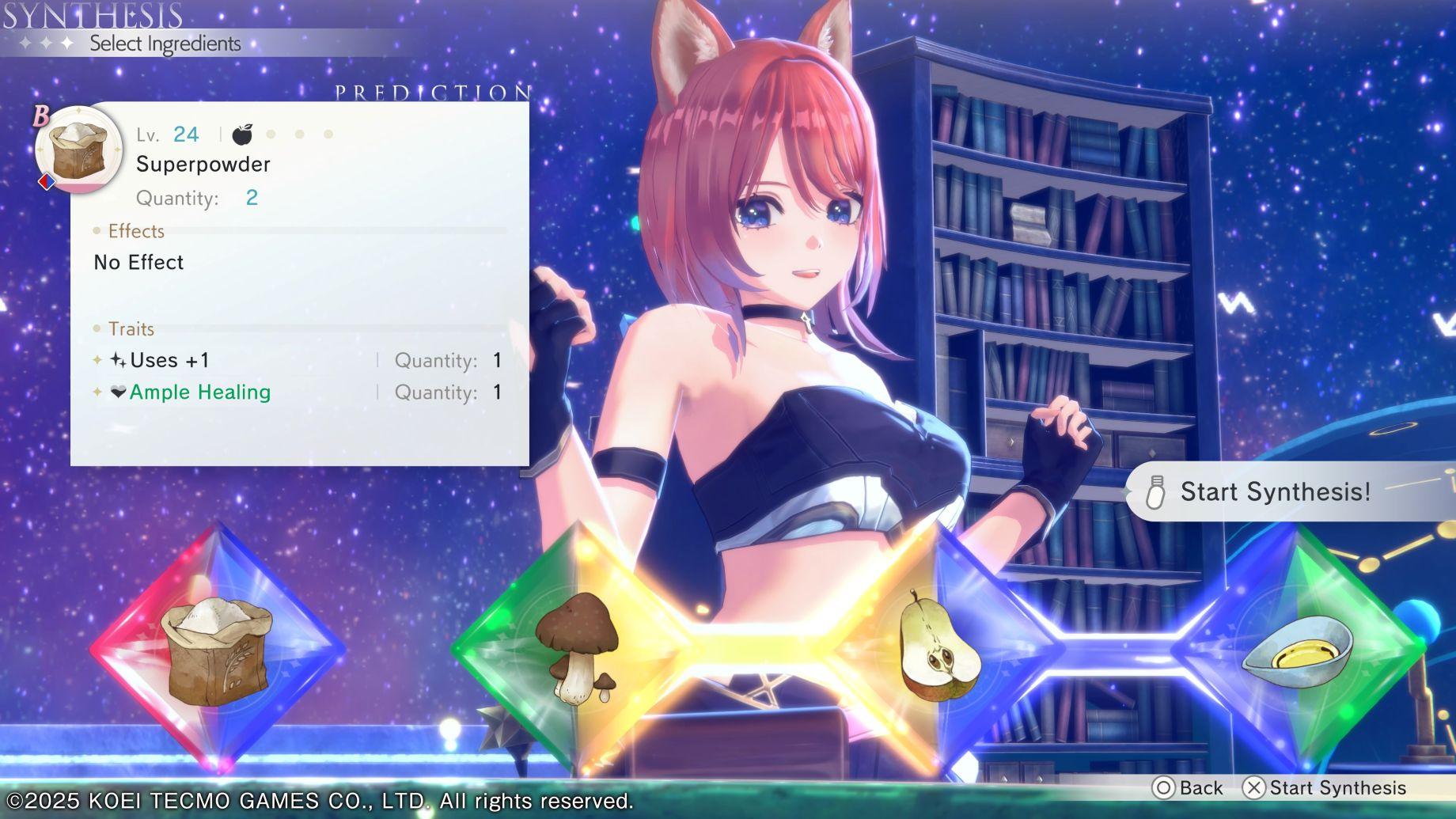
In Atelier, a trait is a passive skill that is embedded into a piece of equipment or an offensive/defensive item. There are dozens of them, of various rarity and efficiency, and just analyzing them represents a sizeable portion of the total game time. Trait management has always been one of Atelier’s strongest appeals: finding the rarest ones and combining them into the mightiest perks possible has always been and will always be absolutely thrilling to me. It's also unique to Atelier; I’ve never seen another RPG series even try to copy it.
Atelier is also particular in the way that you have to make everything you use in battle. In Atelier Resleriana I haven’t seen a single weapon for sale in a town shop. So you must create the weapons for your characters, with traits maximising attack power, such as “Rare Metal”, which grants ATK+30, armor; as well as accessories with defensive traits; and healing items with traits maximising recovery, revival, and number of uses. It's also worth noting that attack and healing items have a set number of uses, which is a very limiting factor in battle, so you have to ensure you make extremely efficient potions, food, and elixirs.
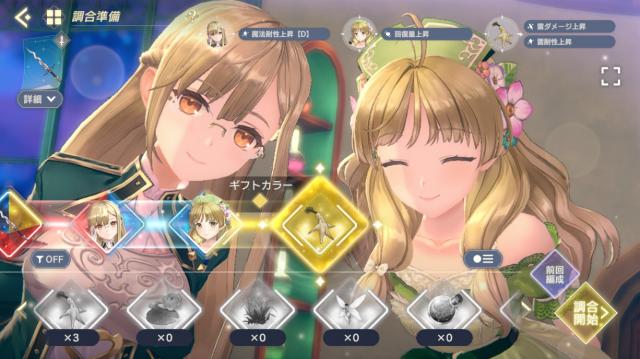
So what can often happen in Atelier Resleriana is that, while you do have the desired trait, you might be unable to embed it if the colors don’t match. True, there’s a mechanic to get around that involving changing the type of material at hand, but it's poorly implemented and even more poorly explained. This is very, very frustrating given how much it hinders the final output. It’s just immensely difficult to get the three traits you want on the same weapon or armor. Not to mention that ingots, cloth, and any intermediary items now bear only one trait instead of three. All that I eventually could cope with, but it's absolutely unacceptable that the first trait will be always been overridden when you add more than three. I should be able to choose the best traits, as has always been the case in the series. So the alchemy system in Atelier Resleriana isn’t as user friendly as before, but that can also be viewed as an extra layer of challenge.
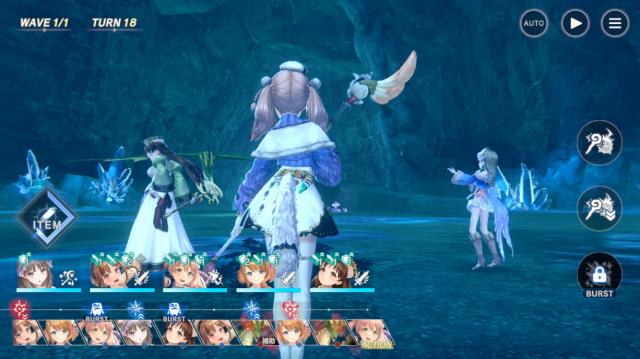
Atelier Resleriana on consoles maintains the principle of turn-based battles already in use in the smartphone game. You have a front and back row of three characters each. Like in the smartphone version, you have to hit the opponents’ weaknesses (fire, wind, physical, etc.) with the characters’ skills to prevail. A unite gauge allows characters to act consecutively as it grows, and the team can gradually deal more damage. At level five on the unit gauge characters can perform special assists and ultimates, but the gauge simply doesn’t fill quickly enough to see that often. As in Atelier Yumia, this mechanic is far too restrictive. As expected, the game is challenging and requires extensive alchemic research and complex handling of the recipes from the player, which is very stimulating and ultimately guarantees a high level of satisfaction if you stick with it.
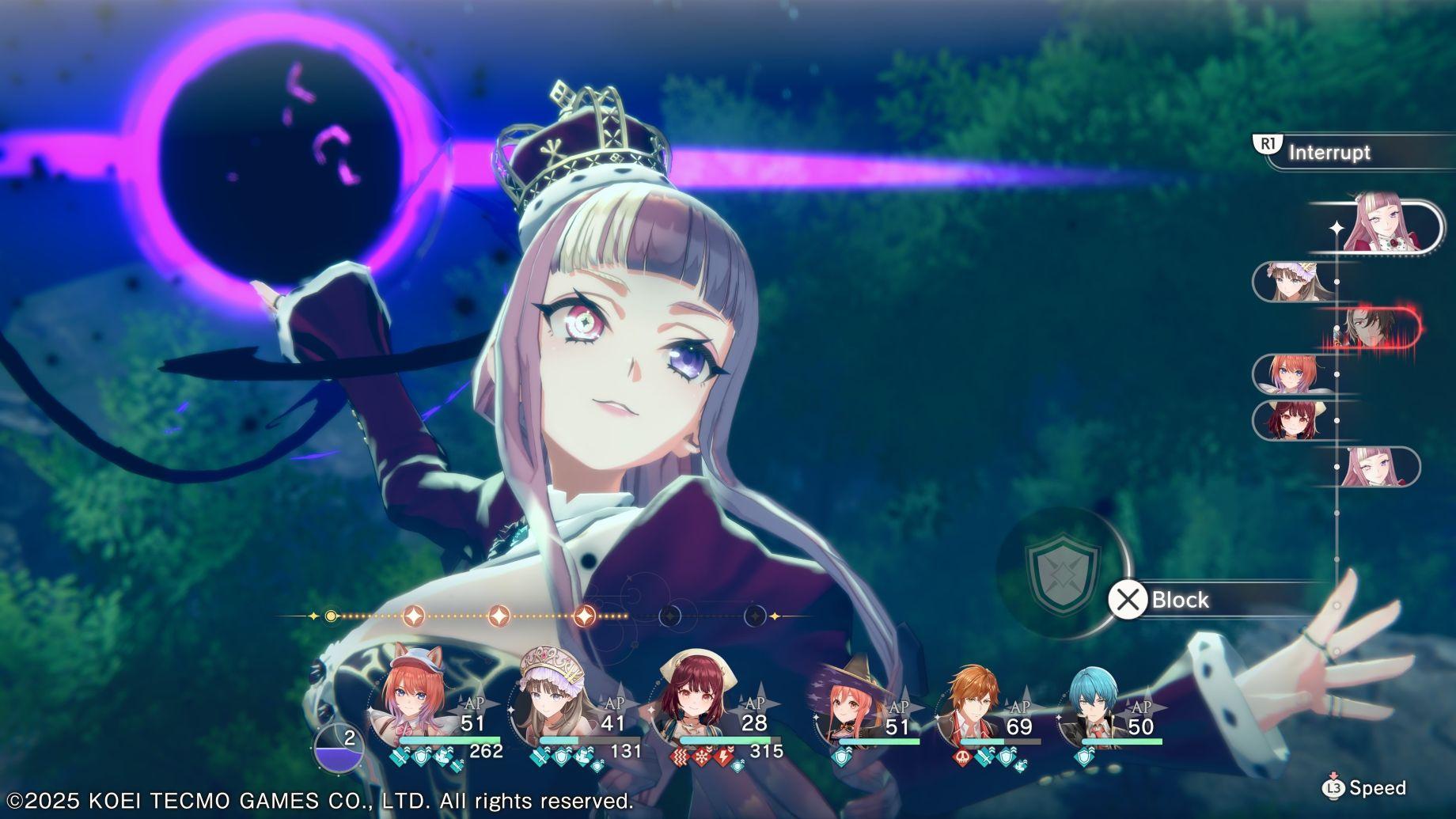
That said, maybe Gust went a bit too far this time for chapter six in particular. The boss for this chapter is a considerably stronger than any other, including ones found in subsequent chapters. This battle is a clear anomaly and I very much question the presence of such a difficulty spike in the middle of the game, when the available traits have fairly limited efficacy. Challenge is essential to a great JRPG, but it must remain fair and progressive. Although not as great as in Atelier Sophie 2 three years ago, the battles are generally entertaining enough, leaving me satisfied by the mechanics and animations. Still, the uneven difficulty is source of frustration and set at an unprecedented level this time.
Of the six playable characters, only Rias and Slade are actually new. Sharing the world and lore of the smartphone game, that means this offline Atelier Resleriana is also an all-star game welcoming many characters from various entries in the series. Raze, Wilbell, Totori, and Sophie are back as playable characters, but some 24 others end up as NPCs. Frankly, this doesn’t feel enough to me. I’m not saying the console version should have all the characters and costumes from the smartphone one, but a few more wouldn't be a lot to ask. Atelier Yumia released only six months ago, so there was no rush to get Atelier Resleriana on the market in September with such a tiny playable cast. Releasing it later in the fiscal year with additional playable characters would have been better.
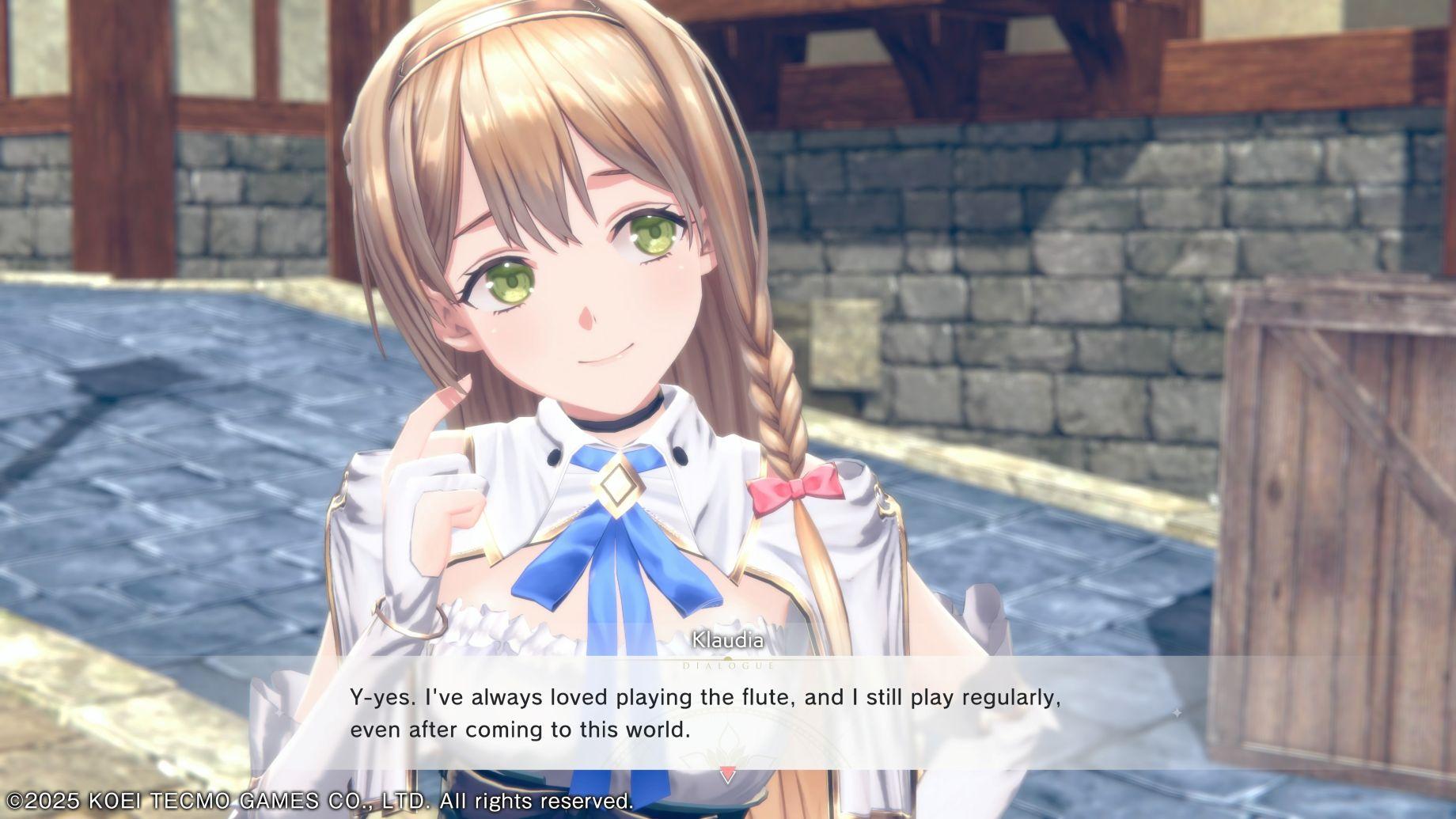
It’s all the more frustrating because character modeling in this entry is fabulous. I nearly fell off my chair when I saw Ayesha for the first time. Gust (maybe thanks to the help of Team Ninja) has made a giant leap in graphics since Atelier Yumia, which itself was already not that bad. I’ve been complaining for some time now about Japanese JRPG developers not catching up with Chinese firms in terms of character graphics, but now KoeiTecmo clearly has; the characters look simply magnificent. In particular, the rendering of the eyes is truly impressive. The character animations have also been modernised, with them boasting new, more diverse and natural-looking gestures during conversation scenes, making them considerably more enjoyable now. Unfortunately, that doesn’t apply to the landscapes or creatures, which are very unimpressive compared to Atelier Yumia.
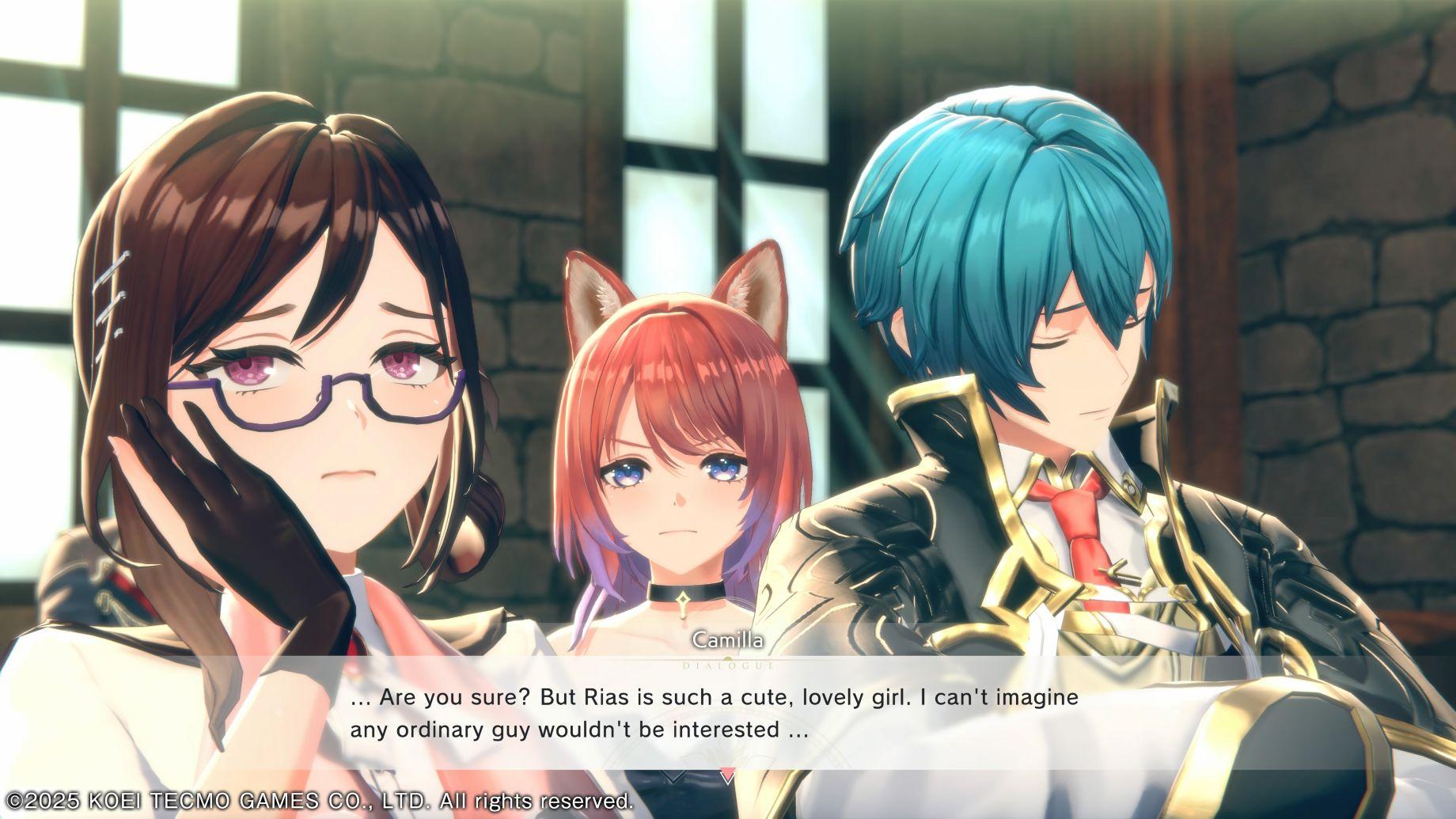
That’s not the last difference with 2025's other Atelier release, since Atelier Resleriana has a wholly different take on story and character development. Atelier Yumia wanted to tell a philosophical story about alchemy, but in doing so neglected character development. Atelier Resleriana by contrast does exactly the opposite, and I favor that; there are tons of characters events throughout the game in the course of an otherwise feeble storyline. While Atelier Yumia was dead serious about everything, the small talk in this entry is silly and positively humorous. The characters’ personalities receive more emphasis and there are a lot of good jokes. The writing is efficiently focused on making you smile through the cast’s eccentric behaviors and I love that approach.
Atelier Resleriana: The Red Alchemist and the White Guardian is the “other side of the mirror” compared to Atelier Yumia: it's a traditional Atelier game focused on alchemy, management, and having fun with character interactions. It ultimately reminds us how unusual Atelier Yumia was, meaning it was a stranger to the series just like Ryza’s odyssey. But Atelier Yumia and Atelier Resleriana are also similar in the way that they're both enjoyable Atelier titles, albeit with very clear shortcomings. Atelier Resleriana possesses strong qualities associated with beloved episodes, and boasts visual progress and prowess, but loses what was brought to the table by Atelier Yumia or even Atelier Ryza 3 in terms of world design, which ultimately makes me question the decision to have two Atelier games debut in the same year.



About Us |
Terms of Use |
Privacy Policy |
Advertise |
Staff |
Contact
Display As Desktop
Display As Mobile
© 2006-2026 VGChartz Ltd. All rights reserved.


