

A Look Back at Compile Heart/Idea Factory's Support for the PlayStation Vita - Article
by Adam Cartwright , posted on 17 December 2017 / 6,566 Views
This is the tenth entry in a series of articles looking at the output of a number of Vita-supporting companies, from launch through to the present day. I’ll be examining the games they released, how well they sold (if there's sufficient data), how well they ran in the case of ports, and will take a brief look at games which perhaps should have come to the console, either in the west or in general.
While I've recently written articles looking at publishers with a dual-role - Japanese-developing and western-publishing - there are actually three separate companies I need to examine in this article. There's Compile Heart, the Japanese developers of a certain niche type of game; Idea Factory, the parent company that's focused mainly on otome titles; and Idea Factory International, the western publishing arm which localizes both studios' titles. The company as a whole is often seen as a producer of kusoge - low-quality games with few redeeming features - although this is an image that it has managed to improve in recent years thanks to a number of higher-quality RPGs, many of which landed on Vita.
Launch & 2012 - Absolutely Nothing
For a company that released close to a hundred games on the handheld and is still supporting it well into 2017, Compile Heart/Idea Factory started off very slowly on Vita. Neither were there for launch, nor did they release anything during 2012. This doesn't place them worlds apart from similar companies like Nippon Ichi Software, although at least the latter managed to get a port of Disgaea 3 out for launch.
This means a number of games were skipped over that would have made perfect sense for the handheld. Top of the list was Record of Agarest War: Marriage, a PSP spin-off to the company's popular generation-building home-console series that hit the last-gen handheld in July. Developed by Felistella, which would later go on to collaborate with Compile Heart on multiple titles, including the Neptunia Re;birth games and Moero Pirates, the game would likely have benefited from a cross-gen release due to a Japanese software drought on Vita. Localization chances would also have been increased, but instead the game was destined to remain Japan-only. In the end the PSP release opened to a fairly lukewarm 14k.
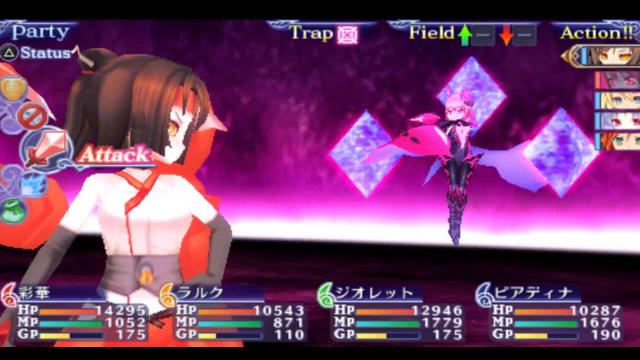
The company had also worked on a brand new IP, in the form of Mugen Souls, which released on PS3 in March (opening to sales of 23k in Japan). Featuring a combat system based on the popular Hyperdimension Neptunia series, mashed with the massive damage numbers of the Disgaea series, the title would go on to spawn a sequel in 2013, but both were tied to Sony's last-gen PS3. As it stands the IP is currently dormant, suggesting the company wasn't too happy with the sales achieved.
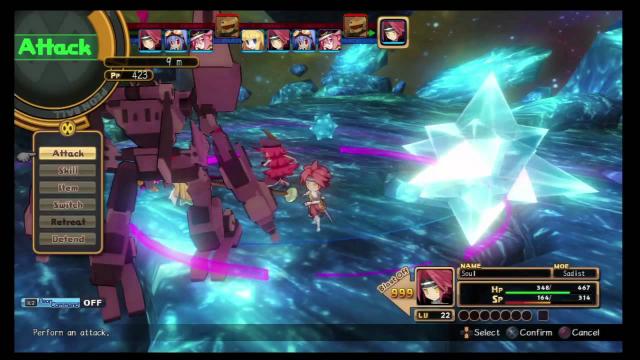
All of this paints the picture of a company that wasn't willing to give the machine a chance, and wouldn't support it in the coming years, but that isn't how things played out at all. Compile Heart and Idea Factory have actually revealed that they had very little planned for the handheld, but seeing Soul Sacrifice (Sony's epic hunting game) changed their minds. Personally I'm very glad this happened, because a number of great games were released by both in the coming years.
2013 - The Beginnings of Support & Some Major Successes
Despite prior trepidation regarding Vita, Compile Heart started 2013 with a bang on the console and was rewarded with immediate sales success. This would prove to be the beginnings of a love affair that would last well into 2017.
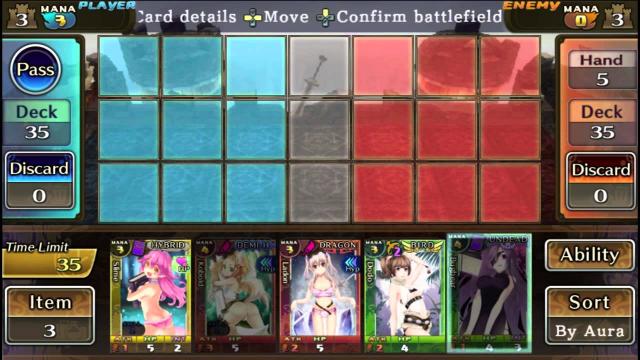
Compile Heart kicked things off in January with the release of Monster Monpiece, a trading-card battling game with some questionable rubbing mechanics. The title was very much a case of 'right game at the right time'; it sold out of its initial shipment in Japan within a couple of days, and the company was forced to apologize for shortages. It's worth noting that the amount of copies sold (27k) is similar to the amount its Hyperdimension Neptunia series was selling on PS3. Given that Hyperdimension Neptunia was the firm's flagship franchise and feature much higher production values, this was an all-round outstanding success.
This momentum was followed up on with the release of Sorcery Saga: Curse of the Great Curry God in March. A successor to the Madou Monogatari series of Japanese first-person dungeon-crawlers made by Compile Heart's predecessor company, Compile, the game shook things up to go for an isometric perspective and rogue-like gameplay, which in my opinion didn't work particularly well. Still, the game was a mild sales success, shifting 25k in Japan by the end of 2013. It was quickly localized by Aksys for the western market the same year.
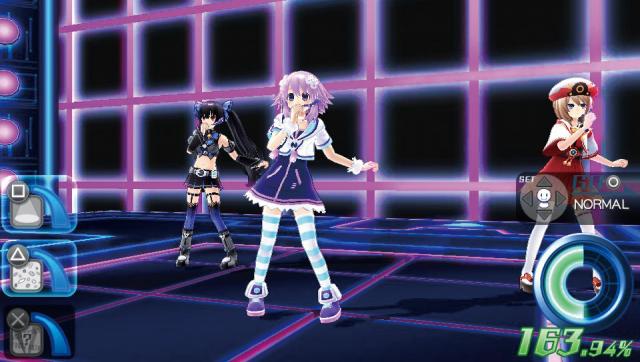
The rest of Compile Heart's year was represented by its aforementioned premier franchise - Hyperdimension Neptunia, which received two new entries on Sony's handheld. The first was Hyperdimension Neptunia: Producing Perfection, an idol-sim spin-off from the main franchise, developed by Tamsoft of Dream Club fame. As with Monster Monpiece, the game was a surprising sales success in Japan, shifting nearly 30k copies in its first week and a localization quickly came from NIS America in 2014.
This was followed by another Neptunia title, this time a remake of the very first game under the title Re;birth 1, which received a much more positive critical reception than the original due to bringing a variety of gameplay improvements. This was met with sales success in Japan, shifting 31k copies in the first week and nearly 60k by the end of 2014. However, it was the title's runaway success on Steam in the west that was really noticeable (thankfully it also released on Vita overseas).

Speaking of overseas releases, it's worth noting that during 2013 Idea Factory established an overseas subsidiary - Idea Factory International - to handle the western releases of its games. This subsidiary would not actually release anything until 2014, but it was the beginnings of the company having a global presence, something that would be important going forward and would benefit Vita greatly.
In Japan, the year would be wrapped up in December with three releases from Idea Factory in the form of remakes of PSP otome titles - something that would prove to be a massive focus for the company on Vita. The games were Amnesia: Memories; Diabolik Lovers: V Edition, and Hakuouki: Kyoka Roku, based on three of its most popular franchises. Each had modest openings in the region but managed to shift more than 10k copies over time, which was considered a success for this niche genre.
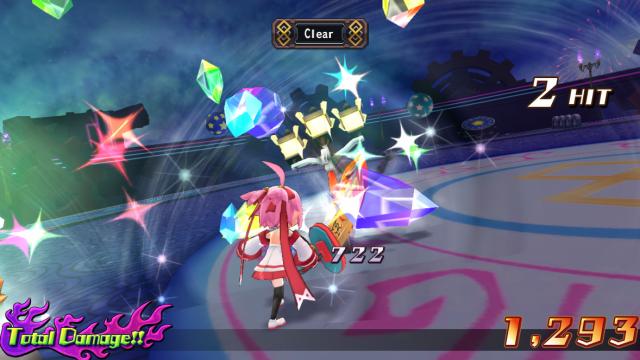
Of course, there were still games that were skipped in 2013 as well. Mugen Souls Z failed to hit the platform (and suffered a sharp sales decline on PS3 to just 13k) and no Re;birth version of this franchise has ever existed, which seems a slightly odd decision. Still, it was obvious both Compile Heart and Idea Factory were on board with the Vita by 2013 and they would continue to support the console well for many years to follow. Arguably they're actually the handheld's best supporter, although the selling power of their franchises has always been fairly muted.
2014 - Hitting Their Stride
If 2013 was a good year for both Compile Heart & Idea Factory on Vita, then 2014 would be an amazing year. They brought multiple popular otome games to the console, as well as a number of enjoyable Neptunia spin-offs, and handled their first overseas releases through Idea Factory International. Truly, the company as a whole was on board like never before.
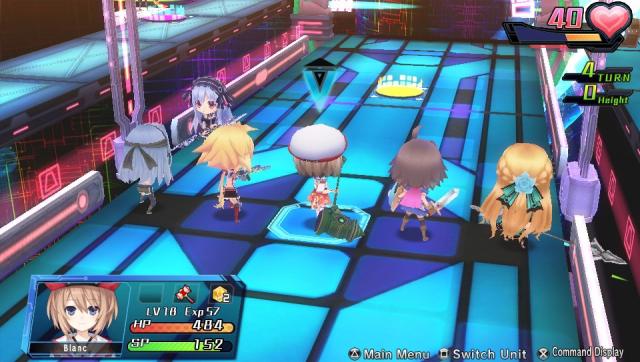
Overall, the company released four Neptunia games in Japan in 2014. The first of these was a remake of MK2, entitled Re;birth 2. Rather than being rebuilt from the ground up, like Re;birth 1, this was more of a straight port, which disappointed some fans but sales were still solid, with the release shifting 42k in the region. Hyperdimension Neptunia Victory was also reworked as Re;birth 3 in December of 2014 and this also cleared 40k in domestic sales; both games suffered from slightly choppy performance compared to their predecessors but still looked lovely on the Vita's screen.
During this period, Compile Heart also experimented with various spin-offs for its premier franchise. The first - Hyperdevotion Noire: Goddess Black Heart - was a tactical RPG set around Noire (one of the goddesses from the game) and was developed by Sting (of Dungeon Travelers fame). Receiving fairly positive reviews, the game was yet another sales success in Japan, reaching series-staple figures of 42k, despite some fans being disappointed by the self-inserted main character. The company's biggest experiment was Hyperdimension Neptunia U: Action Unleashed, a brawler spin-off developed by Tamsoft (of Senran Kagura fame). Opening to a series-high of 34k physical copies sold in the first week, it was clear the game was a financial success, although fans (myself included) seemed less enthused about the game due to its repetitive content and gameplay.
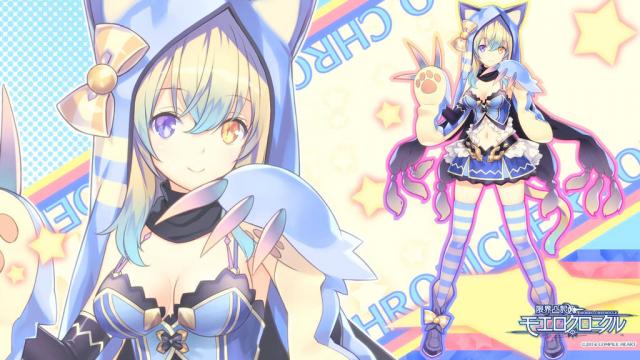
In other ventures, due to the runaway success of Monster Monpiece in 2013 a sequel was quickly developed for release in 2014. This game was Moero Chronicle, a dungeon-crawler featuring similar lewd elements to its predecessor. Just like Monpiece, it seems this game was a fantastic case of 'right game at the right time' - it became Compile Heart's highest selling game on Vita, clearing 61k copies domestically. In a surprise move it also received an Asian-English release, in lieu of a western version (likely due to the game's content), which made for a nice compromise for people wanting to play it in English.
Speaking of overseas releases, Idea Factory International was up and running by this stage and had released its first title in North America and Europe. The game was Monster Monpiece and it caused a minor PR storm due to the fact that it featured censored content for western audiences (as well as the fact that it was digital-only), but it seemingly did well enough for the company to port it to Steam in 2017. This was followed up with a localized version of Hyperdimension Neptunia Re;birth 1 in August, which became the company's first physical release, although it faced its own PR controversy when its limited edition version sold out in seconds.
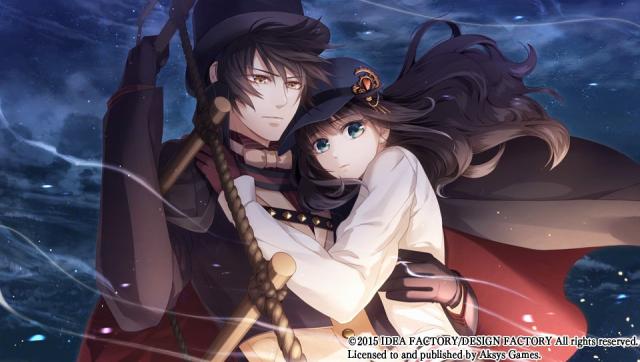
Domestically and outside of Compile Heart's games, Idea Factory was going from strength to strength with its otome label Otomate. A wide variety of games released throughout the year, the most successful of which was Hakuouki: Sweet School Life, which cleared 35k copies sold in Japan. The company also managed to release sequels to Diabolik Lovers (Vandead Carnival) and Amnesia (Crowd; World), as well as new IPs such as BinaryStar and Senjou no Waltz. Most notably Idea Factory ported the classic PSP game Norn9 to Vita and released a brand new title - Code Realize: Guardians of Rebirth, both of which were localized by Aksys in 2015. All of these games saw varying levels of success on Sony's handheld, but given the company continued to release titles like these in future years it seems that, overall, things were going well for the company.
As always, however, there were missed opportunities during this time. The company brought its PS360 tactical-RPG Record of Agarest War to Android & iOS during 2014, so clearly it could have ran on Vita given the tech available. Also skipped were various RPGs developed by the publisher's new studio, Galapagos RPG, including Fairy Fencer F and Omega Quintet. Despite both of these games sharing similar tech and gameplay mechanics to the Neptunia series, neither of them released in portable format. Still, it was an incredible year for Compile Heart and Idea Factory on Vita and thankfully this momentum would continue into 2015.
2015 - Continued Output but Downturn in Sales
Throughout 2015, Compile Heart & Idea Factory continued their assault on Vita with a variety of titles including, for the first time in a while, a new IP. Sadly it seems that as the market became more saturated on the handheld sales decreased, although they were still sufficient for Compile Heart to keep producing new games.
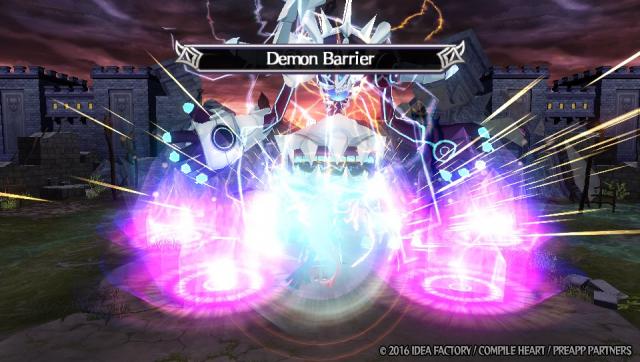
The year kicked off in July with the release of a long-delayed game - Trillion: God of Destruction, which was originally supposed to land in 2014. Designed and directed by key members of the Disgaea and Mugen Souls franchises, it marked the start of a new franchise (Makai Ichiban Kan) and provided some interesting new gameplay ideas (you help raise various Demon Lords to fight the titular Trillion). Despite lukewarm first-week sales in Japan, it went on to sell more than 35k in the region and a localization followed in 2016, suggesting that Compile Heart management was happy with the title's performance. The company also ported its visual novel duo Date-A-Live to Vita under the subtitle Rio Reincarnation in July, although sadly these games remained exclusive to Japan.
It would take until September for the company's next game to appear, and to the surprise of no-one it was a sequel to the uber-successful Moero Chronicle, entitled Moero Crystal. Once again, this was a first-person dungeon crawler with a number of lewd elements, and it seemed that consumers were beginning to get a little tired of this - sales dipped to 40k in Japan, although this was still a good result for Compile Heart. Oddly, another Asian-English release was announced but as of the date of this article no such SKU has become available, suggesting it was quietly cancelled.
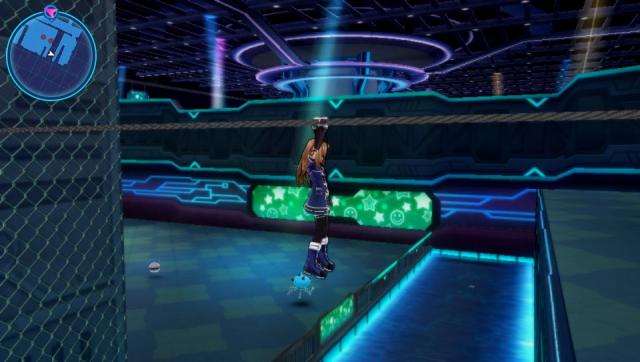
Given the runaway success of the Neptunia spinoffs in 2014, it was also unsurprising to see the company continue this strategy in 2015. First off, Tamsoft was hired yet again to make a brawler - this time with a game themed around high school, entitled Megatagmension Blanc & Neptune vs. Zombie Army, which didn't manage to hit the domestic sales highs of its predecessor at only 31k. Felistella (of Re;birth series fame) also worked on Superdimension Neptune vs. SEGA Hard Girls, a spinoff featuring SEGA's line of anime characters, but this sold worse still at only 26k. It seems that the Neptunia fanbase was finally getting a little tired of being milked.
The studio's year was capped off with the release of MeiQ: Labyrinth of Death in December, a dungeon-crawler set in the same universe as Trillion: God of Destruction. Sadly this was Compile Heart's lowest selling game on Vita in Japan ever, clearing just 5k first week, and plans for this new IP collapsed immediately afterwards. The game itself was seen as a fairly average entry in the genre that never really did anything to impress, something that gamers had evidently cottoned on to by this point.
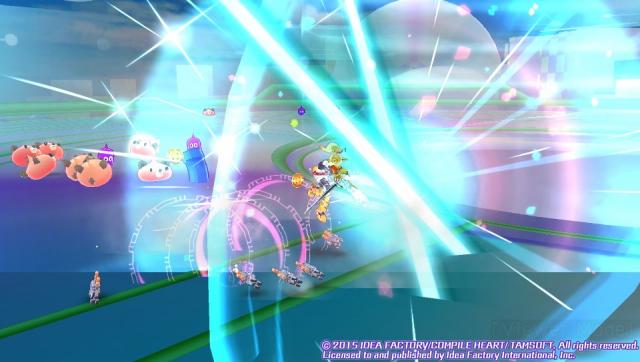
Overseas, Idea Factory International had a very busy year. Things kicked off with the western launch of Hyperdimension Neptunia Re;birth 2 in January, then Hyperdevotion Noire followed in February, Hyperdimension Neptunia U in May, and Hyperdimension Neptunia Re;birth 3 in June. It was during this period that it also became clear that IFI would be porting all of these games to PC, which boded well for any future releases coming to the west thanks to the promise of a Steam version for extra sales.
Of course, Idea Factory itself was active in Japan throughout 2015, releasing a metric tonne of otome games. Some of the bigger titles during this time included Hakuouki: Kyoto Winds (the first half of a full remake of its most popular otome franchise), as well as sequels to other popular series including Diabolik Lovers: Dark Fate and Norn9: Last Era. As always, the company also introduced a string of new IPs. Reine Des Fleurs was the biggest of these in 2015, but others like Bad Apple Wars; Psychedelica of the Black Butterfly, and Yunohana Spring! stood out as well.
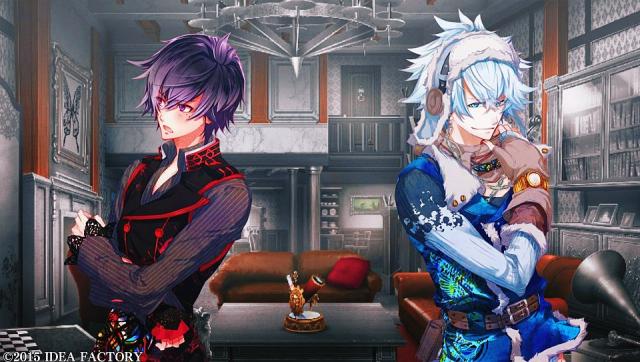
While Compile Heart would continue to support the Vita going forward, releasing games as recently as October 2017 in Japan, 2015 would mark the final year that it was fully on board with the platform - future releases would be lower-effort and less frequent. Idea Factory's Otomate label would continue to go from strength to strength going forward, but very few of these would find their way west.
2016 - Downturn in Output
Releasing just two games for Vita during 2016, Compile Heart's downturn in output was obvious, and while these were still two very solid titles, it was nothing compared to how things had been in previous years.
The first of these games was Moero Pirates, the fourth entry in its Genkai Tokki series, which had started way back in 2013 on Vita with Monster Monpiece. This time, instead of being a card-battling game or first-person dungeon-crawler, it was a more traditional JRPG with exploration mechanics and was developed by Felistella, which based much of the design on the Neptunia Re;birth titles. Sadly, this would be the lowest-selling entry yet, shifting just 12k in its first week on sale. This caused Compile Heart to migrate the IP over to PS4 for the next game, but this sold even worse at just 10k, suggesting the move was perhaps ill-advised or came too soon.
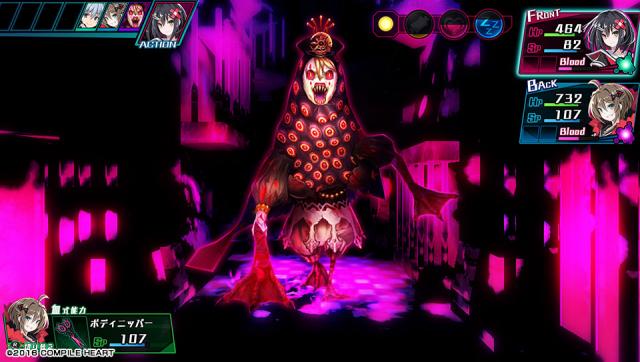
The second release for the year was Mary Skelter: Nightmares, a collaborative dungeon-crawler with Dengeki Bunko and Dengeki PlayStation. Despite an over-saturation of the genre on Vita already, the game actually received a positive critical reception in both Japan and the west, where it was praised its unique and inventive elements. It would be successful enough to lead to a second collaboration the following year - Tokyo Clanpool, although that game did not fare quite as well in sales terms.
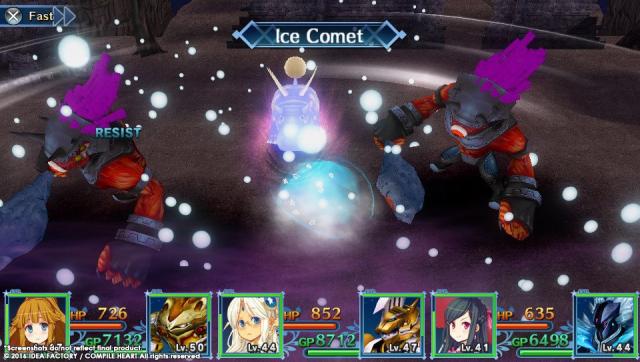
Of course, Idea Factory International had a predictably busy year bringing Compile Heart's content to the west. The company kicked things off with Megatagmension in May, followed by MeiQ: Labyrinth of Death in September, and Superdimension Neptune in October. Unsurprisingly, the Neptunia titles fairly quickly appeared on Steam, but interestingly MeiQ is still a Vita-only title, possibly suggesting that it didn't sell well enough overseas to make it worthwhile porting (the last game this happened to was Omega Quintet on PS4, which eventually made its way to Steam via Ghostlight).
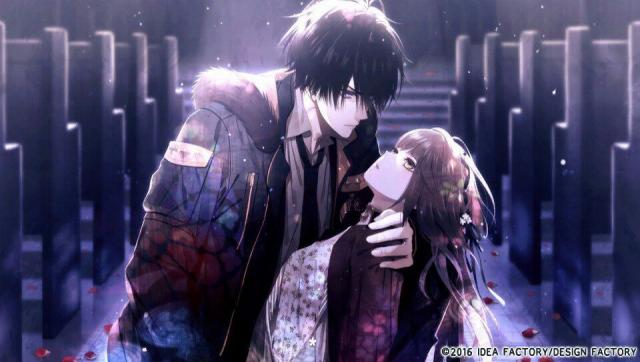
Otomate was also continuing to go from strength to strength in Japan, with a slew of titles releasing throughout the year. The highlight of these was the second part of the Hakuouki dual-release, entitled Edo Blossoms, which has recently been announced for western release. Also released was the brilliant Collar x Malice as a flagship title, which would be localized by Aksys in 2017, alongside a Code Realize fandisc entitled Future Blessings and its take on Sword Art Online called Period Cube. The majority of the company's other releases stayed in Japan, though - Nil Admirari no Tenbin; Diabolik Lovers: Lunatic Parade and Wand of Fortune R being two of the highlights that were passed on by Idea Factory International.
2016 was the year in which Otomate finally committed to PS4, suggesting that company was looking ahead to the impending twilight of the Vita and wanted to start shipping its games elsewhere, something that Compile Heart was also doing. While 2017 and 2018 still have games lined up, it seems clear that we're beginning to head into a period where these companies are finally looking towards a Vita-less future.
2017 & 2018 - To be Continued?
So, looking forward, what can we expect from Compile Heart & Idea Factory? Well, both do still seem on board with the platform, just in a much reduced capacity.
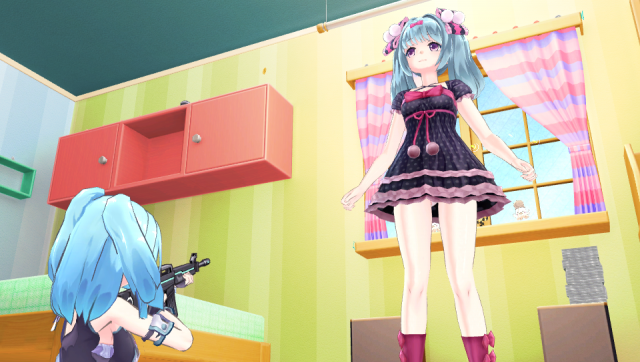
For Compile Heart, 2017 kicked off with the release of Gun Gun Pixies from developer Shade, which had become known for working on the Bullet Girls franchise under D3 Publisher. Despite the similarities between the titles, Gun Gun Pixies was met with both a mild critical reception and sales in Japan, clearing just 8k copies in its first week on sale and with no western (or Asian/English) release planned. With that said, the game was a notable technical achievement for being one of the few 3D Vita games to run at 60fps.
Its other title for the year was the free-to-play card game NepNep Connect: Chaos Chanpuru, which recycled the gameplay from Monster Monpiece with characters from all of Compile Heart's titles, ranging from Neptunia to Trillion. While it sounds like the perfect crossover fanservice game in principle, the decision to make it free-to-play at this late stage in Vita's life was a bizarre one and killed any chance of the game coming west, which is a real shame.
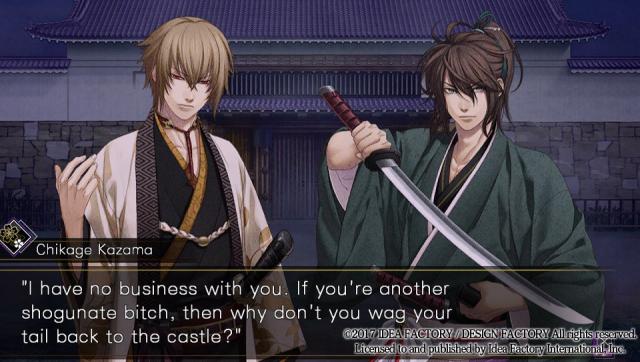
Overseas, Idea Factory International was busy bringing Mary Skelter to western shores in September of 2017, where it was well received by critics. The firm also decided to take a gamble on its second otome title - Hakuouki: Kyoto Winds, the remake of the long-running samurai dating series. With the second part of the story now confirmed for western release, it's nice to see the subsidiary branching out a little beyond Compile Heart's titles.
Speaking of otome, Idea Factory & Otomate had an ever-busy year, including an otome spin-off of the popular anime series Osomatsu-San, as well as various other sequels and new IPs including Diabolik Lovers: Dark Eden and Black Wolves Saga: Bloody Nightmare. All sold within the realm of previous otome games on Vita, suggesting the genre has a home on the platform for at least the next couple of years.
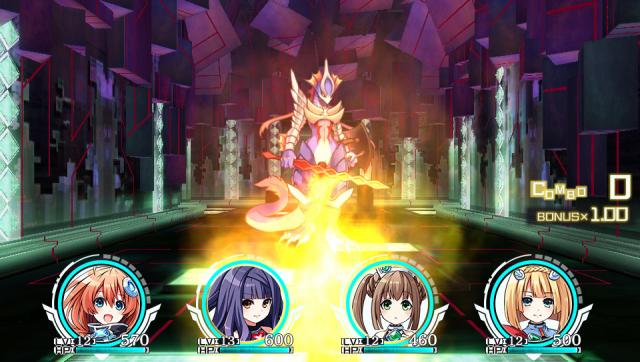
But does Compile Heart still have a home on Vita? Its latest release in Japan - another dungeon-crawler entitled Tokyo Clanpool - opened to an abysmal 5k and while the project seemed like a low-effort game without much of a budget it must still have been a disappointing result. Judging by MeiQ's overseas performance, Compile Heart is unlikely to recoup many sales from the west either, and with titles like Moero Castle Panzers and Death End Re;Quest skipping the platform, it suggests this may be it for the publisher.
It would be a shame to see Compile Heart end on a low-budget, cash-in gridder (although oddly fitting), especially when IPs like the Neptunia Re;birth series have flourished on Vita, but all things must come to an end at some point and it seems likely that Compile Heart won't release anything else substantial for Vita going forward. We'll still get Otomate games, of course, as well as localizations from Idea Factory International (I'll be shocked if Tokyo Clanpool doesn't come across), meaning if you're a fan of the publisher you can still expect to play its games in the west into 2018, but substantial support like Neptunia is gone.
Conclusion
Despite an initial 12 months where it looked like we weren't going to get any games from these companies at all, Compile Heart and Idea Factory quickly stepped up their efforts to become amongst the Vita's strongest supporters. While they've always released software that hits niche audiences, their constant flow of games and efforts to improve the quality of releases has left the handheld with a great number of enjoyable titles.
Amusingly, even though Compile Heart's output soared compared to the PSP days, Idea Factory's non-Otomate output plummeted. Franchises which had flourished on that console such as Generation of Chaos and Spectral Force were dropped altogether, although this appears to be more of a representation of the changing direction of the company as a whole rather than a reflection on Vita itself.
Still, while old franchises were lost, new ones were gained and both companies have released plenty of titles which have surprised me with their quality, whether it be the experimental weirdness of Trillion or the lovely storytelling of Code Realize. While their output may now be coming to a close, both Compile Heart and Idea Factory have been a key factor in making Vita's library the varied and interesting place it became.
More Articles

Waitwaitwaitwait....Hyperdimension Re;Birth 2 isn't a remake like the first one? I'm pretty floored by that. And both it and Re;Birth 3 don't run as well? Is 3 a remake? I have many questions. Still playing Re;Birth 1 at the moment.

Haha, well I'll be happy to answer them. Re;birth 1 was a ground-up remake because the original Neptunia was fairly poorly made and poorly received, whereas the sequels (MK2 and Victory) were much better received. So Re;birth 1 was made to be in line with them.
When it came to remaking MK2 and Victory, they didn't need to do much. So Re;birth 2 and 3 are more like ports, with a bit of extra content included and a few tweaks.
They still run fine by the way, they just noticeably have a few hitches on Vita every now and again; whereas Re;birth 1 is fairly smooth.
Oh, and I liked Action U in spite of the repetitious nature of the gameplay. I felt it was solid enough, and had plenty of my favorite elements of the series: Writing and characters I love. It was also, I believe objectively, the most technically beautiful entry of the series on the Vita. I was a bit disappointed that Re;Birth 1 didn't live up to it on the visual front. It was actually my introduction to the franchise as well. I'm such a big fan now, that I again just yesterday, bought a copy of a game I already own, picking up a physical copy of Hyperdevotion: Noire, even though I have it digitally. I've also done this with Re;Birth 1 and 3.

The art style of their latest titles got worse, and they ended up being a lot of half hearted efforts. The Neptune games were fully featured which is part of why I picked up so many.