History of Final Fantasy: Between Classics (Final Fantasy V) - Article
by Taneli Palola , posted on 12 October 2016 / 22,156 Views
With the release of Final Fantasy IV in 1991 the series had found its greatest success to-date with sales of almost two million units across all regions. Encouraged by this continued growth the development team once again went immediately to work on a sequel. Just as IV had been less about experimenting with new design elements and more about improving already existing ones, Final Fantasy V had a very similar ethos, albeit one with a very different focus.
While Final Fantasy IV had been all about creating a captivating story and memorable characters for players to become attached to, in V the goal was to improve upon the series' gameplay, making it more complex and compelling. As a result the game is in strong contrast to its predecessor; the strengths and weaknesses of the two are almost completely opposite from one other.
Switching Focus: Final Fantasy V
Hironobu Sakaguchi was once again at the center of the game's development. He created the basic story and directed the game, while many other familiar names returned, reprising their roles, including Nobuo Uematsu, Yoshitaka Amano, and Hiroyuki. Additionally, Tetsuya Nomura made his first significant contribution to the series as a monster designer, while Yoshinori Kitase made his debut as a scenario writer, working closely together with Sakaguchi to create the game's event script.
All in all, 45 people worked on the game's development at various times - a significant increase over the team of 14 that had worked on FF IV. Final Fantasy V was released in Japan for the Super Famicom on December 6, 1992, but unlike its predecessor was not released in the west despite there being plans to do so at the time. The reason cited for the cancelled localization was that the game was considered too difficult for western gamers at the time.
It wouldn't be until 1999 that Final Fantasy V would makes its way to the west as part of the Final Fantasy Anthology collection on the PlayStation, although a fan translation of the Super Famicom version had been created in 1997. The PlayStation version was otherwise well received, but its translation was critisized for being of poor quality and this resulted in subsequent releases of the game using an entirely new English translation, starting with the GBA version that came out in 2006.
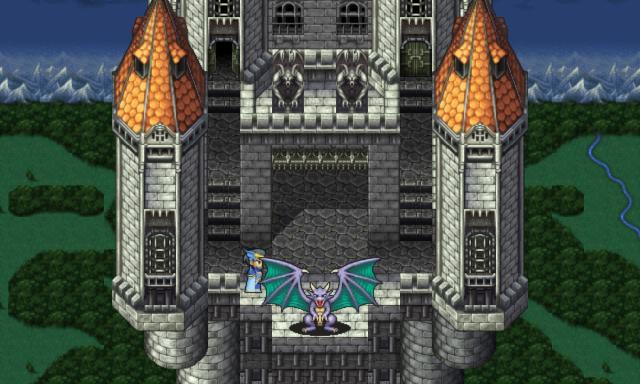
The game's narrative centers on four crystals that control the four elements, and which have suddenly begun to shatter for unknown reasons. After a chance encounter the four main characters decide to band together to investigate the mystery. After it is revealed that the crystals act as seals for an evil sorcerer named Exdeath, who is plotting to take control of the unlimited power of the void and control the world with it, the four begin working towards defeating Exdeath and saving the world from him.
Final Fantasy V's most significant change over its predecessor was in bringing back the job system that had been introduced in FF III, but in a significantly improved state. Many of the systems' issues were fixed, and the rest of it was expanded and improved. The game introduced aspects such as ability points which the player earned in battle alongside normal experience points. They were then used to learn new abilities by using the various jobs.
In addition, Final Fantasy V expanded upon the jobs themselves, allowing a character to learn multiple abilities from each job, as well as use their already learned skills as secondary commands with other jobs. For example, a Thief who had gained levels as a White Mage could use white magic while still being a Thief. This allowed for much greater freedom for players in developing their characters, especially as the jobs themselves were also much more varied than the ones found in Final Fantasy III. There were no more advanced versions of earlier jobs, such as a Black Wizard update for a Black Mage, instead the jobs simply improved as they were used in battle.
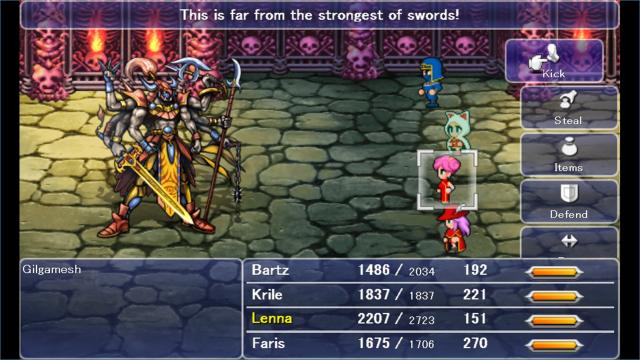
The ATB system was also improved over its original incarnation in FF IV. Most notably, the game introduced a visible time gauge in battle that filled based on the character's speed and allowed the player to see which character's turn would be coming up next. This gauge would become another series staple, going on to appear in numerous later Final Fantasy games in some form.
Final Fantasy V also featured numerous new elements first seen here. Among these were various jobs that would become staples of the series, including Blue Mage, Samurai, and Mime. Another new element that would become a key part of the series was the concept of a recurring minor villain, who in this case was one of the series' most beloved minor characters – Gilgamesh, who himself would later go on to appear in numerous other Final Fantasy games.
While the gameplay received numerous notable improvements, the story and characters were much more linear and simplified compared to Final Fantasy IV. The character development is much more subdued and lacking in depth, as the game is largely devoid of events that truly change any of the characters. The story's main problem is very similar, as it holds very few genuine surprises that would greatly affect the narrative in the long run. Generally, the narrative feels a lot like a simplified version of the more popular parts of Final Fantasy IV.
The music is, as usual, one of the game's true highlights, featuring numerous excellent pieces of music that have become classics of the series. However, amidst excellent songs such as Clash on the Big Bridge and Dear Friends there were also quite a few forgettable tracks that weren't quite on par with Uematsu's usual standards.
Graphically, the improvements over the previous game weren't nearly as clear as they had been in Final Fantasy IV. Minor updates to various visual elements, such as the number of details on the character sprites, were made, but the jump between the previous two games, as well that between this one and Final Fantasy VI, was much greater due to change in hardware in the first case and a better understanding of the SNES's capabilities in the second.
The Best Part

The job system. It offers a huge amount of freedom and flexibility to the player, thanks in large part to the improvements made to the system from its original version in Final Fantasy III. There are countless different ways to organize and customize your party, and often you'll have to experiment with various job classes to find the best way to defeat a difficult boss, for example. It opens up a lot of tactical elements for the battle system and makes them much more engaging than in previous Final Fantasy games.
The Worst Part
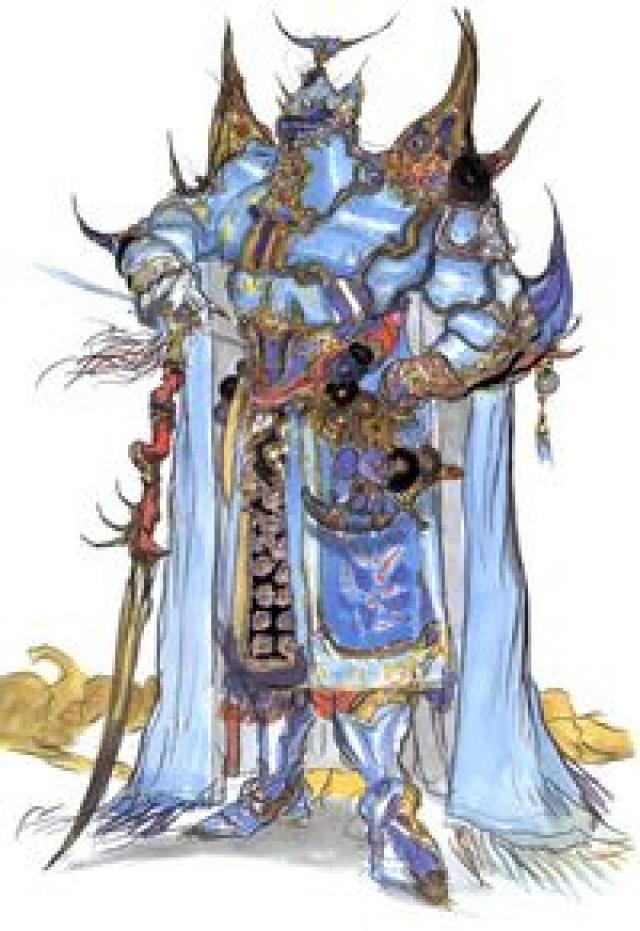
In general, I'd say the story and characters, but more specifically I'd have to say the main villain. Exdeath is just a boring bad guy, with vague, largely unexplained motivations for his actions. His design is silly and overall the storyline surrounding him is quite bland and uninteresting. Even his final battle theme is fairly lacklustre compared to most other final boss themes in the series. It's really a shame because the game also features one of the most memorable minor villains in series' history in Gilgamesh.
Does Final Fantasy V Still Hold Up?
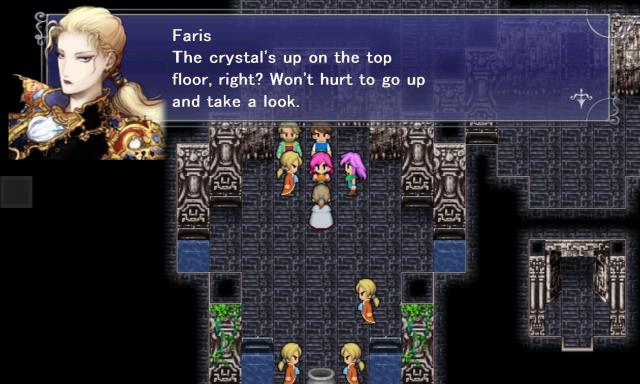
Mostly, yes. There are many genuinely great elements in Final Fantasy V, but also some that, while not necessarily bad, are forgettable or average. Still, most of these are minor issues in an otherwise very good game that is still a lot of fun to play. The improved job and the Active-Time Battle systems are a joy to use and experiment with, the music for the most part is great, and visually it still has a certain charm to it, despite now being almost 25 years old. Even the story and characters, with their shortcomings and all, are good enough to never feel annoying.
Of course, there are certain aspects that don't hold up quite as well. As already mentioned, the game's main villain is fairly lacklustre. Exdeath is among the weaker villains in the series in general, although I suppose him being an ancient tree that became sentient and decided to take over the world is at least quite unique. It does lend itself to quite a memorable boss design in the final battle, if nothing else.
Final Fantasy V is also very clearly an old-school RPG. There are times when the encounter rate gets fairly ridiculous, and the difficulty level goes through some pretty excessive spikes. The final boss is a very good example of a tortuous increase in difficulty; one which makes the end of the game feel needlessly stretched out through mandatory grinding for levels.
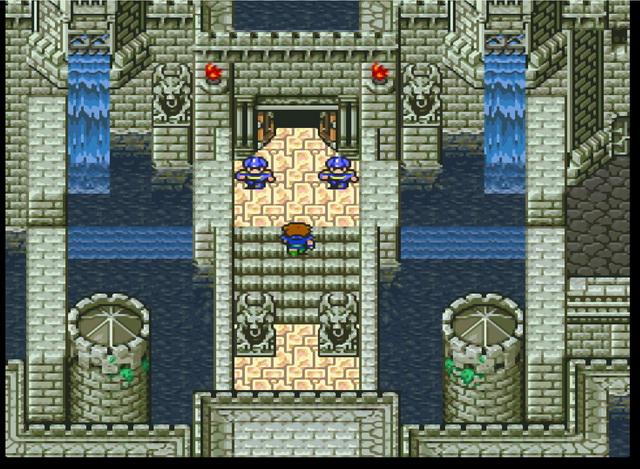
If you're interested in playing Final Fantasy V there are various different platforms you can find it on. The best version of the game is probably the one on the Gameboy Advance, but naturally that might be difficult to get your hands on. The PlayStation version can be found on PSN, but its translation is quite poor compared to GBA version.
The mobile and Steam versions would be highly recommended, as they contain basically all of the elements from the GBA version as well as various gameplay updates, but unfortunately they represent a significant visual downgrade due to the poor work that was done with the character sprites in the process of porting. You'll get used to the flat and blurry look of the sprites after a while, and the gameplay is still as good as it has always been, but it's a regrettable aspect of a port that could have been the definitive version of the game.
Ultimately, I feel that Final Fantasy V is a very good game that doesn't quite reach the same level as Final Fantasy IV. Although the gameplay side is the best the series had seen up to that point, the story and characters simply took too many steps backwards and this hurt the game's overall quality.
Fun Fact
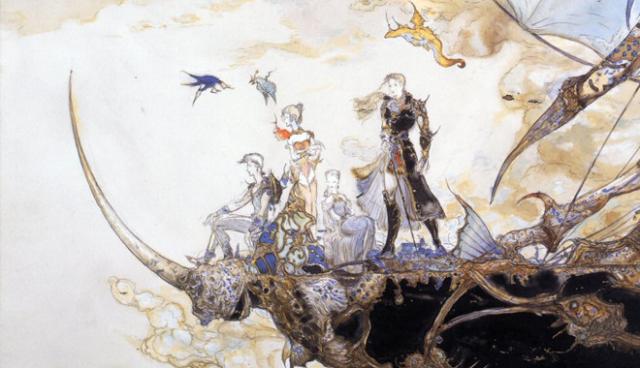
Some designs for new job classes that were originally created for Final Fantasy V, but which were unused in the game, would later serve as inspirations for two characters in Final Fantasy VI. These two inspirations were a gambler who would fight using dice and cards in combat, and a ninja with a dog, which of course became Setzer and Shadow in FF VI, respectively. These two particular ones were thought up by none other than Tetsuya Nomura, who would later become the franchise's main character designer.
Nomura was also able to impress his superiors during the game's development with his design book, which not only contained his ideas and notes for the game but also various sketches and artwork that he had created for his ideas. This made his book stand out from everyone else's, and led to Sakaguchi and Kitase often asking for his book during design meetings.
Additional Sources:
- Wikia
- Weekly Famitsu
More Articles

Job system.
The next ff after this one, was the best i ever played:)
Reading this, memories are coming back;)

Gilgamesh is overrated.
Why?
No problem. It's nice to see that people enjoy what I write. I have somewhat similar feelings towards V. It's just placed in the middle of two story-driven games that have become classics of the genre while V is just kind of there. I still like it, but it's definitely the weakest of the SNES trio.