

History of Final Fantasy: Growing Up (Final Fantasy IV) - Article
by Taneli Palola , posted on 22 September 2016 / 19,707 Views
Following the release of Final Fantasy III on the Famicom, the development team once again wasted no time in putting together the basic concept for a new installment in the series. Initially the plan was to make the next game a much more action-oriented title, where battles would be seamlessly integrated into the game world, rather than taking place on a separate screen. This idea would eventually become the basis for an entirely different game, namely Seiken Densetsu II, which is better known in the west as Secret of Mana.
Final Fantasy IV is perhaps the zenith of the franchise's early years. The first three games had constantly experimented with gameplay and story concepts, introducing new elements into the mix at every possible turn. By contrast, Final Fantasy IV was less about experimenting and much more about refining things that were already part of the series. This doesn't mean that it failed to bring new ideas to the table, but the focus of the development team was clearly on using familiar elements to create the best Final Fantasy game yet.
The Best of the Past: Final Fantasy IV
As with every previous game in the series, the story was once again crafted by Hironobu Sakaguchi. However, the script was written by series newcomer Takashi Tokita, who also served as the game's lead designer. In all, Final Fantasy IV was created by a team of just 14 people, most of whom had worked on previous entries. Among them were series veterans Nobuo Uematsu and Hiroyuki Ito.
Final Fantasy IV was first released on July 19, 1991, on the Super Nintendo, after being in development for roughly a year. It was just the second game in the series at the time to be officially released in the west, and as a result was renamed Final Fantasy II; the original Final Fantasy having been released just one year earlier in North America.
The narrative follows a dark knight called Cecil and a group of companions as they work to stop a man named Golbez from destroying the world with the help of powerful crystals. The other characters are often temporary additions to the party and join and leave it as dictated by the game's story.
The most notable new development for this release was naturally the jump to an entirely new and more powerful console, which allowed for much greater depth for practically every facet of the game. From the graphics and music to the gameplay, everything received a notable update thanks to the increased power of the hardware the development team was now working with.

Final Fantasy IV was intended to combine the best elements of the previous three games into one. The job system from III would form the basis of its character classes, the story-driven II would find its influence in the telling of a more emotional, dramatic story, and the basic structure and elements from the original Final Fantasy would form the foundation of the game's development.
The focus on more complex and mature themes in Final Fantasy IV makes it one of the key precursors for most of the later games in the series. This was the first time a game in the series had genuinely used character development and plot twists to drive the story forward, instead of just isolated events that had little to no impact outside of the confines of the location they took place in.
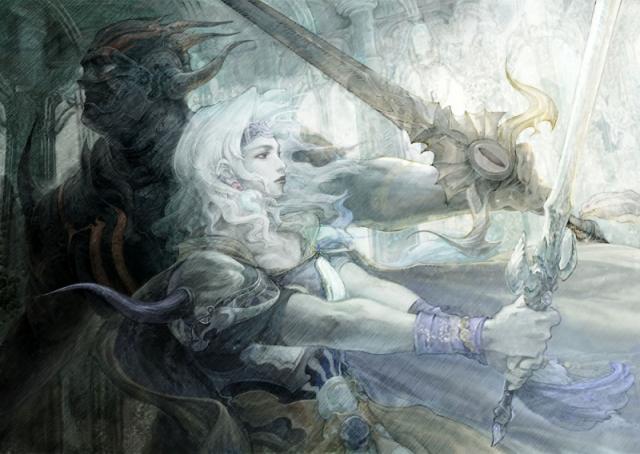
For example, Cecil's inner conflict as a dark knight who begins to understand the price of his past actions is one of the most important aspects of the entire game, and one that constantly pushes the story forward. Every single main character has a clear arc that sees them change and grow over the course of the game, albeit some more naturally than others.
This focus on story and characters meant that Final Fantasy IV was a much more linear game compared to its predecessors, with much less aimless wandering taking place. It also meant that the character classes could no longer be freely changed, due to them being determined by the story this time around. This actually proves to be one of the game's strongest aspects though, as it gives the story much more agency in developing the characters, not just in what they do and who they are, but in what they are as well. Classes, which were freely changeable in the third entry, became a core part of characters' identities in this entry.
This also led to a different type of ability progression. Characters would now learn new abilities as they gained levels, with each having their own pre-determined abilities to learn. This was another aspect of the game that actually worked in its favour, as it strengthened the main characters' core identities by influencing what they could do in battle. Summons were among the more notable exceptions, as they were often gained either by defeating them in battle or by progressing to a certain point in the story.
The music, composed by Nobuo Uematsu, also played a very different role in this entry. In the past the series' music had mostly been used as part of the background, with little connection to the story or characters. In Final Fantasy IV, however, the music was a much more integral part of the experience, helping to enhance the mood and emotions of a scene by specific tracks being played at the right time. The music could change dramatically based on what happened in the game, instead of remaining the same throughout a particular scene regardless of context.
Of the newly introduced elements, by far the most influential and important was the Active Time Battle (ATB) system, designed by Hiroyki Ito. The system would go on to be used in every single Final Fantasy up to IX, and then again in X-2, as well as in several other games made by Square. The ATB system added the element of time to battles, which meant that characters would be able to perform actions once their ATB gauges had filled up (the gauge filling based on a character's speed stat).
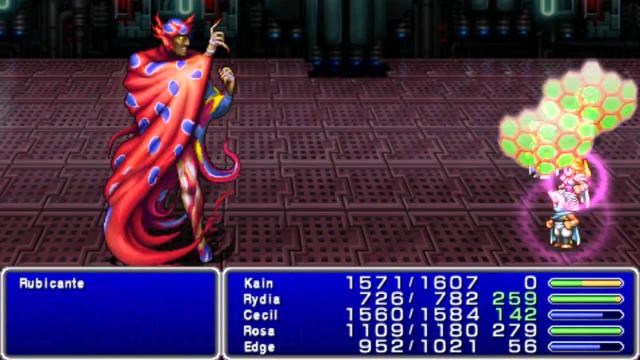
The ATB system also introduced special attack formations that impacted the start of battles, such as pre-emptive strike and back attack. Later games in the series have added to and modified the system in various ways, but its basic structure has remained the same throughout all of its iterations. It has had a profound effect on the entire series, as even Final Fantasy titles that don't use the system tend to feature certain of its elements.
While the improved capabilities of the SNES allowed for much greater graphical fidelity, there were still certain limitations that the developers had to work around. The cartridges could still only hold a limited amount of data, forcing the development team to pick and choose which parts of the game to prioritize when it came to matters such as visual detail. Ultimately, it was the character sprites, airships, and bosses that were given the most detail, while other visual elements were less detailed and colourful.
The Best Part
The story, characters, and the way they are developed over the course of the game. Cecil, Kain, Rosa, Tellah, Golbez, and many others have become some of the most beloved characters in the series for good reason. The extent to which Final Fantasy IV created drama through its characters was something that had never really been done before in JRPGs.
I also have to mention the game's soundtrack, which features some of Uematsu's most beloved songs of all time. His work in Final Fantasy IV elevates the game to a whole new level.
The Worst Part
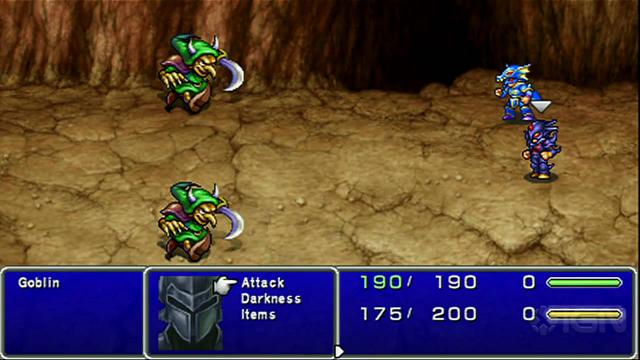
Nothing in Final Fantasy IV is truly bad, or even average. However, if I had to pick one aspect that doesn't hold up as well as other parts of the game, I would say the gameplay. Later games in the series have simply improved upon it in so many ways that Final Fantasy IV's gameplay feels clunky and dated by comparison. Hiroyuki Ito himself once said that he felt the ATB system in FFIV was still incomplete, containing various slight issues that would be fixed in later games.
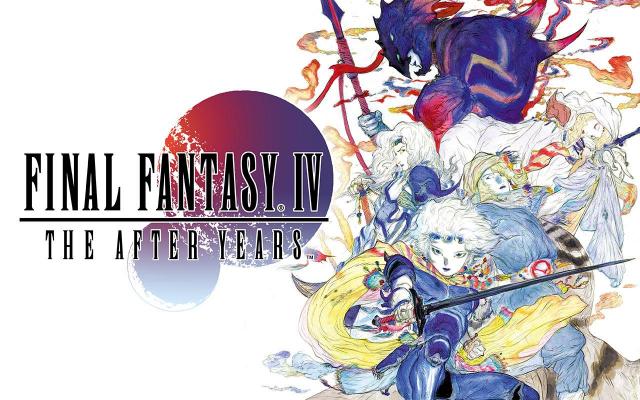
No, wait, forget that. The worst part about the game is its sequel – Final Fantasy IV: The After Years, an utterly pointless exercise in repetition that brought nothing of real value to the original. If anything, it made it worse by association.
Does Final Fantasy IV Still Hold Up?
Yes, without a doubt. Final Fantasy IV is still, over 25 years after its release, a highly enjoyable RPG. If you haven't played it yet, I strongly recommend doing so. The story and characters are very well written and memorable, the music was Uematsu's best work up to that point, and is an absolute joy to listen to. This is where he began to elevate himself above most other video game composers, ultimately creating a legacy as one of the best of all time in his field.
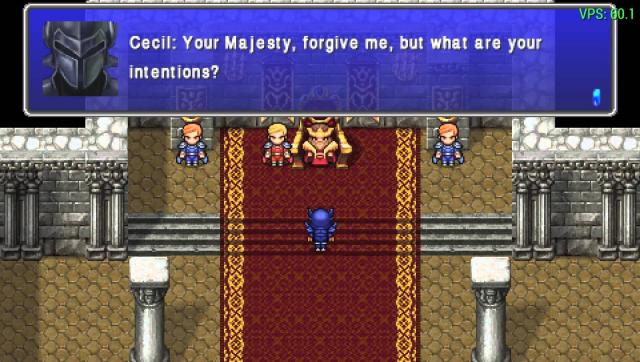
Naturally, there are some minor grievances I have with the game. The battle system does become something of a chore later in the game. Once you figure out the best way to fight, there is very little variation to be had, since you'll most likely be repeating the same actions each and every battle.
As far as the story is concerned, the numerous death fake-outs that occur over the course of the game become tedious and show that this really was the first game in the series to heavily emphasise narrative and drama. The game relies a bit too much on the same trick to get an emotional response from the player and eventually it loses its effectiveness.
Final Fantasy IV's main villain is also a bit of a disappointment, coming a bit out of nowhere near the end of the game. It undermines the effect of the story's conclusion, as there isn't enough weight in the reveal of this new, even greater evil since it hadn't been built up properly beforehand. Ultimately, though, these are all relatively minor issues in an otherwise very good game.
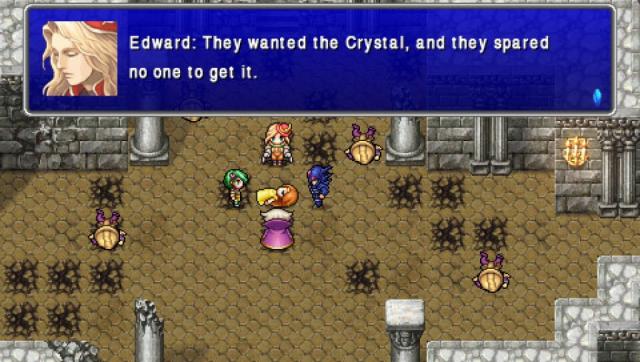
If you plan to play Final Fantasy IV I suggest you get your hands on either the 3D remake on the DS, or the Complete Collection on PSP. Both are excellent versions of the game, with the main differences being visual style and the DS version having voice acting. The original SNES version is still fine for the most part, but its English translation is a bit shoddy and unclear at times, so I wouldn't recommend it over most of the later releases.
Overall, I feel that this was the first Final Fantasy where all the different elements came together to form a genuinely great game. At the time this was quite possibly the peak of console RPGs, at least in terms of story and character progression. It was a forerunner of the genre, pioneering many elements and tropes that we now take for granted. Other games would later surpass, but there was a time when Final Fantasy IV was the best game of its kind.
Fun Fact
The original script for Final Fantasy IV was so vast that almost 3/4 of it had to be cut due to the space limitations of the SNES cartridge. Takashi Tokita took extra care to cut only unnecessary dialogue, so as to keep the story intact. Some of these parts that were cut due to space and time constraints were later included in ports and remakes of the game. Western releases of these later versions would also fix many of the mistakes and discrepancies in the original SNES version's translation. They did retain certain phrases from the original that had achieved cult status over time, however, most famously Tellah's “you spoony bard!”
Sources:
- Wikia
- 1Up
- Weekly Famitsu
More Articles

This was the first FF game I ever played and still today my favorite. No other game I played at the time made tiny colored pixels cause so much emotion.

I've always said that this game is a hallmark when it comes to story featured in any videogame. I like how you touched Cecil's inner demons, because one of the most elegant and impressive subversions between the relationship story-gameplay in any game ever happens when you, both figuratively and literally, fight Cecil's demon and become a Paladin. It's a powerful moment, one that respects both the system the game has established itself, and the plot, who has been carefully set up to live to sequences like that one.
This is a brilliant FF, and while not my personal favourite (it's still Top 2, though!), one that I will always hold dear.

FF4 had truly beautiful musics.

Best story of all the FF games IMO. It's great.

Final Fantasy IV is my favorite FF in SNES. And one of my favorite RPGs of all time.
This game has an awesome mix of plot, characters and atmosphere. I would say FF IV has the best characters of the Final Fantasy universe. Cecil, Kain, Rydia, Rosa, Tellah, Edward, Cid, Palom, Porom, Edge, Fusoya... What a cast.
And of course, the soundtrack... The music that plays when you travels the overworld is still stuck in my head after all these years.
A masterpiece of a game.

This was the second FF game I played (FFVIII being the first) and I loved it, the story, characters and music made it an instant classic and an all time favorite in my list.