
Today's Innovations Yesterday: Online Console Gaming - News
by VGChartz Staff , posted on 12 August 2011 / 6,001 Views
Online gaming has become one of the biggest, if not the biggest, aspect of the video game industry, with the Call of Duty franchise basically selling solely for online gameplay in many cases. Services like Xbox LIVE and PlayStation Network across the HD systems have significant install bases, with millions of users playing online. It wasn't always this way. Online gameplay used to only be something PC users could fully enjoy with titles like Quake, StarCraft and Everquest Online. Console gamers for many years were left with failed services throughout much of early gaming. Unlike downloadable content, online gaming doesn't go as far back as classic platforms like the Atari 2600 or the Intellivision, but it does find its roots fairly early on in gaming's history.
In the 8-bit era, Nintendo definitely was thinking about online connectivity in their home territory. The Famicom Modem allowed gamers to use a variety of network features. The service never left Japan and also lacked any sort of online gameplay which was something Nintendo wasn't concerned with at the time. However, Nolan Bushnell, founder of Atari, and Keith Rupp were concerned about online gameplay. In the early 90s the two in-visioned the ability for players to play head to head from different locations using the Nintendo Entertainment Systems. In 1992 they showed off the fruits of their labor – the Ayota Modem. The modem received a fairly impressive reception at the Consumer Electronics Show, but Nolan Bushnell opted to leave the project, leaving Keith Rupp to fend for himself. He founded the company Baton Technologies and changed the device's name to the Teleplay Modem and started working on the possibility of SEGA Genesis and Super Nintendo compatibility as well. When Keith approached Nintendo and SEGA about the service, neither would license the product which sent the device to an early demise in 1993.

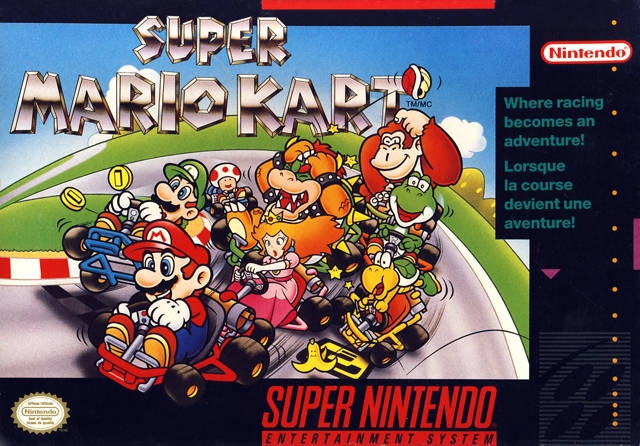
Almost as soon as the Teleplay Modem died, another attempt rose from Catapult Entertainment – the XBAND. It enabled online play for SEGA Genesis and Super Nintendo titles. The difference between it and the Teleplay Modem, is that it actually released. In 1994 it saw a limited release across the United States before becoming available in nearly every metropolitan area just before 1996. Gamers could now play titles like DOOM, Street Fighter II, Mortal Kombat and against other players right from their home console. The success of these attempts were varied. Fighting games were considered nearly unplayable thanks to latency issues with Dial-Up, but the classic Super Mario Kart reportedly worked without a hitch. Of course, being an online service the Xband required a hefty amount of fees, which kept the appeal limited. And for those who were willing to pay the fees, often they wouldn't even know about the service. Catapult was never able to spend much of their budget on advertising, keeping the service's penetration rate fairly low. Just before the service's demise in 1997, it extended to Japan supporting Sega Saturn titles.
Catapult wasn't the only one who saw potential in online gaming at this point. SEGA took an attempt with SEGA Meganet for the SEGA Megadrive (Known as the SEGA Genesis in North America) which launched exclusively in Japan. It didn't perform well, but SEGA took another shot at the online gaming sphere with the Sega Saturn. The platform had SegaNet, a service that is still usable today with the right equipment thanks to the service not fully relying on severs for gameplay. Atari even attempted to take a quick stab at online multiplayer with the Jaguar, which even offered online voice chat. The modem for the Atari Jaguar saw an extremely limited run and only supported one title.

After two generations of experimentation, SEGA finally made a breakthrough with the SEGA Dreamcast. A modem was built-in to every single Dreamcast unit, giving anyone with a dial-up connection the opportunity to connect to the internet and play online. Previous online services only supported a few titles, but a large chunk of the Dreamcast's library were online enabled in some way. Hits like Chu Chu Rocket, Phantasy Star Online and Unreal Tournament graced the platform allowing for plenty of multiplayer action. Thanks to the early demise of the Dreamcast, the service probably never went as far as it could have.
Sony and Nintendo both ignored SEGA's strategy and kept their network adapters as a separate accessory to the system. Sony, seeing a stronger online presence later in the platform's life, eventually moved onto building the network adapter into the slim version of the PlayStation 2, supporting both broadband and dial-up gameplay right out of the box. Despite the platform's overall success, the real winner of the online arena was the original Xbox, featuring the service Xbox Live. While not available day one, the service eventually launched in 2002, with flagship titles like Unreal Championship, and eventually spiked in popularity with Halo 2. The service popularized a concept over a decade in the making and set new console standards when it comes to online gameplay, including features like a system wide friends-list and voice chat.

This generation, online gaming has exploded. Xbox LIVE has continued to evolve and Sony's PlayStation Network has grown every single year. Nintendo still remains behind the other platform holders, but the option is there, which a handful of developers have utilized giving the platform a small online catalog. Online gaming is here to stay and has definitely made its mark on the consoles. Xbox LIVE is the go-to place to play the world's most popular online shooter, and many other titles have found success across other platforms. Where it will go from here is difficult to say as it feels as if we have almost peaked outside of simply just pulling more people in. Even so, as online gaming sticks around we're bound to see it evolve even further.
More Articles

Online multiplayer is the way to go. I can really see it evolve further with innovations from individual devs, eg.demon's soul.
original xbox is what made console online play. halo 2, star wars battlefront, bf2:MC all were amazing multiplayer and is the reason console gaming is dominant today