




Retro Sales Franchise of the Day/ Top 100 Retro Franchises 100-91 - News
by VGChartz Staff , posted on 12 January 2010 / 4,287 Views
Franchise of the Day
Star Ocean
 |
 |
 |
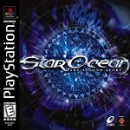
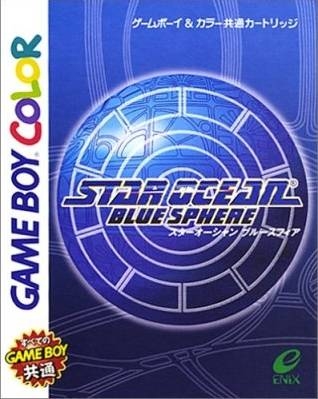
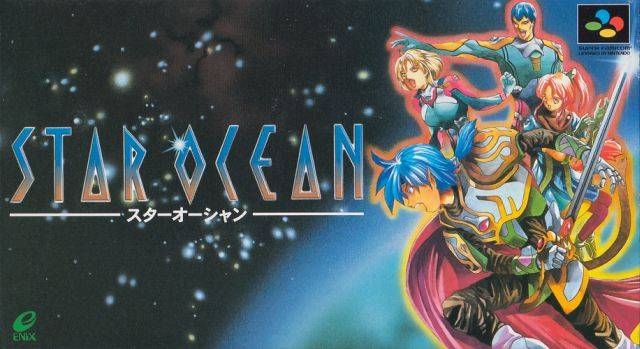
| Star Ocean | The Second Story | Blue Sphere |
| Europe | Americas | Japan | Total | |
| Star Ocean (SNES) | N/A | N/A | 0.23 | 0.23 |
| Star Ocean: The Second Story (PS) | 0.11 | 0.26 | 0.72 | 1.09 |
| Star Ocean: Blue Sphere (GBC) | N/A | N/A | 0.14 | 0.14 |
Description: The Star Ocean franchise is an RPG franchise that made itself standout from other RPG series in Japan by utilizing a real time battle system instead of turn based, and also by having a unique space/sci-fi setting. The early entries in the Star Ocean franchise had an interesting history with the three games appearing on three different platforms (handhelds and consoles), occasionally having worldwide releases, and the games had large sales discrepancies between titles. So why did the series have such varying sales totals, and why is it still so fondly remembered today (Look at number 93 in the second part of the article)? Read on to find out what we decided.
The Star Ocean franchise debuted on the Super Nintendo back in 1996 and was a Japanese only release. The title was critically acclaimed and developed a loyal fanbase for the franchise despite only selling a modest 240,000 copies in the region. The second entry in the series, Star Ocean: The Second Story was much more successful, selling an impressive 720,000 (16th for the year of 1998), and the game also benefited from a worldwide release which brought its total to over 1 million copies sold. Then oddly enough the developers decided to move the series to the Gameboy Color with Star Ocean: Blue Sphere in 2001 (despite Blue Sphere being a direct follow up to The Second Story). After hitting highs with The Second Story, Blue Sphere sold a disappointing ~140,000 copies in Japan and never saw an international release.
Let’s look at a couple of graphs of the games’ Japanese sales (ignoring The Second Story’s international sales to make comparisons more fair), to have a visual representation of the series sales history.

From this chart the success of The Second Story compared to the other two games becomes even more obvious, as both its predecessor and sequel sold less than half of its total. To get a better understanding of the sales patterns of the franchise here is a graph of total sales by week.

A couple of interesting things can be seen in this graph. Star Ocean: Second Story had a very large first week of ~375,000, which is significantly more than its predecessor’s total sales. The fact that the game followed the normal Japanese market pattern of having a large launch than a fast drop off suggests that the game’s sales were not due to strong word of mouth. Instead things like a stronger marketing campaign, more interest in the RPG genre thanks to the growing popularity of franchises like Final Fantasy and Dragon Quest, a userbase more interested in the series, or likely a combination of these factors explains why The Second Story performed so much stronger than the original Star Ocean.
It is also interesting to see how far Star Ocean: Blue Sphere dropped after the franchise gained momentum with The Second Story. First week sales were less than 25% of The Second Story’s first week sales, and Blue Sphere’s weekly sales dropped off even quicker. In hindsight I’m sure tri-Ace wished they would have tried to continue to gain momentum on the Playstation, or at least on another home console instead of adapting the franchise for a handheld just when the series was gaining steam.
That’s my take on the retro sales of the Star Ocean franchise. Let us know what you think caused The Second Story to be such a sales anomaly early in the franchise’s history in the comments section... after reading the second half of the article of course. Then be on the lookout for another Retro Sales article next Tuesday.

The second part of the “Retro” articles for awhile will be revealing VGChartz’s top 100 retro franchises. The list was voted on by a combination of VGChartz staff and community members. In order for a franchise to be eligible for the list a game from the franchise must have released in the Playstation/N64/Gameboy Color era or before for consoles, or 2001 and before for PC and Arcade games.The order was determined using the formula : 2 x number of votes + number of points (determined by which rank a voter gave a franchise, a 1st place vote gives a franchise 10 points a 2nd place vote 9 points and so on), with ties going to the franchise with more votes.
|


|
Logo |
Rank |
Franchise |
Notable Qualifying Games |
|
|
|
100 |
Thief |
Thief: The Dark Project (1998), Theif 2 : The Metal Age (2000) |
|
|
Description: The first games in the Theif series utilized the first person perspective, but instead of shooting the game focused on stealth. Requiring the player to hide in shadows instead of engaging in combat (although fighting is an option too). |
||||
|
|
99 |
Lunar |
Lunar: The Silver Star (1993), Lunar: Eternal Blue, Lunar: Walking School, Lunar 2: Eternal Blue Complete |
|
|
Description: The Lunar series debuted on the Sega CD with Lunar: The Silver Star. The series is a JRPG that takes place on a moon (“The Silver Star”), which is the location where the games’ protagonists battle mythical creatures. |
||||
|
|
98 |
Wing Commander |
Wing Commander (1990), Wing Commander II: Vengeance of the Kilrathi (1991),Heart of the Tiger (1994), The Price of Freedom (1996), Prophecy (1997), Secret Ops (1998) |
|
|
Description: The Wing Commander series was revolutionary in several ways, including being one of the earlier space combat simulators, branching paths to the end of the game based on your performance, and live action cutscenes to tell the story. With that type of pedigree it is no surprise Wing Commander made our list. |
||||
|
|
97 |
Pro Evolution /Winning Eleven |
J-League Winning Eleven (1995), J-League Winning Eleven 97 (1996),J-League Winning Eleven 3, J-League Winning Eleven 98-99 (1998)…World Soccer Winning Eleven 2002(2002) |
|
|
Description: Konami’s soccer/football simulator debuted on consoles on the original Playstation. Initially the series was exclusive to Japan, and the games had the prefix J-League before being released worldwide with Pro Evolution Soccer, a joint Playstation/Playstation 2 release. Pro Evolution has the honor of being the only sports simulator to make our list. |
||||
|
|
96 |
Zork |
Zork I (1980), Zork I: The Wizard of Frobozz (1981), Zork III: The Dungeon Master (1982), Return to Zork (1993), Zork Nemesis (1996), Zork: The Undiscovered Underground (1997), Zork Grand Inquisitor (1998) |
|
|
Description: It doesn’t get much more retro than Zork, a text-based PC series that debuted in 1980. The Zork games had the player take on the role of an adventurer attempting to retrieve treasure from caves and dungeons. Early Zork games set themselves apart from other text based games, by having a richer story and allowing for more complex command inputs than other games. With Return to Zork, the series moved to a graphical format using a first person perspective. |
||||
|
|
95 |
Master of Orion |
Master of Orion (1993), Master of Orion II: Battle at Antares |
|
|
Description: The Master of Orion series is a PC space strategy game. The series has a similar goal to more well known franchise Civilization to expand a colony using a combination of diplomacy, conquest, and technological advancement. |
||||
|
|
94 |
Ecco The Dolphin |
Ecco the Dolphin (1992),Ecco: The Tides of Time (1994) |
|
|
Description: Ecco the Dolphin is a side scrolling action/adventure series. The game’s hero Ecco explores the ocean using unique abilities such as ramming enemies, using sonar to map a location, and being able to jump high out of the water. The series had a high difficulty curve, and a surprisingly sci-fi oriented storyline as the game’s progressed. |
||||
|
|
93 |
Star Ocean |
Star Ocean (1996), Star Ocean: The Second Story (1998), Star Ocean: Blue Sphere(2001) |
|
|
Description: Two out of the three Star Ocean games that qualify for our list were never officially released outside of Japan, but still the games were so well regarded Star Ocean still earned itself a spot on our list. The Star Ocean series is an RPG series, with real-time battles and a sci-fi/future setting, which is one of the main elements the series’ developers have tried to emphasize. |
||||
|
|
92 |
Syphon Filter |
Syphon Filter (1999), Syphon Filter 2 (2000), Syphon Filter 3 (2001) |
|
|
Description: This critically acclaimed 3rd person action/adventure series debuted and had three entries on the original Playstation. The plot of the games’ center on Gabriel Logan as he tracks down terrorists, and learns of a plan to unleash a deadly biological weapon (the Syphon Filter). The intriguing story and engaging gameplay hooked millions of gamers making it very deserving of a place in the top 100 franchises. |
||||
|
|
91 |
Future Cop: L.A.P.D. |
Future Cop: L.A.P.D. (1998) |
|
|
Description: Originally planned to be called Future Strike, a continuation of the Strike series, Future Cop: LAPD was released instead, and while it utilized some of the features from the Strike series, but is not part of the Strike continuity (Ironically the Strike series did not make our list). In the game the player takes control of the X1-Alpha, with the responsibility to fight crime in Los Angeles in the year 2098. One of the most unique features of the game is the X1-Alpha’s ability to transform between, a fast ground vehicle, a flying vehicle, or into a slow combat mecha. |
||||
More Articles
You can get Zork for free: http://www.infocom-if.org/downloads/downloads.html
You can also get Wing Commander from:
http://www.abandonia.com/en/search_abandonia/wing+commander
Does anyone know if any others have turned free?
The first game in the Winning Eleven/Pro Evo series is actually Perfect Eleven on the Super Famicom (I also happen to own this game and it's still awesome to play). The sequel (which I also own) is called Fighting Eleven, and then they changed it to Winning Eleven.

Terrific layout and breakdown
Really like this article. Especially the retro countdown :)

Great article, excellent layout. Thank you, tarheel!
Thief, Wing Commander, Zork, Master of Orion. Great memories. :-)

Zork!
Sheldon and Leonard played it in "Vintage Video Game Night"!
The Second Story was big in Japan for similar reasons Till the End of Time was big in the West. Great marketing.

AMAZING ARTICLE!!!
Can't wait to see which franchises made the top 10, for most part it should be pretty predictable, atleast with words Mario zelda fantasy quest metal turismo!

Wow, well done!

awesome article!!