Existing User Log In
New User Registration


Register for a free account to gain full access to the VGChartz Network and join our thriving community.





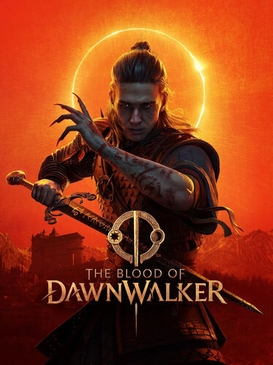
America - Front

America - Back

Rebel Wolves
Role-Playing
 (Add Date)
 (Add Date)
 (Add Date)
| Owners: | 0 |
| Favorite: | 0 |
| Tracked: | 0 |
| Wishlist: | 0 |
| Now Playing: | 0 |
26th Sep 2026 | 44 views
ROLE - 6/10
Player character, Coen, is more predefined than the protagonist of a traditional RPGs, but game gives you meaningful ways of developing him through human, vampiric and witchcraft abilities. Also day/night split changes how he interacts with the world. But he remains a fairly strongly authored protagonist inside game's not so wide structure. You are mostly shaping his combat capabilities and making important moral decisions while playing, rather than creating an essentially blank character with lot of choices whose identity can emerge from play.
The vampire mechanics are also more interesting conceptually than they are systemically. The ability to feed, control hunger and acquire powers from other vampires provides a good foundation, but it doesn't transform the whole game around the character in the way different clans do in something like VtM: Bloodlines.
WORLD - 4/10
This is one of game's biggest weakness for me, where most likely AA budget (we're at the time where $40M is AA budget) didn't allow for more attention to detail.
Vale Sangora looks like a world much more than it behaves like one. There are villages, farms, caves, mines, forests, camps and town of Svartau. There are plenty of NPCs and the game clearly puts considerable effort into giving them dialogue and individual stories. But population density isn't the same thing as a world that's lived in.
The countryside can feel strangely empty, while Svartau often feels like a collection of people positioned to support quests rather than a functioning medieval community. This is particularly noticeable when compared with something like Gothic or KCD, where even a relatively small settlement gives the impression of having an economic and social reason to exist.
The limited enemy ecology compounds the problem. There are interesting individual enemies and bosses, but ordinary encounters become repetitive, with the same basic enemy types repeatedly occupying different parts of the map, either as original initial designs or reskinned, but with same movesets - all in all, bar main bosses, there are only 5 movesets reskinned to different looking enemies.
In the nutshell, Dawnwalker has just enough of a content representing a world without quite having enough simulation underneath it to make that world feel alive.
SYSTEM - 5/10
There are some good interconnected mechanics: vampire hunger, day/night abilities, notoriety, time expenditure, combat, exploration, quest states and relationships. There is some systemic behavior, but it isn't approaching the general-purpose simulation and most of these systems primarily exist to support authored scenarios, not systemic world.
Ultimately, while general systemic simulation is fairly weak, the game still does provide descent reactivity, although it's mostly of authored flavour.
CONSEQUENCES - 9/10
This is one game's two strongest areas. The 30-day clock makes choices inherently consequential and what you choose and who you kill, spare or save (and most NPCs can be killed) can alter or erase quests, determine who survives, affect which allies you gain, and shape the final outcome.
Developers explicitly designed the game around the principle that you cannot complete everything in one playthrough, and the game continues when you fail to save someone (although, IMO, that 30 days clock is way too generous).
There are multiple endings and substantial differences in some quest outcomes, with caveat that most of these consequences are authored rather than emerging from the world's underlying simulation (which is weak).
NARRATIVE - 8/10
Another really good category. The characters are generally strong, the central conflict is compelling, and the game's structure allows you to miss content and live with the results, instead of locking you into predetermined narrative. There is plenty here to experience and ultimately decide the outcomes of people you meat.
The missing piece is directed emergence. The vampire court, factions and wider world don't really operate as autonomous forces that continually develop while you're doing your own thing. The game has a sophisticated collection of authored narrative states and branches and while story is highly reactive, it's still fundamentally authored, rather then emerging from factional and world simulation.
VERDICT
The Blood of Dawnwalker is an ambitious, but uneven attempt to build a choice-driven RPG around time and consequence. Its best idea is genuinely good - time is a finite resource, and therefore doing one thing potentially means not doing something else. That gives otherwise mundane RPG choices an unusual weight.
Its biggest problem is that the world beneath those choices isn't deep enough, which creates an odd disconnect. The game ultimately remains a reactive narrative RPG rather than a living-world RPG that is much better at asking “What will I choose to do, and what will I gain/loose by that choice?” than “What can I actually do in this world, and how will the world respond?”.
FINAL THOUGHTS
Ultimately, I did enjoy the game quite a bit, and if one is looking primarily for reactive narrative RPG and is willing to overlook game's shortcomings in WORLD category, I think one will have really good time with it, but considered as a full fledged RPG it falls short in quite a few areas.
As reactive narrative RPG - 7/10
As living world RPG - 6/10

About Us |
Terms of Use |
Privacy Policy |
Advertise |
Staff |
Contact
Display As Desktop
Display As Mobile
© 2006-2026 VGChartz Ltd. All rights reserved.