




Retro Sales Franchise of the Day/ Top 100 Retro Franchises 90-81 - News
by VGChartz Staff , posted on 20 January 2010 / 5,574 Views
Franchise of the Day
The Sims
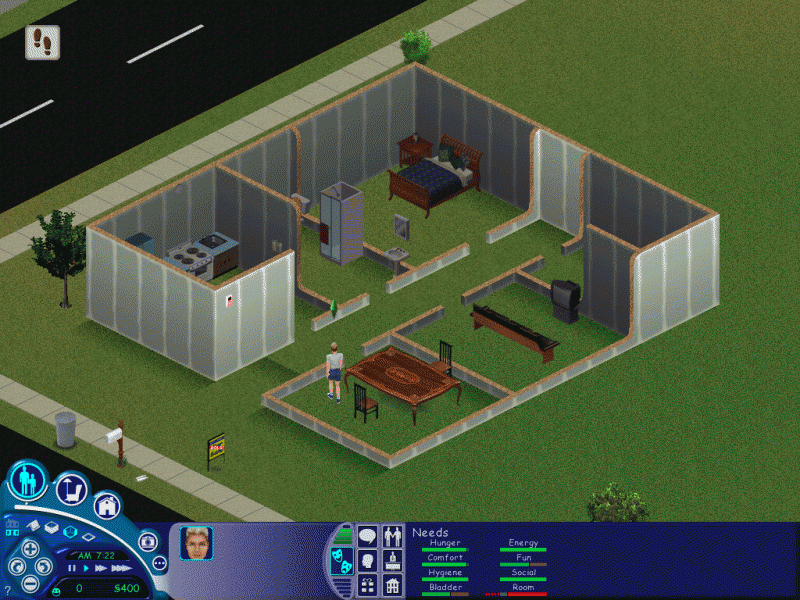
The Sims (2000)
Description: When The Sims released back in 2000 being described as a “virtual dollhouse” no one could have expected it would go on to become one of the most successful franchises of all time. So why did the game appeal to so many people resulting in those enormous sales, and what kind of impact did the numerous expansion packs have? Read on to find out what we decided.
|
The Sims got off to a strong start sales wise, but even more impressive was its strong continued sells. According to EA the game had sold 6.3 million by March of 2002, meaning it went on to sell another ~ten million copies after that (source). So let’s try to break down why it was able to have a strong start, as well as amazing legs.
One aspect the game had going for it from the start was strong critical reception. The game received nearly unanimous praise which helped convince traditional gamers, who are typically early adopters, to purchase the game.
The other factor The Sims had going for it from the start was its pedigree, The Sims was a new property but it also has connections to other games. Many other games with the “Sim” name had been produced, including Will Wright’s own Sim City franchise, which had been very successful commercially itself (although nowhere near as popular as The Sims went on to be).
The Sims was one of the earlier games to target an expanded audience. The game has an accessible and easily relatable purpose; after all it is a life simulating game, something everyone can relate too. This mass appeal led to over 50% of The Sims players being female (source), long before Nintendo figured out how to appeal to both genders with the DS, The Sims was tapping into this audience.
Another interesting aspect of the sales of The Sims is the impact that the numerous expansions packs have had. Only the first three expansion packs make the cutoff for what we consider “retro”, but I’m going to include the sales of all the expansions to talk about their impact on the full game.

You can see that nearly all of the expansion packs sold over two million copies (Makin Magic fell just short), and several of them sold over three million units. Each time a new expansion pack came out it would get prominent retail space, and the packs all clearly stated that the full version of The Sims was required to play. This was a great way to continually promote The Sims, in addition to getting the impressive sales from the expansions.
The Sims had everything going for it, a broad appeal, critical acclaim, a fan base carrying over from other successful franchises, and a continuing market campaign due to the expansion packs. With all those things going for it the fact that it’s currently sitting at the 19th spot of the all times best sellers list is not surprising.

The second part of the “Retro” articles for awhile will be revealing VGChartz’s top 100 retro franchises. The list was voted on by a combination of VGChartz staff and community members. In order for a franchise to be eligible for the list a game from the franchise must have released in the Playstation/N64/Gameboy Color era or before for consoles, or 2001 and before for PC and Arcade games.The order was determined using the formula : 2 x number of votes + number of points (determined by which rank a voter gave a franchise, a 1st place vote gives a franchise 10 points a 2nd place vote 9 points and so on), with ties going to the franchise with more votes.
|
Logo |
Rank |
Franchise |
Notable Qualifying Games |
|
|
|
90 |
Ninja Gaiden |
Ninja Gaiden (1989), Ninja Gaiden II: The Dark Sword of Chaos (1990), Ninja Gaiden III: The Ancient Ship of Doom (1991) |
|
|
Description: Tecmo’s classic franchise known for its addictive yet brutally difficult action gameplay got its start in arcades then gained popularity on the NES in the late 1980s. The player takes on the role of Ninja Ryu Hayabusa as he battles his way through enemies,and as the story progresses through the franchise’s famed cinematic cutscenes. |
||||
|
|
89 |
Ogre Battle |
Ogre Battle: The March of the Black Queen (1993), Ogre Battle 64: Person of Lordly Caliber (1999) Ogre Battle: Legend of the Zenobia Prince (2000) |
|
|
Description: The Ogre series has an interesting release history, having some Japan only versions, as well as the “Tactics” spinoffs. However; the main titles were hybrid strategy/role playing games. The distinctive gameplay, interesting story, as well as other unique features such as multiple endings make this series a favorite of many retro gamers. |
||||
|
|
88 |
Lemmings |
Lemmings (1991), Xmas Lemmings (1992), Lemmings2: The Tribes (1993), 3D Lemmings(1995) |
|
|
Description: The first puzzle franchise to make our list was developed by DMA Design which is now Rock Star North (of Grand Theft Auto fame). When lemmings debuted nearly 20 years ago it was a near instant success thanks to its quirky gameplay. The goal being to lead a set number of lemmings safely to the exit at the end of the level. A design based on real lemmings’ tendancies to migrate in large numbers. |
||||
|
|
87 |
Double Dragon |
Double Dragon (1987), Double Dragon II: The Revenge(1989), Double Dragon 3:The Rosetta Stone (1991) |
|
|
Description: One of the most popular arcade franchises back in its day, Double Dragon helped bring about the popularity of the beat ‘em up genre, as well as helped pioneer features such as cooperative gameplay and the ability to take defeated enemies’ weapons. The games were also ported to home consoles, although those versions are typically thought to be far inferior due to a decrease in graphical power and drastic changes to the story. |
||||
|
|
86 |
Teenage Mutant Ninja Turtles |
Teenage Mutant Ninja Turtles (1989), Teenage Mutant Ninja Turtles II: The Arcade Game(1990) , Teenage Mutant Ninja Turtles III: The Manhattan Project (1992) |
|
|
Description: The gameplay of retro Teenage Mutant Ninja Turtles varied quite a bit between games. The first entry in the series was an action/platforming game, whereas its sequel was a cooperative beat ‘em up. Both types of gameplay found fans though, with the first game in the series being one of the most successful non Nintendo games on the NES. |
||||
|
|
85 |
Gauntlet |
Gauntlet (1985), Gauntlet II (1986), Gauntlet Legends (1998), |
|
|
Description: The first game in the series released way back in 1985 in arcades. The series was one of the first dungeon crawlers released, and in that way has left quite a legacy. The series was a fantasy “ hack and slash” game, that up to four people could play at once. After a long break between releases the franchise was revitalized in 1998 with Gauntlet Legends. |
||||
|
|
84 |
The Sims |
The Sims (2000), The Sims: Livin Large (2000), The Sims: House Party (2001), The Sims: Hot Date (2001) |
|
|
Description: The PC phenomenon released in 2000 and sold millions of copies by getting people to neglect their daily chores, and instead spend time controlling virtual people doing the same thing. This simple premise got millions of people to put tons of hours into the game, trying to earn a raise, build a dream house, or watch sadistically as they remove the ladder from the pool. Before anyone could get tired of the game many enjoyable expansion packs (of which only the first three qualify for our list) were released that kept players coming back for more. |
||||
|
|
83 |
Tomba! |
Tomba! (1998), Tomba! : The Evil Swine Return(1999) |
|
|
Description: If you haven’t heard of this one don’t feel bad. Tomba! was a little known franchise on the Playstation that was well received and gained a small but loyal fanbase. After Tomba! and its sequel released the games’ developer Whoopee Camp went out of business. The series was a side scrolling action franchise, where the main character Tomba attempts to battle/capture the Evil Pigs. |
||||
|
|
82 |
Mana |
Final Fantasy Adventure (1991), Secret of Mana(1993), Legend of Mana (2000) |
|
|
Description: An action role-playing game from Square Enix that actually started as a Final Fantasy spinoff before growing into its own franchise. The best known entry in the franchise, Secret of Mana for the Super Nintendo, utilized a unique up to 3 player cooperative multiplayer gameplay, that shared as many gameplay similarities to The Legend of Zelda series as it does to the main Final Fantasy series. |
||||
|
|
81 |
Ultima |
Ultima I: The First Age of Darkness (1980), Ultima III: Exodus (1983), Ultima V:Warriors of Destiny (1988), Ultima VI: The False Prophet (1990), Ultima IX: Ascension (1999) |
|
|
Description: Ultima is a fantasy RPG series that first launched 30 years ago. The series is known for being one of the earlier role playing video games, the complex plot spanning multiple titles (the 9 main games in the series are split into trilogies), and industry advancements with things ranging from having computer games retail in boxes instead of bags to a method of copy protection. |
||||


Thanks for reading today’s Retro Sale/Top 100 franchises countdown article. Be sure to leave a comment with your thoughts on both the sales of The Sims, as well as what you think of the franchises on the list.
Most recent "Sales of the Day" articles Retro Sales/Top 100 Countdown, Sales Battle, Hit or Miss, Look at Those Legs, System Mover, Change in Sales.
| Europe | Americas | Japan | Total (millions) | |
| The Sims | 4.69 | 11.39 | N/A | 16.08 |
More Articles

I'd just like to comment...how is 'The Sims' Retro? its not even 10 years old yet. Also some stuff like Tomba and Lemmings technically didn't even have official sequels or sequels that reached America.

I don't know how I missed the first article on this, and almost missed this one too. Good thing there is a link back to the first... Awesome list, so far each article brings back some great memories of several games. At this rate, I'll probably have played at least one game of over 50% of the franchises.
patjuan, no it can be released anywhere, and the people who voted were encouraged to consider games released in all regions. But the reason I labeled that column "Notable Qualifying Games" instead of just qualifying games, was because I was sure I would leave some out, and since that was a Japan only release I thought most people may not be familiar with it.
i loved secret of mana when i was a kid. so much so yhat i bought it again when it came out on gba
was a bit spoilt though because i went straight from that to ff7

@Clayton Hainline,
Are we only talking about Western releases of these Franchises? Because Seiken Densetsu 3 was left from the Mana list.
Well...Mana...Ther are others+??
Anyway, Secret of Mana was one of my first Snes games and loved it.
I have spent some time with The Sims but meeeh...