






Former Xbox Exec Peter Moore Discusses the Potential Future of Consoles - News
by William D'Angelo , posted on 03 May 2024 / 4,667 Views
Peter Moore, the former Xbox, Sega, and Electronic Arts executive, in an interview with IGN discussed the state of console gaming and how it has failed to grow in a long many years.
"Yeah, well the numbers don't lie," said Moore. "Let's not forget hardware is a messy business. If you extract hardware and look at the P&L (profit and loss) on its own, it's brutal, but it's the facilitator to the software and services that drive the industry. You've got a generation coming through now, and this is the concern maybe Phil's talking about, that’s more likely to be utilizing their smartphone for everything, including gaming.
"From the perspective of what the console means, it was a plug and play. It was easy, it was powerful. But it goes back 35, 40 years. What you're now seeing and certainly hearing from a company like Microsoft is, does the cloud replace the need for bespoke hardware? Does streaming change the way we game to the devices that we're now used to, in particular smartphones? I don't think people are gaming less, they're just gaming differently. And more and more you're seeing a generation coming through that is not about to sit down for an evening in front of the television with whatever the game du jour is this week."
He added, "Gaming, while still robust — let's not forget, we're probably $200 billion this year — it's fragmented across regions, across different content, and there's only so many hours in a day and there's so many choices for us to use those hours. Information, entertainment, more and more content, YouTube, streaming channels — for me it's Apple TV, Paramount Plus, Peacock, Amazon Prime, go on and go on. And linear television sits in the background now, but with that immense opportunity to sit and gorge on content rather than interact with a console."
Moore said that even when he was working at Xbox in 2007 there were discussions if the Xbox 360 generation was going to be the last console generation as they wondered if TVs would come with chips that can play games and all gamers would need is a controller.
"The broader picture — and we certainly feared during my time even at Microsoft — we were saying then, in 2007, is this the last console generation?," said Moore. "Do televisions start to come with chips that can play games and you just need a controller? Is the PC, as it was then, a renaissance? And why do you need a bespoke piece of hardware that costs us, Microsoft, billions upon billions of dollars to install, and you hope to hell you get an attach rate of software and something out of your Xbox Live, your connected service, that would justify the losses, the hemorrhaging of cash that hardware costs you?"
He added, "So I think that's what we're facing. In particular Microsoft with Azure is thinking, are we now finally ready for cloud gaming? Are we finally ready to just crank on our 8K television, get in our gaming menu with 10,000 games available? Who's playing what right now? Click, go, play."
Moore said the reason they discussed the last generation in 2007 was due to faster and cheaper internet speeds with broadband, and the growth of streaming with movies and music.
"Yeah, the Xbox 360, during the back end of that," said Moore when pressed about the discussions of the Xbox 360 being the last console generation. "You have that concern. If you were thinking then of something that launched the mid-2000s, what does the end of the decade look like and how long the cycles were — usually five, six years — and what does it look like in five, six years? Are we going to need another? Well, the answer ultimately was yes, but the questions were being asked then.
"And why? Because you've got faster, cheaper broadband, more ubiquitous in just about everybody's home. I always remember this: you're looking at music and the lessons learned, and all of a sudden streaming of high definition movies was starting to happen as we had those capabilities at home. Again, gaming wasn't immune to this. The thing that kept us going was, games were 30 gigabytes then or 40 gigabytes and music was four megabytes, and a movie you could stream, but it was linear and passive."
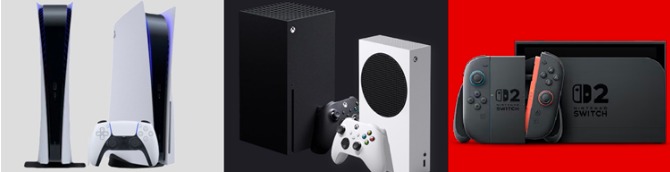
Moore was asked if the Xbox Series X|S and PlayStation 5 would be the last console generation and he stated, "PS5 saying, yeah, maybe we could sunset this thing, but no mention of a PS6. Now look, Sony is very much a hardware company, so I would say that that's your barometer company.
"Microsoft, not so much. Microsoft I'm sure would love it if everything moved into the cloud. The only thing that Microsoft doesn't get to play in as well as anybody else is the smartphone business, right? Because that's where Apple, Google, the handset manufacturers will benefit from enormously and they already are. They're making tens of billions of dollars without really trying in gaming with the 30% royalties.
"But I think it's a real serious question that's being asked I'm sure in Tokyo, in Redmond, Washington, in Kyoto. That's what everybody's working on right now, because when you start off that next generation, you've got to be ready to absorb billions of dollars in losses. And is the industry, given all the layoffs and everything we're going through right now, is the industry ready for that? Look at Sony laying off 900 people — a lot there in the UK. My two eldest daughters work at EA, they're all right, but they're always looking over their shoulder.
"You just never know. And tech broadly, Silicon Valley broadly, you just don't know what's going on anymore as everything evolves and inflation hasn't helped. A lot of companies, gaming companies in particular, did not exit Covid well, hired too aggressively thinking this thing was never going to wind out again. And of course it did. I always call it the Peloton theory of like, oh, we're forever going to be at home and we're forever going to be playing games and jumping on a bike. Well, no, we're not. And if you thought that, as did Peloton, and you geared up for that future, then that's why they're in such a financial mess right now.
"So I think that in answer to your question, those are the questions that are being asked right now and it'll all be tied around, do we continue to develop silicon? The role of AI, what does that mean? You can't look away from that. Are these companies willing to go another round of multi-billion? And at the same time you're gearing up for another cycle where gamers may not embrace the console and just say, you know what? I don't need this, times are tough.
"I've got my phone, I'm enjoying what I've got on my phone. There's plenty of games I can play. Failing that, of course I have my PC or my Mac, I can go do whatever I need to do there. And do I really need to be spending what could be five, $600 on a bespoke piece of hardware just to play games? So both the companies and gamers themselves are asking this question."
He added, "What is it that PS6 can do that PS5 can’t that would make people jump from PS5, or same with Xbox, same with Switch, right? God forbid it's just incremental. And I think that the companies are also looking at that. What can we do to extend this life cycle?
"And then if you're Microsoft and you're Phil Spencer, you've got Satya Nadella coming in and saying, alright, what is the future here and how does this play into the biggest strategy of cloud with Azure, with AI? What are we doing with AI game development? How do you make your games faster, cheaper, with less people? These are all the questions I think are being asked."
Moore doesn't want to be a doomsayer, but sees things are changing in the gaming industry and the words of first-party and third-party might disappear.
"I'm not being a doomsayer," he said. "What I think Phil is doing is setting up some smoke signals that we're thinking very differently. And then the idea of, well, we bought Activision Blizzard King, but we may not make those games ultimately exclusive on our platform. There may not be a platform, and we turn into what we really had at our roots, which is a software and services company."
He added, "I think the words first-party and third-party may just disappear. It'll just be, we make great games and we deliver a phenomenal service on which you can play our games, and first-party and third-party, those are legacies of hardware.
"I think the question that will be being asked from Nadella and the executive team to Phil is, alright, what we've just given you, whatever it was, $69 billion, but what does the next five to 10 years look like, Phil? What is the long-term strategy? Exactly what's going on right now? And yeah, they'll be like, alright, we're thinking about what the next-generation of hardware could look like. But the challenge will undoubtedly be coming from Nadella: what does it look like without hardware? And so that's going on right now, and, what do we look like if we're more like EA than we are Sony? So that's what I'm sure is going on."
Moore said Xbox releasing four of its games on rival consoles is way to test the water to see how well it does.
"I think they're dipping the toes in the water to see how all of this works," he said. "And you do it a little bit tentatively and go, all right, let's test the ecosystem here. We're not throwing Halo out there."
He added, "Look, if Microsoft says, wait, we're doing $250 million on our own platforms, but if we then took Halo as, let's call it a third-party, we could do a billion… You got to think long and hard about that, right? I mean, you just got to go, yeah, should it be kept? It's a piece of intellectual property. It's bigger than just a game. And how do you leverage that? Those are the conversations that always happen with, how do you leverage it in everything that we would do?
"It's had its ups and downs, but look, Xbox wouldn't be what Xbox is without Halo. But yeah, I'm sure those conversations are happening. Whether they come to fruition, who knows? But they're definitely happening, I'm sure."
Moore was last asked about potential backlash from the hardcore Xbox community would make a difference to Microsoft.
"The question would be, ultimately, is that reaction enough not to make a fundamental business decision for the future of not only Microsoft’s business, but gaming in itself? Those hardcore are getting smaller in size and older in age. You've got to cater to the generations that are coming through, because they're going to drive the business over the next 10, 20 years," he concluded.
A life-long and avid gamer, William D'Angelo was first introduced to VGChartz in 2007. After years of supporting the site, he was brought on in 2010 as a junior analyst, working his way up to lead analyst in 2012 and taking over the hardware estimates in 2017. He has expanded his involvement in the gaming community by producing content on his own YouTube channel and Twitch channel. You can contact the author on Twitter @TrunksWD.
More Articles

I might be approaching 40, but I can assure you... I'm more financially secure than I was 20 years ago... And I will be gaming for the next 20 years.
Don't leave us behind just yet.


Everything he says here makes sense to me.
It's all pretty common sense stuff, really. Obviously, every company would prefer to get out of the money losing hardware business. The hardware business only exists in order to sell software. Everyday it becomes more and more reasonable to stop selling hardware, but still bring people into your ecosystem, where all you have to do is sell software. I can't think of any reason that gaming, in the long term, will be any different than music or movies. It just takes longer because gaming needs a lot more bandwidth, and needs data to flow both ways at high speed, all the time. So it's a more technologically difficult proposition. But it is being solved right now.
And yeah, as generations change, so do preferences, so does technology, so do habits. That's just the way it is. A couple of generations ago, everybody in the family gathered in front of the one TV set for a couple of hours in the evening, where they watched one of three or four channels. Over time, that changed to 24-hour per day cable television on 150 channels. And now it's content on demand anywhere you want it.
Gaming is going the same way. It has been moving that way for a while, and it's going to keep moving that way. There's literally no reason for it not to. The fact that some middle-aged people hanging out in gaming forums look fondly upon the old days isn't going to stop it. We've all been gaming for 20, 30, 40 years. It's unlikely that we're going to stop gaming because the delivery method changes. Plus, it isn't changing overnight. It's been changing for 15 years or so now, and it'll probably be another 15 years or so before the dedicated hardware model that we all grew up with is gone. So, we'll change with it. We're just going to whine about it a bunch along the way, because we're old.

That’s the best reply i have seen on this site lol and I been here for years without profile made

I can see Nintendo making traditional consoles until the time most of us die.
Microsoft and Sony probably have at most 20 years left if they continue down their current path of obsession with power.

He kind of makes this point in the article, basically saying Sony and Microsoft eating a multi billion dollar loss at the start of each console generation is not sustainable and there are fairly limited options to offset these costs without sacrificing power (hence the obsession with cloud gaming)
Eveything is shifting from consoles to streaming and I think it upsets lots of people sinking money into but Xbox cloud gaming is a god send for a busy dad be honest I like games coming to mobile I’m changing along with the game industry and I’m eager to see

so true

I disagree with nearly everything moore says especially the "Those hardcore are getting smaller in size and older in age. "
I don't really think that's true. Elden ring and BG3 proved that people still want a somewhat hard-core experience, not to mention hits of the past decade like BOTW, Witcher 3 ect ect, that are games you have to sink time into. As for the streaming part, the economics just don't seem to work for it. If Microsoft wasn't subsidizing GP it would have probably shut down after a year(much like Xbox itself, which has never recorded a single profit for Microsoft according to leaked documents)
The thing is what costs more? the hardware to run games over the cloud, the internet fies, the electristy, the maintaince of the servers ect. In the long run, how much cheaper is that really than just makeing hardware and selling it at breakeven points? People assume the costs go away for the user, since they dont need to own console hardware.... but the other end of the stick is, that cost is now paid by the platform holder.
Currently you can buy a console for US$450 without games, so you need to spend another US$40 to 70 to play.
A Game Pass subscription costs between US$10 and 17 per month, so:
450/10 = 45 months
450/17 = 27 months approximately
It means that you will save between 2 and almost 4 years just by not buying the console.
There are more things... if you think about it from an environmental point of view there are huge advantages:
-
Companies will be responsible for the operation and maintenance of hardware, thus avoiding the disposal of electronic parts in common waste, and there may even be a new market for recycling electronic components.
-
Hardware production and logistics costs will also be eliminated, as cloud computing companies will be responsible.
-
The company works to minimize costs and maximize profits, so energy management will be something taken very seriously. Perhaps if we combine all gaming platforms, energy consumption will be much greater than that of a server.
-
With AI, server management will be much more effective, as soon as it detects that the server is idle for game demand, it can be used for other tasks, thus idleness is reduced, therefore, there will be more value generation for the company .
The fact is that many users and even countries do not offer an ideal scenario for the correct disposal of products and waste, so if there is a possibility of reducing the user's need to have several products for each task, that is, a service to add several tasks, this will be great for the environment.
As long as Sony & Nintendo continue to make consoles I’ll definitely keep buying them!!!!
Consoles I think fit a middle. Phones and PC have their non-gaming purposes as they do their gaming purposes. Cloud is fine but even if better resolution it doesn't make me as compelled as physical or a 'internet isn't going or their servers' welp time to read a book instead or my old consoles instead.
Budgets are high for sure. Some reveals were good back in the day. Some games ideas were more varied then formulaic as they are now. It's why going backwards and not to the hit games gave me a lot to look into going oh that's possible that's cool.
So I get when hardcore go ah the animations, ah the writing and more. Besides my gameplay focus and going oh that's different and never attempted again or oh that was and it got dumbed down (cough Grid 2008 dumbing down Alfa Romeo Racing Italiano's rewind system/RPG systems, sure it's a one make game but Milestone tried it's better than most shovelware car make titles. As good as Grid 2008 as it's a feature I get disappointed hasn't changed since yet expandable elements are possible. Yet Milestone improves Ride 4 with Forza Motorsport 1 & 2 region system. Go figure sometimes with gameplay ideas).
Casual games with hobbies or other particular appeal exist on mobile or console/PC but will AAA do them no, they want to be a blockbuster or what works. Sometimes you get the Pentiment/Song of the Deep but it's every so often they want to try it.
To me hardware gimmicks or varied genres help me decide a console. Xbox besides it's IPs other than Impulse Triggers which don't get used really, it's a back compat and SoundCloud/Blu-ray player for me. Only certain games.
PS Portal/PSVR2 haven't been appealing to me as much. Switch has with it's variety of IPs in different genres, it's gimmicks that while aren't as appealing as Wii U to me and is just a continuation of Nomad/PSP to a TV it's still nice and while a Lenovo Legion has split controllers (like Joycons) do games really benefit from them probably not but still cool, some like Pikmin 4 went directions I was happy with but it happens.
Some fair points on the business side they have to consider of services, hardware and more of course in meetings. Versus what us customers actually care about. Like mobile/Pocket PC Sony/Microsoft were there then Zune/Windows Phone alongside the iPhone.
Like media focus of PS3/Xbox One they were there watching. So I get the Smart TV side of things but that early hmm. I mean PSP Go and digital only with that small of transfer for 1GB games versus the smaller few 100-800MB games or even PS Minis being small not everyone was looking for them but PSP Go/Xbox One S All Digital, Series S, PS5 Digital they are prepping us.
Cloud has a place but like with Kinect not everything has to be for gaming. Kinect works outside of gaming for tracking for medical. Cloud has it's places outside gaming as it is. I can benefit but we want it as a 'optional solution' not the 'only solution' to replace consoles. I don't want everything internet connected.
I want offline options sometimes or prefer them. If live services already limit things online and we don't get patched offline experiences then yeah your game isn't appealing to me. It already gets patched and does or doesn't stop save file editing or archival of the game. Cloud cutting more out of the local on the console sure they want but I mean eh.
But there is new generations and trends and there is people like me in my generation that have always been gamers, had my flash/mobile look and am still a console gamer and always will be.
I have expanded to other genres, retro consoles, failed consoles, history of consoles. I care about the medium, I care about gameplay mechanics and why I pick up or research left behind niche games.
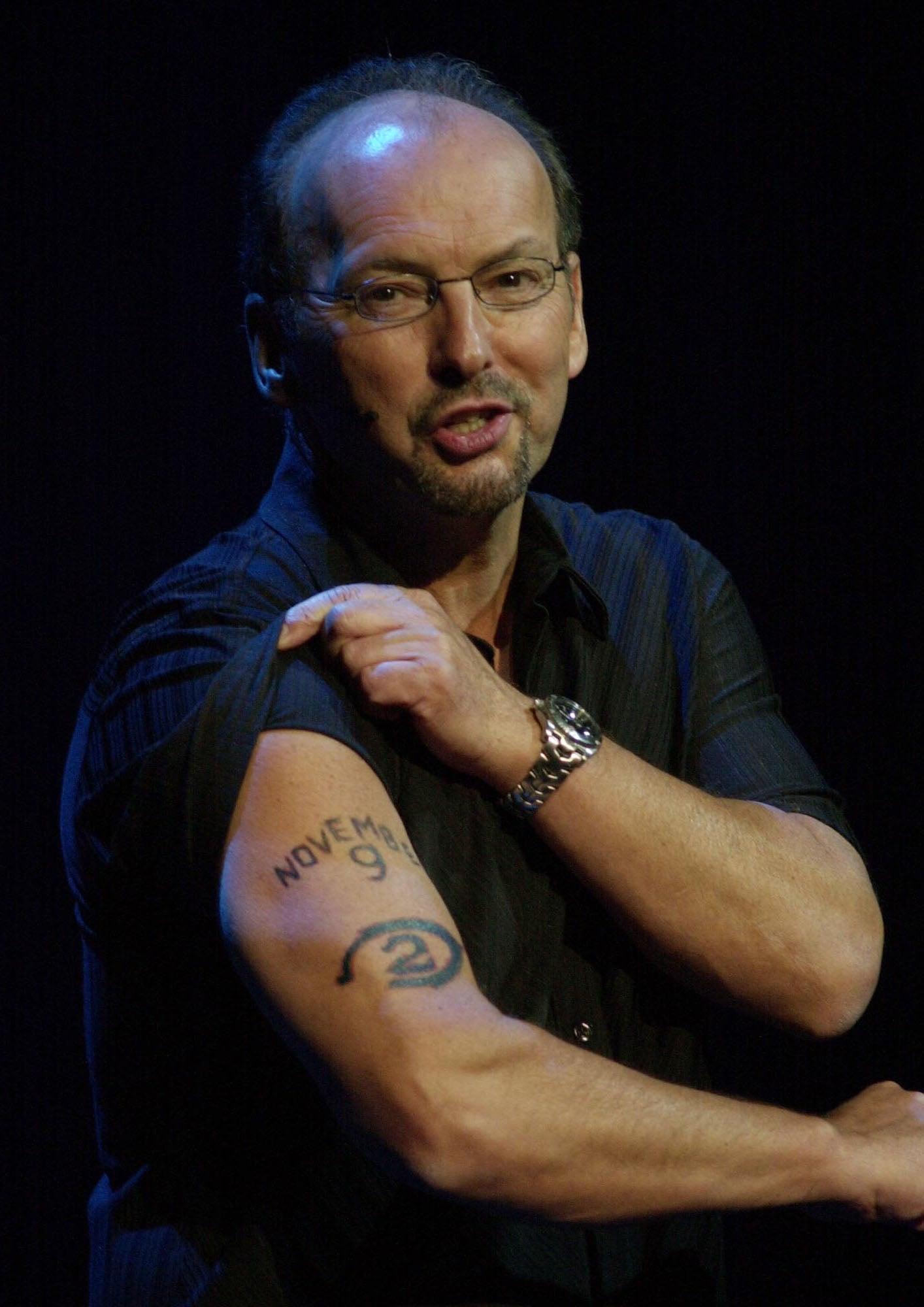
I loved the halo 2 tatoo
I share the same business vision as Moore... What does the second largest cloud computing company dream of for the gaming market?
I believe that Microsoft wants that in a future of 10 to 20 years people will not depend on hardware to be able to play, and that users will be able to buy games in their store and play them on any device, as well as the user can choose to subscribe to a service (game pass).
If you analyze it, a console has no value for entertainment, so it is the games that make sense for purchasing hardware. If telecommunications technology eliminates high latency, cloud gaming can deliver a game at at least 60 FPS and in 4K, then there will be no point in purchasing a US$500 console, or a gaming PC. Cloud gaming will enable users to run any game on a low-end PC or mobiles.
I think Microsoft's next moves will be to create its game store on Mobile and enable users to play games purchased from their library through XCloud. I would like to see Microsoft become more aggressive and reduce its profit margins on games sold, as a result, it would always be offering cheaper games than the competition, and this is something that attracts many users, as they can have a console to play multiplatform games and another only for exclusives.
I honestly think the constantly better smart phones, is a safer bet, than betting on the cloud. Maybe 30 years from now, its more and more common to game on your smart phone, and everyone has a dock for their phone to the tv.
You misunderstand Moore's vision. Cloud gaming comes to eliminate the need for users to purchase hardware just for games, as in the case of consoles, or to make weaker hardware such as low-end PCs and mobiles capable of running more complex and heavy games.
I understand that part. However its not free for a company to offer cloud servers. They probably cost them as much as them makeing a hardware console, and selling you it, does. Ontop of that, they have costs with maintence, and electrisity ect. These costs don't go away, so its just shifting it from the consumer, onto the platform holder, that then has to charge the consumber more, to make back said costs.
part 2: Which is partly why I dont believe in cloud gameing, along with stuff like input delay, lag, compression artifacts, people not everywhere haveing fast enough internet, or unlimited data caps ect.
There are smart phones out now on the market, much more powerfull than a Nintendo Switch.
The idea, that smartphones keep advanceing slowly but surely.... and eventually become more and more common for gameing, isn't far fetched. And it comes without alot of the issues cloud gameing has..... at the cost of its performance not really being as great as what you could stream. However how much more power do consoles need? Isn't the switch currently fine for a gameing machine? Smart phones will keep getting more and more beefy.
As long as consoles are relevant in the gaming market, then I believe that Microsoft and Sony will not abandon the platform, but the gaming market is much more than just consoles, there are customers who do not want to pay US$450 for a console to play some Sometimes, at this point, cloud gaming is an alternative to satisfy customer needs.
If the customer feels good about buying a console or building a PC, then that's fine, but if the customer feels good about the possibility of just playing on cloud gaming, then that's great too... No one needs to impose on others how they will do play and where you will play.
The Uber service, for example, is an alternative for people who do not need a car frequently, so the customer, when hiring the service, is paying the costs of operation, maintenance and other expenses. Nobody cares that the car costs were transferred to the company or the employee. The point I want to make is that the user will have another alternative to play, and it will also be cheaper than buying a console just to enter a certain ecosystem.
Cloud gaming costs are already included in the current service, whether through GeForce Now, Game Pass Ultimate or any other current service. Of course, there is an adjustment every year due to inflation and other expenses, but it is not something that will be unfeasible for the user, as otherwise the service loses its reason for covering the largest number of users possible.
Complementing the variety of options for the user to play. Let's assume you live in a large urban center with several options for getting around. You wake up and have to go to work in the city center, where you have the option of going by car, bus, bicycle, motorcycle, subway, Uber, taxi, in short, there are many ways... there are days when you will go by car because the traffic is favorable, there are days when you will be tired of driving, but you want exclusivity and will take an Uber or taxi, just as there will be days when you want to get there faster and without getting into traffic, so you will take the subway, but you can return home by bus to enjoy the city's landscape at dusk... having variety is not bad! This is great for the consumer!
Xbox's managment has been overall terrible, plain and simple, so much so that even while having the platform that offers the best bang for your buck in terms of sheer power; The one with. arguably, the best gaming service ever conceived (Game Pass) and more titles and ips on their shoulders than any of their competitors with their recent billionaire acquisitons it still leaves A LOT to be desired when it comes to the gist of the matter: SALES. No, you salty, squeaky fanboys, you've got to swallow this hard one (that's what she said) for the current state of the brand is unexcusable specially when Microsoft which is the largest company in the world has truly gone all-in in their bet to gain a larger share of the pie in the gaming space and what do they get in return? A significant sector of their enterprise with no promising future whatsoever. Completely Unacceptable.
What?
Combining Xbox and Activision Blizzard's revenues is already close to that of Playstation, so how is the division not sustainable? The division in 2022 generated US$ 16 billion in revenue, while Playstation generated US$ 26 billion in the same period, however the XBox console has an installed base almost 3 times smaller than that of Playstation, but the difference in revenue is less than half .
There would be several ways to reverse this, one of them being to buy exclusive third-party games, reducing profit margins on sales of third-party games, as they would always be selling below the competition, further subsidizing the price of the console, negotiating with AMD delivering more chips, if necessary, covering the competition's offer... Microsoft has the resources to do this, and of course it would put pressure on Sony, as 1/3 of the corporation's revenue comes from Playstation. I think if Microsoft had this stance, it would be ruining its image both with regulators and other gaming companies, but they could suffocate Sony, especially when Apple didn't reach its iPhone sales target.