


How Microsoft Integrated Mojang Set the Stage for More Xbox Acquisitions, No Signal to Slow Down - News
by William D'Angelo , posted on 04 February 2021 / 4,456 Views
Microsoft in November 2014 acquired Minecraft developer Mojang Studios and for several years after that remained quiet on acquiring new studios. However, starting in E3 2018 Microsoft announced the acquisition of several studios.
Compulsion Games, Double Fine, InXile, Ninja Theory, Obsidian, Playground Games and Undead Labs have all joined Xbox Game Studios between E3 2018 and E3 2019.
Acquiring developers is the easy part, while integrating them into a big company like Microsoft is a big challenge. Microsoft took what they learned from acquiring Mojang in 2014 and used that on their most recent acquisitions. They've given the developers a bigger budget and willing to extend their timeline to ensure they release a better game.
"If you look at the list, you can find our lineage with many of those studios," head of Xbox Phil Spencer told GamesIndustry in an interview.
"Take Ninja Theory -- we did Kung Fu Chaos with them when they were Just Add Monsters on the original Xbox. You think about our relationship with Tim Schafer around Psychonauts and some of the Kinect work that he did. So it starts from a relationship that has been built.
"The other thing that gave us confidence is the track record we had with studios. Mojang was a big point for us, where it was obviously a large acquisition, with an incredible franchise in Minecraft. But Minecraft is not a non-complex product. It's on a lot of platforms, it is very community-led. Our ability to integrate Mojang and grow Minecraft also gave us confidence."
Head of Xbox Game Studios Matt Booty added, "It's kind-of a phased thing. Take Compulsion. They're working on their next game and have spent the last year on early ideation. I try to keep us as far away from that as possible.
"And then, as it starts to get exposure within the organisation, feedback will come in and things will start to steer. But it's important to leave them alone for as long as possible, until they've got something that can walk on its own. And then there's no shortage of feedback within Xbox."
Mojang and Minecraft
Matt Booty was tasked with integrating Mojang Studios into the corporate giant and with $2.5 billion being spent on the acquisition a lot was riding on its success.
"With Minecraft, it wasn't our place to steer a game that we had not created ourselves," said Booty. "It was a game that had this vibrant, thriving community. There was a studio culture and identity there.
"And we had a lot to learn from Mojang. It would be easy for a large organisation to come in and say: 'Hey, we're going to show you how it's done. We're going to get you off this Java code. We're going to get things moved over to C. We're going to get you off Amazon Web Services and over to Azure.' But it's important to realise that the conditions that created Minecraft, how it came to be, are likely to be things that are difficult to recreate within a more corporate structure."
Mojang studio head Helen Chiang added, "The approach we took to the acquisition came from Matt. A lot of times you see big companies buy smaller companies, and it's easy to lose the magic of what you've purchased. It was really important that this acquisition was about retaining all of that great talent within the studio, and ensuring that you're continuing to foster that creative spirit.
It's not all about business results; it is about building a foundation of trust. As you can imagine, there was quite a gap in the culture between an indie studio and a large corporate company like Microsoft. It was about making sure they trusted that the leaders were not going to do harmful things to Minecraft.
"And how Matt integrated Mojang really helped set the stage for how Xbox acquired and integrated all of the additional studios. Before, Microsoft acquired companies in a specific way. And this not only set the foundation for additional game studios, but when you look at LinkedIn and GitHub, they also have this minimally integrated approach. That really was something that Mojang set the foundation for."
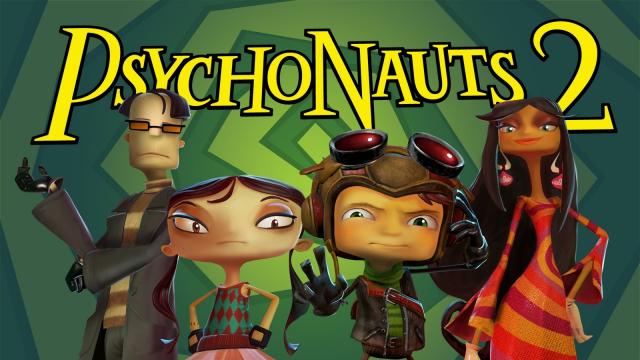
Double Fine, Tim Schafer and Psychonauts
Development at Double Fine have remained the same as before, with one big difference, since being acquired by Microsoft. There is no longer a worry about having enough money to pay staff.
"Things have been almost exactly the same, just without the terror of going out of business all the time," said Double Fine boss Tim Schafer. "We've been doing this for 20 years, so it's not that terrifying. But you do think about where we're going to get the next six months of salaries from. That fills your mind a lot, and I am just getting used to my mind being free of that. Being able to apply it to games and creativity has been an adjustment, but a really great adjustment."
"With Psychonauts 2, we could see the end of our budget coming up, and so we had cut a lot of stuff," Schafer added. "We had cut our boss fights. Now we are able to put those back in, and we're like 'we think people would have noticed if we didn't have those boss fights'. Being able to complete the game in the way that it was meant to be was very important.
"I'm looking forward to doing things for the right reasons. When you only have a certain amount of time and money, you might jump into a part of the game that you're not ready to jump into, or start working on art before you're ready with design. But now I look forward to this era where we are doing everything for what is right for the game."
"When they first started talking to us about acquiring studios, we said we are not looking to sell," Schafer added.
"But going up and having lunch with Mr Booty, and hearing the vision for his business and Game Pass... I started to see two things that were important to me. One was that we could keep our culture. I was concerned, I was like: Will I need to put up a big Windows logo in our lobby, and change my email address to @microsoft.com? And he was like 'no, none of that, you stay your own company, you're just part of our team'. Of course, everyone would say that, but I kind-of believed it because I started to understand their vision for Game Pass.
"With Game Pass, it wouldn't make sense to acquire Double Fine and then assign us a bunch of Forza DLC. That's not what you'd want from a studio like Double Fine. And Game Pass seems like a great opportunity to have a diversity of games, a plethora of unusual content... I can see how the type of games that Double Fine makes could fit into that."
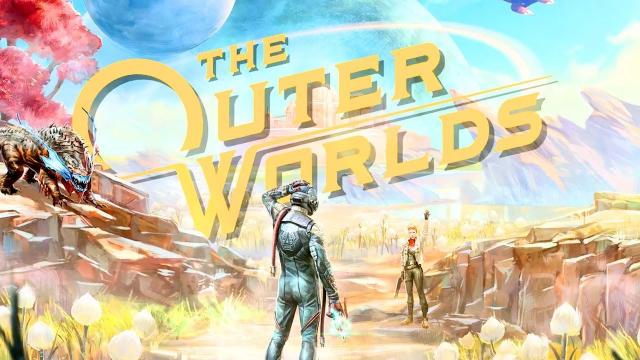
Obsidian Entertainment and studio head Feargus Urquhart
"Around spring or summer last year, I had a number of employees who were super disappointed because they thought it was going to be more different. Not from the standpoint of us not being supported, but because they felt we were becoming part of this 'big Microsoft,'" said Obsidian Entertainment head Feargus Urquhart.
"The only really different aspect of my day-to-day is not having to be the guy getting the money from the publishers. That has also changed how we approach development. A lot of times as an independent, how you develop games is dictated by the partner, because it's their money and they have a way they want you to make a game. It's been cool to apply those years of experience, and say 'hey, we can make the games the way we want to make them.'"
Obsidian Entertainment is using Microsoft's resources with less of a focus on expansion. The resources they are using includes user research labs, tech teams and other studios.
"One of the most important things is just access to experience," Urquhart said. "Matt has got us altogether, and we're a cranky group and we don't always like to go somewhere because we've got all this other stuff going on. But whenever we do get together, it's great because we forged friendships.
"It sounds weird, but running an independent studio can be a lonely thing. We know each other, but we're all usually so engrossed in what we're doing. But now we're here, we are all up on Teams together, so it's very easy for me to send a thing to Alan at Turn 10 and go 'hey, how do we blah blah blah blah', and we either chat via text or we get on a call.
"The established Microsoft studios, they have another way of looking at development. I am going to be hyperbolic, but you have the limited resources versus infinite resources, and how do different groups deal with that? To be honest, a lot of what I've had to do with Microsoft is back off saying 'we can only spend 17 cents on that'. Not that we should spend 17,000 cents on that, but I need to think longer term. And sometimes being an independent studio involves thinking shorter term.
"And I also think it's interesting -- not to toot our horns, but you've got Brian Fargo, and me, and Tim Schafer and Nina [Kristensen, Ninja Theory], and all these people with lots of experience making games, and we have an effect on the organisation. This idea of the limited integration studio was the best idea. Maybe it was intended or unintended, but by letting us be who we are, we then have a positive effect on Microsoft."

InXile Entertainment and studio head Brian Fargo
"I knew what I wanted to do next. It was a category we loved, it was a unique opportunity in the marketplace, and I had all the ancillary information as to why I felt it was a great idea," said InXile Entertainment boss Brian Fargo. "I prepared the whole thing, I sat with Matt and said here is what we want to do, and he said 'if that's what you want to do, then great'. It was over in like 60 seconds. That was wild for me, because we're used to this six month process of back-and-forth with a million questions -- with things like 'how many pieces of art will there be?'
"I had to go back to Matt a second time and go: 'I just want to be sure that you understood that this is what we're doing.' And he said: 'I love the idea so much that I don't want to see anything, so that you guys over-index on what I say and think you have to change it in some capacity.' That's a true story."
InXile has been excited to grow their team with adding 20 people to the team, with plans to add another 20.
"As a smaller developer, we always knew the positions that we were missing, and the things that we wanted to do to up our game," Fargo said. "We want to show what we're capable of and step it up a notch in terms of the experiences we can deliver.
"Specific to that, you have these small, entrepreneurial, artistic companies who want to craft something, but oftentimes they don't have the financial backing that they need. So it's hard to get the great talent, because that talent wants stability. We've been able to bring on the lead producer from World of Warcraft, an artist from Rockstar, one of the lead designers who worked on God of War.
"It's been really compelling to say that you can touch the product, you can get your hands dirty and really push the envelope on what we're creating, and we get to do that with the financial stability. I have already seen the quality of what we're producing, and it's come up in leaps and bounds over the last year."

Head of Xbox Phil Spencer on Future Acquisitions
Phil Spencer is making sure the studios acquired are integrated in the right way and they are given the support needed to make the best possible games.
Spencer and team Xbox has full support from Microsoft CEO Satya Nadell and CFO Amy Hood. There are no signs of them slowing down on acquisitions, but it has to be the right developer to add to Xbox Game Studios.
"We acquired quite a few new studios in a short amount of time, and we want to make sure that those studios are on-boarded in the right way," Spencer said. "As Matt and I were talking about it, we just wanted to make sure that we treated the incoming studios as full parts of the organisation. That they felt supported.
"The Game Pass portfolio and subscriber base continues to grow. We're launching a new console. Last year was our biggest year ever on PC in terms of revenue as Xbox Game Studios. A lot of the business is doing really well, so we're always in the market for new opportunities with studios.
"The first priority was making sure the studios had the things that they needed to build the best versions of their games. That means extending some of the timelines, and giving them more budgets. We have really strong support from Satya Nadella, the CEO of Microsoft, and Amy Hood, the CFO.
"And there's been no signal at all that we should be slowing down, but just to go at a pace that is maintainable for us as a leadership team. We're always out there talking to people. But it has to be the right opportunity."
Microsoft will be launching their next generation console, the Xbox Series X, in Holiday 2020.
Thanks GamesIndustry.
A life-long and avid gamer, William D'Angelo was first introduced to VGChartz in 2007. After years of supporting the site, he was brought on in 2010 as a junior analyst, working his way up to lead analyst in 2012. He has expanded his involvement in the gaming community by producing content on his own YouTube channel and Twitch channel dedicated to gaming Let's Plays and tutorials. You can contact the author at wdangelo@vgchartz.com or on Twitter @TrunksWD.
More Articles

I gotta say I like what I'm hearing here. It sounds very unlike how M$ dealt with their internal studios in the past, and a world of difference from the likes of Activision and EA.
Odd timing for this article. It almost feels like it was planted to assure WB interactive developers (and fans) that everything will be fine.

Didnt know obsidian was bought by microsoft. Why release the outer worlds for ps4 then?

It's not the only game. Minecraft Dungeons, Pillars of Eternity 2, Wasteland 3, Psychonauts 2.
@Barkley wow thats a lot. those are well reviewed games although not AAA, it definitely can help microsoft. I still want to play pillars of eternity someday. I wonder if they will make it exclusive or release on ps4 also as they did with minecraft.
its mean wb on roll

" But it's important to leave them alone for as long as possible until they've got something that can walk on its own. And then there's no shortage of feedback within Xbox." - This part right here is why I am afraid a bit. Feedback there will be plenty, and some studios might lose their identity. Only time will tell how well the ahm integration will work.